Sunday, February 25, 2018

A Bristol Beerfest!

Following on from our day out in Bradford on Avon, the next 2 days of this year's Bristolian excursion would focus on pubs in Bristol itself, some of which I was visiting for the first time, whereas others were old favourites or pubs that we felt deserved a revisit. 
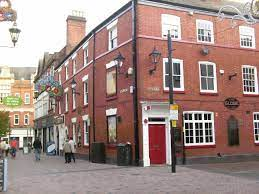
The first of these trips, on what was Matt's 28th birthday, would see us making our way to the suburb of Cotham and working our way down the hill with the intention of finishing the evening with a pub quiz, recruiting Jess along the way. We headed out relatively early, getting a bus into the centre before walking, via a mildly circuitous route, uphill to our first destination. Our day of drinking would begin at The Penny. 


On the edge of Clifton and across the road from Clifton Down shopping centre, this is a pub in a former bank which still hosts the old bank vault downstairs. Formerly known as the Penny Farthing, this is a Wadworth owned premises with a modern, comfortable feel, painted woodwork, beer themed wallpaper and Wadworth paraphernalia. The bar is large and situated to the right of the room with seating consisting of tables and booths. As you'd expect the beer choice is Wadworth with 5 of the 6 handpulls in use during our visit. The choice is between Horizon, Dirty Rucker, 6X, IPA and Flyin' Try. I opted for a pint of the Horizon (4%), a pale gold-coloured beer with zesty citrus and hop aromas and a crisp, tangy finish on the palate. It's a nice and refreshing way to start the day and I feel like we've earned a pint after the walk. The weather had settled down considerably from the previous day and there was a much more pleasant feel in the air throughout the day. We had a loose route planned that would take us back downhill towards the centre of town. The Penny had certainly been a good place to start off the day and our next destination was a short walk away. Leaving the pub through the opposite door through which we entered, we emerged on Cotham Hill.

A short walk to the right brought us to our next stop, somewhere we'd visited on a previous occasion. It was time for a revisit of Brewhouse & Kitchen. 


Part of the now nationwide chain, the pub has gone by many names in the past including the Hill, Cotham Hill, Crockers and Finnegan's Wake and is built on the site of the 18th century Whiteladies Tavern. Situated 100 yards from Clifton Down station, the pub reopened in March 2015, following an extensive refurbishment. As with other pubs in the chain, the beer is brewed onsite and named after local historical figures or stories. The brewery is located at one end of the long bar, which takes up the majority of the rear wall. The rest of the space is given over to a variety of seating and quirky features including hollowed out suitcases used as picture frames and an upright piano decorated with the lyrics to Peter Gabriel's 'Sledgehammer'. The pub is also Good Beer Guide listed, a testament to the quality of the beers. Speaking of the beers, they occupy 6 handpulls on the bar, 5 of which were in use during our visit. Our options were strictly B&K beers namely, Yankee Cabot, Crockers, Down the Hatch and Hornigold. The 5th handpull was occupied by Orchard Pig Chilli & Ginger cider. A few of the available beers were a bit on the strong side for this time of day so I opted instead for the Hornigold (3.9%). This is a dry and refreshing very pale ale, named after Benjamin Hornigold, mentor to the infamous pirate Blackbeard. Despite the low ABV, it's a very delicious beer indeed! 

We headed further down the hill for our next stop, which stood in a cluster of pubs not far from the local university. Next up, we crossed the road and made our way to the Highbury Vaults. 


Listed on CAMRA's regional inventory of historic interiors, this pub has been in the same hands for many years. Popular with staff from both the university and nearby hospital, it dates from the mid 19th century. The interior is dark and dimly lit with a small front snug that used to be the entirety of the original pub, a main drinking area, bar billiards table and a working train set that connects the bars. There is a large, heated patio outside and a garden with impressive floral arrangements. The pub also has a bit of a grim history. The gallows used to stand on the nearby roundabout and this pub was often the last stop for the condemned, with their bodies being stored in the vaults under the pub before burial. The walls are decorated with all sorts of bric-a-brac including funny newspaper headlines. The bar features 8 handpulls offering doubled up Young's Bitter and London Gold, as well as Teignworthy Mad Hatters, Butcombe Gold, Tribute and Bath Gem. I decided on the Butcombe Gold (4.4%), a golden ale with a light aroma of fruit and hops, leading to well-balanced flavours of malt, pale fruit and hops, leading to a bitter aftertaste. We took our pints and headed out into the pleasant garden where conversation, as it often does with me and Matt, turned to music, specifically how Matt knows the cousin of a member of Tool. I thoroughly enjoyed the Highbury Vaults and I'd definitely like to visit again. It's an unusual and very pleasant place for a pint. 

We had not far to go at all for our next stop as it is located opposite. We now made our way to Beerd. 


This is a sleek, modern bar, originally opened by Bath Ales in 2011 and refurbished in the summer of 2017. As well as 4 handpulls, there are also a number of craft keg beers, located on a bar surrounded by a mixture of furnishings consisting of high and low tables, chairs, sofas and armchairs. The aforementioned handpulls appear to be repurposed bike handlebars although they may just have been decorated to appear this way. The beers on offer are Bath Gem, St. Austell Tribute, St. Austell Proper Job and Wild Beer Co. Bibble. Having really enjoyed Bibble when I've had it in the past, it didn't take me long to decide to have it again. At 4.2%, Bibble has a moreish bitterness complimented by tropical fruit flavours from Mosaic and Amarillo hops. The name is a local Somerset word meaning to drink regularly. It's certainly a delicious beer and this venue in general is very interesting. I enjoyed the quirkiness of it and I enjoyed the pint I had so it ticks all the boxes in that respect!

Just next door to Beerd, lay our next destination. We now made our way to the Cotham Arms.


Formerly known under a variety of names such as the Royal Fort, Bar @ 155, Howlin' Wolf and Chin Chin, the pub reopened under its new name on 3rd August 2017, following a refurbishment. It is a Grade II listed building that was built between 1861 and 1871, when it was known as the Highbury Park Tavern. Its first recorded landlord was John Dando and it stayed within the family until 1883. It was once a popular cider house in the Cotham district. Nowadays, there is a contemporary feel with two main rooms. The light and airy front bar is furnished with a variety of tables and chairs. The pub is now operated by Bermondsey Pub Co, a subsidiary of Enterprise Inns. As well as ales, there is also a large selection of gins. 2 of the 3 available handpulls are in use on our visit, offering a choice between Doom Bar and Milk Street The Usual. It was to the latter that we turned our attention. The Usual (4.4%) has a well-rounded fruitiness with hints of caramel in the taste. The slight sweetness is balanced by a bitter, grainy finish with hints of raspberry. It's an unusual concoction but delicious all the same. It's even more enjoyable in the surroundings in which we find ourselves, under the gaze of the mural of a gin-loving octopus.

Our next stop was a slightly further walk away and a little bit more downhill, although not by much. Next up was the White Bear.


With its namesake proudly standing outside, this pub dates all the way back to 1752 when it was a coaching inn for those looking to trade from the docks at the bottom of the hill. Downstairs features a comfortable lounge to the rear and a more traditional area at the front. Upstairs has a small performance space that accommodates about 50. Three handpulls occupy the bar and at the time of our trip these feature Wickwar B.O.B, Bristol Beer Factory Independence and Bristol Beer Factory Fortitude. Matt and I had a pint of both the Fortitude and Independence respectively. Independence (4.6%), has a strong, hoppy flavour and initial aroma followed by sweet fruitiness leading to a bitter hoppy finish. Overall, it's well balanced with impressive flavour for its strength. The White Bear is a very nice place and we were able to find some free stools upon which to perch at the bar and admire the place fully. One of the things I love about Bristol is how different the pubs are whilst still maintaining a homely and welcoming atmosphere. It's one of the reasons that I enjoy coming back so often. 

This feeling was very much in evidence in our next location which would be our rendezvous point with Jess when she finished work. Back across the road and slightly further down the hill is the Colston Arms. 
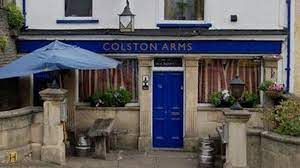


Formerly known as Micawber's Ale House, the earliest known licensee served customers here as long ago as 1816. Whilst informal, this is a very welcoming little place with a nice garden to the rear and a table football table. Legend has it that condemned men were allowed their last pint before the gallows here, a claim it shares with the aforementioned Highbury Vaults. The small bar here is visible through the window and boasts 5 handpulls one of which advertises 2 beers. The 6 total choices were. Doom Bar, Bombardier, Wye Valley Hereford Pale, Prescott Hill Climb and Titanic Plum Porter. I needed a moment to decide here as I was sorely tempted by the Plum Porter. In the end though, I decided on the Hereford Pale. This is a pale, hoppy, malty brew with a hint of sweetness before a dry finish, all at just 4%. Jess had arrived just before we ordered and with us all together for the evening, we plotted our next move. 

Next, we decided to make yet another trip to what is my favourite pub in Bristol. It's a haven, not just for beer, but also for rock and metal music. I do, of course, speak of The Gryphon.
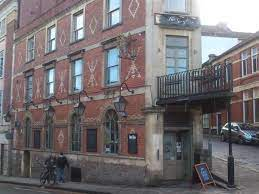


Following a brief stop for pizza at nearby Zero Degrees, we arrived at The Gryphon full and in good spirits. Triangular in shape due to its corner plot and just a few yards up the hill from Colston Hall, The Gryphon has a reputation for live music and excellent beers. This is very much a metal shrine with lots of band posters and pump clips all over the walls. 4 of the 6 available handpulls were in use during this particular visit offering Bristol Beer Factory El Choco, Vibrant Forest Flying Saucer, Milestone Hoptimism and Old Sawley Plummeth the Hour. It was an interesting experience seeing beers from the Nottingham area available this far afield but I went for something a bit different, in the shape of Flying Saucer from Lymington's Vibrant Forest brewery. Flying Saucer (4.3%) is a full flavoured golden ale with fruity, floral and citrus-like flavours. It's fresh and hoppy with a long, bitter finish and was very nice indeed. We spent a fair amount of time here, enjoying the music and Matt somehow managed to knock his beer all over Jess without getting any on himself. Jess was less than impressed and I get the feeling that this isn't the first time it's happened. 

We were about to move on to our final destination now. It was again another pub we'd visited on more than one occasion, largely due to the large amount of cats on the premises. It was finally time for the Bag O Nails. 


This is a small gas-lit terraced free house dating from the 1860s that has built an excellent reputation for a great change of cask ales and a large number of very friendly cats roaming free inside. It has a list of 'house rules' covering one pillar some of which are fairly eccentric and the interior also features terracotta colours and portholes in the floor. We had arrived here to get involved with the weekly pub quiz which I'd been positive was on Thursday nights. It turns out that I'd somehow got my wires crossed and we were 48 hours late. Still, at least we'd know for next time and we were here now so it would be rude not to have a pint or 2. 6 of the handpulls were in use, providing a choice of Butts Barbus Barbus, Bristol Beer Factory Milk Stout, Bristol Beer Factory Bow Street, Bristol Beer Factory Nova, Dark Star Pale Ale and Tapstone Kush Kingdom. After a moment's deliberation, I went for the Kush Kingdom (5%). A heady mix of 7 malts and 8 hops are used to make this big hitting orange coloured beer. Dank citrus and fruit flavours combine into a complex and uplifting resiny mouthfeel. I was unfamiliar with Tapstone Brewery but further research has revealed that they're based in Chard in Somerset. I'll definitely be on the lookout for more of their beers after this as this is an excellent beer. 

Following our beers and some friendly cat interaction, the decision was made to head home and so we wound our weary way back to the bus stop for the return journey to Hanham. As with the previous evening, Matt and I had sobered up significantly to the point where we felt like another pint or 2. After dropping Jess at home, we headed down the road to the pub that sits right by the bus stop. We had time for a quick one at The Maypole. 


This is a Grade II listed pub on Hanham high street, operated by Greene King, with a reputation for showing live sport. The interior has a split level layout, with a lower lounge area to the front and a pool room and bar at entrance level. 2 of the 3 handpulls here were in use offering a choice between Abbot Ale and Old Speckled Hen. The Abbot was in fantastic condition. We'd arrived at The Maypole around 10.30pm and we were 2 of the 3 customers in the building which was clearly in the process of closing up for the night. It's a comfortable enough pub though and again it's somewhere we've been to on more than one occasion. 

Upon leaving The Maypole, we decided to head over to the local Spoons which is about 3 doors down from Matt's flat. Again this was the subject of a return visit. Our final pint of the night would be at The Jolly Sailor. 
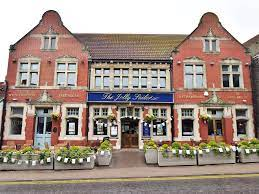


The pub is situated on the main road through Hanham which follows the route of the old Roman road through Bath. It's name is a link to the nearby river Avon and the earliest recorded landlord is Charles Coole who was in charge during 1853-74. He was followed by Joseph Bateman whose relative conducted a service on board the Titanic as it sank. There are a good selection of beers on offer at the time we're there but, with it being late, I'd somehow forgotten to write any of them down. The best I can offer is that I had a very delicious pint of Exmoor Bitter which went down very well indeed. 
It had been a very good day with lots of positives to take from it. I'd thoroughly enjoyed exploring new pubs and revisiting some old favourites. It had been a long and tiring day and it was time to get some sleep.

The 3rd and final day of my trip took place at a more leisurely pace than the previous 2. This time accompanied by Jess from the outset, we went out around lunchtime and began with a trip to Atomic Burger, possibly the best themed burger restaurant I've even seen, decorated as it is with all sorts of geeky memorabilia. In a nutshell, it's what the inside of my head looks like on a regular basis. From there, suitably stuffed, we headed down the road to a pub we'd skipped when I was last down with Amy. Day 3 took us to the Pipe & Slippers. 


Formerly known as the Berkeley Castle, this is a locals pub with high ceilings, dark wood furnishings and regular live music and DJ nights. We appear to be the only customers as we wander in from the cold, still struggling with how full we are from our burgers. The bar hosts 4 handpulls, 2 of which offer Ashridge Cider and Orchard Pig Chilli & Ginger cider whilst the others offer Purity Mad Goose and Otter Amber. I went for the Amber (4%) which is light, refreshing and mellow with hints of citrus hoppiness. It's creamy and delicate with flavours of hops and fruit. It's a nice start to the day and it's nice to be doing things a bit more slowly after 2 solid days of alcohol. Thankfully, I don't get hangovers so my only symptom was a bit of tiredness. 

Our next pub took some finding, tucked away as it is on the edge of a housing estate in the back streets off Gloucester Road. Once we got our bearings, we finally managed to locate The Bell. 


This is a pleasant, eclectic, two-roomed pub, popular with local DJs and drinkers on their way to local clubs on Friday evenings. There is a pleasant, heated patio area to the rear and local art on the wood-panelled walls adds a bohemian feel to the proceedings. The bar features 4 handpulls which, on the day in question, offer Butcombe Adam Henson's Rare Breed, Butcombe Original, Butcome Gold and Fullers London Pride. For no reason other than the novelty of seeing it here, I went for the London Pride which was excellent and tasted just as it should. We sat outside, with the majority of the other customers, all regulars and enjoyed the dialled back ambience. There was an amusing moment when a regular's dog kicked off at a local cat that was perched on the smoking shelter roof, largely indifferent to the canine onslaught. 

Our next pub would be the last as we were scheduled to meet with Pete, Matt's sister and her boyfriend and a couple of others as part of Matt's birthday celebrations. I can think of no better place to end my most recent trip to Bristol than The Volunteer.


Tucked away in a side street but extremely close to Cabot Circus shops. Dating from 1670 and listed, it reopened in 2011 after being closed for 6 months. It has quickly become a popular fixture on the local scene and features a fully enclosed and heated beer garden. Dog friendly, it was voted Bristol & District CAMRA Pub of the Year 2016. The bar is small and occupies one end of a long room with the rest of the space given over to furniture for both drinking and dining. The outside area is equipped with long benches and heat lamps to ensure everyone is comfortable. The 6 handpulls offer a decent range of beers and, during our visit, included the following: Plain Ales Inntrigue, Tiny Rebel Cwtch, Gloucester Dockside Dark, Gloucester Session Pale, Tex's Secret and Electric Bear Above the Clouds. I initially intended to begin on the Cwtch. This however failed to clear when poured and it turned out to be the end of the barrel. Instead, I swapped to Tex's Secret, a very sweet, very tasty IPA with big top notes of citrus and fruit. I rejoined the others outside and we were soon joined by Becca & Rich, Pete and his girlfriend Wendy, Kenny from Matt's band and his friend Tom and Jess's friends David & Andrea. What followed was an evening of fun conversation, laughs, jokes and excellent beer. Becca pointed out that, until that night, she'd never seen me sober. She has a point but at least she knows I can actually be sober. 

So, how does this trip to Bristol compare to previous visits? As usual, it was excellent. Bristol will continue to be one of my favourite places and has some of my favourite pubs. I'll never get bored of coming down. There's always more to discover and I intend to go and explore it as often as I can. It's just an incredible place and I always have an amazing time. Bristol, you've done it again!

Saturday, February 24, 2018

A Haven on the Avon?

Last week, I once again headed down to the West Country for what is fast becoming an annual trip to Matt and Jess down in Bristol for 3 days of exploration, beer drinking and general frivolity. The plan was to include 2 days of visiting a few Bristol establishments that I'd yet to go to as well as taking a trip further afield. We decided that the first day of my trip would be a good day to go exploring elsewhere as Jess was working and wanted to join us later in the week. Once I eventually arrived at Matt's, following a delay due to an accident and congestion on the motorway, we headed straight off. Our destination was Bradford on Avon, over the Wiltshire border but to get there, we first had to travel to Keynsham to get the train. I've mentioned our previous expedition to Keynsham in these pages before and it was to one these prior spots that we headed to first as we had a little bit of time to wait for the train. What better way to start the day than with a pre-train pint at The Old Bank?


The only Good Beer Guide listed pub in Keynsham, this is a free house in a Grade II listed building. It was originally built as a coaching inn before becoming a branch of Westminster bank and then reverting back to a pub. Internally, there is one large room for drinking in with the bar in one corner and a very large TV screen on the back wall. The walls are decorated with photos of old Keynsham and add to the pleasant feel of the place. The aforementioned bar features 6 handpulls, one of which offers Cheddar Valley Cider with the rest given over to ales. To start the day, our choices were Twisted Oak Fallen Tree, Cheddar Ales Totty Pot, Palmers 200, Spitting Feathers Rush Hour and Palmers Tally Ho. I opted to blow out the cobwebs of my drive with a pint of Rush Hour and Matt followed suit. From Cheshire-based Spitting Feathers brewery, Rush Hour (4.5%) is a pale ale with a strong, citrus character brewed with 5 different hop varieties. This combination imparts intense flavours of grapefruit, orange and passionfruit which make it a bit like a fruit cocktail in a glass and all the better for it. The first pint of the day had certainly gotten us in the mood for what lie ahead and we now made our way back to the train station for our short wait for the train.

The weather was taking a turn for the worse by the time we boarded the train but we were not to be deterred. 30 minutes or so later, we arrived in Bradford on Avon. Bradford on Avon is a town and civil parish in west Wiltshire, with a population of 9,402 at the 2011 census. The town's canal, historic buildings, shops, pubs and restaurants make it popular with tourists.
The history of the town can be traced back to Roman origins. It has several buildings dating from the 17th century, when the town grew due to the thriving English woollen textile industry. The town lies partly on the Avon Valley, and partly on the hill that marks the Vale's western edge, eight miles southeast of Bath, in the hilly countryside between the Mendip Hills, Salisbury Plain and the Cotswold Hills. The local area around Bath provides the Jurassic limestone (Bath Stone) from which the older buildings are constructed. The River Avon (the Bristol Avon) runs through the town. The town directly borders Trowbridge to the south east. The town includes the suburbs of Bearfield and Woolley; the parish includes the hamlets of Widbrook and Woolley Green.
The Western Wiltshire Green Belt forms the eastern extent of the Avon Green Belt, and it completely surrounds Bradford-on-Avon, helping to maintain the setting and preserve the character of the town, and minimising urban sprawl between Bath and other nearby settlements such as Trowbridge, Winsley, and Westwood.
The earliest evidence of habitation is fragments of Roman settlements above the town. In particular, archaeological digs have revealed the remains of a large Roman villa with a well-preserved mosaic on the playing fields of St Laurence School. The centre of the town grew up around the ford across the river Avon, hence the origin of the town's name ("Broad-Ford"). This was supplemented in Norman times by the stone bridge that still stands today. The Norman side is upstream, and has pointed arches; the newer side has curved arches. The Town Bridge and Chapel is a grade I listed building. It was originally a packhorse bridge, but widened in the 17th century by rebuilding the western side. On 2 July 1643 the town was the site of a skirmish in the English Civil War, when Royalists seized control of the bridge on their way to the Battle of Lansdowne.
On the bridge stands a small building which was originally a chapel but was later used as a town lockup. The weather vane on top takes the form of a gudgeon, (an early Christian symbol), hence the local saying "under the fish and over the water".
Widbrook Grange is a Georgian manor house on the edge of the town. It was built as a model farm on Earl Manvers' estate; it is now run as a hotel.
The river provided power for the wool mills that gave the town its wealth. The town has 17th-century buildings dating from the most successful period of the local textile industry. The best examples of weavers' cottages are on Newtown, Middle Rank and Tory Terraces. Daniel Defoe visited Bradford on Avon in the early 18th century and commented: "They told me at Bradford on Avon that it was no extra-ordinary thing to have clothiers in that county worth £10,000 to £40,000 per man" (equivalent to £1.3M to £5.3M in 2007).
With improving mechanisation in textile manufacture during the Industrial Revolution, the wool weaving industry moved from cottages to purpose-built woollen mills adjacent to the river, where they used water and steam to power the looms. Around thirty such mills were built in Bradford on Avon alone, and these prospered further until the English woollen industry shifted its centre of power to Yorkshire in the late 19th century. The last local mill closed in 1905. Many have since stood empty and some became derelict.

A notable feature of Bradford on Avon is the large Grade II* listed tithe barn, known as the Saxon Tithe Barn, 180 feet long and 30 feet wide, which was constructed in the 14th century and is now part of Barton Farm Country Park. The barn would have been used for collecting taxes, in the form of goods, to fund the church.
There are several notable buildings in and around the town centre. Many of the old textile factories have been converted into modern flats and apartments; however, few of the buildings are still used today in their original roles. One of the few is The Swan, a public house and hotel set in the centre of town; the building is 17th century and retains many original features, in particular the stone flag floors. Records show that there has been a public house on the same site since the 1500s.
In 1998 the Wiltshire Music Centre was opened in Bradford on Avon, on the grounds of St Laurence School. In 2000, the millennium sculpture nicknamed "Millie" was unveiled.
On 8 October 2003, Bradford on Avon was granted Fairtrade Town status.

I was very excited to explore a new place, somewhere Matt had talked a lot about, and very interested to see what the many drinking establishments in this fine town had to offer. The weather looked set to be rubbish but, as we were pub hopping, we were both confident it would all be worth it. Following a climb up a fairly steep hill with cracking views over the town and countryside beyond, we eventually found our way to the first open pub on our list. Our trip to Bradford on Avon began at The Castle Inn.


Situated on the wonderfully named Mount Pleasant, The Castle is owned by Flatcappers who recently carried out a tasteful refurbishment that earned a national CAMRA award. The pub commands a scenic position with views out towards Salisbury Plain and has a reputation for excellent, locally-sourced food and a comfortable atmosphere. Good Beer Guide listed, it was also local CAMRA Pub of the Year winner for 2017. It's certainly a welcome respite from the inclement conditions as the heavens have decided to open shortly before our arrival. Inside, the pub is divided into 2 sections either side of the entrance with the long bar and low tables in a room to the left and more restaurant-style seating in a room to the right. The bar takes up the entirety of one wall of the first room and features 6 handpulls, 5 of which are in use during our visit. On offer on this occasion were Stonehenge Pig Swill, Three Castles Barbury Castle, Hop Back Winter Lightning, Blindmans Funny Farm and the house beer Flatcappers Ale which is a rebadge of Three Castle Vale. I went for the Funny Farm from Blindmans Brewery in Leighton, Somerset. This is a 4% pale, light golden ale with a crisp, hoppy finish. It's a delicious pint which certainly helped me dry off as we sat at a small round table near to the toilets. From here, we took a moment to plot our next move and also to double check the return train times ready for later. Matt took a moment to go to the loo, heading into the corridor next to where we were sitting which, I quickly realised, was the ladies toilet. Matt clearly hadn't realised though and actually didn't notice at all until after he'd come back out again. Strangely, this wouldn't be the first time that this would happen throughout the day. Suitably refreshed, we ventured back out into the rain to make our way to our next stop.

Next up, we made our way down towards a recent new development on the riverside in an area known as Kingston Mills. Stop number two was The Weaving Shed.


This is a modern café/bar with an emphasis on food but with an area to one side for the casual drinker. It is a large, comfortable and airy place with views over the riverside and the ancient town bridge. The bar is located in the back corner of the room with an open plan kitchen taking up the majority of one wall. The one handpull offers Box Steam Golden Bolt so we both get stuck into a pint of this. This is a straw-coloured bitter with a slightly dry, hoppy aftertaste and a drinkable ABV of 3.8%. We took a few minutes to enjoy this beer in view of the large windows where we were pleased to see that it had temporarily stopped raining. Sadly, this particular weather would not continue.

Our next location was a short walk outside of the town centre proper and we arrived in perfect time as the pub was shortly about to close before it would reopen in the evening. We had now reached The Plough.


This is a simple, local, street-corner boozer, brick-built with a mostly open-plan interior. One corner is dedicated to sports memorabilia, some of it signed. The bar occupies a space towards the rear and features 3 handpulls, 2 of which are in use, offering a choice between Otter Bright and Doom Bar. The Otter Bright (4.3%) was in excellent condition. It's a light and refreshing golden ale with delicate malt and fruit leading through hops into a lingering bitter aftertaste. This is a proper locals pub with a very welcoming atmosphere and we were very grateful to the landlady for letting us finish our pints. We headed on our way, forcibly dragging ourselves away from the Friends rerun that was now on the TV.

It was back down towards the river now, where our next 2 locations sat opposite each other. The first of these wasn't on our initial list but we took a punt when we noticed a sign advertising real ales. The location in question was The Lock Inn.


Although this is essentially a café, this is a very popular venue with a good reputation for hearty food, especially breakfasts. Quirkily and colourfully decorated inside with bright plastic table cloths in primary colours, an additional dining area is situated on a narrowboat tethered nearby. 3 handpulls on the bar offer Lilley's Rhubarb Cider, St. Austell Tribute and Dartmoor Dartmoor Best. I went for a pint of the Tribute and I wasn't disappointed as it was in excellent condition. This was a very interesting place for a pint and it's easy to imagine how busy it must get in the summer seasons as it is a very picturesque spot.

We headed a short distance over the road for our next pint. We now found herself at The Canal Tavern.


As the name suggests, this pub is on the side of the Kennet & Avon Canal and operated by Wadworth. There are 2 rooms, both served by a long central bar, and a substantial outside area. The rain had started again by this stage so we decided to take refuge inside. The 2 handpulls on offer featured a choice of Wadworth beers, namely Henry's IPA and 6X. The IPA (3.6%) is a very tasty beer, despite its low strength. This is a classic session beer, with malt-led flavours and a nicely bitter backbone. This is a nicely, atmospheric place, with the rain gently coming down on the roof and the windows and we enjoyed a few minutes here, helped by the presence of The Chase on the TV. I love a good quiz!

Another nautically named pub was our next stop as we now made our way over to The Barge Inn.


Also situated alongside the canal, the pub was taken over by new management in July 2017. There is a canal side garden suitable for both eating and drinking in finer weather and an adjacent garden with a smokers gazebo. The pub is constructed, as is much of the town, from Bath stone and occupies a picturesque spot. The bar is to the left of the room as you enter with the rest of the floor space taken up by a mixture of seating. 5 handpulls sit on the bar, 3 of which are in use at the time of our visit providing us with the choice of Otter Bitter, Box Steam Crafty One and Box Clever Toodle Pip Cider. I opted for the Crafty One which again proved to be a good choice as this was a very refreshing beer and again helped to take our minds off of the rain.

From here, we had a plan in mind to head back towards the train station and explore a couple of pubs in that area with the opportunity to hit some later opening venues if we were still feeling up for it. The first of these was immediately next to the station and we had in fact walked past it as we left the station earlier with the intention to return later. Our attention now turned to the Three Horseshoes.


This is an old pub that began life as a coaching inn and has recently built a strong reputation locally for its changing beers and regular live music. The bar occupies a central position with seating spread around. There is a really, quaint olde worlde feel to this pub, reflected and enhanced by the preponderance of original features and the photos and memorabilia related to town history that decorate the walls. The 3 handpulls offer some interesting choices, namely Plain Ales Inntrigue, Plain Ales Hairy Hooker and Prescott Hill Climb. Inntrigue from Plain Ales in Sutton Veny provided my sustenance on this stop. At 4.2%, this is a ruby-coloured best bitter with flavours of woodland berries and a slight hint of dark chocolate, which all combines to form a very tasty beverage indeed.

Our next stop saw us take a brief walk around the corner to the second of Bradford's GBG listed pubs. We now ventured to Timbrell's Yard.
Image result for timbrell's yard bradford on avon
Newly reopened in 2015, the building has been well restored and transformed into an upmarket pub that now also includes accommodation. This was originally the home of Mr. Timbrell, a wealthy local mill owner, who now lends his name to the current incarnation. The well-reviewed restaurant overlooks the nearby Avon. I had high hopes for this place having read some very good reviews and seeing it listed in the Good Beer Guide. However, we were soon to be disappointed. None of the 4 available handpulled beers were able to be served due to a technical fault which, if I understood correctly, meant that the compressor was knackered and a repairman was eagerly awaited. As disappointed as we were, we can't really blame anyone. There's no accounting for technology unfortunately. We've made a mental note to return in the future though.

The beer had kicked in by this point so we decided to forego some of the pubs we'd yet to visit and hop on the train back to Keynsham where we were greeted by Matt's sister Becca, who had very kindly offered to give us a lift home. We arrived back in Hanham where we briefly said hello to Jess before the decision was made that we could fit in one more pint at a local pub. The pub we decided on was one that we'd missed out last time and we made our way back out to pay a visit to The Swan.


Located at the western end of Hanham, this is a very popular community pub with a local feel, It's popularity is clear when we enter as there are already a few people about, despite it being a Wednesday in February. The bar at The Swan sits parallel to the primary seating area and has 4 handpulls, 3 of which were in use whilst we were there. The offering were Doom Bar and Tribute, the latter of which was doubled up. I again decided on Tribute and this was again excellent. We took a table not far from the bar and discussed the ups and downs of our day.

How had Bradford on Avon stood up? It's certainly a very picturesque and interesting place and it's easy to see why so many people are attracted to its pubs, its scenery and its inexplicable number of tea rooms. The pubs are many and very pleasant with a good range and excellent quality of beers and it was nice to see so many pubs championing local beers and supporting local breweries. Particular highlights include The Castle and The Barge and I also rather enjoyed The Lock Inn as its quirkiness and comfort was rather unexpected. The Timbrell's Yard disappointment was unfortunate but does not detract from the place and, as I said, sometimes things like that happen. Overall, I think it's safe to say that Bradford on Avon was more than worth the effort and I have a feeling we'll be going back. I've said it before and I'll say it again: I never ceased to be surprised by the West Country! 


Tuesday, January 16, 2018

Busy as a Beaver

A belated happy 2018 to you all! Forgive my absence over recent months. It's been a hectic time over the past few weeks what with the festive season, wedding preparations and a change of job for myself, meaning that I've been having to adapt to moving from weekly to fortnightly pay schedules whilst battling the scourge of emergency tax. My first blog entry for this calendar year will be a little bit different and is likely to upset the purists amongst you. My first trip out was a bit different to what I'd normally do, focusing as it did more on the craft beer end of the spectrum. This came about due to an invite I received from a friend of my for a day trip to the wilds of North London to visit a craft brewery that has made something of a name for itself in recent years. This is the story of my trip to Beavertown Brewery.


Originally founded by Logan Plant in his own kitchen or cellar (depending upon who you believe), Beavertown now occupies two units of an industrial estate in the Tottenham Hale area of North London, in the shadow of student accommodation and in site of Tottenham Hotspur's spectacular looking new stadium which is currently under construction. The brewery's mission statement is simple. They aim to create big, innovative beers, brimming with flavour and character. Our aim was to see how much they'd achieved by way of reaching this target. We had a brewery tour scheduled but were probably most excited about experiencing the taproom which opens every Saturday from 2-8pm for both private groups and locals. I should explain who I mean by 'we'. There were 38 of us in total, all from different Nottingham pubs, who had all come together to celebrate our mutual love of beer on a cold Saturday morning in January. A handful of the attendees, and those I spend most of the day with, were people that I am proud to call friends the majority of the others were people who were unknown to me. We arrived at the brewery around 1.30 in the afternoon, half an hour before the opening of the taproom, which at least allowed us to relieve ourselves and get our bearings. As gentle conversation flowed, the buzz of excitement was noticeable and, in some cases audible. Finally, it was time to see what we'd let ourselves in for.

We formed an orderly queue in the general direction of the taproom bar, admiring a veritable forest of giant brewing vessels that took up a considerable amount of space in what is not a small warehouse. Music was blaring from a free standing speaker as we approached the taproom bar which sits in a room along the wall from the entrance we'd come in through. The first thing that struck me was the price board on the wall. Much of Beavertown's core range is available and, on this occasion, guests from Verdant Brewery, in quantities of 2/3, 1/2 or 1/3 depending upon strength and all for the unbelievable price of £2.50! Most of us had decided upon our first beer of the day. We were privileged in being amongst the first to try a brand new beer, brewed in collaboration with Cornwall's Verdant, and being giving a soft launch before its official release the following Monday. Amongst the wall mounted taps, reflecting the neon lights from the Beavertown sign above was the brand new Double IPA, Shut Up and Play the Hits (8.8%). This is where most of us, myself included, decided to begin our journey of discovery into Beavertown's colourfully advertised and quirkily named beverages. Shut Up is a big beast of a beer. Mango is the central flavour with a sneaky but not unpleasant bitterness lurking throughout. The fruity sweetness comes to the fore, enhanced by the combination of 5 hops and this makes it delicious and dangerously easy to drink. It's also fascinating to look at, almost luminous yellow and clear as mud. I was impressed with the amount of flavour in such a heavy hitting beer. Flavour, as I've mentioned, is a big part of the beers here and that was certainly true of the next one that I decided to try. The queue for the bar was lengthening all the time so wait times for more delicious beer was quickly increasing. However, I persevered and returned for a chance to try Lupuloid IPA (6.7%), the first IPA that the brewery made. This is another punchy number, although not quite to the extent of Shut Up. With just the standard 4 ingredients, this came about as the end result of 10 trial and error style experiments, each one tweaked slightly more than the last in order to pack as much flavour in as possible. The finished product is a hoppy, fruity concoction with a soft bitterness that does not detract from the big, citrusy hit of the main event.

As well as selling their range on draught, the Beavertown taproom also features canned products in fridges opposite the bar and these were very quickly being snapped up, with the Shut Up in particular, quickly disappearing. I'd made a promise to pick up a can for a guy at work so I rejoined the queue and, not wanting to purchase just the one can, bought a pack of 6 which cost me £20. 2 of these cans would be consumed on the coach journey home, 1 has gone to the aforementioned colleague and the remaining 3 are currently in my fridge at home. Following my return from the bar and the safe storage of the beer on the coach, it was time for our brewery tour. The first half of this was as you'd expect as we negotiated the forest of vessels to hear all about the processes involved in making these beers and also taking in new equipment that was improving the process, namely a whirlpool and a centrifuge. The brewery also benefits from a state of the art canning machine for their core products, which are widely available in both canned and kegged forms. Bottled versions were formerly available but are currently taking a break to be hopefully brought back into the fold in the near future. After hearing about the ins and outs of canning, labelling and packaging, we crossed the brewery yard to the unit opposite where we were going to be shown the barrel-aging room. The scale of this dwarfed what anything any of us were expecting. Beavertown uses multiple different types of barrels from cognac, rum and whisky, to champagne and even gin barrels to store beers in different conditions as part of what it calls the Tempus project. This is designed to impart different characteristics to different beers over different periods of time in order to create unique and interesting brews which may or may not be released to the public at a time of the brewery's own choosing. This leads to all sorts of scope for styles that cannot normally be created easily under normal circumstances, leading to some very exciting things indeed. including Heavy Lord, a 14.5% bourbon barrel aged imperial stout, Aquavitza, an 8.2% aquavit-inspired saison, calvados and white wine barrel aged Bramley apple saison Applelation (10%) and a 5% tequila barrel aged gose beer called El Mariachi. Sadly, none of these varieties are available for us to try on the day.

It was back to the beer again now and this time I fancied something from one of the guest lines courtesy of Falmouth-based Verdant Brewery. I opted for Track & Field (7.2%). This is another in the line of fruity pale ales, with obvious melon and pear flavours, a smooth, crisp finish and the overall mouthfeel of a pack of fruit pastilles. After a quick break for food, in my case anyway, more beer was required. With the queue for the taproom bar as long as it had been all day, to the point where it was out the door, we decided to check out the offerings of another brewery which conveniently occupies premises on the same industrial estate and also operates a Saturday taproom. We now made our way over to Pressure Drop brewing.


The difference between the 2 breweries is immediately obvious. Whereas Beavertown is overflowing with requisitioned, older vessels with the taproom in an adjacent room and long benches inside but mostly outside in the car park, Pressure Drop features a row of shiny vessels positioned along one wall, an automated grain distributor on its own mezzanine with a bar opposite the entrance and a large number of benches throughout a large floor space, all of which provides a cosier and substantially warmer interior. The bar has no guest beers but benefits from the full range of Pressure Drop, again all available in reduced quantities for £2.50 a go. I began my exploration with Pale Fire (4.8%), a delightfully smooth pale ale with a good balance of fruity hops and malty bitterness. I'm glad I decided to step down the ABV a little here as there were some more big beers still to come. We'd managed to track down a few more of the group here and had reserved 2-3 benches on which to perch and discuss how the day was going. The pale ale went down just a bit too easily but luckily I'd already identified my next victim, in the form of Pfaff Belgian Pale. At 5.2%, this is a dry hopped Belgian style pale ale that boasts piney, zesty hop flavours and a soft fruitiness from the accompanying yeast. The ABV increased again for my next choice, Bosko IPA (6.5%). Inspired by American-style IPAs, this combines the aromatic flavours of American hops with crystal malt to provide a more balanced version. This provides a characteristic sweetness reminiscent of the style.

We were scheduled to depart at 7pm but thankfully this meant that I had time for a couple more beers before we had to go. My next choice was another IPA, this one profiling Mosaic hops and named Domino Topple (7.2%). Of all the beers I'd had up to this point at Pressure Drop, this is the one that perhaps most matched those of Beavertown around the corner, with a chewy, mango fruitiness and a hoppy, bitter bite. I'd been building up to my final beer before the journey home since I'd seen the name on the board as we entered. I would finish my study of Pressure Drop beers with the wonderfully named Alligator Tugboat (7.2%). This is, in effect, the brother of Domino Topple, with the emphasis this time placed on Simcoe hops over Mosaic. The end result is a big IPA with dank pine, citrus and fruit flavours. Yet another beer that is far too easy to drink! As the last dregs of the beer went down, it became clear that it was time for us to take our leave. We made our weary and tipsy way back to the coach and settled down (or not) for the journey back to Nottingham.

So, what is my overall verdict on these 2 breweries? Firstly, they are both very good at what they do in creating exciting and interesting beers that stand out from the crowd. Beavertown are doing a cracking job at producing a highly flavourful range of strong craft beers, both pale and dark (although I didn't try any of the latter one my visit) whilst Pressure Drop have obviously carried forward considerable influence from traditional styles. I think it's for this reason that I preferred the beers at Pressure Drop over those of their neighbour. Don't get me wrong, I enjoyed every beer that I drank but, for me the traditional cask ale passion is more in evidence at Pressure Drop. I enjoy craft beer and cask ale and I realise that, in this day and age, that's a bit of a fallacy. I still think that my heart lies more in the 'cask' than the 'craft' at this present time although I don't necessarily think that the two terms have to be mutually exclusive and I do think craft beer needs to be welcomed and appreciated for how it's helped to rescue the beer scene and carried on the good work of CAMRA as well as allowing both areas to thrive. I do think I still prefer cask ale and will certainly be placing the emphasis on that as I have been. Last weekend has shown me even more about how good craft beer can be at bringing people together and, whether you're for or against craft beer as a whole, you can't deny that it's making a hell of an impact.

Normal service will be resumed next time!

Sunday, November 5, 2017

Leics Be Having You!

Last week, it was time for another excursion, this time into one of the neighbouring cities in the East Midlands. My travelling companion was none other than Matt, up from Bristol for a couple of days and he was very excited, as was I, to finally explore the city of Leicester.

Leicester  is a city and unitary authority area in the East Midlands, and the county town of Leicestershire. The city lies on the River Soar and close to the eastern end of the National Forest.
In the 2011 census the population of the City of Leicester unitary authority was 329,839 making it the most populous municipality in the East Midlands region. The associated urban area is also the 11th most populous in England and the 13th most populous the United Kingdom.
Leicester is at the intersection of two major railway lines—the north/south Midland Main Line and the east/west Birmingham to London Stansted CrossCountry line; as well as the confluence of the M1/M69 motorways and the A6/A46 trunk routes. Leicester is the home of Leicester City, a club that caused a major upset by winning the 2016 Premier League title, the first new English championship winners for several decades at the time.

The name of Leicester is recorded in the 9th-century History of the Britons as Cair Lerion (whence Welsh CaerlÅ·r), and in the Anglo-Saxon Chronicle as Ligora-ceastre. In the Domesday Book of 1086, it is recorded as Ledecestre. The first element of the name, Ligora or Legora, is explained as a Brittonic river name, in a suggestion going back to William Somner (1701) an earlier name of the River Soar, cognate with the name of the Loire. The second element of the name comes from the Latin castrum which is reflected in both Welsh cair and Anglo-Saxon ceastre.
Based on the Welsh name (given as Kaerleir), Geoffrey of Monmouth proposes a king Leir of Britain as an eponymous founder in his Historia Regum Britanniae (12th century).

Leicester is one of the oldest cities in England, with a history going back at least two millennia. The native Iron Age settlement encountered by the Romans at the site seems to have developed in the 2nd or 1st centuries BC. Little is known about this settlement or the condition of the River Soar at this time, although roundhouses from this era have been excavated and seem to have clustered along roughly 8 hectares (20 acres) of the east bank of the Soar above its confluence with the Trent. This area of the Soar was split into two channels: a main stream to the east and a narrower channel on the west, with a presumably marshy island between. The settlement seems to have controlled a ford across the larger channel. The later Roman name was a latinate form of the Brittonic word for "ramparts" (cf. Gaelic rath & the nearby villages of Ratby and Ratcliffe), suggesting the site was an oppidum. The plural form of the name suggests it was initially composed of several villages. The Celtic tribe holding the area was later recorded as the "Coritanians" but an inscription recovered in 1983 showed this to have been a corruption of the original "Corieltauvians". The Corieltauvians are believed to have ruled over roughly the area of the East Midlands. It is believed that the Romans arrived in the Leicester area around AD 47, during their conquest of southern Britain. The Corieltauvian settlement lay near a bridge on the Fosse Way, a Roman road between the legionary camps at Isca (Exeter) and Lindum (Lincoln). It remains unclear whether the Romans fortified and garrisoned the location, but it slowly developed from around the year 50 onwards as the tribal capital of the Corieltauvians under the name Ratae Corieltauvorum. In the 2nd century, it received a forum and bathhouse. In 2013, the discovery of a Roman cemetery found just outside the old city walls and dating back to AD 300 was announced. The remains of the baths of Roman Leicester can be seen at the Jewry Wall; recovered artifacts are displayed at the adjacent museum.

Knowledge of the town following the Roman withdrawal from Britain is limited. Certainly there is some continuation of occupation of the town, though on a much reduced scale in the 5th and 6th centuries. Its memory was preserved as the Cair Lerion of the History of the Britons. Following the Saxon invasion of Britain, Leicester was occupied by the Middle Angles and subsequently administered by the kingdom of Mercia. It was elevated to a bishopric in either 679 or 680; this see survived until the 9th century, when Leicester was captured by Danish Vikings. Their settlement became one of the Five Burghs of the Danelaw, although this position was short-lived. The Saxon bishop, meanwhile, fled to Dorchester-on-Thames and Leicester did not become a bishopric again until the Church of St Martin became Leicester Cathedral in 1927. The settlement was recorded under the name Ligeraceaster in the early 10th century.
Following the Norman conquest, Leicester was recorded by William's Domesday Book as Ledecestre. It was noted as a city (civitas) but lost this status in the 11th century owing to power struggles between the Church and the aristocracy and did not become a legal city again until 1919.
Geoffrey of Monmouth composed his History of the Kings of Britain around the year 1136, naming a King Leir as an eponymous founder figure. According to Geoffrey's narrative, Cordelia had buried her father beneath the river in a chamber dedicated to Janus and his feast day was an annual celebration.
During the C14th the earls of Leicester and Lancaster enhanced the prestige of the town. Henry, 3rd Earl of Lancaster and of Leicester founded a hospital for the poor and infirm in the area to the south of the castle now known as The Newarke (the "new work"). Henry's son, the great Henry of Grosmont, 4th Earl of Lancaster and of Leicester, who was made first Duke of Lancaster, enlarged and enhanced his father's foundation, and built the collegiate Church of the Annunciation of Our Lady of The Newarke. This church (a little of which survives in the basement of the Hawthorn Building of De Montfort University) was destroyed during the reign of King Edward VI. It became an important pilgrimage site because it housed a thorn said to be from the Crown of Thorns, given to the Duke by the King of France. The church (described by Leland in the C16th as "not large but exceeding fair") also became, effectively, a Lancastrian mausoleum. Duke Henry's daughter Blanche of Lancaster married John of Gaunt and their son Henry Bolingbroke became King Henry IV when he deposed King Richard II. The Church of the Annunciation was the burial place of Duke Henry, who had earlier had his father re-interred here. Later it became the burial place of Constance of Castile, Duchess of Lancaster (second wife of John of Gaunt) and of Mary de Bohun, first wife of Henry Bolingbroke (Henry IV) and mother of King Henry V (she did not become queen because she died before Bolingbroke became king). John of Gaunt died at Leicester Castle in 1399. When his son became king, the Earldom of Leicester and the Duchy of Lancaster became royal titles (and the latter remains so).
At the end of the War of the Roses, King Richard III was buried in Leicester's Greyfriars Church. The site of that church is now covered by more modern buildings and a car park. There was a legend his corpse had been cast into the river, while some historians argued his tomb and remains were destroyed during the dissolution of the monasteries under Henry VIII. However, in September 2012, an archaeological investigation of the car park revealed a skeleton which DNA testing helped verify to be related to two descendants of Richard III's sister. It was concluded that the skeleton was that of Richard III because of the DNA evidence and the shape of the spine. In 2015 Richard III was reburied in pride of place near the high altar in Leicester Cathedral.

On 4 November 1530, Cardinal Thomas Wolsey was arrested on charges of treason and taken from York Place. On his way south to face dubious justice at the Tower of London, he fell ill. The group escorting him was concerned enough to stop at Leicester. There, Wolsey's condition quickly worsened. He died on 29 November 1530 and was buried at Leicester Abbey, now Abbey Park.
Lady Jane Grey, a great-granddaughter of Henry VII who reigned as England's uncrowned Queen Regnant for nine days in June 1553, was born at Bradgate Park near Leicester around 1536.
Queen Elizabeth I's intimate and former suitor, Robert Dudley, was given the Earldom of Leicester.
The Corporation of Leicester opposed the efforts of Charles I of England to disafforest the nearby Leicester Forest, believing them to be likely to throw many of its residents into poverty and need of relief. Sir Miles Fleetwood was sent to commission the disafforestation and division of lands being used in common. Riots destroyed enclosures in spring 1627 and 1628, following a pattern of anti-enclosure disturbances found elsewhere including the Western Rising.
Petitions challenging the enclosures were presented by the Corporation of Leicester and borough residents to the King and Privy Council. They were unsuccessful so petitioned the House of Lords in June 1628 who however supported Fleetwood but asked for proceedings made by the Crown against the rioters to be dropped. Compensation made to the legal residents of the forest was reasonably generous by comparison with other forests. The Corporation received 40 acres (16 ha) for relief of the poor.

Leicester was a Roundhead stronghold during the English Civil War. In 1645, Prince Rupert decided to attack the city to draw the New Model Army away from the Royalist headquarters of Oxford. Royalist guns were set up on Raw Dykes and, after an unsatisfactory response to a demand for surrender, the Newarke was stormed and the city was sacked on 30 May. Hundreds of people were killed by Rupert's cavalry and reports of the severity of the sacking were further exaggerated by the Parliamentary press in London.

The construction of the Grand Union Canal in the 1790s linked Leicester to London and Birmingham. In 1832, the railway arrived in Leicester in the form of The Leicester and Swannington Railway which provided a supply of coal to the town from nearby collieries. The Midland Counties Railway (running from Derby to Rugby) linked the town to the national network by 1840. A direct link to London St Pancras Station was established by the Midland Railway in the 1860s. These developments encouraged and accompanied a process of industrialisation which intensified throughout the reign of Queen Victoria. Factories began to appear, particularly along the canal and river, and districts such as Frog Island and Woodgate were the locations of numerous large mills. Between 1861 and 1901, Leicester's population increased from 68,100 to 211,600 and the proportion employed in trade, commerce, building, and the city's new factories and workshops rose steadily. Hosiery, textiles, and footwear became the major industrial employers: manufacturers such as N. Corah & Sons and the Cooperative Boot and Shoe Company were opening some of the largest manufacturing premises in Europe. They were joined, in the latter part of the century, by engineering firms such as Kent Street's Taylor & Hubbard (crane makers & founders), Vulcan Road's William Gimson & Company (steam boilers & founders), and Martin Street's Richards & Company (steel works & founders).
The politics of Victorian Leicester were lively and very often bitter. Years of consistent economic growth meant living standards generally increased, but Leicester was a stronghold of Radicalism. Thomas Cooper, the Chartist, kept a shop in Church Gate. There were serious Chartist riots in the town in 1842 and again six years later. The Leicester Secular Society was founded in 1851 but secularist speakers such as George Holyoake were often denied the use of speaking halls. It was not until 1881 that Leicester Secular Hall was opened. The second half of the 19th century also witnessed the creation of many other institutions, including the town council, the Royal Infirmary, and the Leicester Constabulary. It also benefited from general acceptance (and the Public Health Acts ) that municipal organisations had a responsibility to provide for the town's water supply, drainage, and sanitation. In 1853, backed with a guarrantee of dividends by the Corporation the Leicester Waterworks Company built a reservoir at Thornton for the supply of water to the town . This guarrantee was made possible by the Public Health Act 1847 and an amending local Act of Parliament of 1851. In 1866 another amending Act enabled the Corporation to take shares in the company to enable another reservoir at Cropston, completed in 1870. The Corporation was later able to buy the waterworks and build another reservoir at Swithland, completed in the 1890s.
Leicester became a county borough in 1889, although it was abolished with the rest in 1974 as part of the Local Government Act. The city regained its unitary status apart from Leicestershire in 1997. The borough had been expanding throughout the 19th century, but grew most notably when it annexed Belgrave, Aylestone, North Evington, Knighton, and Stoneygate in 1892.

In 1900, the Great Central Railway provided another link to London, but the rapid population growth of the previous decades had already begun to slow by the time of Queen Victoria's death in 1901. World War I and the subsequent epidemics had further impacts. Nonetheless, Leicester was finally recognised as a legal city once more in 1919 and, in 1927, again became a cathedral city on the consecration of St Martin's Church as the Cathedral. A second major extension to the boundaries following the changes in 1892 took place in 1935, with the annexation of the remainder of Evington, Humberstone, Beaumont Leys, and part of Braunstone. A third major revision of the boundaries took place in 1966, with the net addition to the city of just over 450 acres (182 ha). The boundary has remained unchanged since that time.

Leicester's diversified economic base and lack of dependence on primary industries meant it was much better placed than many other cities to weather the tariff wars of the 1920s and Great Depression of the 1930s. The Bureau of Statistics of the newly formed League of Nations identified Leicester in 1936 as the 2nd-richest city in Europe and it became an attractive destination for refugees fleeing persecution and political turmoil in continental Europe. Firms such as Corah and Liberty Shoes used their reputation for producing high-quality products to expand their businesses. These years witnessed the growth in the city of trade unionism and particularly the co-operative movement. The Co-op became an important employer and landowner; when Leicester played host to the Jarrow March on its way to London in 1936, the Co-op provided the marchers with a change of boots. In 1938, Leicester was selected as the base for Squadron 1F, the first A.D.C.C (Air Defence Cadet Corp), the predecessor of the Air Training Corps.
The years after World War II, particularly from the 1960s onwards, brought many social and economic challenges. Mass housebuilding continued across Leicester for some 30 years after 1945. Existing housing estates such as Braunstone were expanded, while several completely new estates – of both private and council tenure – were built. The last major development of this era was Beaumont Leys in the north of the city, which was developed in the 1970s as a mix of private and council housing. There was a steady decline in Leicester's traditional manufacturing industries and, in the city centre, working factories and light industrial premises have now been almost entirely replaced. Many former factories, including some on Frog Island and at Donisthorpe Mill, have been badly damaged by fire. Rail and barge were finally eclipsed by automotive transport in the 1960s and 1970s: the Great Central and the Leicester & Swannington both closed and the northward extension of the M1 motorway linked Leicester into England's growing motorway network. With the loss of much of the city's industry during the 1970s and 1980s, some of the old industrial jobs were replaced by new jobs in the service sector, particularly in retail. The opening of the Haymarket Shopping Centre in 1971 was followed by a number of new shopping centres in the city, including St Martin's Shopping Centre in 1984 and the Shire Shopping Centre in 1992. The Shires was subsequently expanded in September 2008 and rebranded as Highcross. By the 1990s, as well, Leicester's central position and good transport links had established it as a distribution centre; the southwestern area of the city has also attracted new service and manufacturing businesses.
Since the war, Leicester has experienced large scale immigration from across the world. Many Polish servicemen were prevented from returning to their homeland after the war by the communist regime, and they established a small community in Leicester. Economic migrants from the Irish Republic continued to arrive throughout the post war period. Immigrants from the Indian sub-continent began to arrive in the 1960s, their numbers boosted by Asians arriving from Kenya and Uganda in the early 1970s.
In 1972, Idi Amin announced that the entire Asian community in Uganda had 90 days to leave the country. Shortly thereafter, the Leicester City Council launched a campaign aimed at dissuading Ugandan Asians from migrating to the city. The adverts did not have their intended effect, instead making more migrants aware of the possibility of settling in Leicester. Nearly a quarter of initial Ugandan refugees (around 5000 to 6000) settled in Leicester, and by the end of the 1970s around another quarter of the initially dispersed refugees had made their way to Leicester. Officially, the adverts were taken out for fear that immigrants to Leicester would place pressure on city services and at least one person who was a city councillor at the time says he believes they were placed for racist reasons. The initial advertisement was widely condemned, and taken as a marker of anti-Asian sentiment throughout Britain as a whole, although the attitudes that resulted in the initial advertisement were changed significantly in subsequent decades, not least because the immigrants included the owners of many of "Uganda's most successful businesses."
Forty years later, Leicester's mayor Sir Peter Soulsby expressed his regret for the behaviour of the council at the time.
In the 1990s, a group of Dutch citizens of Somali origin settled in the city. Since the 2004 enlargement of the European Union a significant number of East European migrants have settled in the city. While some wards in the northeast of the city are more than 70% South Asian, wards in the west and south are all over 70% white. The Commission for Racial Equality (CRE) had estimated that by 2011 Leicester would have approximately a 50% ethnic minority population, making it the first city in Britain not to have a white British majority. This prediction was based on the growth of the ethnic minority populations between 1991 (Census 1991 28% ethnic minority) and 2001 (Census 2001 – 36% ethnic minority). However Professor Ludi Simpson at the University of Manchester School of Social Sciences said in September 2007 that the CRE had "made unsubstantiated claims and ignored government statistics" and that Leicester's immigrant and minority communities disperse to other places.
The Leicester Multicultural Advisory Group is a forum, set up in 2001 by the editor of the Leicester Mercury, to co-ordinate community relations with members representing the council, police, schools, community and faith groups, and the media.

Leicester is a fine city with an extensive and diverse history and it was now time to see what gems could be found in a few of its drinking establishments. The day of our trip turned out to be Halloween and we were very much intrigued to see whether the real ale scene in these parts was one of magic or a thing of horror. We arrived in Leicester by train, just after 11.30am and it wasn't long at all until we'd located the first venue on the day's itinerary. Located right next to the station entrance, our day was to begin at The Parcel Yard.


This modest looking shop frontage leads into a spacious former sorting office and parcel yard for the adjacent station. Owned by Steamin' Billy brewery, this is a modern bar with contemporary furnishings and quirky features. There is a small seating area just inside the door and a small flight of steps leading into the larger lower level which houses the bar and more seating, including a row of booths opposite the bar with lights above made from old bowler hats. The bar has a strong beer focus, featuring craft keg taps and, more importantly, 6 handpulls, 4 of which are in use during our visit. Our choices to start the day were Steamin' Billy 1485, Steamin' Billy Billy, Butcombe Adam Henson's Rare Breed and Charnwood Black Hen. We opted for the Billy (4.3%), contract brewed for the pub chain by Belvoir Brewery. This is a light, golden three hop English bitter with a pronounced floral flavour and aroma followed by a lingering aftertaste. It's a very nice beer on which to begin and the venue itself is brilliant and considerably bigger than it looks from outside!

To continue our trip, we now headed towards the city centre proper, which is only a short walk away, in search of our next location. Located on a main thoroughfare through the shopping precinct, is the Barley Mow.


This is a traditional town centre boozer that operates as part of the Everards estate. A refurbishment in early 2013 took away the much loved pool table in favour of an ale house theme which now boasts 13 handpumps in banks of 5, 3 and 5. As it is part of the Everards chain, I was holding high hopes for the Barley Mow. The interior is long and a study in bare wood floors with seating arranged around the edge, the bar along one wall and a couple of TVs, both on mute, at opposite ends of the room. Whether it was due to the time of day or it being a relatively quiet midweek afternoon, only 1 of the aforementioned handpumps was in use, offering Everards Tiger. Thankfully the beer quality made up for the disappointment in choice and this is always a positive sign. There was enough evidence on show that suggests that their is a wider choice at busier times so I'm prepared to extend the benefit of the doubt in this case.

Our next stop was the customary visit to a local Wetherspoons, in this case accessed after a short walk to The Last Plantagenet.


Named after Richard III, the last Plantagenet king, who stayed in Leicester prior to his death at Bosworth Field in 1485, this is potentially the largest pub floor space in the city. Typical Wetherspoons décor, complete with the obligatory trek to the toilets, features a curved bar to one side that utilises 15 handpumps, in 3 banks of 5. 14 of these are in use whilst we're there, offering an interesting choice. The beers to decide between are Doom Bar, Abbot Ale, Ruddles Bitter (all doubled up), Caledonian Trojan Horse, Fort Oatmeal Porter, Hogs Back Farnham White, Vale Steam Punk, Arcadia Autumn Wheat, Woodforde's Tundra, Theakston Pink Grapefruit and Atlas Nimbus. Matt, now sufficiently recovered from the hangover he was nursing, plumped for the Steam Punk. I was intrigued by the Woodforde's Tundra and so decided to give this a go. This proved to be an excellent choice. Billed as a white IPA, Tundra is a very drinkable, very refreshing pale ale with a nice hop balance and a dry, crisp aftertaste, all for just 4.6%! There were quite a few customers already in during the time of our stop which is perhaps no surprise given the general popularity of Spoons and the fact that it was lunchtime. This was a very nice pub in the chain with some excellent beer on offer too!

We veered slightly away from the city centre for our next location which takes pride of place on a street corner. Featured in the Good Beer Guide, our next stop was the Ale Wagon.


Originally the Queens Hotel, the pub was built in 1931 to replace a Victorian hotel on the adjacent corner It still retains its 1930s interior, including an original oak staircase, and has two rooms with tiled and parquet flooring either side of a central bar. Hops decorate the drainpipes. The pub was originally owned by Ansells then, after years of neglect and deterioration, it was acquired by the present owners, the Hoskins family, who opened it as their first tied house in 1999. Internally, the walls feature photos of the former hotel, the pub itself in the 30s and Hoskins Brewery. The bar itself features 12 handpulls, 11 of which are in use, offering for our delectation Thistly Cross cider as well as Tiny Rebel Cwtch, Hop Back Taiphoon, Hoskins Brothers Old Hoskins Porter, Belvoir Dark Horse and doubles of Hoskins Hob, Hoskins IPA and Hoskins Green & Gold. On this occasion, I decided on the Taiphoon (4.2%) from Wiltshire's Hop Back Brewery. This is a clean-tasting, light, fruity beer with hops and fruit on the aroma, complex hop character and lemongrass notes in the taste, slight sweetness balanced with some astringency in the aftertaste. It's a punchbowl of flavours and very refreshing, especially when enjoyed in the environs of this wonderful pub with its traditional charm and original features. A hidden gem indeed.

It was back into the Everards stable for the next pitstop. Making our way back into the side streets of the city centre, we soon arrived at The Globe.


A pub since 1720, ales used to be brewed here using water from the well under the pub. The current pub is a non-listed, late 18th century Georgian building that has been owned by Everards since the late 19th century. Until 2001, entry was into a congested irregularly-shaped lobby area with a small servery on the left hand side. A sympathetic remodelling has since taken place, creating a new, central island servery which retains some of the original bar features, with small rooms around. An interesting historical feature was the small snug to the right of the entrance, which has been retained albeit with some modernisation. There is an upstairs function which has its own bar and downstairs is decorated with local historical photographs and bricabrac. The gas lights have been restored and are used on special occasions. This was the first Everards pub to return to selling real ale. Whilst the building already has a long history and retains features of this, there are other aspects of the past that still remain. Prior to use as a pub, the building is believed to have been both a cattle merchants and accommodation for women awaiting execution at nearby Gallowtree Gate. This appears to have left an impression or two in the form of apparent hauntings. These take the form of a woman who appears on the stairs, two disagreeing brothers seen and heard arguing over the bar and a young boy in the cellar notorious for turning off the beer lines. Speaking of beer lines, the bar is fully equipped with 10 handpumps, divided across both sides of the bar, featuring a variety of regular and guest beers. On this occasion, the beers are Everards beers are Beacon Hill, Tiger (x2), Sunchaser, Old Original (x2) and Pumpkin Pie, accompanied by Wadworth Treacle Treat and two ciders, namely Rosie's Pig and Woodhall's Wizard's Sleeve. Whilst Matt mistakenly ordered Wizard's Sleeve thinking it was an ale, I went for the Old Original which was fantastic and tasting just as it should, no less than you'd expect from an Everards pub. Thankfully Matt rather enjoys cider so his mistake ended up being nothing of the sort by the end. This is a very old and yet very cosy pub that is definitely worth a visit!

It was something slightly different in order for our next stop. Whilst it was still an Everards property, it was significantly different in both style and atmosphere. Next up was the Rutland & Derby.


This Good Beer Guide listed pub has an open plan interior and a contemporary ambience. The long bar is directly opposite the front entrance while off to the left is a lounge bar styled area which leads to a restaurant area on a raised level. At the back is a brick-paved courtyard with a metallic spiral staircase that leads to a rooftop terrace. The bar features 5 handpumps, offering a choice between Lilley's cider, Everards Sunchaser, Greene King Grubber, Everards Tiger and Heritage Masterpiece. This time, I decided on the Masterpiece, courtesy of Burton's Heritage Brewery. At 5.4%, this is an IPA big on flavours. It features aromatic hops, cereal notes and hints of smoke and spice enhanced by a fragrant, fruity character and a top note of fresh bread. A full, luxurious mouthfeel combines with a subtle peppery flavour. It was certainly an impressive tasting beer! As well as a good choice of beer, the bar also featured a barmaid who was unmistakably from the West Country, Bath as it turned out. Only Matt could travel to the Midlands and bump into someone from his neck of the woods in a pub he's never been to! It certainly made this pub even more memorable!

There was a bit more walking involved now, which took us past the Leicester branch of Brewdog, sadly too soon for it to open, and along to our next stop. We now visited the Bowling Green.


Originally dating mostly from the 18th century, this is a Grade 2 listed building that has existed under a number of different incarnations. One of the oldest pubs in Leicester it was previously owned by Ansells under the name the Old Bowling Green. Following spells as the Fullback & Firkin and the Scream-branded Polar Bear it was given a makeover in 2015 by current owners Stonegate which has resulted in a more traditional pub, a return to its original name and a blending of older features with modern tastes. Two original fireplaces were uncovered during this refurbishment and load bearing truss in the front entrance dates to the 14th century. The front parts of the building are old and beamed with panelling. The rear areas have been opened out and are more modern with music, games and sports TVs. The rear features an enclosed courtyard seating area. 5 of the bars 8 handpumps were in use, featuring Lilley's Mango cider, Lilley's Crazy Goat, Robinson's Dizzy Blonde, Robinson's Delilah and Caledonian Deuchars IPA. Despite exposing myself to a lot of Robinson's beer during my recent Stockport trip, Delilah was a new one on me so this seemed like the perfect opportunity to give it a go. This turned out to be a very delicious pale ale with a good balance of hops and citrus flavours and a smooth, dry backbone. It was now an opportune time to have some food and we both enjoyed a very good burger whilst perched on stools at a high table near the bar.

Suitably nourished, we continued on our way. Our next stop wasn't too much further away and we now arrived at the Sir Robert Peel.


Another Everards pub in their traditional heartland, the pub is named after the man who was twice Prime Minister between 1788 and 1850 and who is largely responsible for creating the concept of modern policing thanks to the introduction of the Metropolitan Police Act in 1829 whilst home secretary. This has been an Everards house since 1901 and was refurbished by them in a traditional style in 2013. 9 handpumps are located on the bar here, 7 of which were in use whilst we were there. Our options were Orchard Pig Hog Father, Everards Tiger (x2), Wadworth Treacle Treat, Everards Beacon Hill, Heritage Masterpiece and Everards Sunchaser. My choice of the Sunchaser was well founded and this was excellently kept!

We had 2 stops left on our day's agenda and our next was a short distance away at the Bricklayers Arms.


This Victorian corner pub was run by the Oakland family in the 1880s and owned by Beeston Brewery which was taken over by Shipstones of Nottingham in 1922. The pub was extended in 1983 to incorporate the adjacent shop and became an Irish bar in 1995 whilst under Greenalls' ownership. It then passed into the ownership of Scottish & Newcastle when it was refurbished and reverted to its original name. Having been closed for 2 years, it reopened in March 2015. The interior consists of one large open plan L-shaped room with a partially covered courtyard/smoking area at the rear. 4 handpumps sit on the bar, half of which are available offering a choice between St. Austell Tribute and the pub's own Welford Road Ale. Matt and I are both big fans of Tribute so it doesn't take us long to decide on this. The beer is in good condition and certainly helps detract from the couple having a 'disagreement' at the bar.

There was just time for one more stop before our return journey and this was the 3rd of the day's pubs to feature in the Good Beer Guide. The day was to conclude at the King's Head.


This pub started life as a tiny city centre local, owned by M&B which was extended to its current size in 1993. It was acquired by Black Country Ales and reopened after a refurbishment in 2012. Inside it boasts an open fire, whilst a roof terrace ensures that is popular with the local real ale community. 12 handpumps take pride of place, with 10 of these in use during our visit, offering an interesting variety of beers namely Black Country Pig in the Wall, Black Country Fireside, Black Country Blackcurrant, Black Country Black Rat Cider, Lister's Special, Peerless Jinja Ninja, Salcombe Gold, Lister's Limehouse and Swan Lily Little Legs. Brewed by Swan Brewery of Leominster, Herefordshire, Lily Little Legs (4.4%) is a traditional English pale ale with lots of hop flavour and fruity aromas that lead to a juicy hit backed up with a hint of malty bitterness. It's well balanced and a very nice way to end the day.

Leicester had been intriguing. It had been a pleasure being able to explore a city I've heard many good things about, in the company of one of my best friends. It didn't disappoint. The pubs in Leicester are typical for those of such an historic city being varied, interesting and numerous. The beer choice is excellent and allows for a wide variety of options even in the presence of a local brewery with as much clout as Everards, who are still very much a force and rightly so as their beers and pubs are largely responsible for ensuring that real ale still holds a presence in this particular part of the country. There are many more pubs to be explored in the city and so a return trip is a virtual necessity. Overall, this is definitely the best way I could have imagined spending Halloween. Lots of treats and very little trick.