Tuesday, August 20, 2024

All About St. Albans

My latest trip was something of a return to form after the more laidback and subdued nature of recent excursions. Last week, I was finally able to tick off a location that had long been on my radar but postponed for logistical and financial reasons. However, the occasion had finally arrived and it would prove to be well worth the wait, as I headed south to the county of Hertfordshire, a first for this blog, to look closely at the city of St. Albans.

St Albans is a cathedral city east of Hemel Hempstead and west of Hatfield, 20 miles (32 km) north-west of London, 8 miles (13 km) south-west of Welwyn Garden City and 11 miles (18 km) south-east of Luton. St Albans was the first major town on the old Roman road of Watling Street for travellers heading north and became the city of Verulamium. It is within the London commuter belt and the Greater London Built-up Area.

St Albans takes its name from the first British saint, Alban. The most elaborate version of his story, in Bede's Ecclesiastical History of the English People, relates that he lived in Verulamium, sometime during the 3rd or 4th century, when Christians were suffering persecution. Alban met a Christian priest fleeing from his persecutors and sheltered him in his house, where he became so impressed with the priest's piety that he converted to Christianity. When the authorities searched Alban's house, he put on the priest's cloak and presented himself in place of his guest. Consequently, he was sentenced to endure the punishments that were to be inflicted upon the priest, unless he renounced Christianity. Alban refused and was taken for execution. In later legends, his head rolled downhill after execution and a well sprang up where it stopped.

There was an Iron Age settlement known as, Verlamion, or Verlamio, near the site of the present city, the centre of Tasciovanus' power and a major centre of the Catuvellauni from about 20 BC until shortly after the Roman invasion of AD 43. The name "Verlamion" is Celtic, meaning "settlement over or by the marsh". The town was on Prae Hill, 2 km (1.2 mi) to the west of modern St Albans, now covered by the village of St Michael's, Verulamium Park and the Gorhambury Estate. Although excavations done in 1996 produced finds which include silver coins from the Roman Republic era dating from 90/80 BC. There was evidence of trade with the republic and that a settlement already existed on the site 50 years before Julius Caesar attempted to invade Britain. However, it is believed that the tribal capital was moved to the site by Tasciovanus (around 25 to 5 BC). Cunobelinus may have constructed Beech Bottom Dyke, a defensive earthwork near the settlement whose significance is uncertain.

The Roman city of Verulamium, the second-largest town in Roman Britain after Londinium, developed from the Iron Age settlement and was granted the rank of municipium around AD 50, meaning that its citizens had what were known as "Latin Rights", a lesser citizenship status than a colonia possessed. It grew to a significant town, and as such received the attentions of Boudica of the Iceni in 61, when Verulamium was sacked and burnt on her orders. Excavations preceding the museum's new entrance done in 1996–97 within the centre of the Roman town gave archaeologists the chance to date a black ash layer to 60–65 AD, thus confirming the Roman written record. It grew steadily; by the early 3rd century, it covered an area of about 125 acres (51 ha), behind a deep ditch and wall. Verulamium contained a forum, basilica and a theatre, much of which were damaged during two fires, one in 155 and the other in around 250. These were repaired and continued in use in the 4th century. The theatre was disused by the end of the 4th century. One of the few extant Roman inscriptions in Britain is found on the remnants of the forum (see Verulamium Forum inscription). The town was rebuilt in stone rather than timber at least twice over the next 150 years. Roman occupation ended between 400 and 450 AD.

The body of St Alban was probably buried outside the city walls in a Roman cemetery near the present cathedral. His hillside grave became a place of pilgrimage. Recent investigation has uncovered a basilica there, indicating the oldest continuous site of Christian worship in Great Britain. In 429 Germanus of Auxerre visited the church and subsequently promoted the cult of St Alban.

A few traces of the Roman city remain visible, such as parts of the city walls, a hypocaust – still in situ under a mosaic floor, and the theatre, which is on land belonging to the Earl of Verulam, as well as items in the museum. Further remains beneath nearby agricultural land have only had a few exploratory trenches, which have never been fully excavated and were seriously threatened by deep ploughing, which ceased in 2005 after compensation was agreed. Test trenches in 2003 confirmed that serious damage had occurred to buildings on the northern side of Old Watling Street by deep ploughing. Permission needs to be granted to enable the full extent of the damage to the western half of Verulamium to be investigated.

After the Roman withdrawal the town became the centre of the territory or regio of the Anglo-Saxon Waeclingas tribe.

St Albans Abbey and the associated Anglo-Saxon settlement were founded on the hill outside the Roman city where it was believed St Alban was buried. An archaeological excavation in 1978, directed by Martin Biddle, failed to find Roman remains on the site of the medieval chapter house. As late as the eighth century the Saxon inhabitants of St Albans nearby were aware of their ancient neighbour, which they knew alternatively as Verulamacæstir or, under what H. R. Loyn terms "their own hybrid", Vaeclingscæstir, "the fortress of the followers of Wæcla", possibly a pocket of British-speakers remaining separate in an increasingly Saxonised area.

The medieval town grew on the hill to the east of Wæclingacaester where the Benedictine Abbey of St Albans was founded by Ulsinus in 793. There is some evidence that the original site was higher up the hill than the present building, which was begun in 1077. St Albans Abbey was the principal medieval abbey in England. The scribe Matthew Vickers lived there and the first draft of Magna Carta was drawn up there. It became a parish church after the dissolution of the Benedictine abbey in 1539 and was made a cathedral in 1877.

St Albans School was founded in AD 948. Matthew Paris was educated there and it is the only school in the English-speaking world to have educated a Pope (Adrian IV). Now a public school it has, since 1871, occupied a site to the west of the Abbey and includes the 14th-century Abbey Gateway. One of its buildings was a hat factory, a link with the city's industrial past.

On Abbey Mill Lane, the road between the Abbey and the school, are the palaces of the Bishops of St Albans and Hertford and Ye Olde Fighting Cocks, claimed to be the oldest pub in England.

Between 1403 and 1412 Thomas Wolvey was engaged to build a clock tower in the Market Place. It is the only extant medieval town belfry in England. The original bell, named for the Archangel Gabriel sounds F-natural and weighs one ton. Gabriel sounded at 4 am for the Angelus and at 8 or 9 pm for the curfew. The ground floor of the tower was a shop until the 20th century. The first- and second-floor rooms were designed as living chambers. The shop and the first floor were connected by a flight of spiral stairs. Another flight rises the whole height of the tower by 93 narrow steps and gave access to the living chamber, the clock and the bell without disturbing the tenant of the shop.

Two battles of the Wars of the Roses took place in or near the town. The First Battle of St Albans was fought on 22 May 1455 within the town, and the Second Battle of St Albans was fought on 17 February 1461, just to the north.

A street market on Wednesdays and Saturdays, founded by Abbot Ulsinus, still flourishes. In 1553, Henry's son Edward VI sold the right to hold the market to a group of local merchants and landowners via letters patent which also incorporated St Albans as a borough. The old market hall, which dated from around 1596, was replaced by the Corn Exchange in 1857.

Before the 20th century St Albans was a rural market town, a Christian pilgrimage site, and the first coaching stop of the route to and from London, accounting for its numerous old inns. Victorian St Albans was small and had little industry. Its population grew more slowly than London, 8–9% per decade between 1801 and 1861, compared to the 31% per decade growth of London in the same period. The railway arrived in 1858. In 1869 the extension of the city boundaries was opposed by the Earl of Verulam and many of the townsfolk, but there was rapid expansion and much building at the end of the century, and between 1891 and 1901 the population grew by 37%.

In 1877, in response to a public petition, Queen Victoria issued the second royal charter, which granted city status to the borough and Cathedral status to the former Abbey Church. The new diocese was established in the same year, in the main from parts of the large Diocese of Rochester.

In the inter-war years it became a centre for the electronics industry. In the post-World War II years it expanded rapidly as part of the post-War redistribution of population out of Greater London. It is now a popular tourist destination.

My visit would once again see me delving deep into the cauldron of history. Barring snippets of the information above, I knew a few choice facts about St. Albans. CAMRA are based in the city, which did at least bode well for its many fine drinking establishments. Nicolas Breakspear, to date the only English Pope (Adrian IV), was born and educated in St. Albans and the city is also responsible for blessing/cursing (delete as applicable) the alternative music scene with both Enter Shikari and Trash Boat.

I set out on my Hertfordshire adventure on a warm and sunny Tuesday. On paper St. Albans should be fairly easy to get to. It's on the main train line towards London but it appears that direct trains from Nottingham no longer run there. Instead, I was faced with the prospect of a double change, first at Kettering and then again at Luton. I always find you can judge your proximity to the capital by the improving quality and efficiency of the trains. It being mid-August and the summer holidays in full swing, I braced myself for delays and overcrowding. I was pleasantly surprised to have my journey go off without a hitch. There were no holdups and the trains were surprisingly quiet, as the diesel driven monstrosities gave way to smooth, electrically driven machines. It was just as well that my journey went smoothly given that St. Albans is verging on prohibitively expensive to get to. Even my super off-peak return ticket cost me the best part of £70 and meant that I couldn't leave Nottingham before 10am or leave St. Albans before 6pm. After almost two and a half hours, I finally arrived at my destination, St. Albans City, the main train station, just before 12.30pm. I was concerned that I wouldn't have enough time to visit all the venues that I had crammed onto my itinerary for the day so, without further ado, I strode out into the glorious August sunshine, ready for an afternoon of exploration.

Leaving the station I turned left onto Station Way and followed this, slightly uphill until I reached the end of the road, where I then turned left onto Hatfield Road. My first stop, and first glimpse into St. Albans many pubs, was situated a few minutes walk further along this road. Before too long, it appeared on the left. My day would begin at The Mermaid.


The Good Beer Guide 2024 listed Mermaid is a friendly, welcoming community local. It was the first purpose built pub of its era, rather than just being a traditional taproom. The pleasant exterior, with a small drinking area, gives way to an impressive interior. The J-shaped bar sits in the centre of a largish room, which is decorated with mirrors, old pub signs and various other breweriana. The seating consists of wooden tables and chairs. A small snug is at one side of the room, with another smaller room to the right of the main entrance. Various CAMRA awards are displayed within as the pub is a regular winner of the local branch's Cider Pub of the Year award. To the rear can be found a recently enlarged, covered beer garden which also features an outside TV for live sport. The beer selection justifies the pub's selection as a GBG entry. 7 handpulls sit on the bar. 6 of these, in two banks of 3 offer a selection of regular and guest beers. On the day my choices were Oakham Citra, Wantsum Heart of Darkness, Nethergate Suffolk County, Listers Special Ale, Broad Town Bobby's Tipple and Batemans Summer Swallow. The seventh hand pump, standing alone, is reserved for cider and in this case it was Gwatkin Game Cock. Upon entering I had been warmly greeted by the very friendly, Frank Carter lookalike, barman who looked like someone who would not take any nonsense but would also be an excellent person to have on your side. After a moment's perusal, I selected the Suffolk County (4%) from Nethergate Brewery (£2.30 a half) and took it to a table opposite the bar. Despite the fantastic weather, with a long day ahead, I would spend most of my pub time sat inside, so as not to peak too soon. Suffolk County turned out to be a great beer with which to quench my thirst and start my day. Nethergate's flagship beer is a chestnut brown best bitter with biscuity malt flavours and warming, roasted undertones. Well-rounded on the palate, it leads to a superb bitter finish. So far, so good, and my beer was gone in no time. The Mermaid had been a great start to the day. Onwards!

Leaving the Mermaid, I turned left and continued a short distance down Hatfield Road until I reached Upper Marlborough Road where I took a left. This took me down towards Victoria Road, beset by roadworks, where I crossed over and continued on, down a small pathway in front of the Beehive pub (not featured on this trip) and emerging onto Keyfield Terrace. The next few pubs on my journey are all very close together which did at least save on walking time. The first of these, on the right hand side of where I'd entered the street, was the White Hart Tap.


Another Good Beer Guide listed pub, both in 2024 and in many previous years, the White Hart Tap is a one-room back-street pub. There is a small outside drinking area to the front, primarily consisting of picnic tables. A small flight of steps leads into the pub proper, with the square, island bar sitting directly opposite the entrance. Seating is wooden tables and chairs but with some comfier seating in one corner. The seating is spread around the pub, including in a quieter area directly behind the back of the bar. The toilets are through a door adjacent to the bar and a doorway in one corner leads out to a raised rear beer garden. The decor is bright and modern with contemporary features. 7 handpulls grace the bar here too, one of which provides cider; Weston's Old Rosie on my visit. The remaining 6 offer an interesting array of beer options. My choices here were: Wadworth Horizon, Timothy Taylor Landlord, Wadworth 6X, Tring Side Pocket for a Toad, Arbor ZZ Top and Pentrich Box of Tricks. I'm a big fan of Arbor Ales, and at least as big a fan of puns, so it was a no brainer to choose the ZZ Top (4.3%) a session New England IPA brewed with Citra and Mosaic hops. I took my half (£2.65) to a small table in the window, slightly off from the bar, to enjoy both it and my surroundings. The beer was delicious! Big tropical and grapefruit flavours and an absolute riot of citrus. Unfortunately, I did observe something here that rankled me a little. Since pubs reopened fully after the various lockdowns, I've noticed a distinct drop in people's ability to display patience. A prime example occurred here. There was one member of staff working the bar on the day. He was a nice chap and was being kept busy with both drink and food orders. At one stage, he was running a sizable food order to a table in the beer garden when two gentlemen, in shirts and trousers, came in, presumably for a lunchtime pint. They stood at the bar, could clearly see that the member of staff was busy doing another task and, instead of waiting patiently, just gave up and walked out. Their loss. The beer would definitely have been worth waiting for. 

From the White Hart Tap, I had a mere few yards to go to reach pub number 3. Reaching the end of Keyfield Terrace, I turned right onto Sopwell Lane, where my next destination greeted me immediately opposite. My attention would now turn to the Hare & Hounds.


This low-ceilinged, split-level pub recently underwent a complete refurbishment and reopened in November 2023. The front entrance leads through into the bar space, effectively a snug, with areas to the right and left of the bar laid out in more of a restaurant style, although food has yet to be introduced. To the rear is an area with TVs for live sport. A garden includes decking and a children's play area. The furniture throughout is primarily of the scrubbed wooden variety with upholstered chairs although there are stools at the bar. The bar here is fairly long and equipped with a bank of 4 handpulls. The beers on offer on the day were Wadworth 6X, and Timothy Taylor Landlord, alongside both SA and SA Gold from Brains, a rarity in these parts. I went for the latter of the two Brains beers and perched on a stool at the bar. I appeared to be the only one sat inside. I could see a few people sat outside, including the two guys who'd declined to wait for service at the previous pub. The Hare & Hounds does have a welcoming character to it, enhanced by the quality of the beer. It had been a while since I'd had anything from Brains so it was a welcome change to be able to sample it again. The SA Gold (4.7%) was well kept. This is a hoppy, refreshing golden ale, brewed with Styrian Goldings and Cascade hops. The end result is citrusy and easy drinking. I paid £2.65 for a half. Whilst the Hare & Hounds hadn't been my favourite pub of the day so far, I was beginning to get a sense of the character of St. Albans and its pubs in general. I was eager to see what else was to come.

I went slightly off-script for my next stop. Another pub stands slightly up the road and almost opposite the Hare & Hounds. It hadn't been on my original itinerary, but I was making good time so I took the opportunity to duck into The White Lion.


The Grade II listed White Lion dates from the 16th century and has been recently refurbished by the owners, Punch Taverns. The pub consists of two rooms. A small, intimate front bar, to the right of the entrance and a much larger main bar to the left, which features much more seating and space for dining. The toilets are located in a raised area in the main bar. More seating is available to the rear, where there is also a suntrap garden. Both interior areas are served by a small bar to the front. The small snug-like front lounge is where you will find the bank of 6 handpumps mounted. I didn't know this though and went left instead of right. Luckily, I was able to ask the member of staff behind the bar about the beer selection and was given a rundown of what was available. 5 of the 6 handpulls were offering beer, namely Adnams Ghost Ship, Timothy Taylor Landlord, Wadworth 6X, XT 4 and Black Sheep Best, with the remaining pump offering Seacider Marmalade cider. In a moment of panic, I decided on the Ghost Ship and retreated to a high table just inside the door to the main bar, listening to the sounds of conversation from the smaller room, which apparently seemed to be employees having a meeting. The White Lion offers CAMRA discount of 20% to members and this is proudly displayed on a board at the bar. To memory, this is the only pub of the day where I saw this openly advertised but I'm not that observant so I may have missed it elsewhere. I also don't have a tendency to ask about it if I don't see it, something that I really need to get out of the habit of. Regardless, the welcome discount meant that my half cost me just £2.24, which made up for the quality of the beer itself. Whilst the Ghost Ship tasted and smelled fine, which at least meant no obvious off-flavours, it was decidedly hazier than it normally should be, suggestive of it approaching the end of the barrel. Ironically, the pub was recently awarded Most Improved by the local CAMRA branch so I suppose it could have been worse. I finished my drink and pushed on.

Leaving The White Lion, I turned right, continuing down Sopwell Lane. Reaching the end, I turned right again onto Holywell Hill. Continuing on, I soon came across an imposing building on the right. This would be my next destination, the White Hart Hotel.


One of the oldest buildings in the city, this Grade II* listed former coaching inn sits opposite St. Albans' famous abbey and was originally constructed in 1470. The Tudor exterior gives way to two small bars around a central serving space. There is an oak-panelled Tudor dining room to the rear. The decor here is minimalist and focuses on original hotel features. A suit of armour stands guard inside one of the doors. Oak panelling and exposed beams are the overriding themes. This is a very atmospheric place indeed. Walking in, as I did, on a beautiful summer afternoon, I was transported back in time and could almost feel the physical weight of the history. The aforementioned bar serves both sides of the hotel and includes 4 handpulls, though only half of these were in use when I went in. My choices were Adnams Ghost Ship and Vale Good Day Sunshine. I was unfamiliar with Vale's beers so the latter seemed like the obvious choice. I took a seat at a table in the left hand room, so I could better absorb the environment. Neither the member of staff on duty nor the other customer seemed to mind. The hotel reminded me in no small way of The George Hotel in Stamford both in terms of aesthetics and atmosphere, due in no small part to the White Hart Hotel's reputation as one of the most haunted buildings in the city. Stories are many. The ghost of a lady in 1820s clothing is occasionally seen drifting around the entrance. She was the victim of a tragic accident during the hotel's days as a coaching inn. Being of lower means than many coach travellers, she was relegated to a raised seat on the upper part of the coach. Upon entering the hotel's courtyard, she was too slow to react to the change in height and was decapitated. Her mournful shade has been reported ever since and her tale retold in a much less forgiving way by Dickens himself in The Pickwick Papers. Another tragic spectre is that of a young girl, the daughter of a former landlord, who died in a fire at the property in 1832. She has been sighted in the back corridors of the hotel on many occasions. A more mischievous spirit is that of a monk seen crossing from the nearby abbey and helping himself to a beer. Whether any of these characters can be linked to the phone calls sometimes received at reception from rooms that are known to be empty, is a matter for conjecture. Back in the mortal realm, I was thoroughly enjoying the hotel and my beer. Good Day Sunshine (4%), is a crisp and refreshing golden ale, with Willamette and Northdown hops. It's a good job it was tasty as a half cost me a frankly preposterous £3.20. I loved my time in the White Hart Hotel all the same. Fair play to anyone brave enough to spend the night!

My day was going very well and there was much more to come. I paused for a brief lunch break, during which a passing gentlemen complimented my Lamb of God T-shirt, before returning to the task at hand. Reaching the top of Holywell Hill, my next destination sits at the junction with London Road. On now, to The Peahen. 
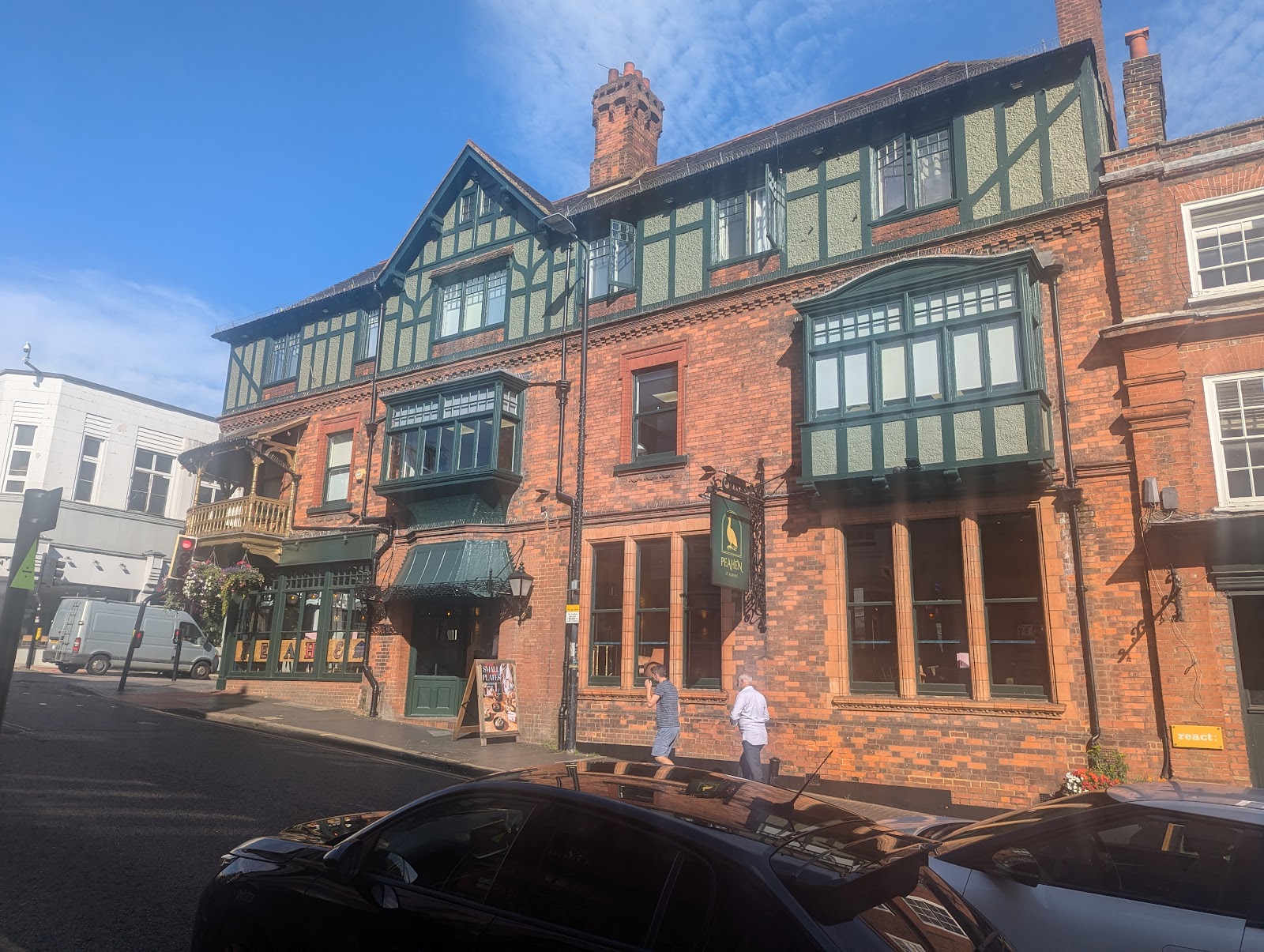

This imposing building was formerly a hotel and was built at the end of the 19th century, replacing a previous premises on the site. A former public bar, operated under the same name, closed in the 1990s and has since been converted into shops. Now operated by McMullen's, The Peahen was refurbished earlier in the year and boasts a modern and stylish interior. I was not prepared for how quirky and cool the interior this place is. A short flight of steps brings you up to the centre of a large open-plan space with bright colours, unique lighting, bespoke fixtures and fittings and interesting touches including bare brickwork on the bar back and an old rotary telephone surreptitiously hung on the wall. An upgraded garden features lots of seating and the added bonus of a table tennis table. The seating inside is various styles of wooden and plush comfort. Being a McMullen's pub, real ale is available from a trio of handpulls, alongside some of the brewery's craft keg offerings. The real ale options included McMullen's IPA and AK as well as Rivertown Ivel. Having been acquainted with McMullen's AK from a trip to London last year, I went for the IPA (4.8%) on this occasion. This proved to be a good idea. Mahogany in colour, McMullen's IPA carries hints of chocolate, coffee and orange zest, amongst a rich and full-bodied flavour. At £2.45 for a half, it was worth it. I sat at a high table across from the bar and marvelled at the unique decor of the Peahen. The pub is popular with students and it's easy to see why. It also becomes strictly over-18s only after 6pm. This was certainly an unexpected gem, something that I've noticed is a theme with McMullen's venues. I need to seek out more of them. Purely for comparison purposes you understand.

My next location was one that I'd been looking forward to since planning my trip to St. Albans. Leaving the Peahen, I crossed the road and headed to the Market Place, located a short distance away. Situated here, you will find The Boot. 


This Grade II listed pub is believed to date back to 1422 but has been much altered in the intervening years. The flower covered awning at the front is a splash of colour in the shadow of the iconic clock tower opposite, which is currently covered in scaffolding and undergoing repairs. Inside, the pub is one room arranged around a bar at the back of the room. Seating, in the form of basic scrubbed tables and chairs are located around the perimeter and there are windows looking out over the historic market place. The clientele are of a mix of all ages and the decor is muted and welcoming. When I walked in, the in-house music was Kansas's classic 'Carry On, Wayward Son'. It's like they knew I was coming! This was by far the busiest pub of the day at the time of my arrival. The outside seating area was full and the inside was bustling, although there were a couple of spare tables. The bar boasts 8 handpulls, with 6 for beer and 2 for cider. There were certainly some intriguing options: Oakham Citra, Left Handed Giant Citra Pale, Tring Side Pocket for a Toad, Titanic Plum Porter, Timothy Taylor Landlord and Harvey's Sussex Best Bitter. The cider options were Thatcher's Stan's Big Apple and Weston's Old Rosie. I was tempted by the Oakham, then the Harvey's but I finally decided on the Citra Pale (4.4%) from Bristol's Left Handed Giant, largely on the basis that I don't see their beers in cask very often. Paying £2.45 a half for the privilege, I moved to a table near to the end of the bar, close to the kitchen which turned out to be a local business specialising in tacos. I could also hear the earmarks of any decent pub: jovial banter between bar staff. Its always pleasing when the staff in a pub are clearly enjoying being there. It lifts the mood and contributes to the atmosphere. It helps when the beer is banging! The Citra Pale was everything you'd expect. Citrusy, fruity and tropical but somehow dialled up to 11! It could easily give Oakham's flagship example a run for its money. The Boot truly is a lovely, welcoming and relaxing place to visit. Whether you're marshalling three very cute lamb-like dogs under a table, like a gentlemen nearby, or you're a visitor to the city who is out to explore, this is a must-visit pub. How it isn't in the Good Beer Guide is beyond me! It's not all positivity and light though. There is a gruesome story attached to the pub. In 1840, a visiting soldier became acquainted with a lady of the night and took her upstairs to complete their transaction. When he emerged in the morning, he was covered in blood and the lady was no longer of this world. As punishment, he was shipped off to Tasmania (then Van Diemen's land and used as a penal colony). His unfortunate victim may remain though. The landlord's son, who lives upstairs, has reported, on more than one occasion, the sensation of somebody lying next to him in bed when he's been known to be alone. No thank you.

Less sinister things were afoot at my next destination. As much as it pained it me to leave The Boot, there was much more exploring to be done. Crossing the Market Place, I headed down Romeland Hill. Following a quick side quest to photograph the cathedral, I continued on, where the road soon becomes Fishpool Street. Located along this very picturesque avenue, is the Lower Red Lion.
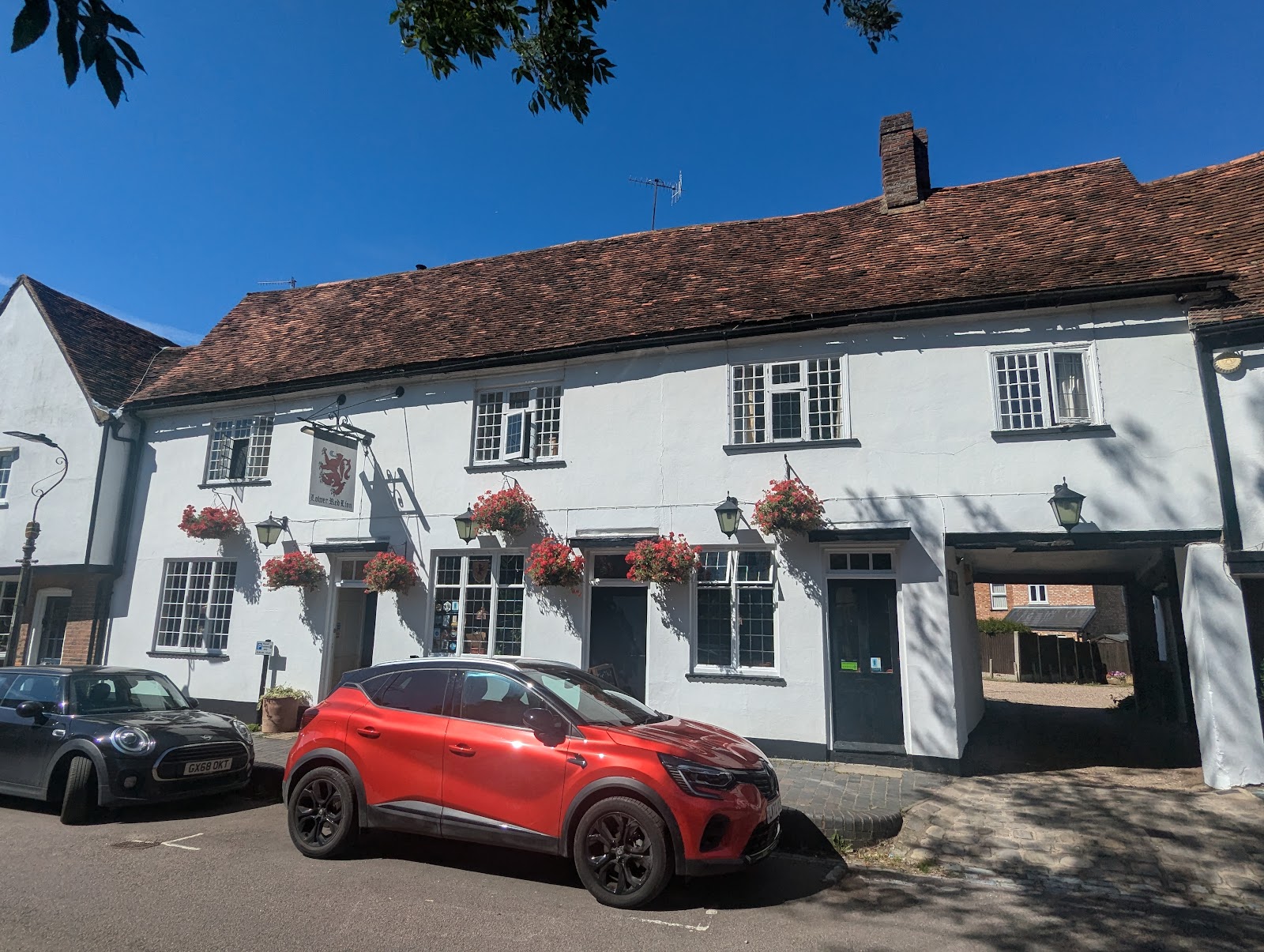

Built in the 17th century, this Grade II listed pub is Good Beer Guide 2024 listed and is regarded as an early champion of CAMRA's core values. The single entrance leads through to two rooms, both served by a central bar. To the right, is an area of wooden seating with an open fire and a small raised area beyond, featuring a dartboard. To the left, a single level space with more of the same seating. Throughout the decor is minimalist but full of character with bric-a-brac and old photos. The landlord has run the pub for a number of years and has a very good reputation. The pub was unfairly demonised on social media a while ago for its staunch anti-child, pro-dog policy. The backlash was such that a board inside the door now includes the names of, and distances to, the nearest child-friendly pubs in the area. To be honest, I can't help but side with the pub. Not every pub should, or has to, admit children. Plenty of pubs do, which is fine, but there's simply no need to kick off at the ones that don't. As a hospitality veteran, I can confirm that children are much more badly behaved, noisier and messier than dogs, so I am all for spaces that don't allow them in. If you're one of those people who kicks off when pubs don't allow kids in or don't let them run riot, you are part of the problem and the reason that the rule exists. Rant over. Back to the bar. The bar at the Lower Red Lion features 6 handpulls. During my visit, 5 of these were in use. Two were occupied by cider, in the shape of Thistly Cross Whisky Cask and Old Rosie. The remaining three were offering a choice between Nethergate Venture, 3 Brewers of St. Albans Special and Ilkley Pale. I'd yet to give anything from 3 Brewers ago so opted for the Special at £2.30 a half. I manoeuvred to a table opposite the large fireplace (thankfully not lit) and enjoyed my beer. This is yet another very comfortable pub for a tipple. If you're after a quiet drink, with minimal distractions, this is the place to come. Just be wary of the large step up to the toilets. The beer itself was very good. Special English Ale (4.8%) is deep copper in colour from the use of chocolate malt, and a hint of berries from English hops. It's very well balanced and drinkable and was a finalist in the 2017 Champion Beer of Britain contest, and deservedly so! Whatever the pub's stance on children, one uninvited guest has remained. The apparition of an unknown woman has been seen in the upstairs rooms. Who she is, and what connection she has to the property, remains unknown but she is also believed to be linked to the unexplained shaking and movement of bedsteads. 

On I went, leaving the Lower Red Lion and continuing down Fishpool Street until I reached an alleyway in the middle of a row of houses. Turning into this, and following it to the end, brought me to Portland Street and another Good Beer Guide 2024 listed pub, this time The Portland Arms. 
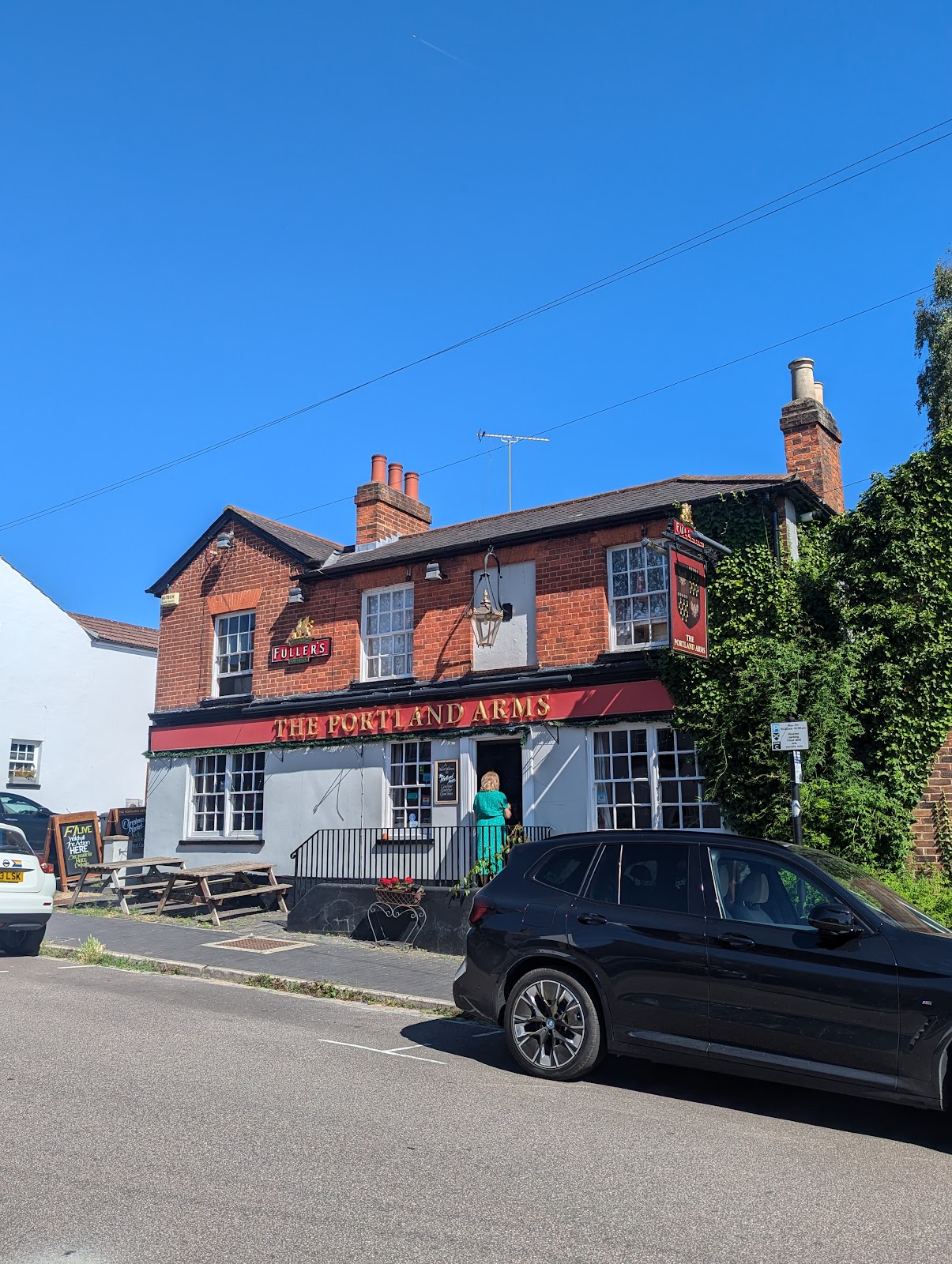


The first of two Fuller's pubs to feature on my trip is a community local tucked away in a residential area. A small seating area at the front leads to a flight of steps up to the front door. This leads through into the main room, arranged around a central bar with a separate seating area in a room beyond. A further carpeted area with more seating is at the rear. Seating is arranged around the room, in the form of wooden tables and a mix of normal chairs and banquette seating. A small number of stools allow sitting at the bar. Upon entering this pub, I committed a heinous crime from which I will never full recover: I stepped on a dog. In my defence, he was lying directly in the doorway and happened to be the same colour as the floor tiles and in no hurry to get out of the way. It didn't help that I'd come in from bright sunshine and my eyes hadn't adjusted. I felt awful but, luckily, the little Frenchie who had been my unintentional victim allowed me to fuss him by way of an apology. No harm done, apart from to my soul. Being a Fullers pub, The Portland Arms is well equipped with real ale. 4 of the 5 handpulls on the bar were offering beers from their own range: Dark Star Hophead, Fuller's ESB, Fuller's London Pride and Gale's Seafarers. I decided on the ESB (£2.90 a half) and pulled up a stool at the bar, the better to hide my shame and regret from canine judgement. As expected, the ESB was cracking. My go to Fuller's beer is normally London Pride but I was grateful that I'd switched it up here. I was much more careful when leaving the pub.

From The Portland Arms, I continued down Mount Pleasant, took a left onto Branch Street and continued on into St. Michael's Street where my next location soon hove into view. I was now at The Six Bells.


Another pub listed in the 2024 Good Beer Guide, The Six Bells dates from the 16th century and takes its name from the peal of bells located at the nearby church of St. Michael. Inside, the pub is one room, with the bar extending across most of the rear. Pew style seating and traditional wooden tables make up the furniture. A real fire is to one side and there are numerous original features including white-washed walls and exposed beams. 6 handpulls greet you on the bar, offering a selection from near and far (unintentional rhyme klaxon). I was faced with a choice of Vale Wychert, Tring Fanny Ebbs (stop it), St. Austell Proper Job, Timothy Taylor Landlord, Oakham JHB and Vale Red Kite. The Red Kite (4.3%) interested me the most and so I parted with the sum of £2.50 for a half and made my way to a table in the corner of the room. As well as its beer, The Six Bells is known for being very dog friendly and this was evidenced by dog bowls throughout and treats available on the bar. I can't wait to have a dog again and be able to take it to the pub. I can confirm that The Six Bells' beer reputation is more than justified. The Red Kite was excellent. Chestnut in colour, there are warm toasted malt flavours and a satisfying blend of autumn spice. Too autumnal a beer for a summer's day? Not when it's this good!

I had a bit more of a walk ahead of me but at the other end I would reach an absolute icon of St. Albans pub culture. The quickest route to my next stop took me through the nearby Verulamium Park, which runs alongside the river Ver. The sun was beaming down now and the lack of any discernible breeze made the heat feel quite oppressive. In the moment, I didn't care. The park was busy without being too crowded and the walk was enjoyable, with green parkland on my right and the shaded riverbank on my left. It was well worth it, knowing that there would be a beer at the end. Soon enough, I crossed a bridge over the river and reached what is the very definition of an old-school destination pub: Ye Olde Fighting Cocks.


This is believed to be the oldest pub in the entire country. Not St. Albans. Not Hertfordshire. Not southern England. The entire country. Whilst there are a small number of other pubs that dispute that claim, parts of Ye Olde Fighting Cocks allegedly date from the 8th century. It is octagonal in shape and originally housed pigeons. The current building was finished in 1485 and was renamed from the Round House to the Three Pigeons in 1756 before becoming the Fighting Cocks sometime in the 1800s, due to the hosting of cock fights on the premises. Whether the building is as old as claimed or not will likely never be confirmed but being able to visit the pub is, I'm not ashamed to say, a bucket list moment as far as this blog is concerned. Many of the original features still remain, such as the low ceilings, various nooks and crannies throughout and an original bread oven next to one of the fireplaces. If the tales that are told are true, these physical features aren't the only remnants of bygone times that still remain. Rumours of a secret tunnel to the nearby cathedral abound but nobody seems to be sure whether these exist. Ghostly figures in monks' habits have been seen on several occasions, including by one bartender who witnessed a procession of monk-like figures coming out of the cellar to take seats a nearby table. An intriguing feature was that they were only visible from the knees up. They disappeared shortly after being seen. Strange movement of objects when nobody is watching has also been reported. Whilst it makes perfect sense that these ecclesiastical brothers might be continuing their journey through the secret tunnels in search of liquid refreshment many centuries after their departure from this realm, the fact that the stories only seem to date from 2001 means they should be taken with a pinch of salt. What's not in doubt though, is that there is good beer available here. The bar features 8 handpulls and, at the time of my visit, 4 of these were in use, offering Purity Pure UBU, Purity Mad Goose, 3 Brewers of St. Albans Copper and Adnams Broadside. The Pure UBU set me back £2.60 for a half and I decided to investigate the large, raised outside patio which I was surprised to find had plenty of space. I procured a table, and a much needed parasol, and set about recovering from the exertions of my walk here. I was really pleased that I'd been able to make it to this pub. Notwithstanding anything else, the history here is fascinating. The beer was decent too. The Pure UBU refreshed and revitalised me and went down very swiftly. It seemed a shame to leave Ye Olde Fighting Cocks, with its questionable ghostly monks, excellent beer garden and elderly Labrador (a customer's) pottering around amongst the benches. Still, my glass was empty and it was time to depart.

Departing the Ye Olde Fighting Cocks from the beer garden entrance I turned right and continued down Abbey Mill Lane. Turning off in the shadow of the cathedral, I re-emerged on Sumpter Yard and turned left so that I was back on Holywell Hill. Reaching the top, I turned right onto London Road and continued on. A few minutes further on brought me to my next destination. All aboard the Great Northern.


This Good Beer Guide 2024 listed pub was originally known as the Alma before changing its name to reflect its proximity to the now closed (but preserved) railway station on the old line to Hatfield. Grade II listed and independently owned, it underwent a major refurbishment in 2014/15 that completely changed the internal layout. An old semi-circular central bar has been removed and replaced with a rectangular replacement at one end of the building, to the left as you enter. The modern interior is bright and airy and there is a large garden which includes a heated marquee. Away from the bar, there is a room of additional seating to one side. The toilets are adjacent to the bar. Furniture is modern and a mixture of benches, chairs and high stools. Of the 6 handpulls on the bar, 4 of them were in use when I visited. These provided a choice between Dark Star Hophead, Mad Squirrel London Porter, Marston's Pedigree and St. Austell Proper Job. I wasn't really in the mood for a porter but the Proper Job caught my eye instead. After paying £2.50 for a half, I sat on a stool at the bar and took in the pub's modern, friendly surroundings. A lot of the tables were reserved for later in the evening, which certainly suggests the pub is popular. A small group of older gentlemen had gathered in the corner at one end of the bar and there was another guy sat by himself but overall it was fairly chilled. The Proper Job was just as it should be. When St. Austell beer is kept well, it's amongst the best and that was indubitably the case here. 

Two pubs to go and the penultimate venue required retracing my steps. Leaving the Great Northern, I turned left and headed back down London Road to the cut-through next to the Beehive that I'd utilised earlier. Making my way back down Keyfield Terrace, I bypassed the White Hart Tap and turned left onto Albert Street to visit a pub that I'd been determined to get to but didn't open until 5pm, the Good Beer Guide 2024 listed Garibaldi.


The second Fuller's pub on the route, this late Victorian premises is named after the 19th century Italian patriot who allegedly lodged in St. Albans whilst in exile. Since its construction, the pub has been extended twice. Entry is up a short flight of steps which brings the drinker into a square room with a central, island bar. Seating, in banquette and wooden table configuration, traces the perimeter of the room. Further seating can be found to the rear. Two TVs are mounted on the wall, with a third in the garden, located to the side of the pub. I decided to pull up a stool at the bar again. It took me a little while to get served as the landlord was giving a couple a tour of the cellar, accessed down a ladder directly behind the bar. It later transpired that they were ITV location scouts looking for a pub cellar to feature in a new drama. The delay did at least give me a chance to look at the options. Three of the 7 handpulls were occupied with Fuller's ESB, Fuller's London Pride and Dark Star Hophead. Having already partaken of ESB earlier in the day, I went for the London Pride (£2.50 a half) on this occasion. It turned out to be a great decision. The Pride was superb and exactly what I would have expected. Whilst I enjoyed my half, I eavesdropped on the landlord discussing the TV crew visit with a regular and was able to ascertain that he runs the pub with his mother. The way he said 'mother' put me in mind of Norman Bates or Johnny Nice Painter from The Fast Show. Still, at least the beer was good and walls weren't black like the walls of Hell.

I had one more pub left before I needed to head to the station. Once again, I reversed my route, heading back up the cut-through to London Road. However, this time I continued up Upper Marlborough Street and took a right onto Victoria Street. Appropriately enough, my last pub visit before returning to Nottingham would be at the Robin Hood.


This Good Beer Guide 2024 listed pub is very handy for both the train station and St. Albans City F.C., if you feel so inclined, and is also the recipient of numerous CAMRA awards including Cider Pub of the Year for both 2023 and 2024. Inside, there is a single bar to one side, with seating at other end of the room including behind the front windows. A jukebox, dart board, table skittles, board games and daily newspapers add to the ambience and there is also a secluded garden to the rear. As well as a frankly obscene number of boxed ciders, there are 3 handpulls on the bar. At the time of my visit, the beers on offer were Otter Ale, Harvey's Sussex Best Bitter and Ossett Silver King. After a moment's deliberation, and another compliment on my T shirt from the man behind the bar, I ordered the Otter Ale (4.5%) for £2.55 a half and wandered over to the window to enjoy. The Otter was cracking. A premium, mahogany ale, it's bursting with flavour, well balanced and with a delicate sweetness. All-in-all, it's an absolute belter. The Robin Hood is a cosy and friendly pub and definitely a worthwhile stop off on the way to or from the station and/or a local football match. It was certainly a decent place to round off my day's activities. Beer supped, I made the short walk back to the station in time to get the train half an hour earlier than planned and, thanks to short turnover times between connections, was home much earlier than expected.

What did I make of St. Albans? In all honesty, it's hard to put into words quite how much I enjoyed it. The pubs were excellent and the beer was as good as I'd have expected with this being the heartland of CAMRA. I am amazed and thrilled by the quality of the beer that I discovered and the uniqueness and variety of the pubs I visited. It's no exaggeration to say that, across the 14 pubs I made it to, St. Albans has ended up being one of the best pub trips that I've ever done. That claim sounds even more staggering when I think of all the pubs that didn't make the cut. There were many more I could have added, and many more I could have taken a punt on on the way past to somewhere else. Still, I've got to save some for next time, eh?

Pub of the day: The Boot was the highlight. Great beer, fantastic pub, staff with just the right amount of sass. Why it isn't in the Good Beer Guide is anyone's guess.

Beer of the day: Left Handed Giant Citra Pale. Phenomenal. Blows the original Oakham version out of the water.

Biggest surprise: The Peahen. So much quirkier and cooler than I expected.

Monday, July 29, 2024

The Simple Things

Greetings! You join me this time for a rather different sort of blog, as opposed to my normal format. Rest assured, pubs and beer do still feature, but in a much more peripheral capacity to previous entries. The main thrust of this particular write-up will focus on the importance of doing simple things with great friends, and drive home the point that excellent trips don't have to take hours of planning or involve dozens of pubs. With the world in its current state of spiralling closer towards oblivion, it's important to embrace the things that make us happy. After all, small things can create a much more satisfying larger picture. First, let's set the scene.

This past weekend, for the first time since March 2020, Amy and I were able to make a trip down to Bristol to visit Matt and Jess. The aim of the trip was a relaxing time away, in the company of two of our favourite people, with no set plans other than a zoo trip (more on which later) and a very loose itinerary. We were very much looking forward to a chilled weekend and the opportunity to spend time with Matt and Jess. Whilst Matt had been to visit us last April, we hadn't seen Jess since our aforementioned 2020 trip, which happened to take place on the weekend before the first COVID lockdown. On that occasion, we had ventured into Bristol city centre on the Friday night before a trip to Bath on the Saturday, with feelings of uncertainty, fear and trepidation gripping all and sundry. Fast forward almost 4 and a half years and we were certainly hoping for a more sedate experience this time around. What followed would very much live up to our expectations and featured such themes as cracking weather, cat persuasion, Uber-related antics and much more besides. 

We started our excursion by driving down to Bristol on Friday evening. We had already predicted that this may have taken longer than planned. The Friday in question was the day in which the final schools broke up for summer and also coincided with a pay weekend for the vast majority, and the start of a spell of hot weather. For once, the weather in the UK has actually been seasonal for the past few days, a far cry from the very wet and unsettled June that had put a dampener on a few things, Download Festival amongst them. Held up by traffic, and three different sets of roadworks, we eventually arrived in Hanham, the suburb of Bristol where Matt and Jess live, around 3 hours after leaving home, having been delayed by 40 minutes. This validated our decision to leave home at 1.30 as we still managed to arrived before 5pm. We parked up on a side road, around the corner from Matt and Jess, our normal parking location for these trips and, not long after, were greeted by Matt who had returned home from work a few minutes before we had arrived. Matt and Jess have moved house since our last visit. Having previously occupied a flat on the high street, they have now moved a short distance away to a lovely two bed terraced house dating from the 19th century. It was our first opportunity to see the new place and it really is very nice. Greetings exchanged, we relocated our bags and air mattress to the spare room that would be ours for the next two nights, and then began the discussion of what our plans for the evening would be. We all agreed that staying local would be an excellent plan, instead of braving the traffic and the Friday night madness that is the theme of all major cities at a weekend, especially one blessed with warm weather like ours would be. The first stage of our Friday evening involved a beer in the garden, discussing the house, the area and catching up on things, all whilst decompressing from our car journey with, in my case at least, a bottle of ale from the local supermarket. This was simultaneously thirst quenching and refreshing and set us up in good stead for what was to come next. We decided to decamp to one of the local watering holes, a short distance away, to make the most of the sunshine as the evening crept on.

A short walk from Matt and Jess, past the road where we'd parked, a pub sits adjacent to Lower Hanham Road. That pub is The Queens Head and would be the location for our first pub pints of the trip. 


This comfortable local pub underwent a refurbishment in 2016 before being taken over by new management in September of 2020. There is a large car park to the front of the pub, with the main door leading through to a central, L-shaped bar. To the left is a traditional bar space with a snug to the rear. To the right, there is an airy conservatory extension that is used as a restaurant. Beyond this, a small garden with picnic bench seating acts as a late afternoon suntrap. Bench seating can also be found to the front, separated from the car park by a wooden fence. The pub sign is new and features the late Queen Elizabeth II. We entered the Queens Head and made our way to the bar where, amongst the delights on offer, 6 handpulls are present. Divided into a group of 4 and a group of 2, one set on each side of the bar, 4 of them were in use at the time offering Horizon and 6X, both from the portfolio of operators Wadworth. Amy and I opted for the Horizon (4%), Matt went for a pint of Madri lager and Jess went for a gin and tonic, before we made our way outside to the beer garden where we secured a table on a small raised area (with an alarmingly tall step) in the corner. The total cost of our round here was £20.25. As we went in rounds throughout the weekend, I'll only be able to provide prices for certain times. We were glad to be out in the evening sunshine and, despite the weather, the pub was not overly busy. The majority of the outside seating was occupied but there was a lot of room inside, as was to be expected on a rare sunny day in Britain. The Horizon was as good as I remembered it from previous times. Light in colour, crisp and refreshing, it was an absolutely perfect beer for the occasion. Conversation quickly pivoted to, and then swiftly away from, politics, both of the local and international variety and onto TV, film and other generalities. The mood around the table was calm, relaxed and happy, precisely the kind of emotions that a trip like this should conjure. We stayed for a second round here, with Amy switching to lime and soda and myself going for the 6X (4.1%), a classic amber ale imbued with malt and fruit character and a long, lingering finish. As our second drinks were supped, we concocted a plan for the following hours. Take away pizza was a unanimous decision and so, before long, we departed The Queens Head, detoured briefly to the Co-Op to pick up additional alcohol and returned to Matt and Jess's place. Following a drink in the garden as the sun started to set and the temperature began to drop, we retreated inside. Pizza was soon ordered and hastily consumed and what followed was an evening of trying to coax Matt and Jess's cat Fern into the living room to say hello. Up until this point she had steadfastly hidden herself under their bed. We did at least succeed in her letting us give her treats from the palms of our hands so progress was indeed made. We also introduced Amy to the delights of the wonderfully surreal medical sitcom Green Wing before tiredness got the better of all of us. I went to bed feeling content and very happy. These are the sorts of evenings that are often in short supply so to be spending them with people we've not seen for a while was a joyous affair. We had a hunch that Saturday would be even more enjoyable.

Saturday dawned, sunnier and warmer than its predecessor. I'd woken up relatively early and Amy followed soon after. Following a hearty breakfast and everybody getting ready, we were ready to embark on our single planned activity for the day. Matt had booked us all tickets to the Bristol Zoo Project, a local wildlife park situated an approximate 30 minute drive away. It was opened a couple of years ago as an ongoing concern to rehouse animals from the defunct Bristol Zoo, whilst improving their general living conditions and contributing to international conservation efforts. Amy and I are both huge fans of good zoos, namely those that exist to help animals survive and thrive, so had jumped at the idea when Matt had suggested it. It turned out to be a fantastic few hours. One of the areas of the zoo is an aerial walkway above enclosures featuring animals that were previously native to Britain but now only exist elsewhere in Europe and Asia, having gone extinct in these lands at various points throughout history. This meant that we got see wolverines, wolves and, most excitingly, brown bears. The urge to climb in and cuddle them was strong but that's the sort of thing you'd only get to do once and not for very long. The bears were certainly the highlight of the day, although an added bonus was watching a very inquisitive red panda exploring the limits of his enclosure. More often than not, every red panda we've seen in a zoo tends to be asleep so this one being so active was a very welcome surprise. Having covered every inch of the zoo site over the course of a few hours, we then made our way back and enjoyed another beer in the garden whilst pondering our next move. We knew we again wanted to stay local and also factor in a food option for later in the day. With that in mind, we decided to take a trip down to the river, in an area known as Hanham Mills, to spend some time at a couple of pubs that sit virtually on the water's edge. Matt had driven us to the zoo earlier in the day so it seemed unfair for him to drive again, even though he'd offered, so instead we decided on an Uber. One happened to be nearby and within 3 minutes had arrived to pick us up. Our first instance of Uber-related hilarity occurred shortly afterwards when the driver began to drive away before Matt was fully in the car and the door was still open! This was quickly rectified but then resulted in Matt having to hold onto the seatbelt as the actual clip had become shut in the door during our hasty departure. Luckily, no harm befell anyone and, a few minutes later, we arrived at the riverside which was, unsurprisingly, bustling with cars and locals, either visiting the pubs or enjoying the weather by the side of the Avon. We were lucky enough to locate an empty table outside one of the pubs and it was here that the second half our day would commence. 

We were now at the Old Lock & Weir.


This riverside cottage pub, on two levels, reopened in June this year after a refurbishment following major flooding. The interior features three linked drinking areas with a central staircase leading up to the bar area which features high stools and flagstone floors. The wall above the bar is decorated with photos of dogs, including the former pub dog. To the front of the pub are benches, separated from the riverside path by a stone wall. The main attraction is the large patio space directly next to the river. Whilst most of this open to the elements, one part is covered and heated (in colder months). The table we had found was on the very end of the patio, in one of the uncovered areas, overlooking the river and nearby weir. Amy and I headed inside to procure beverages, joining the queue up the stairs to the bar. Why queuing at bars has become a thing is something I'm still not sure of. A holdover from COVID? Who knows? A note to everyone: don't queue for the bar! Line up along it like normal people. Anyway, back to the job in hand. There are two handpulls on the bar here. One of these was offering Weston's Old Rosie cider, leaving me with the option of St. Austell Tribute. Matt opted for Birra Moretti with Jess staying on gin and tonic. Amy swapped to cider here, in the shape of Thatcher's Haze. We carefully manoeuvred our purchases back to the table and basked in the glorious summer weather. Sat by the river, watching the passing swans and canoeists, it became clear that we had not fully prepared for the weather. It felt much warmer than forecast and I deeply regretted not bringing shorts with me. I also needed to use some suntan lotion that Jess had brought, as I could feel my face getting very warm. I briefly borrowed Matt's hat to take the edge off. This is certainly an idyllic spot to while away a couple of hours. The Tribute was in decent condition and, personally, there's nothing more satisfying than a delicious pint, in a beer garden, on a fabulous summer day. It makes my heart glad. There are many ingredients to a happy life and two of them are certainly Vitamin D and close friends. We stayed for a second round here, with Amy swapping to Thatcher's Apple & Blackcurrant, and fortified ourselves with crisps and mini cheddars. 

Before long, we felt we had spent quite a bit of time under the sun's fiery gaze so decided to move along to the neighbouring venue in hopes of finding a shadier table. We were successful almost immediately and found an empty table, almost completely shaded by a parasol. Our attention now turned to the Chequers Inn.


This former Marston's pub underwent a major makeover in 2014, before being taken over by Young's in 2017. The curved frontage overlooks the River Avon. Accessed by a flight of steps to the side, or via a disabled access lift, the interior is roughly divided into separate areas for drinking, dining and gaining access to the front terrace. A more formal area to the left of the bar is laid out restaurant style. As with its neighbour, a patio area is available, as well as a small, grassy area that can be used for outside functions. As with the Old Lock & Weir, there were not many people inside the pub when we visited, although both the outside terrace and riverside patio were very full. Walkers and cyclists were milling about as well as lots of people with dogs, including a very cute one that was playing fetch near where we were sitting. The bar at Chequers is large and roughly central. Two of the 3 handpumps were in use, one of which was offering Thatcher's Cheddar Valley whilst the other featured Young's London Original. It was for the latter that I swung, with Amy on Thatcher's Haze, Matt on Peroni and Jess on G&T (total cost of round: £24.35). The London Original was absolutely spot on. You may remember that I had some in London and the pint here in Hanham was far superior. Quite how that makes sense is unclear but fair play to the cellar team at Chequers for keeping this beer so well. Our table proved to be a good spot to avoid the sun and people watch but sadly not to avoid a typical 'laddish' conversation happening amongst a group of lads on an adjacent table. Thankfully we wouldn't have to deal with that for long. During our time well spent here, Matt educated us on aspects of housing law that he'd picked up at his previous job and which will come in very handy for Amy and I as we're currently in the process of trying to buy a house again. With any luck, in the next couple of months, that should all be sorted and we'll be in a place that we can call our own. 

Hunger was beginning to settle in so we decided that our next plan should be to remedy that. We decided to head back to Hanham and grab some food from a local pub a few minutes walk from the house. We again summoned an Uber, which arrived in a couple of minutes and led to another humorous incident. For whatever reason, I hadn't been able to secure my seatbelt so had to hold it across it me like a sash, which the driver found hilarious. He then randomly changed his music from the traditional stuff he'd be listening to to Heart radio, which meant our journey back was accompanied by the tones of Sabrina Carpenter. He was a very funny, jovial bloke and it was certainly one of the more entertaining Uber rides we'd experienced. Before long, we'd reached our next destination and what would be our final pub stop for the weekend: the Blue Bowl.


The site on which the Blue Bowl sits has been occupied by a pub since the 15th century. This is reflected in the interior layout, consisting of several small rooms knocked together to form a traditional family pub and restaurant. A modern extension to one end houses a pool table and TV. The Blue Bowl reopened in Spring 2011 as part of Mitchells and Butlers' Sizzling Pubs chain. A fairly large beer garden is located to the rear, from where we entered the building. There is also an entrance to the front of the pub, which looks out over the main road. We knew roughly what to expect upon arriving here, namely reasonably priced food and drink and a fairly relaxed atmosphere, which turned out to be the case on all fronts. Having procured a table a short distance from the bar, next to a dividing pillar, we set about perusing the menu and deciding what to drink. Amy and Jess went for a burger each, Matt settled on a steak and chicken combo whilst I treated myself to a classic mixed grill. Drinks wise, Matt went for Birra Moretti, Jess stayed on gin, Amy remained on Thatcher's Haze and I contented myself with Doom Bar, the only real ale available from a bank of three handpulls, and priced at £3.70 a pint. Before too long our food had arrived. It was average at best but it hit the spot. We hadn't expected anything spectacular from a well-known low budget pub chain and so it proved. The Doom Bar was at least passable and we made the walk back to the house with full stomachs and full hearts. 

Our second and final evening in Hanham went much the way of the first. A couple more relaxed drinks at the house was enhanced by Fern becoming more confident and actually jumping up onto the sofa and allowing herself to be fussed, though only briefly. More Green Wing was watched and we were all rather tired from the day's exertions. We certainly slept much more deeply than the night before, filled with the joys of a brilliant day. Yesterday (Sunday) morning would see us rise slightly later and enjoy another cracking breakfast, before we got our stuff together and bid our farewells, albeit begrudgingly, with the promise that we would definitely meet up with Matt and Jess again in some capacity before too long. It's always bittersweet saying our goodbyes to such good friends, particularly when we don't see each other as often as any of us would like.

As you can see, this particular trip to Bristol was rather different from previous ones, though certainly not worse for it. The relaxation and sense of contentment that were the result was something that we all agreed had been totally worth it. Our trips to Bristol are, and always have been, a visit to see friends first and foremost. That's what keeps us going back. Sometimes pubs can be part of the story and adjacent to events, instead of being the whole story and the centre of things. Primarily, an opportunity to spend time with people we care about is not one that we will ever pass up. We all have different stresses and anxieties that chip away at us and now, more than ever, it's important to find the things that help to counterbalance the weight of reality. For Amy and I, and I hope for Matt and Jess too, this weekend provided an escape. The simple things can be the ones that have the most profound impact, especially on an emotional and mental level. Reader, whatever you do, make some time to spend with people you're close to. You never know what kind of a difference it could make. 

Pub of the trip: The Old Lock & Weir. A picturesque place for a summer pint.

Beer of the trip: Young's London Original. Perfectly kept, even this far from the source.

Biggest surprise: The Queens Head. I'd genuinely forgotten how nice a pub this is, particularly on a summer's evening. 

Wednesday, May 29, 2024

Browsing in Bridgford

Following on from last month's visit to Gloucester, which proved to be logistically and financially draining, and with May itself having already been a busy month, I opted for something considerably closer to home and easier to organise for my most recent trip. I decided it was finally time to revisit an area of Nottingham that I hadn't been to in quite some time, 10 years to be precise, and see whether things were still as they had been or whether things had changed significantly, either for better or for worse. The location in question is West Bridgford. Before I set out, I already knew that the vast majority of pubs on the day's itinerary had featured in my previous visit though, happily, there would be one or two new entries too. For those unfamiliar with the geography and those that haven't read the blog from my previous visit, or simply need a refresher (I don't blame you), a quick reminder of where West Bridgford actually is. West Bridgford is located south of the River Trent, with the river itself acting as an unofficial demarcation between it and Nottingham City. Whilst technically a suburb, West Bridgford acts as its own independent entity, existing within a different council ward and a different borough entirely. The area itself has a reputation of being more upmarket and noticeably 'posher' than the surrounding areas, something that is a source of pride amongst residents and reflected in things like house prices. Whether this would also be seen in the price of pints was something I would be investigating throughout the day. I already suspected the establishments I was planning on visiting would be reflective of the local clientele but I was eager to see whether West Bridgford was deserving of being recognised for its beer.

It's very rare that I'm able to write up a report of a trip so soon after it's happened but, as I've been blessed with a few consecutive days off work, you find me in the position of updating this page the day immediately after my trip out. At least it should help if things are a bit fresher in the memory. Yesterday's weather was unsettled with frequent showers, although it was relatively mild. To add an extra level of difficulty, week-long roadworks have begun on the main bus route that I would normally have used to get to West Bridgford. Instead, I got my normal bus from Clifton and disembarked in the Meadows. From there it's a few minutes walk along London Road and over Trent Bridge. My trip would begin in close proximity to one of Nottingham's iconic landmarks. Adjacent to the famous bridge and a mere stone's throw from the river itself, is Waterside Bar & Kitchen.


If you're a long time reader and you're having deja vu, don't worry. You have indeed seen this building before but in a much different guise. Waterside occupies what was once Southbank Bar. Not only did it feature in a very early entry here but I also worked here for a few months whilst it was under its previous ownership. Things have changed a lot in the intervening years, in rather a lot of ways! The building which houses Waterside was originally part of the Bridgford Hotel, built in 1968. The former hotel building still stands and is now luxury apartments, after a long period spent as offices. Waterside was formerly owned by Great Northern Group, who carried out a massive refurbishment of the former Southbank bar in early 2020, resulting in the current layout. Internally, the building could not look more different than its previous incarnation. Gone is the enormous central island bar, replaced by a bar along one side, in an area that previously housed booths with in-built TVs. The area directly opposite the bar houses high tables and stools. A central free-standing partition divides this from the other side of the room, which features long benches and horseshoe-shaped booths. A raised area to the front features a pool table and further seating. Around half a dozen large TVs can be found on the walls, a far cry from the more than 30 that were present before. The toilets are located in the back left corner of the room, completely relocated from the opposite end, where they have been replaced by a larger kitchen with a service window. Outside is a large, decked beer garden, open to the elements, and a refurbished conservatory featuring fake greenery and lots of windows. All-in-all, it's a majorly different building from when I worked here, although the overall footprint has remained mostly unchanged. Waterside is now owned by troubled company Red Cat Leisure though, given their financial predicament, how long that will be the case is unclear. I was excited to be out, despite the unsettled conditions, and eager to dive into West Bridgford for the first time in a decade. On the bar here, there are 4 handpulls. However, none of these were in use when I arrived. One of them did have a pump clip on but this was turned around, indicating that whatever ale there was was unavailable. Luckily, there are a range of craft keg beers available, mostly from Brixton Brewery, on a keg wall behind the bar. Miffed that real ale was not present, but determined not to let it bother me, I opted for a half of Low Voltage, priced at £2.80, and retreated to a high table, not far from the entrance and next to a fruit machine. It felt a bit surreal to be back in a place that I had worked and to see it virtually unrecognisable from my time. Don't get me wrong though, it's not a bad change. The decor and lighting are bright and modern and the atmosphere, at least on a non-match day, is calm and welcoming. Whether the place is still packed to the rafters during Forest games, especially now that it's not really a sports bar, is a question for another day. The beer wasn't too bad for what it was. It's a sessionable, hoppy pale ale that did at least quench my thirst.

Despite the beer choice not being entirely what I was hoping for, I was confident that my day would be a success from this point forward. Leaving Waterside, I turned left. Crossing over at the nearby traffic lights, I took another left and continued down Radcliffe Road, along the outer wall of the iconic Trent Bridge Cricket Ground, once again the venue for this year's beer festival in October, and the scene of many Aussie batterings. Reaching Fox Road on my right, I turned down it and soon found myself at the second pub of the day: Larwood & Voce.


Whilst resembling a cricket pavilion, the Larwood & Voce is a pub and kitchen that opened in 1985 as part of the development of the new stand at the cricket ground. It is named after Harold Larwood and Bill Voce who were Nottinghamshire's fast bowling attack from 1929-1939. They were asked to develop 'bodyline' bowling during Test Matches against Australia in 1932-33. Inside, the layout is open plan but there are two distinct areas. To the left is a carpeted area, laid out for diners. To the right is a much more casual space, with wooden flooring. There are two raised areas in both sections which can be used for larger groups or parties. Toilets are located in a corridor to the right. The decor is contemporary and minimalist, with cricketing references throughout. The pub is owned by Moleface Pub Company, who also operate The Wollaton in Wollaton. This is reflected in the similarities between the two pubs respective aesthetic. The bar here is at the back of the room and serves both areas, with a partition wall in between the sections. The beer choice is much more in keeping with my kind of thing. 5 handpumps sit proudly on the bar. 4 of these were in use whilst I was there, with a choice between Nottingham Trentsman, Nottingham Citra, Timothy Taylor Landlord and Castle Rock Harvest Pale. I was intrigued by the Nottingham Brewery options as I've only ever previously tried their core range, so I decided on a half of the Citra (£2.60) and found a table in the raised section to the right. I had noticed a large group on their lunch break in the section next to me, one of which happened to be a friend of mine with his colleagues from Trent Bridge. That was a nice and unexpected surprise! Back to the beer though. Citra (4.2%) is Nottingham Brewery's own take on the iconic pale ale. The use of Citra as a dry hop has added aroma and grapefruit flavours. It's zesty and tangy and also carries the trademark 'bite' that I've noticed in Nottingham Brewery's beers. It really is a very well put together beer and I thoroughly enjoyed it. 

Bidding farewell to Larwood & Voce, and my mate Simon, I headed out the way I had entered but this time turned right, following the road round until it becomes Hound Road. I followed this to the end and then turned left. I was now on Bridgford Road, the central thoroughfare that runs along into the main shopping area. My next destination was to be found shortly before this though. Crossing over at a nearby pedestrian crossing, I made my way to the adjacent Stratford Road and the Stratford Haven.


The first of two Castle Rock pubs in my sights for the day, the Stratford Haven recently celebrated its 25th birthday. Previously a pet shop, it was renovated in a classic style and has become a go-to beer destination in West Bridgford, reflected by its inclusion in the 2024 Good Beer Guide. The name is a play on words of both its destination on Stratford Road and of its reputation as a 'haven' for excellent beer, as well as being a rather excellent pun with nods to the Bard. The interior is composed of linked areas around a large, wooden bar. To the left is the larger public space, with high tables and stools directly opposite the bar and an open area of sofas and banquette seating to the rear, where the toilets can also be found. To the right, is a smaller, but no less cosy, lounge with scrubbed wooden tables and chairs. A large courtyard beer garden can be found to the rear, and also includes sheltered seating for inclement days like the one on which I visited. Even though I'm a Castle Rock employee, I'd only ever been to the Strat a couple of times and both of those were before I worked for the company. This seemed like a terrible crime for which I was eager to repent. I was very much looking forward to experiencing the pub again. A whopping 14 handpulls occupy the bar here with the offering primarily from Castle Rock, although guest beers also get space. The options on the day featured 8 Castle Rock beers namely Harvest Pale (doubled up), Preservation (doubled up), Elsie Mo (doubled up), Screech Owl, Our House, Oatmeal Stout, Hyperfocus and Sunshine After the Rain. Accompanying these were guest beers in the form of Dark Star Hophead, Batemans XB and Oakham Citra. As tempted as I was by the guest beers, I'd yet to try the latest Castle Rock special Sunshine After the Rain, so this one got the nod. One of the many advantages of working for Castle Rock is that I get a team member discount in all venues so that would come in very handy here. I had opted for a pint of this particular beverage. Normally retailing at £4.60, my cheeky discount allowed me to purchase it for the price of £3.45. Excellent! I moved to a high table a short distance from the bar and took my time to enjoy the beer and my surroundings. Sunshine After the Rain proved to be a winner. A 4.2% pale ale, this is a showcase of New Zealand hops, specifically Nelson Sauvin and Motueka. The end result gives white wine and gooseberry flavours, citrus aromas and a hint of Sauvignon Blanc. It's a cracking beer and certainly best enjoyed in such a comfortable place as this. During my time here, I got my first glimpses into the snobbishness I'd heard was prevalent in West Bridgford. I got some decidedly disapproving looks from a group of older women when I went to the toilet. I put that down to the fact that I was wearing a Download t shirt. I then overheard the couple on the table next to me muttering amongst themselves about the logic behind the pub kitchen not being open on a Tuesday. But, seeing as they couldn't agree on how many days there are in the month of May, I'm not sure their opinion counts for much. Before too long, my beer glass was empty and it was time to move on. I was glad I'd finally been able to appreciate the Strat properly. It had been worth the wait.

My next stop would be a location that was new to me and, therefore, new to these pages. Leaving the Strat, I turned right and continued down Stratford Road until I reached Highfield Road. A short distance further on, I reached Glebe Road where I again turned right. This brought me out on Melton Road, with my next destination almost opposite. Next up, The Refinery.


This large, open plan cafe bar opened in 2019 and is owned and operated by Great Northern Group. The modern interior is loosely divided into a number of smaller sections. To the front is an area of tables and chairs for cafe-style dining. Beyond this is a larger, more restaurant-style space. A row of high tables with bench seating are located along one wall with the bar positioned against the wall beyond these. Subtle lighting and bright fixtures are the main features of the interior with semi-partitions set up to separate each area. The kitchen is located along a corridor to the rear, where toilet access can also be found. The drinks menu here is primarily focused on wine and cocktails with food options including tapas style dishes and larger meals. Happily, there is a single handpump on the bar. At the time of my visit, this was pouring Black Iris Snake Eyes. Wonderful! Following a brief chat with the gentleman behind the bar, whose name I've since remembered is Tristan, who I knew from my time working for the same company, I took my half (£2.35) to one of the aforementioned high tables, adjacent to the main entrance. The Snake Eyes was delicious. Whilst it's not one of my favourites from the Black Iris portfolio, when served correctly, it's very good and that was certainly the case here. The Refinery is a relaxing place for a chilled afternoon drink, as long as you can tune out the mums in leggings and the old people complaining that the background music is too loud (it wasn't). 

I would be retracing my steps slightly now and heading back towards the centre of West Bridgford. To get to my next destination, I left the Refinery, turned right, crossed back over the road and took a left down Clumber Road. Following this to the end brought me to Exchange Road. Turning left, I carried on for a few more yards, until I encountered an alleyway between two houses. Traversing this brought me out onto Gordon Square and right in front of the Test Match.


This imposing building is an architectural gem. Grade II* listed, the Test Match Hotel was built in 1938 by A. C. Wheeler for Hardy's & Hanson's. This was the first public house to be licensed in West Bridgford in the twentieth century and was built at great expense in the Art Deco style. The 1930s plan and accompanying fittings have survived virtually intact which is a very rare thing. The Test Match was listed as an Asset of Community Value by the local CAMRA branch in 2016 and is recognised as having a nationally important historic interior. The interior here really is something to behold. The entrance to this pub is unique in that access is gained through a revolving door (yes, really!), which leads through into a two-storey lounge with ash panelling. The high vaulted ceilings resemble those of an old cinema. Two large wall paintings, by local artist T. L. B. Hutchinson, are of a cricketing persuasion and the pub's name comes from the proximity of the cricket ground. To the right as you enter is what was once a gents-only smoke room but is now an area of additional seating. A staircase in the lounge leads up to the Boundary Bar, a former cocktail lounge, which houses a semi-circular bar. This was linked to a former assembly room during a sensitive refurbishment in 2001. Beyond the lounge, is the large public bar which features a terrazzo floor, tiered counter and slate fireplaces. A corridor off of this leads to an additional side room, with yet more seating, as well as the toilets and an additional side entrance. The bar counter runs along the majority of one wall and features 6 handpulls on the bar, a welcome sight indeed! I'd been to the Test Match during my previous survey of West Bridgford but I'd forgotten how impressive a building it is. Now operated by Greene King, it's certainly worth a visit for the architecture and visuals alone. Along with the The Vale in Daybrook, it's an excellently preserved example of an Art Deco pub in the local area. The beer choice was better than I'd expected with a couple of guest beers accompanying some more standard choices from the Greene King stable. Alongside Greene King IPA and Abbot and Hardy's & Hanson's Olde Trip, Nottingham EPA, Timothy Taylor Landlord and Abbeydale Moonshine (!) were present. Anyone who knows me, or who has been following this page for some time, will know that Moonshine is my absolute favourite cask beer ever. It really was a no-brainer when I saw it here. Having parted with £2.55 for a half, I made my way over to a round table in the lounge, where best to peruse my magnificent surroundings. Whilst most purists might balk at me waxing lyrical about a Greene King pub, there's really no denying how superb it is to see an original building still thriving virtually untouched. I enjoyed my Moonshine which, thankfully, was well kept and listened to a very odd quiz that appeared to be taking place in the adjacent side room. The room had been curtained off so I have no idea how many people were taking part, or what it was in aid of, but I can tell you that the first two rounds were about canals and fashion respectively. I'm curious to know what the remaining rounds consisted of!

Half pint supped and more pubs to go, I took my leave of the Test Match and headed down Gordon Road. One fortifying trip to Greggs later and I was on my way again, this time headed down Albert Road. Following a brief detour through the park, I turned right onto Mabel Grove. I followed this to the end, crossing a stream along the way and then took another right, this time onto Rutland Road. I then took the next left onto Pierrepont Road where a handy sign pointed me towards my next destination: the Poppy & Pint.


The second of the duo of Castle Rock pubs for the day, and also Good Beer Guide 2024 listed, the Poppy & Pint opened in 2011 after the successful conversion of a former British Legion Club. A nod to its former identity has been retained in the name of the pub. The interior is large, with wooden furniture throughout and a large bar running along one side. There is a raised area of additional seating opposite the bar, a family area to one side and further seating, along with a more formal dining area at the other end. A large function room can be found upstairs and this regularly caters for local events, including a folk club. Outside, there is a beer garden that overlooks nearby tennis courts and a bowling green. As with all Castle Rock pubs, dogs are welcome but, in this case, they are not permitted in the restaurant area. I'd forgotten how large the Poppy is but, as with the Strat, I was glad I'd made the effort of a return trip, even if it has taken me over a decade. As expected, Castle Rock beers are centre stage but, again, guest beers can be found here too. 12 handpulls feature on the bar here. At the time of my visit, 9 of these were in use with a couple of others in various stages of being swapped over between products. For my delectation and delight, I had a choice between the following Castle Rock beers: Screech Owl, Elsie Mo, Preservation, Harvest Pale, Our House and Moonage. The additional guest beers were Little Loop, North Riding Rum & Raisin Dark Mild and Shiny Disco Balls. I was briefly drawn towards the mild but I'm still not sure whether it's a style I enjoy. I've had some good ones in the past but there are others that haven't been great so, on this occasion, I erred on the side of caution and went for the Shiny Disco Balls (5.3%). This was priced at £5.20 for a pint but I again utilised my team discount and got it for £3.90 instead. Disco Balls is a big hitting IPA brewed with American hops and it ticked a lot of boxes. Citrusy, fruity and hazy with a proper tropical punch to it. It's also certified gluten free as well, for those who need to know. I took my beer to a the raised area and looked out over the bar area, people and dog watching. The Poppy & Pint is another cracking pub that certainly has its place amongst the local community. Converting such a building to a pub not only continues to foster a sense of community but also means that there is another great place to while away a few minutes, or hours, or days, and watch the world go by. The food here looks amazing too! 

I had two more venues to visit before my trip was at an end and these were also located conveniently close by. Having left the Poppy, I returned to Pierrepont Road and turned right. Continuing on until I reached the end, I turned left, having now reached Trent Boulevard where my penultimate stop of the day is located. A short distance away, on my right and tucked slightly back from the road, is the Lady Bay.


Formerly a Kimberley's tied house, the Lady Bay is now owned and operated by Greene King as one of their 'Local' chain. Set back from the main road, it boasts a large car park and beer garden to the front, as well as picnic tables and a children's play area nearby. Inside, the layout is large and open plan. The front room is carpeted and contains the bar, as well as wooden tables and chairs at different heights. A raised area to one side features a TV and additional seating. To the rear, up a small flight of steps, is an L-shaped area with pool tables, dartboards and additional screens. Small alcoves throughout break up the overall layout. The wooden bar features a bank of 5 handpulls. Three of these feature ale, with the other two reserved for ciders. On this occasion, the beer choices were Greene King IPA and Greene King Abbot, alongside Abbeydale Moonshine again, with Lilley's Gladiator and Lilley's Tropical taking up the remaining two pumps. Seeing Moonshine in two separate pubs on the same day was a stroke of luck but I wasn't planning on having it again. I try to have a different beer in each pub I visit on a trip wherever possible so at this stage I opted for the Abbot instead (£2.55 a half). I took this to a high, round table to one side. I had vague memories of coming to the Lady Bay once before, prior to a football match but it didn't look anything like I remembered it. I do have a recollection of sitting outside though so perhaps that's where the confusion stems from. Either way, I doubted very much that I'd be coming back again. The service was fine and the pub itself isn't bad but the beer wasn't great. I managed to finish it but it was clearly off. I noticed as I was leaving that the pump clip had been turned round so it was obviously the end of the barrel. Hopefully that's the only reason why. I was at least grateful that Moonshine hadn't been ruined for me. It's easy to see this place being absolutely heaving on a match day but it was much more subdued on a wet Tuesday afternoon. The gloomy weather got me pondering a story I'd heard about this place having had a ghost. Allegedly, many years ago, there were stories of a mysterious cloaked figure said to manifest and glide across the car park. The sightings would only happen at night but haven't been reported for quite some time now. Whether this anonymous figure had any connection to the pub light switches randomly being tampered with, or whether these are two mysterious yet disparate pieces of phenomena, will likely never be known. 

I had one stop left before my day was done and my final destination wouldn't be too far from where my adventure had begun, completing a roughly circular route. Continuing down Trent Boulevard, I crossed at a nearby junction with Radcliffe Road. I would now carry on down Radcliffe Road to where my last stop is located, opposite the side of the cricket ground. My day would come to a close at The William Gunn.


The newest addition to West Bridgford's drinking scene opened in August 2022 after previously being an Indian restaurant and, before that, an Italian wine bar. Now owned by Great Northern Group, this smart, single roomed bar is named after William 'Billy' Gunn (1858-1921), a Nottingham born sportsman who played cricket at both county and international level and played football for both Nottingham Forest and Notts County, representing England on two occasions. He became President of Notts County in 1920 and died the following year, in the Standard Hill area of Nottingham, at the age of 63. Inside, the bar is decorated in a contemporary style with modern, bespoke lighting, wooden tables and benches and cricket memorabilia throughout. The exterior colour scheme of dark green is partly repeated inside, along with Victorian-style tiling on the internal pillars. A beer garden to the front features benches and a mix of paving and turf. The bar sits over to one side with a rear corridor, down a ramp, that leads to the toilets. A couple of TVs are mounted on the wall, usually showing sport. A pair of handpulls sit on the bar. For my final beer of the trip (not of the day mind you), I had a choice between Nottingham Sunshine (ironically) or Fuller's London Pride. Having already partaken of some of Nottingham Brewery's beer earlier in the day, I swung for the Pride (£2.60 a half) and retreated to a high table near the window. My last stop of the day is often a place of reflection on the day's achievements before I use the journey home to contemplate my conclusions. The reflection was certainly aided by a very nice drop of London Pride. This was my first visit to the William Gunn but it may well not be my last as it's a very welcome addition to the area.

Before long, I found myself with an empty glass and a sense of accomplishment. It was time to head home. Luckily, the closest bus stop is only around the corner so it wasn't long before I was on my way. I had thoroughly enjoyed my long overdue revisit to West Bridgford. I thought about the initial question I had in my head when I had first set out earlier in the day: Had the area changed much and, if so, how? I now feel that I have my answer. By and large, West Bridgford hasn't changed an enormous amount. The good venues are still going strong and still remain must-visit destinations. The new kids on the block have slotted themselves nicely into the scene and found themselves a niche that they have clearly grown into. If you can look past the snobbery and the snootiness of some of the residents, there's much to be discovered in this area of Nottingham. It certainly has a pub scene that makes for an excellent day out and it's highly likely I'd do the whole thing again. I doubt it will take me ten years to get around to it again next time though.     

Pub of the day: Stratford Haven. Cracking pub, excellent beer, worthy of its reputation.

Beer of the day: Castle Rock: Sunshine After the Rain. Bloody delicious. I'm not being biased, honest!

Biggest surprise: Test Match. I'd forgotten how incredible the building is and I was surprised how much I enjoyed being there.