Friday, September 22, 2017

Taking Stock of Stockport

I'd first read about the ale scene in Stockport in an article many years ago and made a point to visit as I wanted to see if a place I never would have associated with a diverse real ale scene really lived up to the hype. In the years since this article piqued my interest, I've learned a lot more about the place including it's history as the home of Robinson's renowned Unicorn Brewery. The time had finally come to me to pay the place a proper a visit and see what else I could uncover. I picked a surprisingly nice September Wednesday to make my way to Greater Manchester and what followed had been well worth the wait.


Stockport  is a large town in Greater Manchester, 7 miles (11 km) south-east of Manchester city centre, where the River Goyt and Tame merge to create the River Mersey. The town is the largest settlement in the metropolitan borough of the same name.
Historically, most of the town was in Cheshire, but the area to the north of the Mersey was in Lancashire. Stockport in the 16th century was a small town entirely on the south bank of the Mersey, and known for the cultivation of hemp and manufacture of rope. In the 18th century the town had one of the first mechanised silk factories in the British Isles. However, Stockport's predominant industries of the 19th century were the cotton and allied industries. Stockport was also at the centre of the country's hatting industry, which by 1884 was exporting more than six million hats a year; the last hat works in Stockport closed in 1997.
Dominating the western approaches to the town is the Stockport Viaduct. Built in 1840, the viaduct's 27 brick arches carry the mainline railways from Manchester to Birmingham and London over the River Mersey. This structure featured as the background in many paintings by L. S. Lowry.

Stockport was recorded as "Stokeport" in 1170. The currently accepted etymology is Old English port, a market place, with stoc, a hamlet (but more accurately a minor settlement within an estate); hence, a market place at a hamlet. Older derivations include stock, a stockaded place or castle, with port, a wood, hence a castle in a wood. The castle probably refers to Stockport Castle, a 12th-century motte-and-bailey first mentioned in 1173.
Other derivations are based on early variants such as Stopford and Stockford. There is evidence that a ford across the Mersey existed at the foot of Bridge Street Brow. Stopford retains a use in the adjectival form, Stopfordian, for Stockport-related items, and pupils of Stockport Grammar School style themselves Stopfordians. By contrast, former pupils of Stockport School are known as Old Stoconians. Stopfordian is used as the general term, or demonym used for people from Stockport, much as someone from London would be a Londoner.
Stockport has never been a sea or river port as the Mersey is not navigable here; in the centre of Stockport it has been culverted and the main shopping street, Merseyway, built above it.

The earliest evidence of human occupation in the wider area are microliths from the hunter-gatherers of the Mesolithic period (the Middle Stone Age, about 8000–3500 BC) and weapons and stone tools from the Neolithic period (the New Stone Age, 3500–2000 BC). Early Bronze Age (2000–1200 BC) remains include stone hammers, flint knives, palstaves (bronze axe heads), and funerary urns; all finds were chance discoveries, not the results of systematic searches of a known site. There is a gap in the age of finds between about 1200 BC and the start of the Roman period in about 70 AD, which may indicate depopulation, possibly due to a poorer climate.
Despite a strong local tradition, there is little evidence of a Roman military station at Stockport. It is assumed that roads from Cheadle to Ardotalia (Melandra) and Manchester to Buxton crossed close to the town centre. The preferred site is at a ford over the Mersey, known to be paved in the 18th century, but it has never been proved that this or any roads in the area are Roman. Hegginbotham reported (in 1892) the discovery of Roman mosaics at Castle Hill (around Stockport market) in the late 18th century, during the construction of a mill, but noted it was "founded on tradition only"; substantial stonework has never been dated by modern methods. However, Roman coins and pottery were probably found there during the 18th century. A cache of coins dating from 375–378 AD may have come from the banks of the Mersey at Daw Bank; these were possibly buried for safekeeping at the side of a road.
Six coins from the reigns of the Anglo-Saxon English Kings Edmund (reigned 939–946) and Eadred (reigned 946–955) were found during ploughing at Reddish Green in 1789. There are contrasting views about the significance of this; Arrowsmith takes this as evidence for the existence of a settlement at that time, but Morris states the find could be "an isolated incident". The small cache is the only Anglo-Saxon find in the area. However, the etymology Stoc-port suggests inhabitation during this period.

No part of Stockport appears in the Domesday Book of 1086. The area north of the Mersey was part of the hundred of Salford, which was poorly surveyed. The area south of the Mersey was part of the Hamestan hundred. Cheadle, Bramhall, Bredbury, and Romiley are mentioned, but these all lay just outside the town limits. The survey includes valuations of the Salford hundred as a whole and Cheadle for the times of Edward the Confessor, just before the Norman invasion of 1066, and the time of the survey. The reduction in value is taken as evidence of destruction by William the Conqueror's men in the campaigns generally known as the Harrying of the North. The omission of Stockport was once taken as evidence that destruction was so complete that a survey was not needed.
Arrowsmith argues from the etymology that Stockport may have still been a market place associated with a larger estate, and so would not be surveyed separately. The Anglo-Saxon landholders in the area were dispossessed and the land divided amongst the new Norman rulers. The first borough charter was granted in about 1220 and was the only basis for local government for six hundred years.
A castle held by Geoffrey de Costentin is recorded as a rebel stronghold against Henry II in 1173–1174 when his sons revolted. There is an incorrect local tradition that Geoffrey was the king's son, Geoffrey II, Duke of Brittany, who was one of the rebels. Dent gives the size of the castle as about 31 by 60 m (102 by 197 ft), and suggests it was similar in pattern to those at Pontefract and Launceston. The castle was probably ruinous by the middle of the 16th century, and in 1642 it was agreed to demolish it. Castle Hill, possibly the motte, was levelled in 1775 to make space for Warren's mill, see below. Nearby walls, once thought to be either part of the castle or of the town walls, are now thought to be revetments to protect the cliff face from erosion.
The regicide John Bradshaw (1602–1659) was born at Wibersley, in the parish of Stockport, baptised in the parish church and attended Stockport Free School. A lawyer, he was appointed lord president of the high court of justice for the trial of King Charles I in 1649. Although he was dead by the time of the Restoration in 1660, his body was brought up from Westminster Abbey and hanged in its coffin at Tyburn.

Stockport bridge is documented as existing since at least 1282. During the English Civil War the town was supportive of Parliament and was garrisoned by local militias of around 3000 men commanded by Majors Mainwaring and Duckenfield. Prince Rupert advanced on the town on 25 May 1644, with 8-10,000 men and 50 guns, with a brief skirmish at the site of the bridge, in which Colonel Washington's Dragoons led the Royalist attack. Rupert continued his march via Manchester and Bolton to meet defeat at Marston Moor near York. Stockport bridge was pulled down in 1745 and trenches were additionally dug in the fords to try to stop the Jacobite army of Charles Edward Stuart as they marched through the town on the way to Derby. The vanguard was shot at by the town guard and a horse was killed. The army also passed through Stockport on their retreat back from Derby to Scotland.
One of the legends of the town is that of Cheshire farmer, Jonathan Thatcher, who, in a 1784 demonstration against taxation, avoided Pitt the Younger's saddle tax on horses by riding to market at Stockport on an ox. The incident is also celebrated in 'The Glass Umbrella' in St Petersgate Gardens, one of the works on Stockport's Arts Trail.

Hatmaking was established in north Cheshire and south-east Lancashire by the 16th century. From the 17th century Stockport became a centre for the hatting industry and later the silk industry. Stockport expanded rapidly during the Industrial Revolution, helped particularly by the growth of the cotton manufacturing industries. However, economic growth took its toll, and 19th century philosopher Friedrich Engels wrote in 1844 that Stockport was "renowned as one of the duskiest, smokiest holes in the whole of the industrial area".
Stockport was one of the prototype textile towns. In the early 18th century, England was not capable of producing silk of sufficient quality to be used as the warp in woven fabrics. Suitable thread had to be imported from Italy, where it was spun on water-powered machinery. In about 1717 John Lombe travelled to Italy and copied the design of the machinery. On his return he obtained a patent on the design, and went into production in Derby. When Lombe tried to renew his patent in 1732, silk spinners from towns including Manchester, Macclesfield, Leek, and Stockport successfully petitioned parliament to not renew the patent. Lombe was paid off, and in 1732 Stockport's first silk mill (indeed, the first water-powered textile mill in the north-west of England) was opened on a bend in the Mersey. Further mills were opened on local brooks.
Silk weaving expanded until in 1769 two thousand people were employed in the industry. By 1772 the boom had turned to bust, possibly due to cheaper foreign imports; by the late 1770s trade had recovered. The cycle of boom and bust would continue throughout the textile era.
The combination of a good water power site (described by Rodgers as "by far the finest of any site within the lowland" [of the Manchester region]]) and a workforce used to textile factory work meant Stockport was well placed to take advantage of the phenomenal expansion in cotton processing in the late 18th century. Warren's mill in the market place was the first. Power came from an undershot water wheel in a deep pit, fed by a tunnel from the River Goyt. The positioning on high ground, unusual for a water powered mill, contributed to an early demise, but the concept of moving water around in tunnels proved successful, and several tunnels were driven under the town from the Goyt to power mills. In 1796, James Harrisson drove a wide cut from the Tame which fed several mills in the Park, Portwood. Other water-powered mills were built on the Mersey.
The town was connected to the national canal network by the 5 miles (8.0 km) of the Stockport branch of the Ashton Canal opened in 1797 which continued in use until the 1930s. Much of it is now filled in, but there is an active campaign to re-open it for leisure uses.
In the early 19th century, the number of hatters in the area began to increase, and a reputation for quality work was created. The London firm of Miller Christy bought out a local firm in 1826, a move described by Arrowsmith as a "watershed". By the latter part of the century hatting had changed from a manual to a mechanised process, and was one of Stockport's primary employers; the area, with nearby Denton, was the leading national centre. Support industries, such as blockmaking, trimmings, and leatherware, became established. Stockport Armoury was completed in 1862.
The First World War cut off overseas markets, which established local industries and eroded Stockport's eminence. Even so, in 1932 more than 3000 people worked in the hatting industry, making it the third biggest employer after textiles and engineering. The depression of the 1930s and changes in fashion greatly reduced the demand for hats, and the demand that existed was met by cheaper wool products made elsewhere, for example the Luton area.
In 1966, the largest of the region's remaining felt hat manufacturers, Battersby & Co, T & W Lees, J. Moores & Sons, and Joseph Wilson & Sons, merged with Christy & Co to form Associated British Hat Manufacturers, leaving Christy's and Wilson's (at Denton) as the last two factories in production. The Wilson's factory closed in 1980, followed by the Christy's factory in 1997, bringing to an end over 400 years of hatting in the area. The industry is commemorated by the UK's only dedicated hatting museum, Hat Works.

Since the start of the 20th century Stockport has moved away from being a town dependent on cotton and its allied industries to one with a varied base. It makes the most of its varied heritage attractions, including a national museum of hatting, a unique system of underground Second World War air raid tunnel shelters in the town centre, and a late medieval merchants' house on the 700-year-old Market Place. In 1967, the Stockport air disaster occurred, when a British Midland Airways C-4 Argonaut aeroplane crashed in the Hopes Carr area of the town, resulting in 72 deaths among the passengers and crew.
Stockport Metropolitan Borough Council has embarked on an ambitious regeneration scheme, known as Future Stockport. The plan is to bring more than 3000 residents into the centre of the town, and revitalise its residential property and retail markets in a similar fashion to the nearby city of Manchester. Many ex-industrial areas around the town's core will be brought back into productive use as mixed-use residential and commercial developments. Property development company FreshStart Living has been involved in redeveloping a former mill building in the town centre, St Thomas Place. The company plan to transform the mill into 51 residential apartments as part of the regeneration of Stockport.

I arrived in the town in early afternoon after a very scenic journey through some picturesque countryside. Getting my bearings from the station I began to make my way to my first destination which was a few minutes walk away from the railway station area. Making my way up Wellington Road South, I made my way through some back streets before I arrived onto Middle Hillgate where my first stop was located. My journey through Stockport would begin at the Sun & Castle.


This is a good example of the traditional style of décor favoured by Holt's, the current owners. A long vault, a large lounge and snug, an attractive bar and an excellent use of mirrors and dark wood both on the walls and around the bar, contribute to this being a very clean and well-upholstered premises. There are two entrances, although the pool room cum vault is only accessible via the corridor that leads to the gents toilet. The pub was previously a Tetley's owned property for many years, several of which meant an absence of cask ale. Holts are responsible for replacing most of the inter-war fittings with a mock Victorian interior, including a spectacular 1890s bar back. The current arrangement certainly fits this building well. The traditional pub feel is carried off with lots of dark wood and red, brown and cream fixtures and fittings. The right hand side, where I enter, has a cosy lounge and behind that, a bigger rambling room complete with a small stage. The left hand side boasts the spacious and well used vault. The pub has been run on and off by the same married couple since 2000 with Ronnie having 30 years experience at several nearby pubs and husband Harry looking after the cellar to such good effect that he's been entered into Holts' Best Kept Cellar competition this year. This is an impressive looking and comfortable feeling pub and a good place to start the day. There are 2 handpumps on the bar, one of which is in use offering Holt's Bitter. I opted for this as my opening beverage. At 4%, this is a copper-coloured beer with malt and hops in the aroma, malt, hops and fruit in the taste and a bitter and hoppy finish. I took a stool at the impressive bar where the beer went down a treat and the barman engaged me in conversation about the upcoming ale trail and their quantity of bottled beers, all from the Holts range and all very cheap (as was the draught it has to be said). Stockport had started off well after one pub and the second was just down the hill.

My attention now turned to the Red Bull.


This is an imposing pub with a white exterior and well-worn front steps providing access to the building. It has long been popular with locals as well as being a favourite on the so-called 'Hillgate Stagger'. This is a Good Beer Guide listed Robinson's pub which underwent a substantial refurbishment in 2008 meaning that the formerly outside toilets became a thing of the past. The few concessions that have been paid to twenty-first century trends have done nothing to detract from the building's feel of a proper pub. There has been an extension into the adjacent building on the left that has allowed for a more significant eating area. The entrance leads to a long corridor that comes out in the central area in front of the bar. This is one of 6 different areas, some of which have signs such as 'The Old Cottage', 'The Snug' and 'The Courtyard'. Various kinds of seating is available throughout with pictures of old Stockport and rural scenes adorning the walls and a TV screen to the right of the bar. The bar itself features 5 handpulls, 4 of which are in use, all offering, unsurprisingly, beers from the Robinson's range. My choice is between Unicorn, Trooper, Dizzy Blonde and Wizard. I opted for the Unicorn (4.2%), an amber beer with a fruity aroma. The taste is of malt and hops with a dash of fruit leading into a bitter, malty finish. I took a seat at a high round table underneath the aforementioned TV and took in my surroundings. There is a very higgledy-piggledy layout here with lots of rooms off of the central area which is raised slightly above the adjacent dining area and a separate snug area to the right. The beer is excellent and as well-kept as you'd expect it to be in a flagship Robinson's house.

I had a bit more of a walk to reach my next stop. Heading down the hill and past the famous Robinson's brewery, I took a right and climbed a suspiciously steep alleyway that leads up to St. Mary's Church and, exactly opposite, The Cocked Hat.
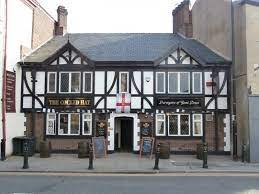


Previously known as the Pack Horse, this Good Beer Guide listed pub reopened in September 2013 following a redecoration and a name change along with a change of management. Now owned by Chester-based AtWill Pubs, the Cocked Hat is located just behind Stockport's famous indoor market with its front door facing the main entrance of St. Mary's church, the churchyard of which was used as a filming location in A Taste of Honey. The entire AtWill estate is up for sale as of September of this year so the future here may change but fingers crossed that a buyer can be found who plans to keep the pub's values the same. To the left of the entrance is the bar and a standing drinking area and to the right is a large room, previously two, where plenty of seating is available. Many old photos of Stockport and its market adorn the walls throughout. The bar features 6 handpulls, offering an interesting choice of beers usually from breweries within 30 miles of Chester. Available during my visit are Moorhouse's Black Cat, Salopian Oracle, Moorhouse's Pride of Pendle, Cross Bay Little Nipper IPA, Dunscar Sessh! and Dunscar Gold. I had a few minutes to decide here as the barmaid was elsewhere. I eventually decided on the Pride of Pendle (4.1%), a beer I've previously had in a bottle but never on draught. It proved to be a good choice, a well-balanced best bitter with fresh, initial hoppiness and a mellow, malt-driven body. I sat in the large seating area to the right hand side as I enjoyed this beer which definitely benefits from not being bottled. I hope to see this on draught more often elsewhere.

From here, I headed down the road towards the indoor market before turning right where my next location is next door to a supermarket car park. This is the renowned and Good Beer Guide listed Arden Arms.


Former Stockport CAMRA branch pub of the year in 2009, this Grade II listed building is featured on CAMRA's National Inventory of Historic Pub Interiors. Amongst its distinctive features are a curved, glazed bar, a hidden snug that is accessed by going through the bar itself (believed to be one of only 4 such snugs in the UK), chandeliers and a grandfather clock, giving the pub a Victorian ambience. The pub is conveniently close to the market and Peel Street shops. The cellar retains body niches in the walls, testament to the building's former use as a mortuary. A recently added smoking lounge and a courtyard which hosts live music also provides view of the old stables and outbuildings. It's a wonderful reminder of a bygone era, emphasised by the ghost of a young boy that has been sighted on the premises, believed to have died falling from a tree when an orchard stood nearby. In February 2017, a blue plaque was attached to the outside of the building to honour Elizabeth Raffald: her nephew built the Arden Arms and she is buried in the nearby churchyard. She was known as a tremendous innovator and produced the first town directory for Manchester and Salford in 1772, amongst other things. I was already overwhelmed by this place before I'd even got to the beer. 6 handpumps feature here, unusually positioned on the back bar with the taps facing the customer, offering beers from the Robinson's range, on this occasion Double Hop, Wizard, Unicorn, Trooper, Dizzy Blonde and Yippee IPA. I decided on the Yippee IPA (4.2%), an American style IPA brewed with a heady mix of Nelson Sauvin and Galena hops. It has an intense hop character and a hint of citrus zestiness and it's very very nice indeed!

It was a real shame to have to leave the Arden Arms. It had been the standout pub so far but I had many more to visit and the day was still relatively young. My next stop wasn't far away. Just around the corner is the Boars Head.


Yet another Good Beer Guide listed premises in the vicinity, this is a multi-roomed pub with a cosy, town-centre feel. Owned by Samuel Smith, a fair amount of money and time was spent some years ago to restore the pub to how it may once have looked. The front room is divided into a sparsely furnished public lounge on the right and a more substantial, comfortably furnished room to the left. Cushioned pews, high-back chairs and stools fit out the latter. A second lounge, previously a music room, is to the rear with a decked, outside area leading off. The Boars Head tends to attract a mature clientele as evidenced by the fact that I'm roughly 20 years younger than the next youngest person in the building, which seems surprisingly busy in comparison to the other pubs I've visited so far. One beer was available on hand pump, Samuel Smith Old Brewery Bitter, spread over all 4 of the bars handpulls. This is a full-bodied, malty, toffee-ish tasting beer with a creamy character and lots of flavour for an ABV of 4%. This was a nice reminder of a brewery that often gets overlooked and also a reminder that not all beer is priced over the odds!

My next stop was just opposite. Another entry in the Good Beer Guide, next up was the Bakers Vaults.


This Grade II listed building, originally known as the George & Dragon, was built around 1775 on the foundations of the old Stockport Castle. Demolished in the late 19th century, it was renamed the Bakers Vaults and rebuilt in the style of a 'gin palace'. The current style is the result of a reinvigoration in 2014 by a trio who are renowned for their work in the pub trade across Greater Manchester. The layout is that of a large, single room with a bohemian feel and impressive architecture, including high ceilings, feature arch windows, and the grey and dark blue colour scheme. The central, island bar is towards the back of the building, adding to the sense of space. Behind this bar is a small, lounge-type area with low leather sofas. This is a Robinson's house but one of the few that offers guest beers, supplied through Titanic Brewery in Burslem. 9 of the 10 handpulls are in use during my visit with one bank strictly Robinson's (Double Hop, Dizzy Blonde, Trooper, Wizard and Unicorn) and the others given over to guests, namely Titanic Plum Porter, Hop Back Hallertau Blanc, Titanic Stout Stout and Old Rosie cider. I'd never tried the Hallertau Blanc so this seemed like a good option. This is an August seasonal from Salisbury-based Hop Back brewery. It's brewed with a new German hop variety which has a bouquet of tropical fruit and flinty grapefruit on the palate which gives a complex structure with an underpinning of English bittering hops. It's only 4.2% as well which makes it very drinkable and refreshing. This is certainly a spacious and impressive building but also a very comfortable one. It also has a dark side. Perhaps unsurprisingly, given the age of the building, ghostly activity has been reported in both the cellar area and the adjacent corridors. The origins of this activity are unknown but it continues to this day.

The next stop is a newcomer on Stockport's real ale scene, having opened just less than a year ago. Soon celebrating it's first anniversary, I was now at The Petersgate Tap.


Run by an enthusiastic father and son, the pub opened in September 2016 in a former betting shop premises. The pub is based over two floors with downstairs having a fairly modern style and continental feel. Recycled, solid oak-topped tables and a mix of seating sit under posters and breweriana that adorn the walls. In addition to 6 handpumps, the bar also boasts four keg fonts, a cider fridge and a variety of specialist gins, as well as a good choice of red and white wines. The upstairs function room has a capacity of 60 and is ideal for meetings and parties and even has a small stage at one end. A monthly poetry and prose night takes place on the first Wednesday of the month. Of the aforementioned 6 handpumps, 5 of them are in use during my visit offering Hawkshead Windermere Pale, Lancaster Admiral Archer, Deva Oatimus Prime, Shiny Huell Melon and North Riding Tiramisu Porter. The name alone was enough to draw me to the Oatimus Prime (4.2%), an oatmeal pale ale from Deva Brewery, based near Chester. This is a very sessionable pale ale with a plethora of juicy tropical hop notes, balanced with a rich, full malt profile and a very creamy head due to the use of flaked oats instead of torrefied wheat in the brew. It's an uppercut of juicy hops and an absolute belter of a beer to go very well with the pub as a whole, which started playing Fear of the Dark by Iron Maiden, as if the day couldn't get any better. This pub deserves to do very well indeed and I'm confident that will become a staunch member of the local ale scene for many years to come.

More walking was to come now as I made my way towards the Merseyway shopping precinct where the next pub is located amongst the shops. Another entrant in the Good Beer Guide, it was time to visit the Swan With Two Necks.


This is a narrow-fronted property with a mock Tudor façade that was thankfully saved from a failed shopping scheme and then rejuvenated in 2008. It is impressively panelled throughout in light oak to a familiar Robinsons style with labelled doors to match. From the door, there is a vault, then a bustling bar corridor, a cosy, button-back seating snug with a feature skylight and the rear a further small lounge-cum-diner. The bar is small and serves both the corridor and the vault, boasting 5 handpulls, 4 of which are in use, featuring Robinson's Unicorn and Old Tom as well as Old Rosie and Rosie's Pig for the cider drinkers. It was about time for something stronger so Old Tom was to be my drink of choice. At a whopping 8.5%, this is a full-bodied, dark beer with malt, fruit and chocolate on the aroma. There is a complex range of flavours that includes dark chocolate, full maltiness, port and fruits, leading to a long, bittersweet aftertaste. This is a monster of a dark beer that ticks all of the boxes and I thoroughly enjoyed it sat in a comfortable snug with a view out into the corridor. I'd decided by this point that I've become a big fan of Robinson's pubs and there are still a couple more to come on what was becoming a highly successful trip.

I left the shopping precinct now and made my to Wellington Road North, the northern extension of where I'd initially begun my journey. The next trio of pubs are all in close proximity and the first of these was The Railway.


Confusingly, there are two pubs in Stockport called The Railway and both make an appearance in the Good Beer Guide. This particular one features two front rooms, both of which are tidily decorated with a central bar between them that serves both sides. The left hand room, where I enter, has a feature fireplace and photos of old Stockport whilst the right hand room is more contemporary in feel with a raised stage area and a TV projector. There is a games room to rear with a pool table and a leather sofa. There is also an upstairs function room available to hire. A successful CAMRA campaign is responsible for the pub's conversion to real ale and it was branch pub of the year in 2010. 4 of the 5 handpulls are available on the day, featuring Holt's Bitter, Dancing Duck Nice Weather, Nottingham Legend and Nottingham EPA. I went for the Nice Weather which was in excellent condition. I enjoyed this in the more modern of the rooms where a small handful of regulars were enjoying Sky Sports News with sound on the large projector screen.

The next location on the day's itinerary stood almost opposite The Railway. In the shadow of the famous viaduct which is impressive at any time of day, is The Magnet.


Named for the shape of the giant arches on the nearby viaduct, the Magnet was rescued from failure a few years ago and within 22 months had been completely rejuvenated, to the extent that it won CAMRA Regional and Branch Pub of the Year in both 2011 and 2015. Unsurprisingly, the pub is GBG listed. This is a family-run establishment that focuses on quality and choice. To the left is a bustling vault which leads down to a lower pool room where the in-house micro-brewery (opened in 2014) can be viewed. To the right are a series of rooms separated by arched doorways. An extensive outdoor area, part-covered and part-open allows drinkers views of the magnificent viaduct. The upstairs beer terrace and function room are well used and popular as are Monday cheese nights. Live music sessions take place on the first Friday evening of the month. 14 handpulls are on the bar, arranged in banks of 2, with 11 of these in use whilst I'm there. The choice is extensive featuring, Neptune Tamesis, Track Sonoma, Dent T'owd Tup, Tickety Brew NZ Gold, Dent Baas & Stripes, Tiny Rebel Cwtch, Saltaire Decennium, Furnace Milk Stout, Durham White Gold and Salopian Oracle. After a moment of indecision, I eventually plumped for the Decennium from Shipley-based Saltaire. Brewed to celebrate 10 years of brewing success at Saltaire, this is a pale ale brewed with 10 hops to provide a massive amount of zest. At 4.6%, this is a cracking mid-strength pale!

I had 2 pubs left to go, both of them Robinson's houses and the first of these was just down the hill from The Magnet, once again in the significant shadow of the viaduct. The penultimate stop of this fantastic trip was The Pineapple.


This is an unusual little place. Despite sitting a stone's throw from the busy A6, it feels as if it should be tucked away into a quiet area of town. The two rooms to the front of the pub have been opened out but are clearly separate and the walls are decorated with plates brought back from foreign lands by regulars as gifts for the licensee who has been here for a long time. Down a short flight of steps to the rear is a more basic games room with an array of trophies with the entrance to the smoking area leading off. The building itself was originally a coaching house prior to conversion to a pub in the early 20th century, at which time it was the headquarters of the local botanical society. I was confused by this pub. I entered to silence and only ambient lighting and wasn't sure initially if the pub was open. The landlord quickly appeared though and I wandered to the small bar tucked into one corner. 2 of the 4 handpulls were in use, offering Unicorn and this was in excellent condition as you'd expect from yet another GBG listed property. No sooner had I paid for my drink, then the landlord disappeared into the back and I was left to enjoy the atmosphere of this warm and cosy little place with only the sound of the ticking clock on the wall for company. I can imagine that this place does very well of an evening, as a distraction from the busy world outside.

It was almost time for me to depart. Before that though, I had time for one more stop. Heading back in the general direction of the station, I located my final destination, at a busy road junction on the edge of the Edgeley district. Last up for this week: The Armoury.


This Victorian pub is named for the adjacent Army Reserves Centre and the Mortar Battalion of the Mercian Regiment. It remains largely intact since a 1920s refit and still boasts original fittings and evidence of the original Bell's Brewery ownership in the interior glasswork. There is a bright lounge, a drinking lobby with its own bar counter, a darts room at the back and an excellent traditional vault that is up there with the rest in town. A cask of the formidable Old Tom is often visible on the bar counter. Memorabilia of the Cheshire Regiment adorns the walls. A secluded beer garden is located at the rear. The pub has a strong link to the local community and a mature clientele is in very close to Edgeley Park, home of Stockport County FC. Occasional live music nights are held in the upstairs room. The pub is Good Beer Guide listed and was Branch Pub of the Year runner up in 2007. This is a welcome smack in the face to those who say that pubs like this do not survive. The 4 handpulls inside feature beers from Robinson's, specifically Dizzy Blonde, Yippee IPA and doubled up Unicorn. I went for the Dizzy Blonde to end the day and this was a good choice. This is a straw-coloured summer ale with a distinctive hop aroma. It is a light and refreshing beer with a clean and zesty palate, dominated by hops and complemented by a crisp, dry finish. It's an excellent way to end what has been a fantastic day.

Prior to my arrival, I was apprehensive that what I'd read about Stockport wouldn't reflect reality or that things had declined since that article was written. I was very pleased to learn that, not only was this not the case, but the real ale is amongst one of the best I've seen for a while. As well as the considerable presence of Robinson's and their excellent range of beers, there are plenty more pubs and breweries doing a great job to promote and maintain real ale in this particular area of Greater Manchester. Whilst it may not be a place that automatically triggers thoughts of real ale and cracking pubs, it has both, in absolute shedloads.


Monday, September 11, 2017

A Mish-Mash in Melton

Last week, I returned to Leicestershire with the aim of exploring a town that is known more for its locally produced food than it is for its ale. On an unsettled Wednesday, I made my way to Melton Mowbray.
Melton Mowbray  is a town in Leicestershire, 19 miles (31 km) northeast of Leicester, and 20 miles (32 km) southeast of Nottingham. The town is on the River Eye and the River Wreake and has a population of 25,554.
The town is best known for its culinary speciality, the Melton Mowbray pork pie, and it is one of the six homes of Stilton cheese. Melton Mowbray is promoted as the "Rural Capital of Food".

The name comes from the early English word Medeltone – meaning "Middletown surrounded by small hamlets" (and therefore has the same origin as Milton and Middleton). Mowbray is a Norman family name – the name of early Lords of the Manor – namely Robert de Mowbray.
In and around Melton, there are 28 scheduled ancient monuments, around 705 buildings listed as having special architectural or historical interest, 16 sites of special scientific interest, and several deserted village sites.
There is industrial archaeology including the Grantham Canal and the remains of the Melton Mowbray Navigation. Windmill sites, ironstone working and smelting archaeological evidence suggest that Melton borough was densely populated in Bronze and Iron Ages. Many small village communities existed and strategic points at Burrough Hill and Belvoir were fortified. There is also evidence to suggest that the site of Melton Mowbray in the Wreake Valley was inhabited before Roman occupation (43 AD).
In Roman times, due to the close proximity of the Fosse Way and other important Roman roads, military centres were set up at Leicester and Lincoln; and intermediate camps were also established, for example, Six Hills on the Fosse Way. Other Roman track ways in the locality passed north of Melton along the top of the vale of Belvoir scarp; they linked Market Harborough to Belvoir, and linked the Fosse Way to Oakham and Stamford.
Evidence of settlement throughout Anglo-Saxon and Danelaw period (8th/9th centuries) is reflected in many place names. Along the Wreake Valley, the Danish suffix "-by" is common, as is evident in Asfordby, Dalby, Frisby, Hoby, Rearsby and Gaddesby. In addition, a cemetery of 50–60 graves, of Pagan Anglo-Saxon origin, was found in Melton Mowbray. Although most villages and their churches, had origins before the Norman Conquest of 1066, stone crosses at Asfordby and Sproxton churches and Anglo-Saxon cemeteries as found at Goadby Marwood, Sysonby and Stapleford, are certainly pre-Conquest.
Melton Mowbray itself had six recorded crosses the construction of which spanned several centuries: (i) Kettleby Cross, (close to the present filling station near the junction of Dalby Road to the Leicester Road), (ii) Sheep Cross, on what was Spital End, (now Nottingham Street/Park Road Junction), (iii) Corn Cross at the Swine Lane/Spittle End junction, (reconstructed and reinstated on the Nottingham St/High St junction in 1996 as a memorial to the Royal Army Veterinary Corps), (iv) Butter Cross or High Cross, at the west end of Beast Market (again reconstructed from partial remains of the original Saxon cross in 1986/7 in the Market Place), (v) Sage Cross, at the East end of the Beast Market close to Saltgate, (on Sherrard Street opposite Sage Cross Street), and (vi) Thorpe Cross at the end of Saltgate (near the junction of Thorps Road and Saxby Road). All the original crosses were removed or destroyed during the reformation and other periods of iconoclasm or simply to make room for traffic or other development.

The effects of the Norman conquest are recorded in the 1086 Domesday Book. This document indicates that settlements at Long Clawson and Bottesford were of noteworthy size; and that Melton Mowbray was a thriving market town of some 200 inhabitants, with weekly markets, two water mills and two priests. The water mills, still in use up to the 18th century, are remembered by the present names of Beckmill Court and Mill Street.
Melton Mowbray has been a market town for over 1,000 years. Recorded as Leicestershire's only market in the 1086 Domesday Survey, it is the third oldest market in England. Tuesday has been market day ever since royal approval was given in 1324. The market was established with tolls before 1077.
Legacies from the Medieval period include consolidation of village and market town patterns; in Melton Mowbray, Bottesford, Wymondham, and Waltham-on-the-Wolds. The latter had a market in medieval times that continued until 1921, and an annual fair of horses and cattle. Many buildings in Melton Market Place, Nottingham Street, Church Lane, King Street and Sherrard Street have ancient foundations. Alterations to number 16 Church Street revealed a medieval circular stone wall subjected to considerable heat. This is probably the 'Manor Oven' mentioned in 13th century documents. Surveys of 5 King Street show it to be part of an early medieval open-halled house. It may be part of the castle or fortified Manor of the Mowbrays, which existed in the 14th century.
King Richard I and King John visited the town and may have stayed at an earlier castle. In 1549 following the Dissolution of the chantries, monasteries and religious guilds, church plate was sold and land purchased for the town. Resulting rents were used to maintain Melton School; first recorded in 1347 and one of the oldest educational establishments in Britain. Funds were also used to maintain roads, bridges and to repair the church clock.
Anne of Cleves house, now a Public House, is a Grade II* listed building.

During the English Civil War, Melton was a Roundhead garrison commanded by a Colonel Rossiter. Two battles were fought in the town: in November 1643, Royalists caught the garrison unaware and carried away prisoners and booty; in February 1645, Sir Marmaduke Langdale, commanding a Royalist force of 1,500 men, inflicted severe losses on the Roundheads. Around 300 men were said to have been killed. According to legend a hillside where the battle was thought to have been fought was ankle deep in blood, hence the name 'Ankle Hill'. However, this name is mentioned in documents pre-dating the Civil War. Furthermore, in the past, the names of Dalby Road and Ankle Hill have been switched around, thus confusing the true site of the battle.
Local notable families seem to have had divided loyalties, although the War ended with great rejoicings outside the "Limes" in Sherrard Street, home of Sir Henry Hudson. His father, Robert Hudson founded the "Maison Dieu" almshouses opposite the Church in 1640, which complement the stone built "Anne of Cleves House" opposite. This was built in 1384 and housed chantry priests until the Dissolution. It was then included in the estates of Anne of Cleves by Henry VIII, as a divorce settlement in the 16th century, although there is local debate about whether she ever stayed there or not. Anne of Cleves' house is now a public house which is owned by Everards Brewery.

Stilton cheese originated near Melton Mowbray, and is still made in the town today. Stilton cheese takes its name from the village of Stilton in Huntingdonshire, where it was marketed to travellers on the Great North Road, though no Stilton was ever made there.
Melton Mowbray pork pies are made with a specific "hand-raising" process and recipe. On 4 April 2008 the European Union awarded the Melton Mowbray pork pie Protected Geographical Indication status, following a long-standing application made by the Melton Mowbray Pork Pie Association. As a result of this ruling pies made only within a designated zone around Melton, and using uncured pork, are allowed to carry the Melton Mowbray name on their packaging.
The fox hunting crowd also left their mark on the town in a different way, through their "high jinks". Out celebrating a successful hunt in 1837, the 3rd Marquess of Waterford and his hunting party found several tins of red paint which they daubed liberally on to the buildings of the High Street, some traces of which can still be seen on doors of older buildings in the town.
There is also a picture labelled "A Spree at Melton Mowbray." and subtitled "or doing the Thing in a Sporting-like manner". It is dated 1837, the same date as the Marquess' event. It appears to take place on what is now called Leicester Street and depicts men in hunting clothes climbing on Swan Porch (a building in the market place), fighting and a gentleman apparently being robbed. There is no mention of any red paint. Of course this sort of thing may have been common in Melton Mowbray at that time and there is no evidence that the picture depicts the same events. What is certain is that the physical evidence appears to support the town was painted red. However this does not necessarily mean that the phrase "painting the town red" came from the event, and according to the Oxford English Dictionary, the phrase originated in the United States in the late nineteenth century.
The Melton Mowbray event was recorded as happening in the early hours of 6 April 1837. It was later recorded in the London Examiner. Henry Alken's pictures A Spree at Melton Mowbray and Larking at the Grantham Tollgate are said to illustrate the event. The events were depicted in a play called The Meltonians at The Theatre Royal, Drury Lane in 1838.

Melton Mowbray is home to Melton cloth (first mentioned in 1823), which is a tight-woven woollen cloth that is heavily milled, and a nap raised so as to form a short, dense, non-lustrous pile. Sailors' pea coats are traditionally made of Melton cloth, the universal workmans' donkey jackets of Britain and Ireland and in North America, loggers' "cruising jackets" and Mackinaws.

I'd only ever been to Melton once before when I'd accompanied George to a meeting at the local Wetherspoons. I was looking forward to getting a proper opportunity to explore what other pubs were on offer in this historic. Arriving by train, following a change at Leicester, I emerged into Melton around lunchtime and immediately set about finding my first intended stop on this journey. A short walk from the train station, sticking out like a sore thumb, was the building now known as the Anne of Cleves.


One the most historic pubs both in the town and in the Everards estate, part of this building dates back to 1327, when it was home to monks. The house was gifted to Anne of Cleves as part of her divorce settlement with Henry VIII, although there is some debate as to whether she ever lived in it. Thomas Cromwell, chancellor to Henry VIII is known to have lived in the house until his death in 1540. This is now a very popular pub, following a conversion and restoration in 1996. There are stone-flagged floors, exposed beams and wall tapestries throughout. Other elements of the past are thought to still linger within the property, in the form of  unexplained sightings of a white lady seen in the award-winning garden and a man sitting on a bench near the back door. Staff have also reported feeling an unseen dog brushing up against them in certain areas of the pub. It's certainly a very old and atmospheric place and I was greeted by the warmth from a log fire as I entered through a low doorway into the bar area. The bar sits along one wall with seating opposite and an area to one side that is set up for dining. A low entrance to a snug sits to the left hand side. The drinking and dining area both have entrances to the street outside. Being an Everards property, their presence is significant across the 7 handpulls on the bar, offering Old Original, Tiger (doubled up), Myrtle and Beacon Hill, alongside Slaughter House Wild Boar and Weston's Reserve Cider. I was unfamiliar with the Myrtle, so I decided that this was a good place to dive into whatever Melton Mowbray had to offer. Named after a famous chicken that was the mascot of the 10th Airborne Regiment and perished at the Battle of Arnhem, Myrtle is a dark red beer, brewed with Pilot and Flyer hops and boasting treacle-toffee and caramel notes. It's so dark red that it almost appears black and is a very warming brew, perfect for supping by an open fire. It's easily drinkable, with an ABV of 4% and has certainly got the day off to a good start!

As reluctant as I was to leave this very welcoming place, there was much more to see. I now made my way towards the market place where I turned off into Nottingham Street, where my next location was located. Next up was the Half Moon.


Located next door to one of Melton's many pork pie shops, this is a long and narrow, two-roomed pub with a half-timbered frontage. The main bar starts off at ground level but then climbs up steps to a higher level with the serving area at the top and lounge seating and a pool table through to the rear. There is a large TV showing horse racing when I arrive and a jukebox playing AC/DC at the only acceptable volume (i.e. bastard loud). The small bar abuts one corner of the top area and features 2 handpulls, with a choice of either Greene King IPA or draught Bass. I opted for the IPA and this was drinking well, and well kept. This pub is an odd little place with the street level area bringing an olde worlde feel to the building.

My next stop was the only pub in Melton that I had prior knowledge of. Heading back through the market place, I made my way slightly further across town to Wilton Road and the obligatory trip to Wetherspoons. The pub in question is The Kettleby Cross.


The local entry into the Wetherspoons estate is a purpose built 'eco pub' completed in 2007 and featuring a wind turbine on the roof. The Good Beer Guide listed pub stands close to the bridge over the River Eye and is named after the cross that used to direct travellers in the direction of Ab Kettleby. The layout is that of a large room spread over two levels, divided by a couple of steps. The bar is long and situated along most of one wall. 10 handpulls take centre stage with 6 taken up by doubles of regular beers, namely Abbot Ale, Doom Bar and Greene King IPA. The remainder are given over to guests, on this occasion Milestone Shine On, Brewster's Hophead, Purity Mad Goose and Newby Wyke Sundowner. I opted for the Mad Goose, a personal favourite of mine, and this was very well kept, being a zesty, pale ale with a smooth and citrusy finish, in a package of 4.2%. I took a seat at a high table near the bar and reminisced about my last visit here when George and I watched England v Wales in the Six Nations whilst we waited for his meeting. That was a good day and this was shaping up to be just as good.

From here, I made my way around the corner and looped around behind a nearby retail park before turning right onto St. Mary's Way where my next destination is located. Next stop, The Cutting Room.

Originally a section of the Melton Regal Cinema, which lies in an adjoining building, the building was converted into a pub by the Smith & Jones Pub Co. but has since been taken over by Stonegate. It is a popular venue for live sports, helped by the large amount of seating throughout. The layout consists of a large, single room with the bar to the left of the entrance and a raised section to the rear that is mainly for dining. There is a large balcony above the bar that can be hired for private functions but is otherwise open at busy times. 5 of the available 6 handpulls are in use whilst I'm there, featuring Nottingham Robin Hood, Pheasantry Black Pheasant, Courage Best Bitter, Greene King IPA and Lilley's Rhubarb Cider. I decided on the Black Pheasant (4.2%), from Newark-based Pheasantry Brewery. As the name implies, this is a dark ale with malty flavours, balanced bitterness and velvety flavours. It's very smooth and very satisfying and I'll definitely be seeking out more of their beers in future.

I was approximately halfway through the day's itinerary now and so I retraced my steps back in the direction of the train station. Passing back past the market place, I made my way to a pub that lies nearby. My day would continue at The Crown.


Adjacent to St. Mary's Church, this Georgian town pub is part of the Everards estate. The main entrance leads to a small porch with an entrance to both sides. Left leads to the bar room with a real fire and a large TV and right leads to a slightly larger lounge. There is a skittle alley to the rear and an upstairs room with a separate bar that is available for functions. There is also a cobbled courtyard with a floral border to the rear of the pub that features tables and chairs. I went left upon entry and found myself in a fairly large and comfortable lounge with one half of the central bar to my left. Each side of the bar includes a bank of handpulls with 4 in the room I'm in offering beers from Everards namely, Sunchaser, Beacon Hill, Tiger and Old Original. Sunchaser was my choice this time. At 4%, this is a straw coloured ale with lemon and honey aromas and subtle, zesty flavours of honey. It's very refreshing after the walk from the previous pub!

My next location wasn't very far away at all, merely a short walk and across the road. It was time for a visit to a micropub and I found just the thing at The Gas Tap.


The Gas Tap first opened in April 2016, in a converted sandwich bar opposite the church. Under new management since March 2017, the pub serves real ale, cider, 8 wines, quality spirits, soft drinks and Adnams Dry Hopped Lager. It is a small, single roomed pub with a capacity of around 25, 21 of which can be comfortably seated. The beers are provided by gravity dispense from a stillage in one corner. Recipient of a local branch Pub of Merit Award for September of this year, the pub is located within the historic building known as 'The Old Club', Melton's first gentlemen's club, which featured both Beau Brummell and the Prince Regent as regular visitors. Francis Grant painted 'The Melton Breakfast' within the building and there are pictures on the wall depicting the history of the building from 1870 to the present day. I arrived about 1 minute after the pub had opened and made my way to the stillage to see what was on offer. I found 4 beers available, all of which were very interesting. I was faced with a choice between Newby Wyke Bear Island Extra, Tres Bien Peacock, Milton Medusa and Froth Blowers John Bull. I'd never heard of Froth Blowers Brewing Co. so one of their beers sounded like a good plan. I've since learned that they are based in Birmingham. John Bull's Best (4.4%), the beer that I'd chosen, is a golden, well balanced beer made with British hops and malt. It was a surprising beer from a new brewery and it's always nice to find something new on trips like this!

I had time for a couple more venues now and these would take me closer to the train station in preparation for the journey home. Next up was a location that was almost opposite the path that led back to the platform. I was now at the Harboro' Hotel.


This former 18th century coaching inn still retains a good reputation for accommodation in the local area with 33 en-suite rooms. It was extensively refurbished in 2014 to give it a modern and open plan feel but two separate lounge areas have been maintained. The hotel is usually busy but it's size means that it rarely becomes crowded. The bar sits at an angle in one corner of the main route through the hotel and includes 4 handpulls. Available on the day are Timothy Taylor Landlord, Black Sheep Bitter, St. Austell Proper Job and Morland Old Speckled Hen. It was nice to see Proper Job in this part of the world so I gave that a go and this was a good choice as it was delicious and in just the right condition. I enjoyed my drink at a table underneath a TV that was showing Supergirl without sound or subtitles which I can't help but think defeats the point. The beer more than made up for it though.

I had time for once last stop before my journey back home and it was one that was worth waiting for. I would finish the day at Noel's Arms.


This is a popular single-roomed pub that became a freehouse in 2013 and has since shown real commitment to real ale with microbreweries featuring prominently. In the intervening years, more than 200 real ales and ciders have featured, many of them LocAle. Live music features prominently at weekends and darts, pool and cribbage are also available. Awarded Branch Pub of the Year for 2014, the Noel's is Good Beer Guide listed and deservedly so. 4 of the 5 handpulls are in use when I arrive, with a choice of Doom Bar, Twisted WTF, Belvoir Dark Horse and Belvoir Gordon Bennett. I swung for the excellently name Gordon Bennett (4.1%), from Belvoir Brewery, located at Old Dalby just outside of the town. Named for the infamous playboy billionaire who sponsored many early gas balloon and motor car racing teams, this is a chestnut beer with a biscuity finish and overtones of aroma from the late addition of English hops. It's certainly a cracking pint! I sat at a low table, near the door to the toilets and roughly between a muted jukebox and a TV playing power ballads. It was almost time to leave and time to reflect on my day.

Does Melton need to add real ale to its list of locally recognised produce alongside the aforementioned cheese and pork pies? I believe so. There are a lot of venues in this town that are flying the flag for real ale in this town. The Noel's Arms, Kettleby Cross and Gas Tap in particular should be commended for their commitment for keeping faith with proper beer in this lovely part of Leicestershire. There are places that don't quite hit the mark, as there are in every town. The Half Moon was the less favourable venue of the day but their beer was good so there's not too much to complain about really. I enjoyed my foray into the real ale scene of Melton Mowbray and I like to think I will return. I ran out of time to visit The Boat, another GBG listed pub not far from the station that has gain something of a reputation in recent years for its choice of ales. A return trip is likely to be worth it for that alone. Melton can be proud of its culinary heritage. And now it can be proud of its beer scene too!


Tuesday, September 5, 2017

Happy Brew-day to Me!

For my 30th birthday back in February (*cries*) I was very lucky to have been bought a Red Letter Day trip to be a brewer for a day, courtesy of my mum and stepdad. I decided to book this a few months later in the year to give myself an extra thing to look forward to. The day had finally arrived last Friday and I was very excited as I made my way to my chosen location for a 10am start. I had chosen to spend the day brewing at one of the newest venues to appear on the Nottingham scene, Brewhouse & Kitchen, located on the northern side of Trent Bridge in a listed building that, in its most recent incarnation had been the Riverbank Bar & Kitchen.


The building has previously operated under a number of different names including Casa, The Aviary and the Town Arms, its first use as a licensed premises having originally been used as the local police station. The recent rebranding and refurbishment has been sympathetic to the building's original features whilst significantly modernising and opening up the interior into a designated dining area with table service and a smaller bar area where bar service is provided. The new features are quirky and interesting with light fittings made from beer bottles and recycled washing machine drums, framed album covers in the toilets and an original canoe mounted on the ceiling in the dining area. This is the newest addition to the B&K chain, which prides itself on brewing its beer in-house and theming its ales after the history of the area in which each premises is based. I was familiar with the chain having visited venues in both Portsmouth and Bristol so I knew roughly what to expect but I was very much looking forward to getting stuck into the brewing process. I had done something similar before at Great Yorkshire Brewery in Cropton around 4 years ago but, in the intervening years, I am confident that my beer knowledge has greatly improved and so I was eager to put it to the test.

I arrived around 9.45 and was immediately introduced to Ben Pearson, head brewer for the venue, who was apparently impressed by my punctuality. A quick cuppa was followed by signing of the obligatory health and safety paperwork and then it was time for my experience to be begin! The brew kit here is located in a prominent location just inside the main entrance where it stands out as a forest of large, copper vessels. Our first task was to begin the brew. The water in the hot liquor tank needed to be transferred to the mash tun in addition to the malt in order to begin the process of allowing the sugars to be broken down and extracted. The water had been already been heated as this is done by the process of a timer which begins the procedure at roughly 4am, in order to ensure that the sufficient temperature has been reached in time for the day's brewing to begin. Ben explained that we would be spending the day brewing Tricky Tree, a 5.5% traditional IPA, named after a nickname for Nottingham Forest, packed with citrus and fruity flavours from 3 different types of hop. But first, we needed to add the malt. Transferring the water into the mash tun, Ben added pale malt whilst I commenced the 'mashing in', which involved standing on a ladder and using a paddle to stir the malt into the hot liquor, ensuring that all of the malt was wet and evenly distributed throughout the mixture. This started off relatively easily but, as more malt was added, the mixture got thicker and heavier and a considerable amount of strength was required to stir the malt in. Along with the high temperature, this was hard work and I'd worked up a significant sweat by the time the mixture had reached the required consistency, resembling that of a malty, delicious-smelling porridge. With all the malt added and stirred in, this could now be left for an hour and a quarter to brew before the next stage took place.

As I recovered from the hard work, Ben explained what other tasks we had to do today. Our next job was sterilising casks and then filling these with beer, something which I had never done but I was looking forward to trying out. This meant heading into the cellar, accessed through a door behind the bar and down a slope which acts a barrel drop, into the basement area which occupies a series of small rooms, which in the building's law enforcement phase, actually acted as the cells. Some of the cell markers are still visible in the brickwork. Ben immediately set me to work using a basin with a high pressure water pump to sterilise empty casks ready for reuse. I was surprised to find out that the brewing procedure here is a one-man operation with Ben having sole responsibility for the end product. Apparently, all the brewing in the chain is done in the same way with one brewer dedicated to each venue, all overseen my a master brewer. Ben himself had recently been helping to cover brewing duties at the company's Bedford venue, where his career with the company had begun following an apprenticeship he'd completed at Oldershaw in Grantham. I was intrigued by the amount of work that one man was responsible for, even just for a single venue, as we began filling the now-sterilised casks. This involved using a long hose that runs from the fermenter, all the way into the back room of the cellar where beer is pumped directly into the empty casks. Before the beer was put into the cask, Ben added finings to each which would then be supplemented by a second addition as the casks were full. Ben explained that this was done more for personal preference than necessity and he was investigating whether the addition of two lots of finings during the barrelling process was significant in affecting beer yield. It didn't take long until the casks were filled and fined and then it was time to knock a shive into each to seal the casks which is harder than it sounds but oddly satisfying. Another half dozen casks later and we returned to the brew kit, where a bacon sandwich awaited was much needed.

The next step in the process was the extraction of the brew from the leftover malt in the mash tun and the transfer of this into the kettle before the addition of the hops. Using a series of pipes, a small container metal tun-like vessel which acted like a filter driven by pumps, we transferred the hot, malty smelling liquid out of the mash tun, switching the pump on and off accordingly as the liquid level changed. To ensure that we got as much sugar as possible from the original mixture, we also carried out a technique called 'sparging'. This involved using a rotating arm that sprays water evenly into the remaining mash, with the aim of flushing any excess sugar out of the mixture in order to get as close to the target ABV as possible. Ben offered me some of the hot liquid to try and it was very sweet and very warming and I was looking forward to seeing how the finished product was going to turn out. Ben now pointed out that it was time for a beer. Briefly heading behind the bar, he returned with 3 thirds of 3 different beers from the Brewhouse range. I enjoyed these as Ben explained about them whilst the sparging was going through its paces. The first of these was Constable (3.9%), a traditional bitter named in honour of the building's original use. This was very drinkable and refreshing, a proper session bitter although Ben said be had been experimenting with the mouthfeel as he was concerned that the finished product was a bit watery to the taste. I, for one, can't see what he's worried about! Next up was 1899 (4.4%), a pale ale that owes its name to the date of the first Test Match between England and Australia at Trent Bridge. This is a classic take on a mid-strength pale with a good balance of malt and hops and a refreshing sweetness on the palate. The final third was Tricky Tree, the beer that I was brewing today. This is a very good IPA with a punchy, citrus flavour and a strong hop aroma, all giving way to a delicious mouthfeel and a smooth finish. If the batch I'm brewing tastes as good as this, I think it will be a hit!

The sparge was over now so we turned on the kettle to allow it to bring the mixture back to temperature before we added the hops to the boil. Whilst this happened, our next task was the one that I'd been dreading: emptying and cleaning the mash tun. This ended up not being as bad as I thought as I used a large tool, similar to a giant fish slice to scrape the mash from the vessel and into 2 rubber buckets. The hard part was disposing of the waste as this meant a walk to the bins at the rear of the building to tip the waste malt away. Ben explained that he had previously tried to arrange with local farmers to come and pick up the waste for use as animal feed but was finding it difficult to rely on them as, more often than not, the promised pickups never happened. So it was that we spent a few minutes conveying the waste malt to the bins as I scraped it out of the tun. Once the majority had been removed, we hosed down the interior before Ben wiped down the inside and removed the floor panels to make it easier to clean. This was then left to dry out. As we waited for the kettle to reach the optimum temperature, I decided that it was time for another beer. The weapon of choice this time was Street Block (4.7%) an American style red rye ale which is amber in colour with a dry, bitter finish and plenty of spicy and aromatic hops. The name comes from residents of West Bridgford who protested about the perceived 'urbanisation' of the area and refused to allow the word 'Street' to be added to any road names as a result. Ben also gave a me a taster of a beer that was currently in the fermenter, Talladega, an American pale ale that is designed to be kegged, and has tonnes of grapefruit flavour from US hops. It's pre-finished state is an interesting fusion of sugary malt and hops and I'll definitely be popping back at a later stage to try the finished article.

We were reaching the business end of the brew now and, with the kettle up to temperature, we were able to add our first batch of hops. Ben prefers to use hop pellets instead of hop leaf and, after collecting the 3 required varieties from the cellar, we measured out the required amount and added them to the boil. First to go in was Chinook, added as a bittering hop. This was then left to come to the boil and left for an hour before the next hops were added. It was lunch break time now so I decided on a lamb and rosemary burger from the delicious burger and opted for a pint of Tricky Tree to wash it down. The burger was amazing and much needed as I hadn't realised how hungry I was! Ben went off to check a couple of things and shortly returned to complete some weekly paperwork as we waited for the first stage of the boil to finish. With the bittering phase now complete, we weighed out the next hop, Cascade, which would be added next to add flavour and impart the strong citrus notes that are the backbone of the beer. These would be left to boil for a few minutes. The addition of the second hop was followed by the addition of a small batch of protein tablets, designed to prevent protein precipitating out into the beer and causing a haze. Shortly after this, the final hop, Mosaic was added. The addition of this hop imparts a fruity aroma and is similar in character to Cascade. The presence of two similar hops in a brew is due to the relationship between smell and taste. Similar flavour and aroma hops ensure a strong continuity of tastes throughout the brew and means that the balance is carried off correctly. The final stage was fast approaching as we waited for the hops to do their job and impart the delicious flavours into the mixture before the whole thing was transferred over to the fermenter where it would be joined by yeast to begin the journey into a completed beer. Whilst we waited for the yeast to settle in the jug that we had prepared for it, the transfer to the fermenter was started, accompanied by yet another beer. This time I went for Calaboose (4.9%), an unfiltered cask pilsner. This is a hazy, straw coloured lager with a light, malty character and spiciness from German hops. It's name comes from an alternative name for a jail, again reflecting the building's original job.

With the mixture transferred to the fermenter and the mash tun and kettle now fully sterilised and ready to be used again, the yeast was finally added and the fermenter sealed. It would now be 3-5 days for the yeast to do it's job as the sugars in the beer were broken down into the alcohol that we so love! With the exception of the addition of a small amount of cold water to correct the gravity (something that Ben had checked prior to the yeast addition), all of the ingredients were in and the brew was complete! All that was left to do was to clean down which meant hosing down the brew area, sterilising any equipment that hadn't been done and ensuring that liquor tank was filled with water recycled from elsewhere in the process, ready for Ben to use again in the morning. I had had a fantastic day! I can honestly say that brewing is something that I really enjoy and I can definitely see it being a potential future career option for myself. I left Brewhouse & Kitchen with a huge smile on my face, some new beer knowledge, new ambition and a mini-keg of 1899 to enjoy at home. I will definitely be visiting this place more frequently, as there are many more beers I need to try and Amy and I are getting married in the upstairs function room so it stands to reason that I should keep coming back to check things out! I urge all of you to do the same!

Friday, August 11, 2017

A Grantham Gallimaufry

This week, I ventured into the fine county of Lincolnshire for its first appearance in this blog, in order to investigate a place that has become synonymous with Thatcher, Newton and manufacturing but is now more known for its recent upsurge in its real ale scene. I speak of course of Grantham, which lies a mere 30-40 minute train journey across the border from Nottingham.

Grantham  is a market town in the South Kesteven district of Lincolnshire. It straddles the London to Edinburgh East Coast Main Line railway and the River Witham and is bounded to the west by the A1 main north–south trunk road. Grantham lies about 23 miles (37 km) south of the city and county town of Lincoln, and about 22 miles (35 km) east of the city of Nottingham. The resident population in 2014 was estimated as 43,117, excluding the adjacent villages of Great Gonerby and Barrowby.
Grantham is notable for being the birthplace of the former UK prime minister Margaret Thatcher, for having educated Isaac Newton at its King's School, for having the first female police officers in the United Kingdom (Edith Smith in 1914), and for producing the first running diesel engine in 1892 and the UK's first tractor in 1896.

Grantham lies close to an ancient Roman road. It was the scene in 1643 of Oliver Cromwell's first win over Royalists during the English Civil War, at Gonerby Moor.
The origin of "Grantham" is uncertain, although the name is said probably to be Old English "Granta+ham", meaning "Granta's homestead". It appeared as early as 1086 in the Domesday Book in its present form of Grantham, but was also recorded variously as Grandham, Granham and Graham. The place name element grand could possibly mean "gravel".
The name of the town is the origin of the Scottish surname, now often used as a given name, Graham.
Late neolithic vessels from a burial were found at Little Gonerby, in the north of the town, in 1875. A number of flint blades have been found, including from near Welham Street to the south-east of the town centre and from near Barrowby where a macehead has also been found. At Little Gonerby a neolithic settlement site was discovered with finds of pottery and flints.
There have been a number of finds of flint and stone tools including palaeolithic hand-axes, from the Cherry Orchard Estate, to the west of the town centre, and from near North Lodge on the hill top south of Barrowby. Mesolithic flints have also been recovered from the Cherry Orchard Estate as well as from sites to the west of Great Gonerby
To the north-east of the town centre a Bronze Age bucket and urn cemetery, with cremation burials and ploughed-out barrows, has been recorded. Bronze Age flint scatters have also been found in several places, particularly on the higher ground near Barrowby. At Saltersford a Bronze Age ingot and a rapier were found. There are also several ring ditches on the higher ground above Saltersford.
According to the Chronicles of Raphael Holinshed, Gorbonianus, a legendary King of the Britons built Grantham between 292 and 282 BC.

The Domesday account notes Queen Edith having 12 carucates to the geld, with no arable land outside the village. She had a hall, two carucates and land for three ploughs without geld, and 111 burgesses. Ivo had one church and four mills rendering 12 shillings, and eight acres of meadow without geld. The lands of Bishop Osmond were described: "In Londonthorpe ... is land for two ploughs. This land belongs to the church of Grantham. In Spittlegate, St Wulfram of Grantham has half a carucate of land to the geld. In Great Gonerby, St Wulfram of Grantham has 1 carucate of land. There is land for twelve oxen."
On 4 December 1290, the funeral cortège of Eleanor of Castile, accompanied by her husband King Edward I, stopped at Grantham on its way from Lincoln to Westminster Abbey. An 'Eleanor Cross' was later erected in the town, although its precise location has not been identified.
In 1363 "The Castles, Manors and towns of Stamford and Grantham" were granted to Edmund of Langley, 1st Duke of York, and fifth son of Edward III of England. The question has been raised as to whether Grantham House was the site of a castle, however, no such site has been reliably identified. The street name "Castlegate" cannot be traced further back than the 17th century. There are references to a Hospital in Grantham as early as the 1330s.
Grantham received its Charter of Incorporation in 1463.

The town developed when the railway came to the town. The Nottingham Line (LNER) arrived first in 1850, then the London line (GNR) – the Towns Line from Peterborough to Retford – arrived in 1852. The Boston, Sleaford and Midland Counties Railway arrived in 1857.
The town received gas lighting in 1833. The corporation became a borough council in 1835. Little Gonerby and Spittlegate were added to the borough in 1879. The town had been in the wapentake of Loveden, and the town included three townships of Manthorpe with Little Gonerby, Harrowby, and Spittlegate with Houghton and Walton.
Grantham Golf Club (now defunct) was founded in 1894. The club continued until the onset of the Second World War.
Until the 1970s the housing estates west of the town centre were green fields. Green Hill, on the A52, was literally a green hill. In July 1975 the National Association of Ratepayers' Action Groups (NARAG) was formed in Grantham by John Wilks, its Chairman, being a forerunner of the TaxPayers' Alliance.

Grantham is notable as being the first place in the world after London to recruit and train women police officers. Grantham was the first provincial force to ask the newly formed Corps of Women's Police Volunteers to supply them with occasional policewomen, recognising them as particularly useful for dealing with women and juveniles. In December 1914 Miss Damer Dawson, the Chief of the Corps, came to Grantham to supervise the preliminary work of the women police. The officers stationed at Grantham were Miss Allen and Miss Harburn. In 1915, Grantham magistrates swore in Mrs Edith Smith, making her the first proper policewoman in Britain with full powers of arrest.

I arrived in Grantham shortly after 11am and quickly got my bearings. Leaving the station, I made my way through a pedestrianised housing estate which eventually led me out onto a main road and from here it was a short walk to my first destination of the day. Situated on a corner of 2 traffic routes, my first stop was the Tollemache Inn.


The first of 2 Good Beer Guide listed pubs on this trip, the Tollemache is the first Wetherspoons to feature in this blog for a few weeks at least and seemed like a good place to start the day's exploration. One of the first Wetherspoons pubs to be opened outside of London, this occupies the former Co-Op building and is a former CAMRA pub of the year. Situated next to the Museum and Arts Centre, this year marks its 3rd consecutive year in the GBG and deservedly so. There is a statue outside the building of the 19th century MP, the Hon. Frederick Tollemache, after whom the pub is named. The interior is laid out in a reverse L with 3 separate entrances, all to the front that lead to an open plan bar area with high tables and chairs and a few small booths in one corner. To the rear, a small flight of steps leads down to a more traditional dining area and the door that leads to the inevitably upstairs toilets. The bar is adorned with 15 hand pumps, in 3 banks of 5, 14 of which are in use at the time that I stop by. Available on the day are Ruddles (x2), Abbot Ale (x2), Sharp's Doom Bar, Adnams Broadside, Nottingham EPA, Nottingham Tolle Tipple (brewed exclusively for the pub), Newby Wyke Black Squall, Newby Wyke White Squall, Newby Wyke Bear Island, Oldershaw Bullion, Milestone Cromwell Bitter and a draught cider, Polgoon Cornish Cider. After a moment's deliberation in the face of so much choice, I eventually opted for the White Squall (4.8%), from Newby Wyke Brewery, which is based in the town itself. This is a blonde hued beer with a hoppy aroma. There are generous amounts of hop well supported by a solid malty undercurrent. This leads to a increasingly bitter tang towards the finish. It's a very tasty beer indeed and it's a good way to start the day. It's also a good way to dry off on what is a thoroughly inclement and miserable day weather wise!

My itinerary for the day had been arranged in such a way that there was little walking time between pubs and I wouldn't stray too far from the station. And so it was that my next location was up the road a little way, noticeable thanks to an unusual feature. Renowned for the only 'living' pub sign in the UK, my next stop was The Beehive.


Dating back to the 18th century, this is a two roomed pub most famous for the beehive of South African bees that has existed in the tree out front since the 1830s. This is a unique feature and a point of interest for which the pub is worth seeking out. A terraced beer garden is located to the rear of the pub. Inside, the bar is central with seating around the walls of the main room and a smaller room next door that includes a pool table and a second entrance. 2 of the pub's 3 hand pumps are in use when I arrive, shortly after opening time, offering a choice between Bear Island and Oldershaw Great Expectations. In hopes of keeping things varied, I went for the Great Expectations (4.2%). I was unfamiliar with this beer, from another Grantham based brewery but it turned out to be a pale, gold beer with rich, citrus hops. I took a seat at a table opposite the bar and absorbed the ambience of this cosy place, which features photos of old Grantham decorating the walls as well as a few bits of memorabilia. I was pleased that I'd made the effort to find this place, for the living sign alone but the beer made it even more worthwhile. 

Stop number 3 on the day's trip was a short walk away. Situated on Vine Street, very close to the church of St. Wulfram, is the Blue Pig. 
Image result for blue pig grantham

One of only 2 half-timbered buildings left in the town, the building that is now the Blue Pig, dates from Tudor times and is a survivor of the disastrous fires that swept the area in the 1660s. It was first mentioned as an inn in a trade directory of 1846, when the landlord was Richard Summersby. It then passed into the ownership of the Manners family, whose family crest gives the derivation of blue in the name of this and several other pubs in the local area. A recent internal refurbishment has been sympathetic to the age and appearance of the building. The pub is cosy and divided into a number of small areas with a central bar serving 2 separate rooms. Exposed brickwork and original beams are prominent throughout. The bar features 6 hand pumps, 5 of which are in use, with one being Old Rosie cider and the ales being Timothy Taylor Landlord, Wells Bombardier Burning Gold, Morland's Old Speckled Hen and St. Austell Proper Job. My original choice for the Proper Job was scuppered slightly as the barrel was just being changed over so I went instead for the Old Speckled Hen which was very well kept and went down very easily. I spent my time here perched at a high table just off from the bar. This is a great little place which has managed to retain lots of its original character over the past few hundred years. If reports are to be believed, more than just atmosphere has been retained in the building. The pub made local news in recent years following reports of an apparition seen by the landlady. According to her description, the figure was of a man dressed in red, with a red handkerchief but minus a face seen in the bar area in the early hours of the morning. This is believed to match the description of a previous landlord. Whether this is the same entity that has been responsible for knocking drinks off tables when there is nobody nearby is unclear but it's easy to see why this place may be haunted given its age. 

Next up saw another short walk to the second of the Good Beer Guide listed pubs on the day's list. Located on North Street, opposite a supermarket car park lies a pub that has developed a well deserved reputation for good, local ales. I had now arrived at the brilliantly named Nobody Inn.


Previously known as the Joiners Arms and locally known as Eddie's, this is a superb example of a well run independent pub. The pub has been in the Guide for a number of years and is a frequent winner of Pub of the Year awards, with the most recent accolade being in 2015. It is very popular with both drinkers and sports fans with multiple TV screens able to show multiple events in the case of a fixture clash. The bar sits parallel to the front of the pub with the entrance in one corner. A large, fake spider web with accompanying arachnid takes up space on one wall and old beer pumps decorate various parts of the building alongside other breweriana and old photos. The toilets are hidden behind a bookcase so, if you are visiting, give yourself extra time to find them or come in with an empty bladder. Beer-wise, 5 of the 7 handpulls are in use with 2 of them given over to ciders from Broadoak (Lime and Chilli) and Snail's Bank (Strawberry and Lime). The remaining 3 feature Doom Bar and 2 beers from Newby Wyke in the shape of Sundowner and USS Winston S. Churchill. Sundowner was a new one on me and, eager to try more offerings from this very good brewery, I gave it a try. At 4.4%, this is a pale, crisp citrus ale with slightly fruity and refreshing undertones. It's a good beer in which to avoid another rain shower, especially in quirky surroundings such as these. It's easy to see why this place is so popular. It has the feel of a proper drinkers pub and the bar staff are very knowledgeable and welcoming which is definitely a plus. CAMRA discount is also available so this place is a must!

I deviated slightly from the itinerary for my next location. Whilst on my way to another pub, I almost walked past a pub I'd been unaware of. Being a bit of a sucker for micropubs, I ventured into this one to see what I could find. This particular place was BeerHeadZ. 


This is Grantham's first micropub, opened in March 2016 in a former shop premises. The bar is small and occupies a space at the back of the room. There a number of small tables on the ground floor with a larger space and more seating upstairs signed as 'Headz Up!'. Ales and ciders are served both from chrome, swan-neck hand pumps and direct from casks in the cellar which is through a door behind the bar. 5 of the pumps are in use during the time of my visit, offering an interesting range of beers, namely North Riding Pale Ale V3, Exit 33 Northern Best, Howling Hops Pale No.2, Wild Weather Skadoosh and 3 Blind Mice Russian Blud. After a moment to decide, I ventured away from pale ales for the time being and instead chose the Northern Best (4.2%) from Sheffield based Exit 33. This is a brewed as a traditional Northern English bitter. Dark mahogany in colour, it has a smooth and wonderfully balanced malty base, packed with a rich flavour. It's a welcome change from the pales I've had so far on the day and lives up to its hype. The pub itself is worth shouting about. This is a quiet, comfortable place with friendly regulars and very knowledgeable and hard working staff. I can thoroughly recommend it to anyone who is passing through!

Following this welcome distraction, it was back on track for the next location which is only a few doors down. My next stop was the Black Dog.


This Marston's pub has a large, welcoming interior with lots of furniture throughout and a pool and darts area off to one side. The bar sits in the far back corner and there are TVs throughout, including one in the beer garden. The 4 hand pumps feature beers from the Marston's portfolio, specifically on this occasion, Thwaites' Wainwright, Marston's Pedigree, Wychwood Hobgoblin and Mansfield Bitter. With Hobgoblin available this was an easy choice and the beer was perfectly kept, very dark and smooth. Speaking of dark, something ghostly lurks at this premises. Poltergeist activity has been reported from the bar area, in the form of doors opening and closing of their own accord, stools moving on their own and, somewhat alarmingly, trays of glasses being thrown to the floor. The staff flat above the pub has witnessed pungent smells with no obvious source and another flat, unoccupied for years, has a reputation for growling noises and footsteps and, during attempted renovation work, workmen downed tools and fled after tools were found to be moving by themselves. Needless to say, the renovation of that particular space has never been completed. 

I was excited about the next destination which is one of Grantham's oldest buildings is located almost opposite the previous location. I now made my way to the Angel & Royal Hotel. 


Said to be the oldest inn in England, the façade of the current building is 600 years old although the inn itself was built in 1203 as a hostel for the Knights Templar. It stands on the route of an ancient Roman road, the Roman Ermine Way and would have been a popular stopping point on the long journey from London to Edinburgh. King John held court here in 1213, when the inn was known as the Angel. Richard III, Edward III, Charles I, Oliver Cromwell and George IV are also known to have visited but it took until a visit from Queen Victoria's eldest son Edward, Prince of Wales in 1866 for 'Royal' to be added to the name. Richard III ordered the arrest of his cousin, the Duke of Buckinghamshire whilst sitting in what is now the King's Room restaurant in 1483 and this room features a small staircase in one corner that now leads to nowhere but previously led to the rooftop where the innkeeper and his staff could keep an eye out for the stagecoaches of approaching guests. The fireplace in the Angel Bar is believed to be the original medieval fireplace and has been used to keep visitors warm since it was uncovered during renovation work in 1947. Given the 800 years plus of the building's existence, it's perhaps unsurprising that a couple of guests have not quite moved on. Strange orbs and balls of light have been caught on camera in the restaurant. The figure of a white lady in a slender dress has been seen moving down corridors in the upper part of the building and poltergeist activity has been reported in one of the bedrooms which may the work of a separate mischievous spirit, nicknamed Jasper by the staff. Back in the land of the living and I felt slightly intimidated entering this magnificent building with its hundreds years of history and its original stonework still visible inside. When I eventually found the small public bar, I was pleased to see the presence of 2 hand pumps offering a choice of beers from Oldershaw, namely Sunnydaze and Old Boy. I decided on the Old Boy (4.8%), a full-bodied amber ale, fruity and bitter with a balanced aroma of fruit and hops. The taste is backed by malt flavours that die in the finish. This ancient place is one of the most impressive I've ever visited and invokes memories of the George & Pilgrim in Glastonbury from a previous entry. The fact that, after so many centuries it is still going strong, certainly speaks volumes. 

There was definitely a more modern feel to the next stop on the agenda. Slightly off the High Street, on a street named Butchers Row, is a bar called Chequers.


Formerly known as Barkers, this is a cosmopolitan contemporary bar, currently owned by the Pint Size Pub Company. Inside, the feel is very modern with the island bar to one side, seating opposite and a couple of low sofas tucked into corners. The feel is relaxed and the lighting suitably dimmed. The bar holds 4 hand pumps, 3 of which are in use when I'm there, offering Lilley's Mango Cider, Dark Star Hophead and Kelham Island Easy Rider. I was surprised to see Kelham Island here so it didn't take long for me to decide on the Easy Rider (4.3%). This is pale and straw coloured with a sweetish flavour and delicate hints of citrus fruit. The flavour is soft and not full-bodied, leading to a very delicious beer indeed. I sat away from the bar, on one of the aforementioned sofas, inside the main front window. The beer went down well and the day had so far been a success. With one venue to go, I had high hopes that this would continue.

Last on the list for this particular excursion was a pub that is situated back on the High Street. The day was to end at the Goose. 


Owned by Stonegate, the pub has recently been refurbished to a high standard and features a combination of wooden tables and booths. TVs are located throughout showing a variety of sport including baseball whilst I'm there. The long bar takes up most of one wall and is adorned with 6 handpulls, 5 of which are in use. The beers on offer are Doom Bar (x2), Flipside Sterling Pale and Wells Bombardier with Lilley's Mango Cider on the remaining pump. I opted to finish my day with old, reliable Doom Bar, a beer that I don't think I've ever had a bad pint of. This particular attempt is no exception. I sat in one of the booths, drinking my last beer of the day, attempting and failing to understand baseball on one of the screens nearby. Soon it was sadly time to make my way back to the train station and return home.

What had I learned from my day in Grantham? A few things. Firstly, that there are some great pubs here, some offering what you'd expect from large chains, the others flying the flag for well-run independents. I've also learned that a lot of these pubs have unique quirks that help them stand out and make them drinking destinations. Living pub sign? Check! Toilets behind a bookcase? Check! 800 year old haunted hotel? Check! Grantham isn't a place that I would have associated with real ale at first glance. Research not withstanding, this was effectively a leap into the dark and it paid off handsomely. I can confirm that this Lincolnshire town is worth taking the time to explore. But it still won't help me understand baseball. 


Tuesday, August 1, 2017

A Critique of Cromford

Hi again folks! Once again, a busy few weeks has limited my ability to get out and about but, with some welcome spare time on my hands, I made the effort this week to make an enjoyable train journey out to the Derbyshire village of Cromford, one stop down the line from Matlock Bath, with the intention of exploring the pubs that lie in the village to see what I might find.
The day I had chosen was an unsettled but not unpleasant Monday, following a few hours of morning work. I was especially excited about this trip as Cromford is a place that I had never visited and I was anxious to see what was on offer and learn more about the location as a whole. Any excuse to be back in beautiful Derbyshire!

Cromford is a village and civil parish, two miles to the south of Matlock in the Derbyshire Dales. The population at the 2011 Census was 1,433. It is principally known for its historical connection with Richard Arkwright, and the nearby Cromford Mill which he built outside of the village in 1771. Cromford is in the Derwent Valley Mills World Heritage site.
The River Derwent, with its sources on Bleaklow in the Dark Peak, flows southward to Derby and then to the River Trent. The geology of this section in the Derbyshire Dales is that of limestone. The fast flowing river has cut a deep valley. The A6 trunk road, which was the main road between London and Manchester in former times; the Cromford Canal and the Derwent Valley Line, linking Derby and Matlock, were all built in the river valley. The Via Gellia dry valley joins the Derwent at Cromford.
The A6 passes to the north of the village of Cromford; its land rises from 80m to 150m above mean sea level. It is 27 km north of Derby, 3 km south of Matlock and 1 km south of Matlock Bath. Trains operate from Cromford Station, on the north bank of the Derwent to Derby and Nottingham.
It is one of the significant sites in the development of the Industrial Revolution. Here, Richard Arkwright built his cotton mill to make use of the water frame.
The Gell family, who were local Hopton landowners heavily involved in the nearby Wirksworth lead mining, had the Via Gellia built to connect Cromford and Grangemill in the late 18th century.
Some cottages and farm buildings pre-date Arkwright's time, but a large part of the village was built to house the mill workers. They were provided with shops, pubs, chapels and a school.
The 20th century saw the development of council and private housing. Dene quarry, currently operated by Tarmac Ltd for the production of aggregrates and roadstone, was excavated to the south west of the village from 1942 onwards.
In December 2001 a 15-mile corridor from Masson Mill in Matlock Bath to the Silk Mill in Derby and including the mills in Cromford, Milford, Belper and Darley Abbey was declared the Derwent Valley Mills World Heritage Site.
Cromford railway station can be seen on the cover of the 1995 Oasis single "Some Might Say".

I arrived at the aforementioned train station around 12.20 in the afternoon and immediately began the short (around a mile) walk towards the village centre, passing the historic mills that played so pivotal a role in the village's existence, crossing a bridge over the Derwent as I did so. A short time later, I had arrived in the village proper where 2 of the day's 3 destinations lay in close proximity. The first of these, lying right next to the main road through the village, was The Greyhound.


This three storey sandstone Georgian building is the most prominent in building in Cromford market place. Built by Sir Richard Arkwright, it is named for the black greyhound on the family crest of Phillip Gell. Some locals still refer to the place as the Black Dog. The prominent clock, by Smith of Derby, has been recently restored. The hotel itself has also undergone recent refurbishment and, in addition to its ale selection, has earned a reputation for a large selection of wines, totalling more than 60. The main entrance leads down to the bar which occupies a central spot opposite the main door with an additional entrance to the side car park and seating throughout, divided up into separate areas. The horseshoe shaped bar includes 4 hand pumps, offering a choice in local ales. During my visit these are Derby Brewing Business as Usual, Derby Triple Hop, Blue Monkey BG Sips and Peak Ales Chatsworth Gold. It's been many a year since I tasted beer from the Peak Ales portfolio so the Chatsworth Gold was an obvious choice. Peak Ales is a microbrewery based in a converted barn on the Chatsworth estate, which last featured in these pages during my survey of Bakewell many years ago. Chatsworth carries an ABV of 4.6% and is a golden beer made with honey direct from the estate itself. It boasts a delicate sweetness which is well balanced with bitterness from Goldings and Fuggles hops. It's a delicious beer which certainly starts the day off well, even at the rather steep price of £3.95 for a pint. The beer just about makes up for the cost. The Greyhound is a pleasant place with a comfortable well-decorated interior which makes it hard to leave, so much so that I decided that a second pint was worth the effort, this time opting for Triple Hop from Derby Brewing Co. This is a classically flavoursome pale ale brewed with Goldings, Northdown and Challenger hops. With a relatively low ABV of just 4.1%, this packs a deceptive punch and shows why this beer was a deserved finalist for Champion Beer of Britain.

The second pint went down just as well as the first and soon it was time to head around the corner to my second location. My next stop was The Boat Inn.


Built in 1772 and a pub since 1828, the beamed ceilings and stone walls give the bar a cosy, old world atmosphere. There is a small snug area, dining room and a function room giving space for both diners and drinkers. Home cooked meals are served 12-9pm everyday and there is live music every Friday and Saturday night. The downstairs cellar bar shows live sport and there is a large beer garden to the rear with a separate smoking area, both of which overlook the adjacent mill pond. The small bar features 5 handpulls, on this occasion offering a choice of Chatsworth Gold, cask Worthington's Burton Bridge Damson Porter, Pedigree and Dancing Duck Ay Up. Finding a spot at the bar at which to stand and peruse the options, I decided to start with the Pedigree, which turned out to be a good choice as it was served perfectly and tasted excellent. I took some time to take in my surroundings and was very pleased to see that the pub was dog friendly and there were several dogs around, most of them forlornly watching to see if their owners would provide them with leftovers from the tasty looking food morsels. Having finished my first pint, I next switched to the Ay Up, which was just as it should have been and I was also lucky enough to be able to find a table by the window so I could enjoy the view as well as the beer. The Boat is a very nice and friendly place and the beer was worth the trip.

I had one final stop left on the day's itinerary and this meant a short uphill walk to The Bell Inn.


Around 1800, this house was added onto the end of a terrace of historic cottages built in 1776-7 by Richard Arkwright for workers of his mills. The pub itself has not changed much in 50 years and the tiny snug has a quarry-tiled floor, old fixed seating and service from a hatch. There was an off sales hatch in this area until 2009. The old benches in the public bar still display the maker's labels but the bar counter is modern. The lounge on the left has its own entrance and was created from a private sitting room in the 1950s with many of the fittings dating from that time. The pub is on the list of Historically Important pub interiors and also has a tap room with a TV. I entered the building on the snug side of the bar and immediately spotted the tap room with its separate entrance on the other side where 5 hand pumps sit proudly on the bar. 3 of those are in use at the time of my visit offering Heritage St. Modwen, Bass and Abbot Ale. I was unfamiliar with the St. Modwen so this was definitely worth a shot. Named after the patron saint of Burton on Trent, where the brewery is based, this is a crisp and refreshing blonde beer with a subtle malted biscuit taste and an overall summery flavour, all with an ABV of 4.2%. I walked down the adjoining corridor between both parts of the pub, followed by a lovely Bassett Hound that had decided it wanted to make friends before it was stubbornly dragged away by its owner. The beer was very nice indeed and did not take long to go down at all. I thoroughly enjoyed being in The Bell particularly the doggy company. This was another plus point on what had been a thoroughly worthwhile day.

Cromford might be a little bit out of the way, especially for Nottingham folk, but I can honestly recommend it. The pubs might not necessarily be that numerous but they're certainly charming and the atmosphere is very friendly and cosy with excellent service. The beer choice is interesting and features beers that don't often appear closer to home. On top of that, the scenery and the history of this part of Derbyshire are second to none. If you're looking for a few hours to kill in a close knit community where you're guaranteed a warm welcome and a decent pint, there's one thing you must do. Come to Cromford!