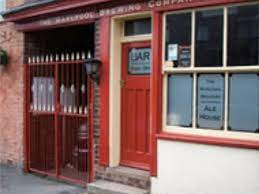
Last week, having once again been granted the unexpected pleasure of a Bank Holiday Monday off work, I decided to venture further afield and investigate the annual City of Ale celebration in the fine city of Norwich. This takes the form of 10 days of special events across loads of the city's pubs with many of them putting up stillages and having special guest ales on for the festivities. This year's event took place from 21st-31st of May, which meant that this one day off was my only free chance to take a closer look. Although I holidayed in Norfolk with my family as a child, I'd never been to Norwich before. As a result, some research was necessary into this most historic of cities.
Norwich is a city on the River Wensum. It is the regional administrative centre and county town of Norfolk. During the 11th century, Norwich was the largest city in England after London, and one of the most important places in the kingdom. Until the Industrial Revolution, Norwich was the capital of the most populous county in England.
The urban or built-up area of Norwich had a population of 213,166 according to the 2011 Census.This area extends beyond the city boundary, with extensive suburban areas on the western, northern and eastern sides, including Costessey, Taverham, Hellesdon, Bowthorpe, Old Catton, Sprowston and Thorpe St Andrew. The parliamentary seats cross over into adjacent local government districts. 132,512 (2011 census) people live in the City of Norwich and the population of the Norwich Travel to Work Area (i.e. the self-contained labour market area in and around Norwich in which most people live and commute to work) is 282,000 (mid-2009 estimate). Norwich is the fourth most densely populated local government district within the East of England with 3,480 people per square kilometre (8,993 per square mile).
In May 2012 Norwich was designated as England's first UNESCO City of Literature.
The capital of the Iceni tribe was a settlement located near to the village of Caistor St. Edmund on the River Tas approximately 8 kilometres (5 mi) to the south of modern-day Norwich. Following an uprising led by Boudica around AD 60 the Caistor area became the Roman capital of East Anglia named
Venta Icenorum, literally "the market place of the Iceni". The Roman settlement fell into disuse around 450 AD, and the Anglo-Saxons settled on the site of the modern city between the 5th and 7th centuries, founding the towns of
Northwic (from which Norwich gets its name),
Westwic (at Norwich-over-the-Water) and the secondary settlement at Thorpe. According to a local rhyme, the demise of
Venta Icenorum led to the development of Norwich: "Caistor was a city when Norwich was none, Norwich was built of Caistor stone."
There are two suggested models of development for Norwich. It is possible that three separate early Anglo-Saxon settlements, one on the north of the river and two either side on the south, joined together as they grew or that one Anglo-Saxon settlement, on the north of the river, emerged in the mid-7th century after the abandonment of the previous three. The ancient city was a thriving centre for trade and commerce in East Anglia in 1004 AD when it was raided and burnt by Swein Forkbeard the Viking king of Denmark. Mercian coins and shards of pottery from the Rhineland dating to the 8th century suggest that long distance trade was happening long before this. Between 924–939 AD Norwich became fully established as a town because it had its own mint. The word
Norvic appears on coins across Europe minted during this period, in the reign of King Athelstan. The Vikings were a strong cultural influence in Norwich for 40–50 years at the end of the 9th century, setting up an Anglo-Scandinavian district towards the north end of present day King Street. At the time of the Norman Conquest the city was one of the largest in England. The Domesday Book states that it had approximately twenty-five churches and a population of between five and ten thousand. It also records the site of an Anglo-Saxon church in Tombland, the site of the Saxon market place and the later Norman cathedral. Norwich continued to be a major centre for trade, the River Wensum being a convenient export route to the River Yare and Great Yarmouth, which served as the port for Norwich. Quern stones, and other artefacts from Scandinavia and the Rhineland have been found during excavations in Norwich city centre which date from the 11th century onwards.
Norwich Castle was founded soon after the Norman Conquest. The Domesday Book records that 98 Saxon homes were demolished to make way for the castle. The Normans established a new focus of settlement around the Castle and the area to the west of it: this became known as the "New" or "French" borough, centred on the Normans' own market place which survives to the present day as Norwich Market. In 1096, Herbert de Losinga, the Bishop of Thetford, began construction of Norwich Cathedral. The chief building material for the Cathedral was limestone, imported from Caen in Normandy. To transport the building stone to the cathedral site, a canal was cut from the river (from the site of present-day Pulls Ferry), all the way up to the east wall. Herbert de Losinga then moved his See there to what became the cathedral church for the Diocese of Norwich. The bishop of Norwich still signs himself
Norvic. Norwich received a royal charter from Henry II in 1158, and another one from Richard
the Lionheart in 1194. Following a riot in the city in 1274, Norwich has the distinction of being the only English city to be excommunicated by the Pope.
The first recorded presence of Jews in Norwich is 1134. In 1144, the Jews of Norwich were accused of ritual murder after a boy (William of Norwich) was found dead with stab wounds. William acquired the status of martyr and was subsequently canonised. Offerings to a shrine at the Cathedral (the Cathedral was largely finished by 1140) by pilgrims were made up to the 16th century but the records suggest there were few pilgrims. In 1174 Norwich was sacked by the Flemings. In February 1190 all the Jews of Norwich were massacred except for a few who found refuge in the castle. At the site of a medieval well, the bones of 17 individuals, including 11 children, were found in 2004 by workers preparing the ground for construction of a Norwich shopping centre. The remains were determined by forensic scientists to most probably be the remains of Jews murdered, and a DNA expert determined that the victims were all related, most probably coming from one Ashkenazi Jewish family. The study of these remains was featured in an episode of the BBC television documentary series
History Cold Case.
In 1216 the castle fell to Louis, Dauphin of France and Hildebrand's Hospital was founded. Ten years later the Franciscan Friary and Dominican Friary were founded. In 1249 the Great Hospital was founded and the following year, the College of St Mary in the Field established. In 1256 Whitefriars founded and in 1266 the 'Disinherited' sacked Norwich. The city has the distinction of being the only English city ever to be excommunicated, following a riot between citizens and monks in 1274. St Ethelbert's Gate, one of the entrances to the cathedral priory, was constructed as penance by Norwich citizens. In 1278 the Cathedral received final consecration. In 1290 the city flooded, whilst Austin Friary founded.
The engine of trade was wool from Norfolk's sheepwalks. Wool made England rich, and the staple port of Norwich "in her state doth stand With towns of high'st regard the fourth of all the land", as Michael Drayton noted in
Poly-Olbion (1612). The wealth generated by the wool trade throughout the Middle Ages financed the construction of many fine churches; consequently, Norwich still has more medieval churches than any other city in Western Europe north of the Alps. Throughout this period Norwich established wide-ranging trading links with other parts of Europe, its markets stretching from Scandinavia to Spain and the city housing a Hanseatic warehouse. To organise and control its export to the Low Countries, Great Yarmouth, as the port for Norwich, was designated one of the staple ports under terms of the 1353 Statute of the Staple.
From 1280 to 1340 the city walls were built. At around four kilometres (2,5 miles) long, these walls, along with the river, enclosed a larger area than that of the City of London. However, when the city walls were constructed it was made illegal to build outside them, inhibiting expansion of the city. Around this time, the city was made a county corporate and became capital of one of the most densely populated and prosperous counties of England.
Hand-in-hand with the wool industry, this key religious centre experienced a Reformation significantly different to other parts of England. The magistracy in Tudor Norwich unusually found ways of managing religious discord whilst maintaining civic harmony.
The year 1549 saw an unprecedented rebellion in Norfolk, which, unlike popular challenges elsewhere in the Tudor period, appears to have been Protestant in nature. For several weeks Kett's rebels camped outside Norwich on Mousehold Heath and took control of the city, with the support of many of its poorer inhabitants. Unusually in England it divided a city and appears to have linked Protestantism with the plight of the urban poor. In the case of Norwich this process was later underscored by the arrival of Dutch and Flemish 'Strangers' fleeing Catholic persecution and eventually numbering as many as one third of the city's population. Large numbers of exiles came to the city especially Flemish Protestants from the Westkwartier ("Western Quarter"), the region in the Southern Netherlands where the first Calvinist fires of the Dutch Revolt had spread. Inhabitants of Ypres in particular chose Norwich above other destinations. Perhaps in response to Kett, Norwich became the first provincial city to initiate compulsory payments for a civic scheme of poor relief, which Pound claims led to its wider introduction, forming the basis of the later Elizabethan Poor Law of 1597–98.
Norwich has traditionally been the home of various dissident minorities, notably the French Huguenot and the Belgian Walloon communities in the 16th and 17th centuries. The great 'Stranger' immigration of 1567 brought a substantial Flemish and Walloon community of Protestant weavers to Norwich, where they are said to have been made welcome. The merchant's house—now a museum—which was their earliest base in the city is still known as 'Strangers' Hall'. It seems that the Strangers were integrated into the local community without a great deal of animosity, at least among the business fraternity who had the most to gain from their skills. The arrival of the Strangers in Norwich bolstered trade with mainland Europe, fostering a movement toward religious reform and radical politics in the city.
The Norwich Canary was first introduced into England by Flemish refugees fleeing from Spanish persecution in the 16th century. They brought with them not only advanced techniques in textile working but also their pet canaries, which they began to breed locally, the little yellow bird eventually to become, in the 20th century, the city's most beloved mascot. The canary is the emblem of the city's football club, Norwich City F.C., nicknamed "The Canaries".
Printing was introduced to the city by Anthony de Solempne, one of the 'Strangers' in 1567 but did not become established and had died out by about 1572.
Across the Eastern Counties Oliver Cromwell's powerful Eastern Association was eventually dominant. However, to begin with, there had been a large element of Royalist sympathy within Norwich, which seems to have experienced a continuity of its two-sided political tradition throughout the civil-war period. Bishop Matthew Wren was a forceful supporter of Charles I; nonetheless Parliamentary recruitment took hold, and a strong Royalist party was stifled by a lack of commitment from the aldermen, and isolation from Royalist-held regions. Serious inter-factional disturbances culminated in "The Great Blow" of 1648, when Parliamentary forces tried to quell a Royalist riot. The latter's gunpowder was set off by accident in the city centre, causing mayhem. (According to Hopper
qv, the explosion "ranks among the largest of the century".) Stoutly defended though East Anglia was by the parliamentary army, there are said to have been pubs in Norwich where the King's health was still drunk and the name of the Protector sung to ribald verse.
At the cost of some discomfort to the Mayor, a Royalist, and the bishop, Joseph Hall, a moderate, was targeted because of his position as bishop.
Distinguishing Norwich in the period following the Restoration of 1660 and throughout the ensuing century was that it was the golden age of its cloth industry, comparable only to those of the West Country and Yorkshire. But unlike other cloth-manufacturing regions, Norwich weaving brought greater urbanisation; being substantially concentrated in the surrounds of the city itself, creating an urban society, with features such as leisure time, alehouses, and other public fora which provided opportunities for debate and argument.
Writing of the early 18th century, Pound describes the city's rich cultural life, the winter-theatre season, the festivities accompanying the summer assizes, and other popular entertainments. Norwich was the wealthiest town in England with a sophisticated poor relief system, and a large influx of foreign refugees. Despite having suffered severe episodes of plague, the city had a population of almost 30,000. While this made Norwich unique in England it placed her in the company of about fifty cities in Europe. In some, like Lyon or Dresden, this was, as in the case of Norwich, linked to an important proto-industry, such as textiles or china pottery; in some, such as Vienna, Madrid or Dublin, to the city's status as an administrative capital; in others such as Antwerp, Marseilles or Cologne to its positioning on an important trade route of sea or river.
However, Norwich of the late 17th century was riven politically. Churchman Humphrey Prideaux described "two factions, Whig and Tory...and both contend for their way with the utmost violence". Nor did the city accept the outcome of the 1688 Glorious Revolution with a unified voice. The pre-eminent citizen, Bishop William Lloyd, would not take the oaths of allegiance to the new monarchs. One report has it that in 1704 the landlord of Fowler's alehouse "with a glass of beer in hand, went down on his knees and drank a health to James the third, wishing the Crowne (sic) well and settled on his head". "Never was a city in the miserable kingdom so wretchedly divided as this", said the
London Post.
In 1716, at a play at the New Inn, the Pretender was cheered and the audience booed and hissed every time King George's name was mentioned. In 1722 supporters of the king were said to be "hiss'd at and curst as they go in the streets", and in 1731 "a Tory mobb, in a great body, went through several parts of this city, in a riotous manner, cursing and abusing such as they knew to be friends of the government". But the Whigs gradually gained control and by the 1720s they had successfully petitioned parliament to allow all adult males working in the textile industry to take up the freedom, on the correct assumption that they would vote Whig. But it had the effect of boosting the city's popular Jacobitism, says Knights (
qv),and contests of the kind described continued in Norwich well into a period in which political stability had been discerned at a national level, and the city's Jacobitism perhaps only ended from 1745, well after it had ceased to be a significant movement outside of Scotland. Despite the Highlanders reaching Derby, and Norwich citizens mustering themselves into an association to protect the city, some Tories refused and the vestry of St Peter Mancroft resolved that it would not ring its bells to summon the defence. But it was the end of the road for Norwich Jacobites, and the Whigs organised a notable celebration following the battle of Culloden.
What the events of this period illustrate is that precursory to an organised radical movement Norwich had had a strong tradition of popular protest favouring Church and Stuarts and attached to the street and alehouse. Knights
qv tells how in 1716 the mayoral election had ended in a riot, with both sides throwing "brick-ends and great paving stones" at each other. A renowned Jacobite watering-hole, the Blue Bell Inn (nowadays The Bell Hotel), owned in the early 18th century by the high-church Helwys family, in the 1790s became the central rendezvous point of the Norwich Revolution Society.
Britain's first provincial newspaper, the
Norwich Post, had been published in 1701. By 1726 there were rival Whig and Tory presses and even in mid-century some parishes had three quarters of the males as literate. In Norwich alehouses 281 clubs and societies met in 1701, and at least 138 more were formed before 1758. The Theatre Royal had opened in 1758 adding to the city's stage productions in inns, and puppet shows in rowdy alehouses. In 1750 Norwich could boast nine booksellers and after 1780 a "growing number of circulating and subscription libraries". Knights says: '[All this] made for a lively political culture, in which independence from governmental lines was particularly strong, evident in campaigns against the war with America and for reform...in which trade and the impact of war with Revolutionary France were key ingredients. The open and contestable structure of local government, the press, the clubs and societies, and dissent all ensured that politics overlapped with communities bound by economics, religion, ideology and print in a world in which public opinion could not be ignored.'
Amid this metropolitan culture the city burghers had built a sophisticated political structure. Freemen, who not only had the right to trade but to vote at elections, numbered about 2,000 in 1690, rising to over 3,300 by the mid-1730s. With growth partly the result of political manipulation, their numbers did at one point reach one third of the adult male population. This was notoriously the age of "rotten" and "pocket" boroughs, and Norwich was unusual in having such a high proportion of its citizens able to vote. "Of the political centres where the Jacobin propaganda had penetrated most deeply", says E. P. Thompson, "only Norwich and Nottingham had a franchise deep enough to allow radicals to make use of the electoral process." "Apart from London, Norwich was probably still the largest of those boroughs which were democratically governed", says Jewson, describing other towns under the control of a single fiefdom. In Norwich, he says, a powerful Anglican Establishment, symbolised by the Cathedral and the great church of St Peter Mancroft was matched by scarcely less powerful congeries of Dissenters headed by the wealthy literate body [of Unitarians] worshipping at the Octagon Chapel.'
In the middle of political disorders of the late 18th century, Norwich intellectual life flourished. And it contained one, so far unmentioned, characteristic. Harriet Martineau wrote of the city's
literati of the period, which included such people as William Taylor, one of the first German scholars in England. The city "boasted of her intellectual supper-parties, where, amidst a pedantry which would now make laughter hold both his sides, there was much that was pleasant and salutary: and finally she called herself
The Athens of England."
Notwithstanding Norwich's hitherto industrial prosperity, by the 1790s the wool trade was experiencing intense competition. It came from both Yorkshire woollens, and increasingly from Lancashire cottons. The effects were aggravated by the loss of continental markets after Britain went to war with France in 1793. The early 19th century would see deindustrialisation accompanied by bitter squabbles. The 1820s would be marked with wage cuts and personal recrimination against owners. Thus amid the rich commercial and cultural heritage that was its recent past, there lurked in the alleys of 1790s Norwich an unwelcome stranger, incipient decline; exacerbated by a serious trade recession.
As early in the war as 1793 a major city manufacturer and government supporter, Robert Harvey, had complained of low order books, languid trade and a doubling of the poor rate. As with many generations of their Norwich forbears, the hungry poor took their complaints on to the streets. Hayes describes a meeting of 200 people in a Norwich public house, at which 'Citizen Stanhope' spoke. The gathering is said to have "[roared its] applause at Stanhope's declaration that the Ministers, unless they changed their policy deserved to have their heads brought to the block; – and if there was a people still in England, the event might turn out to be so." Hayes says that "the outbreak of war, in bringing the worsted manufacture almost to a standstill and so plunging the mass of the Norwich weavers into sudden distress made it almost inevitable that a crude appeal to working-class resentment should take the place of a temperate process of education which the earliest reformers had intended".
However by 1795 it was not just the Norwich rabble which was causing the government concern. In April that year the Norwich Patriotic Society was established, its manifesto declaring "that the great end of civil society was general happiness; that every individual...had a right to share in the government..." In December the price of bread reached its highest yet, and in May 1796, when William Windham was forced to seek re-election following his appointment as war secretary, he only just held his seat. Amid the same disorder and violence as was often the case with Norwich elections, it was only by the narrowest of margins that the radical Bartlett Gurney, campaigning on the platform of "Peace and Gurney – No More War – No more Barley Bread" failed to unseat him.
Though informed by issues of recent national importance, the vibrant two-sided political culture of Norwich in the 1790s cannot be totally disconnected from local tradition. Two features stand out from a political continuum of three centuries. The first is the dichotomous power balance. From at least the time of the Reformation, there is a record of Norwich as a "two-party city". In the mid-16th century the weaving parishes actually fell under the control of opposition forces, as Kett's rebels held the north of the river, in support of poor cloth workers.
Secondly there does seem to be some case for saying that with this tradition of two-sided disputation, the city had over a long period of time developed an infrastructure, evident in her many cultural and institutional networks of politics, religion, society, news media and the arts, whereby argument could be managed short of outright confrontation. indeed at a time of hunger and tension on the Norwich streets, with the alehouse crowds ready to have "a Minister's head brought to the block", that, unusually in England, the Anglican and Dissenting clergy were doing their best to conduct a collegiate dialogue, seeking common ground, and reinforcing the same well-mannered civic tradition of consensus as that illustrated by historians of earlier periods.
In 1797 Thomas Bignold, a 36-year-old wine merchant and banker, founded the first Norwich Union Society. Some years earlier, when he moved from Kent to Norwich, Bignold had been unable to find anyone willing to insure him against the threat from highwaymen. With the entrepreneurial thought that nothing was impossible, and aware that in a city built largely of wood the threat of fire was uppermost in people's minds, Bignold formed the "Norwich Union Society for the Insurance of Houses, Stock and Merchandise from Fire". The new business, which became known as the Norwich Union Fire Insurance Office, was a "mutual" enterprise. Norwich Union was later to become the country's largest insurance giant.
From earliest times, Norwich was a centre of textile manufacture. Towards the end of the 18th century, in the 1780s, the manufacture of Norwich shawls became an important industry and remained so for nearly one hundred years. The shawls were a high-quality fashion product and rivalled those made in other towns such as Paisley (which entered shawl manufacture in about 1805, some 20 or more years after Norwich). With changes in women's fashion in the later Victorian period, the popularity of shawls declined and eventually manufacture ceased. Examples of Norwich shawls are now highly sought after by collectors of textiles.
Norwich's geographical isolation was such that until 1845 when a railway connection was established, it was often quicker to travel to Amsterdam by boat than to London. The railway was introduced to Norwich by Morton Peto, who also built the line to Great Yarmouth.
From 1808 to 1814 Norwich hosted a station in the shutter telegraph chain that connected the Admiralty in London to its naval ships in the port of Great Yarmouth.
A permanent military presence was established in the city with the completion of Britannia Barracks in 1897.
In the early part of the 20th century Norwich still had several major manufacturing industries. Among these were the manufacture of shoes (for example the Start-rite or Van Dal brands), clothing, joinery, and structural engineering as well as aircraft design and manufacture. Important employers included Boulton & Paul, Barnards (inventors of machine produced wire netting), and electrical engineers Laurence Scott and Electromotors.
Norwich also has a long association with chocolate manufacture, primarily through the local firm of Caley's, which began as a manufacturer and bottler of mineral water and later diversified into making chocolate and Christmas crackers. The Caley's cracker-manufacturing business was taken over by Tom Smith in 1953, and the Norwich factory in Salhouse Road eventually closed down in 1998. Caley's was acquired by Mackintosh in the 1930s, and merged with Rowntree's in 1969 to become Rowntree-Mackintosh. Finally, it was bought by Nestlé and closed down in 1996 with all operations moved to York; ending a 120-year association with Norwich. The demolished factory stood on the site of what is now the Chapelfield development. Caley's chocolate has since made a reappearance as a brand in the city, although it is no longer made in Norwich.
HMSO, once the official publishing and stationery arm of the British government and one of the largest print buyers, printers and suppliers of office equipment in the UK, moved most of its operations from London to Norwich in the 1970s.
Jarrolds, established in 1810, was a nationally well-known printer and publisher. In 2004, after nearly 200 years, it passed out of family ownership. Today, the Jarrold name is now best-known and recognised as being that of Norwich's only independent department store.
The city was home to a long-established tradition of brewing, with several large breweries continuing in business into the second half of the century. The main brewers were Morgans, Steward and Patteson, Youngs Crawshay and Youngs, Bullard and Son, and the Norwich Brewery. Despite takeovers and consolidation in the 1950s and 1960s in attempts to remain viable, by the 1970s only the Norwich Brewery (owned by Watney Mann and on the site of Morgans) remained. In 1985 the Norwich Brewery closed, and was subsequently demolished. Small-scale brewing continues in Norwich in "microbreweries".
Norwich suffered extensive bomb damage during World War II, affecting large parts of the old city centre and Victorian terrace housing around the centre. Industry and the rail infrastructure also suffered. The heaviest raids occurred on the nights of 27/28th and 29/30 April 1942; as part of the Baedeker raids (so called because Baedeker's series of tourist guides to the British Isles were used to select propaganda-rich targets of cultural and historic significance rather than strategic importance). Lord Haw-Haw made reference to the imminent destruction of Norwich's new City Hall (completed in 1938), although in the event it survived unscathed. Significant targets hit included the Morgan's Brewery building, Coleman's Wincarnis works, City Station, the Mackintosh chocolate factory, and shopping areas including St. Stephen's Street, St. Benedict's Street, the site of Bond's department store (now John Lewis) and Curl's department store. During World War II Norwich also served another purpose as a postal acronym used by servicemen to convey messages to their sweethearts at home. These were usually written on the back of envelopes, when "Norwich" became "(k)Nickers Off Ready When I Come Home".
In 1976 the city's pioneering spirit was on show when Motum Road in Norwich, allegedly the scene of "a number of accidents over the years", became the third road in Britain to be equipped with speed bumps, intended to encourage adherence to the road's 30 mph (48 km/h) speed limit. The humps, installed at intervals of 50 and 150 yards, stretched twelve feet across the width of the road and their curved profile was, at its highest point, 4 inches (10 cm) high. The responsible quango gave an assurance that the experimental devices would be removed not more than one year following installation.
From 1980 to 1985 the City became a frequent focus of National media due to the squatting of Argyle Street.
It was into this wealth of history that I chose to immerse myself on a warm and unsettled Monday afternoon. With a proposed Bank Holiday rail strike postponed, I was able to catch an early train for the 2 hour and 40 minute journey to East Anglia. I had a rough itinerary in mind, helped by the City of Ale website which provides a comprehensive list of the pubs involved, as well as a map of the different locations. I arrived in Norwich just before 11.15am, knowing that the first destination on my list was already open and close by. Leaving the station, I crossed the main road with the first pub already in sight. My exploration of the City of Ale began at the Compleat Angler.

Old Norfolk records show that there has been an inn at this site since 1845. In 1885, the pub was renamed the Norfolk Railway House. In the Second World War, it was known as the Blue Rooms by American GIs and British troops because it was very lively. Norfolk Brewery Bullards were known to supply the pub with their beers. In 1975, the Norfolk Railway House was renamed the Compleat Angler. The name with its strange spelling is based on the famous book on fishing by Isaak Walton published in 1897. In early 2014, after a complete refurbishment, the pub relaunched with an emphasis on food, beers and wines and is regularly serving up to 10 cask ales. On my visit, 8 of these ales are available whilst the remaining 2 are in the process of settling. The choice on offer is interesting with 5 from Great Yarmouth based Lacons (Legacy, Ale, Four Kisses, Pale Ale and Encore), Green Jack Orange Wheat Beer, Wolf Granny Wouldn't Like It! and Westerham 1730. Attracted by the name, rather than anything else, I opted for Granny Wouldn't Like It! (4.8%). This is a dark red, rich and fruity beer with a complex mix of flavours. The brewery itself is located at nearby Attleborough. I took my pint and found a seat off to one side of the room, between 2 TVs showing highlights from the last day of the Premier League. The long train journey had obviously contributed to a significant thirst as my delicious beer barely touched the sides.
The next location on my East Anglian excursion was a fair trek away, in the City Centre area proper. Once I'd eventually oriented myself correctly and worked out what Google Maps was trying to tell me, I was able to make my way to a pub which had piqued my interest for its name and history alone: The Murderers Arms.
The first known licensee of this intriguing building was William Bales in 1850, although the building dates to 1542. Officially known as The Gardeners, it acquired its nickname from a murder. The story goes that, in 1890, a lady of pleasure got violent with a client who would not pay and stabbed him to death. But that was just a story and the real murder took place in 1895 when an ex-Cavalry man bludgeoned to death his estranged young wife Millie. The pub has been jointly known as The Gardeners and The Murderers ever since. Watney Mann closed the pub in 1970 and it reopened in 1978 after a major refurbishment.
The interior of the pub is a higgledy-piggledy mix of small alcoves and split level areas with exposed brickwork on the walls and central pillars. The bar boasts 11 handpulls, 10 of which are in use and there is also a specially installed stillage for City of Ale. The amount of beer available in this one venue is extensive and I was already very impressed. On the bar, the following beers were on offer: Sharp's Atlantic, Milestone Black Pearl, Taylor's Attleborough Second Coming, Abbot Ale, Wolf Edith Cavell, Bullards No.2, Woodforde's City and Dancing Men Knight's Noggin. The stillage range was even bigger. Thankfully, I'm diligent enough to write them down. In no particular order, the following beers were available: Winters Storm Force, Winters Bitter, Dancing Men Cliffhanger, Taylor's Stitched Up, Grain Wymers Gold, Two Rivers Kiwi Kick, Hoxne HSP, S+P Topaz Blonde, S+P Dennis, Tombstone Big Nose Kate, Tombstone Gunslinger, Shortts Farm Skiffle, Shackleton Nimrod, Wolf Sirius Dog Star, Panther Beast of the East, All Day Drink Me and Norfolk Brewhouse Norfolk Harvest.
With so much choice, I was initially a bit dumbfounded. I finally decided on a brew from the bar and opted for Dancing Men Knight's Noggin (4.8%). This was darker than I'd initially realised but still a good choice, being a rich, heavily-malted porter-style beer packed with toasted toffee and chocolate notes, from a small brewery in Happisburgh, further along the coast. The pub and the city were gearing up for an important football match as Norwich City were playing Middlesbrough in the Championship play-off final later that day and this atmosphere of nervous anticipation was already starting to filter around as the day wore on lending a strange feel to the day as a whole.
The next stop on my route was just around the corner in a street that converged with the one that I was already on. Tucked away down a small alleyway through some metal gates, is The Lamb Inn.

This was originally an inn known as The Holy Lamb as early as the 12th century. Built using bricks from a local church, it was first recorded as trading from 1574. There are many local ghost stories surrounding the Lamb where, in 1787, the 'Story-Telling Landlord' John Aggis, was brutally murdered in the cellar by his brother-in-law. Despite this, John is renowned as a friendly ghost who is known to appear to children and tell them ghost stories. Also, there is another ghost, known as the Shady Motorcyclist, who was found in the courtyard in 1979 and allegedly died under suspicious circumstances. The Lamb has also seen its share of natural disasters with a flood in 1917 and a devastating fire in 1939. The inn has undergone several changes over recent decades having been known as The Lamb Inn, Rat and Parrot in 1996, and Henry's Café Bar in 2002. It was renamed The Lamb Inn in 2011.
This is an upmarket gastro pub with a very modern interior and some very nice features. The food is all made fresh in-house and sounds fantastic. Perhaps one to visit for sustenance another time. Beer-wise, 3 of the 4 bar handpulls are in use, offering All Day Summer Haze, Green Jack Red Herring and Adnams Mosaic. There is a stillage set up nearby for City of Ale and this features Adnams Fat Sprat, Adnams Lighthouse, Wolf Silver Fox, Wolf Golden Jackal, Lacons Encore, Brancaster Oyster Catcher, Green Jack Gone Fishing and Humpty Dumpty Little Sharpie. I was immediately drawn to the Summer Haze, described as a raspberry wheat beer at 5.2%. This did not disappoint. This is an English take on a fruit classic, unfined, naturally cloudy and very refreshing. It's nothing like as sweet as you would imagine and, in truth, is a masterpiece. So far, City of Ale was impressing me.
This theme was to continue at the next location, which I wasn't afraid to ask directions too. Venturing out of The Lamb, I turned right and followed the road round towards the central market place until I eventually came across a small alleyway known as Old Post Office Court. Down this pathway, on the right, is Walnut Tree Shades.

The building itself is 17th Century and Grade II listed. The first known licensee was William Haylett Roe in 1841. The cellar is believed to be part of Norwich's famous 'Underground Tunnel Network' . In the 1960s it was popular with folk clubs but closed several times in the 1970s. The Walnut Tree Shades has featured in at least 2 episodes of Tales of the Unexpected. Chris Gudgin was licensee from 1984 until 2008. It has been run by Claire Brooks, under Enterprise Inns since 2010. The pub has a replica Wurlitzer jukebox. The upstairs of the building is operated as a restaurant for which opening times vary, with the bar area on the ground floor. The bar includes 4 handpulls, 2 of which are in use with the choice of Old Hoppy Hen or Humpty Dumpty City Hoppers (3.8%). This is one of a limited number of individually dry-hopped beers, designed especially for this year's City of Ale. The base beer is a refreshingly light, clean , golden/yellow session bitter and it goes down very well indeed.
The next pub in my sights is known as the smallest pub in the city. Not too far from the Walnut Tree, is The Vine.

Built in 1786, the first known licensee was George Kew in 1841. The Vine has long been the smallest pub in Norwich. From 1846-1860 is was named the Albert Tavern (after Prince Albert) but when Prince Albert died in 1861, it reverted to The Vine. Aey Allen now runs the pub, offering Thai cuisine both in the bar and the restaurant upstairs. The Vine is another pub which has set up a stillage especially in aid of City of Ale. There are 4 handpulls on the bar, offering Oakham JHB, Wymer's Gold, The Star Lilith and Fat Cat Colin. The stillage holds an additional 9 beers: Andwell King John, Coach House Dick Turpin, Great Heck Christopher, Coastal Angelina, Inveralmond Duncan's IPA, Corvedale Norman's Pride, Phoenix Wobbly Bob, Cullercoats Jack the Devil, Sarah Hughes Dark Ruby, Skinner's Betty Stogs and Derventio Cleopatra. After a moment's perusal, I opted for Jack the Devil (4.5%), a SIBA Silver Award Winner in 2012. Delicious and rich, this is a dark chestnut coloured ale made from Maris Otter barley and the finest English hops. It's certainly easy to see why it is worthy of such an award.
My next destination is another pub with an unusual history, reflected in its name. Situated on Bedford Street, I give you the Wildman.

The pub takes its name from Peter the Wild Boy, (c.1711-1785), a feral child discovered in Germany in the 18th century. For a time, he was kept by George I as a curiosity, arriving in Norwich as a vagrant in 1751. The pub is currently owned by Punch Taverns and has been recently refurbished to a high standard. The pub is also believed to be haunted. A former staff member claimed to have seen a young boy run across the bar area and disappear up a staircase, though no trace of him could be found. He is thought to have died in a fire in the cellar, where heavy beer barrels are heard moving across the floor late at night. All of the 4 handpulls are in use, featuring Adnams Jester, St. Austell Spring Brew, Oldershaw Progress and Mr. Whitehead's Plum Cider. I went for a pint of the Jester (4.8%), a pale ale made with the new British hop variety after which it is named. It is intense, with punchy aromas of grapefruit and tropical fruits. As I set and enjoyed this delicious beer, I calculated that I would be able to squeeze 2 more pubs in before the long slog back to the train station.
The first of these, on St. Andrews Street was Rumsey Wells.

Listed from 1845, the pub, originally named the Shrub House, occupied the corner of St Andrews and Exchange Street. In 1974, it was extended to take in Rumsey Wells, gents outfitters' from which it takes its current name. It closed in 1979, and reopened in 1985 as Blueberries, with the corner bar becoming a newsagents. It became St. Andrews Tavern in 1989 when it was taken over by Colin Keatley of the Fat Cat. Adnams bought the pub in 1998 and the tie continues to this day. It was renamed Rumsey Wells in 2008. Being an Adnams tied house, it's perhaps no surprise that the majority of beers on the bar are from this brewery. 8 of the 10 handpulls are in use and 6 of these are Adnams (Southwold, Broadside, Ghost Ship, Jester, Fat Sprat and Sorachi Saison). The remaining pumps feature Mad Goose Purity and Oakham Citra. I'm an enormous fan of Oakham, particularly Citra so no prizes for guessing which beer I chose. I'm pleased to report that this was excellent. It was here that the first of 2 events to tarnish an otherwise excellent day took place. Whilst drinking my pint at the bar and listening to the background music, I was approached by a Lithuanian man who I'm fairly sure tried to recruit me for the Russian mafia. Whether there is a current shortage of suitable candidates for this job and what skills he thought I would be able to contribute I'm as yet uncertain. Needless to say, I decided it was time to leave and so used a cunning scheme to get Amy to phone me so that I had an excuse to go outside. Thankfully, I had finished my beer in time to make my departure more convincing.
My day got stranger and, sadly, more disappointing, when I reached the last stop I had time for before I had to leave. In the heart of Norwich's Tombland lies Mr. Postle's Apothecary.

This intriguing place is an emulation of a 1920's chemist with a modern twist. The pub opened to the public in March of this year and serves an array of innovative and delectable cocktails, the most popular being 'Meringue Martini' and 'Cherry Bakewell'. Using molecular mixology and theatrics never seen in Norwich before, this was not one to miss. Not only do they serve and eclectic cocktail mix but a thirty-strong bottled beer and a craft ale list to die for. The real ale selection isn't bad either, on this occasion boasting 4 handpulls and 4 more beers on stillage. The bar offers Elgood's Black Dog, Golden Triangle Bonny's Gold, Grain Oak and Grain Wymer's Gold. The stillaged beers featured were Wolf Ale, Golden Triangle Mosaic City, Green Jack Trawlerboys and Norfolk Brewhouse Moon Gazer Ruby Ale. For my last beer of the day, I decided on the Trawlerboys (4.6%) from this Lowestoft based brewery. This is a full-bodied and copper-coloured premium bitter brewed with English full cone hops, rich and malty with fruity hop flavours. The beer is named after the nickname of Lowestoft town football club, whose ground is opposite the brewery. This was a very nice beer to end the day but I never got to finish it. Approximately halfway through my beer, I went to the toilet, during which time it became clear that the person in the cubicle next to mine was being very unwell. I thought no more of this until I attempted to head back to the bar. Upon opening the toilet door, I was confronted by the manager, holding my coat, who advised me that it was time to go and to come back when I was feeling better. I was then shepherded out the back door without an explanation or any opportunity to discuss what was going on!
Understandably aggrieved and disappointed, I had no real choice other than to head back to the station as I had no time to find an alternative location. What had otherwise had been an excellent day had turned sour, through no fault of my own. I can only assume that the manager mistakenly believed that I was being sick but this doesn't really excuse not giving me a chance to find out what was happening. Perhaps he was being extra cautious due to occasion of the playoff final, which Norwich had won 2-0, taking them back to the Premier League at the first attempt. Even so, I was unimpressed.
Upon my arrival back at the station and feeling slightly calmer, I had a think back over the day's events. In general, Norwich is a fantastic city with a strong and well-deserved real ale reputation. The venues are different, varied and interesting and the range of beers is nothing short of outstanding. Norwich definitely warrants a further investigation, outside of the City of Ale festivities, to see if it can be as good and as consistent when it's not a special occasion. Were it not for an unfortunate case of mistaken identity, Norwich would have scored even more highly but unfortunately you can't legislate for human error. I suspect that I will go back to Norwich in future to check out some of the venues that I didn't have time to get to. It's clear in my mind that Norwich is a perfect venue for City of Ale. It certainly stands tall and proud as the flagship for real ale in East Anglia and, quite possibly, the UK. Long may it continue. Although they should work on their diplomacy.