Monday, June 5, 2017

A Cambridge Crawl

9 days on from this blog's first foray into Cambridgeshire, I decided to make the most of some excellent weather and commence a follow-up trip, this time to the fair city of Cambridge, a place I know well from a year working there. During this period, I never fully got the chance to experience the full range of Cambridge pubs, this being in the dark days before I discovered proper beer. It was high time that a thorough exploration was carried out. What follows is by no means a comprehensive look but something of a cross section of what to expect should you ever find yourself here.

Cambridge is a university city and the county town of Cambridgeshire, on the River Cam about 50 miles (80 km) north of London. At the United Kingdom Census 2011, its population was 123,867, including 24,488 students.
There is archaeological evidence of settlement in the area in the Bronze Age and in Roman Britain; under Viking rule, Cambridge became an important trading centre. The first town charters were granted in the 12th century, although city status was not conferred until 1951.
The University of Cambridge, founded in 1209, is one of the top five universities in the world. The university includes the Cavendish Laboratory, King's College Chapel, and the Cambridge University Library. The city's skyline is dominated by the last two buildings, along with the spire of the Our Lady and the English Martyrs Church, the chimney of Addenbrooke's Hospital and St John's College Chapel tower. Anglia Ruskin University, evolved from the Cambridge School of Art and the Cambridgeshire College of Arts and Technology, also has its main campus in the city.
Cambridge is at the heart of the high-technology Silicon Fen with industries such as software and bioscience and many start-up companies born out of the university. More than 40% of the workforce has a higher education qualification, more than twice the national average. The Cambridge Biomedical Campus, one of the largest biomedical research clusters in the world, is soon to be home to AstraZeneca, a hotel and the relocated Papworth Hospital.
Parker's Piece hosted the first ever game of Association football. The Strawberry Fair music and arts festival and Midsummer Fairs are held on Midsummer Common, and the annual Cambridge Beer Festival takes place on Jesus Green. The city is adjacent to the M11 and A14 roads, and Cambridge station is less than an hour from London King's Cross railway station.

Settlements have existed around the Cambridge area since prehistoric times. The earliest clear evidence of occupation is the remains of a 3,500-year-old farmstead discovered at the site of Fitzwilliam College. Archaeological evidence of occupation through the Iron Age is a settlement on Castle Hill from the 1st century BC, perhaps relating to wider cultural changes occurring in southeastern Britain linked to the arrival of the Belgae.
The principal Roman site is a small fort (castrum) Duroliponte on Castle Hill, just northwest of the city centre around the location of the earlier British village. The fort was bounded on two sides by the lines formed by the present Mount Pleasant, continuing across Huntingdon Road into Clare Street. The eastern side followed Magrath Avenue, with the southern side running near to Chesterton Lane and Kettle's Yard before turning northwest at Honey Hill. It was constructed around AD 70 and converted to civilian use around 50 years later. Evidence of more widespread Roman settlement has been discovered including numerous farmsteads and a village in the Cambridge district of Newnham.
Following the Roman withdrawal from Britain around 410, the location may have been abandoned by the Britons, although the site is usually identified as Cair Grauth listed among the 28 cities of Britain by the History of the Britons. Evidence exists that the invading Anglo-Saxons had begun occupying the area by the end of the century. Their settlement—also on and around Castle Hill—became known as Grantebrycge ("Granta-bridge"). (By Middle English, the settlement's name had changed to "Cambridge" and the lower stretches of the Granta changed their name to match.) Anglo-Saxon grave goods have been found in the area. During this period, Cambridge benefited from good trade links across the hard-to-travel fenlands. By the 7th century, the town was less significant and described by Bede as a "little ruined city" containing the burial site of Etheldreda. Cambridge was on the border between the East and Middle Anglian kingdoms and the settlement slowly expanded on both sides of the river.
The arrival of the Vikings was recorded in the Anglo-Saxon Chronicle in 875. Viking rule, the Danelaw, had been imposed by 878 Their vigorous trading habits caused the town to grow rapidly. During this period the centre of the town shifted from Castle Hill on the left bank of the river to the area now known as the Quayside on the right bank. After the Viking period, the Saxons enjoyed a return to power, building churches such as St Bene't's Church, wharves, merchant houses and a mint, which produced coins with the town's name abbreviated to "Grant".
In 1068, two years after his conquest of England, William of Normandy built a castle on Castle Hill. Like the rest of the newly conquered kingdom, Cambridge fell under the control of the King and his deputies.
The first town charter was granted by Henry I between 1120 and 1131. It gave Cambridge monopoly of waterborne traffic and hithe tolls and recognised the borough court. The distinctive Round Church dates from this period. In 1209, Cambridge University was founded by students escaping from hostile townspeople in Oxford. The oldest existing college, Peterhouse, was founded in 1284.
In 1349 Cambridge was affected by the Black Death. Few records survive but 16 of 40 scholars at Kings Hall died. The town north of the river was severely affected being almost wiped out. Following further depopulation after a second national epidemic in 1361, a letter from the Bishop of Ely suggested that two parishes in Cambridge be merged as there were not enough people to fill even one church. With more than a third of English clergy dying in the Black Death, four new colleges were established at the university over the following years to train new clergymen, namely Gonville Hall, Trinity Hall, Corpus Christi and Clare.
In 1382 a revised town charter effects a "diminution of the liberties that the community had enjoyed", due to Cambridge's participation in the Peasants' Revolt. The charter transfers supervision of baking and brewing, weights and measures, and forestalling and regrating, from the town to the university. King's College Chapel, was begun in 1446 by King Henry VI. The chapel was built in phases by a succession of kings of England from 1446 to 1515, its history intertwined with the Wars of the Roses, and completed during the reign of King Henry VIII. The building would become synonymous with Cambridge, and currently is used in the logo for the City Council.

Following repeated outbreaks of pestilence throughout the 16th Century, sanitation and fresh water were brought to Cambridge by the construction of Hobson's Conduit in the early 1600s. Water was brought from Nine Wells, at the foot of the Gog Magog Hills, into the centre of the town.
Cambridge played a significant role in the early part of the English Civil War as it was the headquarters of the Eastern Counties Association, an organisation administering a regional East Anglian army, which became the mainstay of the Parliamentarian military effort before the formation of the New Model Army. In 1643 control of the town was given by Parliament to Oliver Cromwell, who had been educated at Sidney Sussex College. The town's castle was fortified and garrisoned with troops and some bridges were destroyed to aid its defence. Although Royalist forces came within 2 miles (3 km) of the town in 1644, the defences were never used and the garrison was stood down the following year.
In the 19th century, in common with many other English towns, Cambridge expanded rapidly, due in part to increased life expectancy and improved agricultural production leading to increased trade in town markets. The Inclosure Acts of 1801 and 1807 enabled the town to expand over surrounding open fields and in 1912 and again in 1935 its boundaries were extended to include Chesterton, Cherry Hinton, Fen Ditton, Trumpington, and Grantchester.
The railway came to Cambridge in 1845 after initial resistance, with the opening of the Great Eastern Railway's London to Norwich line. The station was outside the town centre following pressure from the university to restrict travel by undergraduates. With the arrival of the railway and associated employment came development of areas around the station, such as Romsey Town. The rail link to London stimulated heavier industries, such as the production of brick, cement and malt.
From the 1930s to the 1980s, the size of the city was increased by several large council estates. The biggest impact has been on the area north of the river, which are now the estates of East Chesterton, King's Hedges, and Arbury where Archbishop Rowan Williams lived and worked as an assistant priest in the early 1980s.
During the Second World War, Cambridge was an important centre for defence of the east coast. The town became a military centre, with an R.A.F. training centre and the regional headquarters for Norfolk, Suffolk, Essex, Cambridgeshire, Huntingdonshire, Hertfordshire, and Bedfordshire established during the conflict. The town itself escaped relatively lightly from German bombing raids, which were mainly targeted at the railway. 29 people were killed and no historic buildings were damaged. In 1944, a secret meeting of military leaders held in Trinity College laid the foundation for the allied invasion of Europe. During the war Cambridge served as an evacuation centre for over 7,000 people from London, as well as for parts of the University of London.
Cambridge was granted its city charter in 1951 in recognition of its history, administrative importance and economic success. Cambridge does not have a cathedral, traditionally a prerequisite for city status, instead falling within the Church of England Diocese of Ely. In 1962 Cambridge's first shopping arcade, Bradwell's Court, opened on Drummer Street, though this was demolished in 2006. Other shopping arcades followed at Lion Yard, which housed a relocated Central Library for the city, and the Grafton Centre which replaced Victorian housing stock which had fallen into disrepair in the Kite area of the city. This latter project was controversial at the time.
The city gained its second University in 1992 when Anglia Polytechnic became Anglia Polytechnic University. Renamed Anglia Ruskin University in 2005, the institution has its origins in the Cambridge School of Art opened in 1858 by John Ruskin. The Open University also has a presence in the city, with an office operating on Hills Road.

I was very excited to see what the city's myriad interesting and unique pubs had to offer, especially as the day I had chosen for my trip was the hottest of the year so far. I arrived by train just before midday and set about finding my bearings and getting used to how much had changed since I was last here 6 years ago. Orienting myself around the main road that runs directly into the city centre I set to my task. My first location was somewhat off the beaten track and required walking down a number of side roads to a small housing estate. The first pub on my list for the day was The Alma.


This is a low-ceilinged pub with the remains of former walls and some supporting columns but is essentially open-plan with bar floorboards and wood-panelled wainscoting below cream walls. Sport is very popular here with rugby taking centre stage, as evidenced by the memorabilia and shirts mounted on the walls. The pub once boasted a water-filled phone box and a single piranha but these are now sadly gone. To compensate though, the beer choice isn't bad. 6 handpulls are mounted on the bar that occupies one back corner of the room. On the day of my visit the choice is between Oakham JHB, Alma Rugby Beer which I suspect is a rebadged beer from owner Greene King, Greene King Mighty Moose, Greene King IPA, Evan Evans Brittania and, randomly, Castle Rock Harvest Pale. I decided on the Brittania from Welsh brewer Evan Evans, a 4.6% golden ale which has been specially brewed to commemorate the 250th anniversary of the brewery itself. It's a smooth tasting brew with a good balance of bitterness and sweet undertones and it starts the day off nicely.

My next stop was back on the main road and a few minutes later I had arrived at The Emperor.


Formerly known as the Globe, this recently rebranded and refurbished pub now bills itself as a Latin tapas bar. The single bar features smart, unfussy décor with high tables by the windows and a reasonably sized beer garden to the rear. The floors are bare-boarded and the pub benefits from its location on the main road between the train station and the city centre proper. The bar includes 4 handpulls, 3 of which are in use at the time of my visit, offering a choice of Purity Mad Goose, Cotleigh Tawny Owl and Long Man American Pale. On this occasion, I decided on the American Pale, courtesy of Sussex based Long Man Brewery. Made from US hops, this is a triple-hopped pale ale with a pleasant citrus fruit aroma and a characteristic robust bitterness, all packed into an ABV of 4.8%. I took a seat at a high table with a view onto what was a very busy road as people on their lunch breaks took in the sunshine. Given more time, I would have been interested in trying the food here as I'm not sure what a Latin tapas would involve but it sounded intriguing. However, needs must and there was more beer to be drunk.

Luckily, my next destination was a bit further down the road, where road name changes to Regent Street. Effectively a micropub, I was now at The Old Bicycle Shop.
Image result for old bicycle shop cambridge

Located in the former Howe's bicycle shop (hence the name), this became the 3rd pub operated by the local City Pub Company when it opened in May 2016. 2 others have followed since with another in the pipeline. Decorated with memorabilia that recalls its former life, this is an attractive little place that also includes a wood-panelled room for private dining upstairs. The majority of the space is designed for dining but is a decent sized drinking area to the front. The bar features 4 handpulls, 3 of which are ales in the form of Cambridge Brewing Sweet Chariot, Dark Star Partridge and Adnams Ghost Ship, with Lilley's Strawberry Cider available for those who prefer their alcohol direct from apples. In the mood for something local but this time of the day, I went for the Sweet Chariot (4.5%), a take on an IPA with a good citrus hit and a good amount of sweetness from a big kick of hops. I sat in a corner just inside the door, looking into the room where a number of locals were enjoying an early lunch. This is a decidedly quirky venue with friendly staff and certainly makes a good, albeit recent, addition to the local ale scene.

The next part of the journey was a part that I was very much looking forward to as it involved a number of pubs in a particularly picturesque part of the city. Whilst it required a bit of a walk to get there, I was confident that it would be worth it once I'd had the opportunity to sample the beers. The first of these was the first on this trip to feature in the current Good Beer Guide and is a sister pub to the Old Bicycle Shop. Set in a honeypot location on the bank of the river, is the Mill.


This smallish pub was carefully refurbished by City Pub Company in summer 2012. Amongst the improvements was a newly-created, wood-panelled side room and a new wood-block top to the bar. The pub is now free of tie and is committed to locally brewed beers and even has a vintage radiogram for playing vinyl records. CAMRA awards are mounted on the wall behind the bar including District Pub of the Year 2015 and LocALE City Pub of the Year 2017. Beers are available from 8 handpumps, 7 of which were in use during my visit. Amongst the variety of beers on offer were Nene Valley Australian Pale, Brewsters Pull the other One, Adnams Broadside, Tydd Steam Barn Owl, Cambridge Brewing Natural Born Millers and Adnams Southwold Bitter with Weston's Cider also available. Beers can served for drinking both inside and, if you don't mind plastic glasses, outside on nearby Laundress Green. With such a wide and interesting choice, I needed a moment to decide upon which one would be for me. In the end, I decided on the Australian Pale from Nene Valley Brewery. At 4.4%, this rich, golden ale has a floral aroma that precedes into citrus and tropical fruit from the use of Australian Galaxy hops. After the walk, I needed something refreshing and this certainly did the trick, going down very easily, whilst I watched a Cocker Spaniel try and score food from another customer's plate.

It was soon time to move on again and my next stop was a short walk away down a short alleyway between streets. Located on Silver Street, and overlooking the famous Mill Pond, I had now arrived at The Anchor.


Recently transferred over to Greene King's Real Pub brand, the Anchor has been refurbished to accommodate their interpretation of a traditional alehouse. This is a large pub that rambles over 4 levels with a food-oriented bar at the top and a smallish lobby/lounge at ground level that features comfy chairs, padded benches an imitation fire and polished floorboards. Downstairs from this is the split-level Riverside Bar, once home to a Jazz Club frequented by Roger Barratt who so admired one of the local musicians, his namesake Sid Barrett that he changed his own name to Syd and went on to found a certain band by the name of Pink Floyd. The building itself dates from 1843 when part of the site was used for mooring boats, hence the name. The bar itself features 5 handpulls, 2 of which are being used whilst I'm there offering a choice between the house beer Steadfast and Oakham JHB. On this occasion, I opted for the JHB which was very well kept and delicious. The pub was very full as it was now mid-afternoon but I managed to find a high stool near a window that looks out onto the river where couples and small groups were enjoying the chance to go punting.

The next location of the day was a pub that is swimming in history, somewhere that I had been to on a couple of previous occasions and was very excited about going back to. Slightly further from the river, around the corner from the imposing King's College Chapel is the historic Eagle.
Image result for the eagle pub cambridge

Probably the most famous pub in Cambridge, the Eagle is known for its galleried courtyard, its RAF Bar with signatures of former airmen covering the ceiling and for being the place where, in February 1953, James Watson and Francis Crick announced their discovery of the structure of DNA, an event marked by a plaque outside. A window at the back of the pub has been open constantly for 300 years after a child is believed to have died in a fire after being unable to escape. The child, believed to be a young girl, may have never actually left the premises as visitors and staff have reported feeling the presence of a child around the pub where she is believed to nudge people on the staircase that leads to the toilets. For a time in the early 90s the future of the pub was in doubt because of possible redevelopment but common sense prevailed and the pub reopened in 1992. The price to pay for this was a major expansion of the original two-bar layout to incorporate former office premises fronting the street. This work was carried out sensitively and the newer areas fit in very well with the overall feel of the building. Both bars features a variety of handpumps, with the 7 in the main bar offering Timothy Taylor Landlord, Abbot Ale, Cotleigh 25, Eagle's DNA (rebadged Morland's Original), Greene King Amarillo, Greene King Ale-Fresco and IPA. The RAF Bar to the rear, full when I was there, includes 5 handpumps with a choice between Greene King IPA, London Glory, Abbot Ale, Belhaven Wembley 67 and Landlord. The RAF Bar also comes with the added bonus of localised ghostly activity as many customers have reported their drinks spontaneously spilling for no reason as if deliberately knocked over by unseen hands, activity that is allegedly linked to the aforementioned airmen and women. Beer-wise, I opted for the Ale-Fresco. This is a light and refreshing seasonal beer with tropical fruit and lemon citrus notes and a moderate amount of bitterness which is deceptive for a beer that comes in at only 4.3%. Unable to get a table in the RAF Bar, I sat on a table in one corner opposite the main bar near the toilets with an open window on my right allowing me a view into the covered courtyard. The Eagle is a cracking place and worth a visit for those with a historical interest as well as those that are looking for a good pint.

Once again, despite my reluctance to leave The Eagle, it was time to wander on and this meant a short walk past King's College before turning left on to Bridge Street and back towards the river. My next stop was The Mitre.
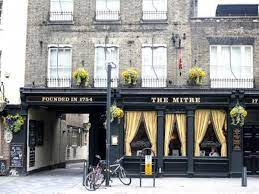


Standing on the site of what was previously two inns, the pub has been known as The Mitre since 1881. The last vestiges of its former ale-house look disappeared following refurbishment in 2011 and the interior now boasts a smart and contemporary style with a dining area down steps to the rear. The pub is now part of the Nicholson's chain and the bar includes 8 handpulls. On offer at the time of my trip were Nicholson's Pale (brewed by St. Austell), Adnams Southwold, Doom Bar, Brakspear Oxford Gold, Thornbridge Jaipur, Timothy Taylor Dark Mild, By the Horns Hop Air Balloon and Adnams Fat Sprat. The Mitre was always a favourite pub of mine and I was relishing another chance to have pint within its walls. The pint of choice was Hop Air Balloon (4.2%), a seasonal beer from London's By the Horns. Brewed to commemorate the memory of the Royal Air Force '2nd Kite Balloon Section' a military division that manned observation balloons in WWI and suffered every losses, Hop Air Balloon is a light and easily drinkable session IPA with a strong hit of hops to the front of the brew. I was enjoying my day in Cambridge and my return to The Mitre had been too long in coming.

The nostalgia continued at the next pub. Located dangerously close to the waterline and adjacent to the bridge after which the city is named, in my favourite part of Cambridge, is the Pickerel.
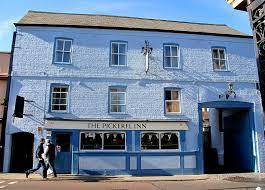


One of several claimants to be the oldest pub in Cambridge and named after a baby pike, the Pickerel is named as an ale-house as early as 1632 with the building itself dating from the turn of that century although a carved beam in the bar dated to 1450 shows grapes suggesting that it may been in use as a drinking den even earlier. In 1879, the Pickerel Hotel along with its stable block, brewery and outbuildings were purchased by Magdalene College for £287. Previously documented as being a gin palace, an opium den and a brothel, the Pickerel was also a favourite watering hole for both C.S. Lewis and J.R.R. Tolkien. The interior of the pub has been much altered with only portions of the internal walls remaining from must have initially been a warren of small rooms. Some of the old features remain, including roof beams, old brickwork and a fireplace and there is a reasonably-sized eating area outside. There are 10 handpulls on the bar, which offer Greene King IPA, Elgood's Golden Newt, Wantsum Fortitude, Woodforde's Nelson's Revenge (x2), Woodforde's Wherry (x2), Old Speckled Hen, Wolf Lavender Honey and Woodforde's Lamplighter. The name alone was enough to draw me to Nelson's Revenge (4.5%), a powerful malty beer with a great depth of flavour and an appealing hoppy aftertaste. It went down very well indeed in the sunshine as I braved an outside for the first time today. The Pickerel is certainly an atmospheric pub befitting its wide history. Some of the history still lingers if tales are to be believed. Back in the day, maintaining a successful tavern was an even harder job than it is now and it is alleged that 2 landlords were unable to cope with the stress and ended their own lives by hanging from a hook in the cellar. Their recurring presence is indicated on the odd occasion by the telltale smell of opium in the area. More visual and more disturbing is the tale of a barmaid who was accidentally drowned in the river which is perilously close by and is still seen running silently down the passageway in a spectral echo of her last journey. If any place in Cambridge were to be haunted, it would certainly be this one.

Less spirits and more beers were on offer at the next location which was reached by a short walk up the hill and round the corner onto Pound Hill. Next stop The Punter.


The pub's location, a short distance from the Cambridge Backs, gives it it's current name, although it has previously been known as both the Town & Gown and the Sino Tap. It is an attractive pub with a suntrap of a courtyard and separate stables that have been transformed into dining and function rooms. The bar is directly by the door as you enter with seating throughout and a door to the rear that leads to the courtyard. 3 of the 4 handpulls are in use during my visit, with a choice of Turpin's Cambridge Black, Adnams Mosaic Pale and Ghost Ship. I chose the latter and this turned out to be a wise option as it was as good as it should be. This is a pleasant little pub with a lot of character and charm to recommend it.

The next stage of the itinerary meant a considerable walk from side of the city to the other, passing Jesus Green where this year's beer festival was in full swing, an irony not lost on me although I hadn't thought to check the dates when I planned this specific excursion. Following a 40 minute stroll in what was calm and very pleasant weather conditions, I following managed to locate my next destination, one which was a place I'd heard excellent things about: the renowned Cambridge Blue.


This Good Beer Guide listed pub is continually popular, with its single bar and its side street location. It has a large extension that leads to the garden and a marquee that is heated in colder weather. The decoration is provided by pump clips and a collection of breweriana and the pub was winner of Cider Pub of the Year 2016 and Cambridge University Real Ale Society Pub of the Year 2017. An impressive 14 handpulls occupy the bar and 13 of these are available during the time of my trip. My options are varied, namely Dark Star Hophead, Dark Star Pale Ale, Nene Valley Jim's Little Brother, Nene Valley Simple Pleasures, One Mile End Temperance, Simon's Cider The Pink One, Crouch Vale Ruby Mild, Titanic Plum Porter, Arbor Shangri-La, Downlands Papa Jr., Woodforde's Wherry, Stockport Stout and Fyne Ales Gentleman Jack. Bristol-based Arbor get my vote this time with their Shangri-La (4.2%), a liberally hopped session IPA with big flavours courtesy of Citra, Equinox, Columbus and Mosaic hops. The popularity of this pub is obvious by the number of people that are in considering it's only early evening on a Friday, It's always good to see a pub like this thriving and providing lots of interesting beers for the enquiring drinker.

My next location was the result of a last minute change of a plan as I realised I'd managed to completely walk past it on the way to the previous stop. Baffled as to how I'd missed it, I decided it would be rude not to pop into The Petersfield.


The former White Hart became the acclaimed Backstreet Bistro in 2004 but returned to being a pub in February 2017 when it became City Pub Company's 5th pub in Cambridge. The entrance leads into a large L-shaped main bar decorated in a fairly traditional manner with modern touches including a entire ceiling decorated with wine bottles. There is a smaller, more intimate room behind the bar. The bar includes 5 handpumps which, at the time of my visit, offer Nene Valley Hop Stash, Three Blind Mice No Nonsense, Cambridge Night Porter, Nene Valley Simple Pleasures and Ghost Ship. I went back to the Nene Valley beers now, this time deciding on the Hop Stash. This is a big hitting American style IPA with citrus punchiness and fruity aromas giving way to a smooth malty finish, all for 5%. The Petersfield was an interesting surprise and I was glad that I added it to the list. The day was drawing on and I still had 2 locations left before I made my way back to the train station.

My penultimate stop was only a short walk away on Kingston Street at the aptly named Kingston Arms.


This classic side street pub lies a short distance from the popular Mill Road and is itself popular with both diners and drinkers, as well as being Good Beer Guide listed. The interior benefits from windows and mirrors, keeping it light and airy. The seating is a mixture of simple tables and chairs as well as bar stools. There is a walled garden to the rear with canopies and heaters and the front even has cycle-racks. The bar is compact but boasts an impressive mix of beers spread over 13 handpulls. For my delectation and delight were Thornbridge Jaipur, Crouch Vale Brewers Gold, Hop Back Summer Lightning, Oakham JHB, Woodforde's Wherry, Timothy Taylor Landlord, Mighty Oak Oscar Wilde, Acorn Gorlovka, Siren Sound Wave IPA, Gene Pool Paleo, Elland White Prussian, Farmhouse Rhubarb Cider and Haymaker Cider. There were a lot of beers and breweries that I was unfamiliar with so choosing a beer took a while. In the end, I went for White Prussian from Elland Brewery. At 3.9%, this is a crisp, clean and refreshing beer made from lager malt and German hops. This provides a fruity flavour with a floral, spice and citrus aroma and a pale straw colour. Previously a seasonal beer, its popularity has seen it added to the brewery's core range. It's easy to see why as there is a lot of flavour packed into a low ABV and it goes down very well indeed.

There was time for one final venue and luckily I felt like I'd found an ideal one. Another GBG listed pub, my last stop was the Devonshire Arms.
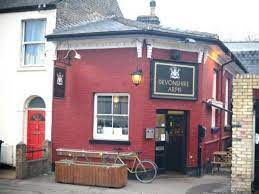


The former Midland Tavern was rescued from decline and opened in 2010 as Milton Brewery's first pub in Cambridge. A deceptively large pub in defiance of the small frontage, there are also front and rear patios. Inside, it was impressively renovated with front and rear drinking areas offering a mixture of wooden booths and larger tables. The tall windows and high ceiling add light to the front area. As to be expected from a pub run by Milton Brewery, the majority of the 8 handpulls come from them, specifically Marcus Aurelius, Pegasus, Dionysus, Medusa and Tiberius with the remaining 3 pumps offering Great Heck Amish Mash, Slightly Foxed Bengal Fox and Spitting Feathers Session Beer. My final beer of the day was Tiberius (4.3%). This rich, bronze coloured beer has a deep malty flavour and is offset by a pleasantly hoppy aroma. There are a few regulars in the pub as I sit and enjoy my last beer of the day and it's clear that Milton Brewery have done as good a job of turning this pub around as they have of brewing excellent beers. It's the perfect way to end the day.

What can be said about Cambridge? It's a fantastic place as I hope this 13 out of the hundreds of pubs in the city will testify. There is plenty of scope for further trips to this fine city and there are many drinking establishments left to explore which will no doubt further cement the strength of the ale scene here. Admittedly, prices can be high but it's effectively what you'd expect for an area this close to London. Don't let the cost deter you from going here. Cambridge is not only a highly popular tourist destination but also, as this cross section makes clear, a superb place to wile away an afternoon with a few pints in some interesting, historic and unique venues. Long live the Cambridge set!


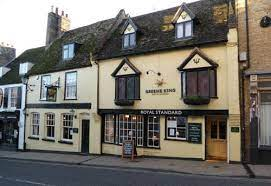




Friday, May 19, 2017

Isle of Ales

This week's pub trip was notable for a couple of reasons. Firstly, it featured the first visit to the fair county of Cambridgeshire and secondly, it once again saw me travel to one of my former stomping grounds as I travelled to the city of Ely, where I resided for a year around 6 years ago. This was back in the dark days before I discovered real beer and so I must confess that I had not fully explored its pubs in the past. It was high time that this particular oversight was rectified.

Ely is a cathedral city in Cambridgeshire, 14 miles (23 km) north-northeast of Cambridge and about 80 miles (129 km) by road from London. Æthelthryth (also known as Etheldreda) founded an abbey at Ely in 673; the abbey was destroyed in 870 by Danish invaders and was rebuilt by Æthelwold, Bishop of Winchester, in 970. Construction of the cathedral was started in 1083 by a Norman abbot, Simeon. Alan of Walsingham's octagon, built over Ely's nave crossing between 1322 and 1328, is the "greatest individual achievement of architectural genius at Ely Cathedral", according to architectural historian Nikolaus Pevsner. Building continued until the dissolution of the abbey in 1539 during the Reformation. The cathedral was sympathetically restored between 1845 and 1870 by the architect George Gilbert Scott. As the seat of a diocese, Ely has long been considered a city; in 1974, city status was granted by royal charter.
Ely is built on a 23-square-mile (60 km2) Kimmeridge Clay island which, at 85 feet (26 m), is the highest land in the fens. Major rivers including the Witham, Welland, Nene and Great Ouse feed into the fens and, until draining commenced in the 17th century, formed freshwater marshes and meres within which peat was laid down. There are two Sites of Special Scientific Interest in the city: a former Kimmeridge Clay quarry, and one of the United Kingdom's best remaining examples of medieval ridge and furrow agriculture.
The economy of the region is mainly agricultural. Before the fens were drained, the harvesting of osier (willow) and sedge (rush) and the extraction of peat were important activities, as were eel fishing—from which the settlement's name may have been derived—and wild fowling. The city had been the centre of local pottery production for more than 700 years, including pottery known as Babylon ware. A Roman road, Akeman Street, passes through the city; the southern end is at Ermine Street near Wimpole and its northern end is at Brancaster. Little direct evidence of Roman occupation in Ely exists, although there are nearby Roman settlements such as those at Little Thetford and Stretham. A coach route, known to have existed in 1753 between Ely and Cambridge, was improved in 1769 as a turnpike (toll road). The present day A10 closely follows this route; a southwestern bypass of the city was built in 1986. Ely railway station built in 1845 is on the Fen Line and is now a railway hub, with lines north to King's Lynn, northwest to Peterborough, east to Norwich, southeast to Ipswich and south to Cambridge and London.
The King's School is a coeducational boarding school which was granted a royal charter in 1541 by Henry VIII; the school claims to have existed since 970. Henry I granted the first annual Fair, Saint Audrey's (or Etheldreda's) seven-day event, to the abbot and convent on 10 October 1189; the word "tawdry" originates from cheap lace sold at this fair. Present day annual events include the Eel Festival in May, established in 2004, and a fireworks display in Ely Park, first staged in 1974. The city of Ely has been twinned with Denmark's oldest town, Ribe, since 1956. Ely City Football Club was formed in 1885.

Roswell Pits are a palaeontologically significant Site of Special Scientific Interest (SSSI) one mile (1.6 km) northeast of the city. The Jurassic Kimmeridge Clays were quarried in the 19th and 20th centuries for the production of pottery and for maintenance of river embankments. Many specimens of ammonites, belemnites and bivalves were found during quarrying, in addition to an almost complete specimen of a pliosaur.
There is some scattered evidence of Late Mesolithic to Bronze Age activity in Ely such as Neolithic flint tools, a Bronze Age axe and spearhead. There is slightly denser Iron Age and Roman activity with some evidence of at least seasonal occupation. For example, a possible farmstead, of the late Iron Age to early Roman period, was discovered at West Fen Road and some Roman pottery was found close to the east end of the cathedral on The Paddock. There was a Roman settlement, including a tile kiln built over an earlier Iron Age settlement, in Little Thetford, three miles (5 km) to the south.

The origin and meaning of Ely's name have always been regarded as obscure by place-name scholars, and are still disputed. The earliest record of the name is in the Latin text of Bede's Historia ecclesiastica gentis Anglorum, where Bede wrote Elge. This is apparently not a Latin name, and subsequent Latin texts nearly all used the forms Elia, Eli, or Heli with inorganic H-. In Old English charters, and in the Anglo-Saxon Chronicle, the spelling is usually Elig.
Skeat derived the name Ely from what he called "O[ld] Northumbrian" ēlġē, meaning "district of eels". This uses a hypothetical word *ġē, which is not recorded in isolation but thought by some to be related to the modern German word Gau, meaning "district". The theory is that the name then developed a vowel to become ēliġē, and was afterwards re-interpreted to mean "eel island". This essentially is the explanation accepted by Reaney Ekwall, Mills and Watts.
But difficulties remain. Bailey, in his discussion of ġē names, has pointed out that Ely would be anomalous if really from ēlġē "eel district", being remote from the areas where possible examples of ġē names occur, and moreover, there is no parallel for the use of a fish-name in compounds with ġē. More seriously, the usual English spelling remains Elig, even in the dative case used after many prepositions, where Elige would be expected if the second element were īġ "island". This is in
conflict with all the other island names which surround Ely.

The city's origins lay in the foundation of an abbey in 673, one mile (1.6 km) to the north of the village of Cratendune on the Isle of Ely, under the protection of Saint Etheldreda, daughter of King Anna. This first abbey was destroyed in 870 by Danish invaders and rededicated to Etheldreda in 970 by Ethelwold, Bishop of Winchester. The abbots of Ely then accumulated such wealth in the region that in the Domesday survey (1086) it was the "second richest monastery in England". The first Norman bishop, Simeon, started building the cathedral in 1083. The octagon was rebuilt by sacrist Alan of Walsingham between 1322 and 1328 after the collapse of the original nave crossing on 22 February 1322. Ely's octagon is considered "one of the wonders of the medieval world". Architectural historian Nikolaus Pevsner believes the octagon "is a delight from beginning to end for anyone who feels for space as strongly as for construction" and is the "greatest individual achievement of architectural genius at Ely Cathedral".
Cherry Hill is the site of Ely Castle which is of Norman construction and is a United Kingdom scheduled monument. Of similar construction to Cambridge Castle, the 250-foot (76 m) diameter, 40 feet (12 m) high citadel-type motte and bailey is thought to be a royal defence built by William the Conqueror following submission of the Isle from rebels such as the Earl Morcar and the folk-hero Hereward the Wake. This would date the first building of the castle to c. 1070.
Following the accession of Mary I to the throne in 1553, the papacy made its first effective efforts to enforce the Pope Paul III-initiated Catholic reforms in England. During this time, which became known as the Marian Persecutions, two men from Wisbech, constable William Wolsey and painter Robert Pygot, "were accused of not … believing that the body and blood of Christ were present in the bread and wine of the sacrament of mass". For this Christian heresy they were condemned by the bishop's chancellor, John Fuller, on the 9 October 1555. On 16 October 1555 they were burnt at the stake "probably on the Palace Green in front of Ely Cathedral". In The Book of Ely published in 1990, Blakeman writes that "permission was not given" for a memorial to the martyrs to be placed on Palace Green. In 2011, a plaque recording this martyrdom event was erected on the northeast corner of Palace Green by the City of Ely Perspective.
Oliver Cromwell lived in Ely from 1636 to 1646 after inheriting a sixteenth-century property—now known as Oliver Cromwell's House—and the position of local tax collector from his mother's brother, Sir Thomas Steward. Cromwell was one of the governors of Thomas Parsons' Charity, which dates back to 1445 and was granted a Royal Charter by Charles I of England. The Charity still provides grants and housing to deserving local applicants.

There was a form of early workhouse in 1687, perhaps at St Mary's, which may have been part of an arrangement made between the Ely people and a Nicholas Wythers of Norwich in 1675. He was paid £30 per annum to employ the poor to "spin jersey" and was to pay them in money not goods. A purpose-built workhouse was erected in 1725 for 35 inmates on what is now St Mary's Court. Four other workhouses existed, including Holy Trinity on Fore Hill for 80 inmates (1738–1956) and the Ely Union workhouse, built in 1837, which housed up to 300 inmates. The latter became Tower Hospital in 1948 and is now a residential building, Tower Court. Two other former workhouses were the Haven Quayside for unmarried mothers and another on the site of what is now the Hereward Hall in Silver Street.
The diaries of writers and journalists such as William Camden, Celia Fiennes, Daniel Defoe, John Byng and William Cobbett illustrate the decline of Ely after the 14th century plague and the 16th century reformation which led to the dissolution of the monastery in 1539. In the 1607 edition of Britannia, chorographic surveyor William Camden records that "as for Ely it selfe, it is no small Citie, or greatly to be counted off either for beauty or frequency and resort, as having an unwholsome aire by reason of the fens round about". In 1698, Celia Fiennes was writing "the Bishop [Simon Patrick] does not Care to stay long in this place not being for his health … they have lost their Charter … and its a shame [the Bishop] does not see it better ordered and ye buildings and streetes put in a better Condition. They are a slothful people and for little but ye takeing Care of their Grounds and Cattle wch is of vast advantage". Daniel Defoe, when writing in the Eastern Counties section of A tour thro' the whole island of Great Britain (1722), went "to Ely, whose cathedral, standing in a level flat country, is seen far and wide … that some of it is so antient, totters so much with every gust of wind, looks so like a decay, and seems so near it, that when ever it does fall, all that 'tis likely will be thought strange in it, will be, that it did not fall a hundred years sooner". On his way to a Midlands tour, John Byng visited Ely on 5 July 1790 staying at the Lamb Inn. In his diary he writes that "the town [Ely] is mean, to the extreme … those withdrawn, their dependancies must decay". Recording in his Rural Rides on 25 March 1830, William Cobbett reports that "Ely is what one may call a miserable little town: very prettily situated, but poor and mean. Everything seems to be on the decline, as, indeed, is the case everywhere, where the clergy are the masters".
The Ely and Littleport riots occurred between 22 and 24 May 1816. At the Special Commission assizes, held at Ely between 17 and 22 June 1816, twenty-four rioters were condemned. Nineteen had their sentences variously commuted from penal transportation for life to twelve-months imprisonment; the remaining five were executed on 28 June 1816.

Ely Cathedral was "the first great cathedral to be thoroughly restored". Work commenced in 1845 and was completed nearly thirty years later; most of the work was "sympathetically" carried out by the architect George Gilbert Scott. The only pavement labyrinth to be found in an English cathedral was installed below the west tower in 1870.
For over 800 years the cathedral and its associated buildings—built on an elevation 68 feet (21 m) above the nearby fens—have visually influenced the city and its surrounding area. Geographer John Jones, writing in 1924, reports that "from the roof of King's Chapel in Cambridge, on a clear day, Ely [cathedral] can be seen on the horizon, 16 miles (26 km) distant, an expression of the flatness of the fens". In 1954, architectural historian Nikolaus Pevsner wrote "as one approaches Ely on foot or on a bicycle, or perhaps in an open car, the cathedral dominates the picture for miles around … and offers from everywhere an outline different from that of any other English cathedral". Local historian Pamela Blakeman reports a claim that "Grouped around [the cathedral] … is the largest collection of mediaeval buildings still in daily use in this country".
As the seat of a diocese, Ely has long been considered a city: the caption to John Speed's 1610 plan of Ely reads "Although this Citie of Ely", and Aikin refers to Ely as a city in 1800. Ely, however, was not formally granted city status until 1 April 1974 by Queen Elizabeth II by letters patent. Ely's population of 20,256 (as recorded in 2011) classifies it as one of the smallest cities in England; although the population has increased noticeably since 1991 when it was recorded at 11,291.
Henry III of England granted a market to the Bishop of Ely using letters close on 9 April 1224 although Ely had been a trading centre prior to this. Present weekly market days are Thursday and Saturday and seasonal markets are held monthly on Sundays and Bank Holiday Mondays from Easter to November. The city is situated on the River Great Ouse, which was a significant means of transport until the fens were drained and Ely ceased to be an island in the eighteenth century. The river is now a popular boating spot, and has a large marina.

The low-lying fens surrounding the island of Ely were formed, prior to the 17th century, by alternate fresh-water and sea-water incursions. Major rivers in the region, including the Witham, Welland, Nene and Great Ouse, drain an area of some 6,000 square miles (16,000 km2)—five times larger than the fens—into the basin that forms the fens. Defoe in 1774 described the fens as "the sink of no less than thirteen Counties". On 23 November of that year, Church of England cleric and Christian theologician John Wesley, wrote of his approach to Ely after visiting Norwich: "about eight, Wednesday, 23, Mr. Dancer met me with a chaise [carriage] and carried me to Ely. Oh, what want of common sense! Water covered the high road for a mile and a half. I asked, 'How must foot-people come to the town?' 'Why, they must wade through!'" Peat formed in the fresh-water swamps and meres whilst silts were deposited by the slow-moving sea-water. Francis Russell, Earl of Bedford, supported by Parliament, financed the draining of the fens during the 17th century, led by the Dutch engineer Cornelius Vermuyden; the fens continue to be drained to this day.

On what was a warm, but thoroughly unsettled, Wednesday afternoon I stepped off the train at Ely Station and my reacquaintance with this picturesque and hugely historical location began in earnest. With no time to waste, I headed to the first destination, a short walk from the station on the bank of the nearby river. My first stop was The Cutter Inn.


Situated next to the River Great Ouse, the pub overlooks a marina and boathouses. Its name comes from the cutting or diversion that brought the river closer to Ely. The outside area includes a narrow terrace with a handful of tables. Internally, there is a lounge bar to one side and a smart dining area to the other with a separate restaurant adjoining. The bar sits in the lounge area facing out towards the river and features 4 handpulls offering a choice between Theakston Hog's Head Bitter, Woodforde's Wherry, Doom Bar and Adnam's Ghost Ship. I decided to begin my day with the Ghost Ship, which proved to be an excellent choice as it was exactly as it should be and very refreshing after a train journey. I took a seat on a bench just inside the door to the bar, opposite a TV that occupies one corner wall. This was a suitably picturesque spot to begin the day's adventures and I can vouch for the quality of the view when the weather is less inclement. The weather plays its part in a strange story associated with the nearby river. On misty evenings, it is said that a group of spectral monks are seeing steering a barge down the river carrying the open coffin of a woman, whilst singing hymns. This is believed to be linked to the story of Saint Withburga, whose body was taken from her grave at East Dereham by monks acting on orders of the Abbot of Ely. Ely has a certain ghostly reputation, as will become clear later.

Back in the land of the living, it was time to venture and there was a short walk involved to get me to my next destination. Leaving the riverside, I ventured towards the city centre, eventually reaching Fore Hill, one of the roads that leads up towards the market place and cathedral. About halfway up this road on the left was my next destination: the Royal Standard.


Recently refurbished and now operated by Greene King, this is a large traditional pub with a split level dining area to the front and further seating throughout. Many of the traditional features have been kept, adding to an olde worlde ambience. The bar is accessed through a short corridor that comes out into the central drinking area and takes up a significant portion of one wall. The 4 handpulls on the bar offer a choice between Greene King IPA, Timothy Landlord, Isle of Ely Bitter and Oakham JHB. On this occasion, I decided on the Landlord and this was well kept with the familiar flavour and finish that has made it so popular, Being back in Ely, I was intrigued to see how the pubs had changed. Whereas The Cutter was relatively unchanged, the Royal Standard was significantly different to how I remembered it. My previous visits here had been to a pub that featured live sport and exposed timber beams, a thoroughly different interior to the pub I now sat in. The change appears to have benefited the pub though with a comfortable and pleasant feel to the building and the beer is good as well!

To reach my next location, I continued up Fore Hill and then turned right, crossing the market place, before walking through a small shopping precinct and crossing a car park behind a Waitrose. The next pub was accessed through a small alleyway where it sat on the other side of Newnham Street between a car park and a leisure centre. I had now arrived at The High Flyer.

Image result for high flyer ely

The pub is named after a famous, undefeated thoroughbred racehorse from the 18th century which built a small fortune for its owners. It is alleged that the horse's spirit lingers on nearby as the sounds of thundering phantom hoofbeats have been heard in the vicinity on multiple occasions. The original pub has been extended to form a bar area, a large restaurant area and a separate function room for larger parties or private bookings. Memorabilia and breweriana, much of it dog themed, decorate the various areas and hotel accommodation is also available. This is another pub that has changed much since I was last here and the interior is quirky and comfortable with low seating opposite the J shaped bar and the restaurant to the rear. Operated by Inn Britain, a small local chain, the bar holds 3 handpulls which, at the time of my visit, provided Well's Eagle IPA, Bombardier Burning Gold and Courage Director's. The Burning Gold was my choice and it was delicious, smooth and fruity. It went down very well indeed.

The next few pubs benefited from being in close proximity to each other, in a smallish area in and around the city centre. The first of these is located in the main high street and goes by the name of The Hereward.


Formerly part of the Smith & Jones estate, this large sport-friendly pub is now operated by Stonegate. TV screens are on every wall, showing Sky Sports News whilst I'm there and the bar is large and runs almost the full length of one wall. There is a small seating area outside to the front and lots of seating throughout with some on a split level divided into booths. The beer choice comes from 6 handpulls proferring a variety of different things, in this case Fuller's London Pride, Wychwood Hobgoblin, St. Austell Tribute, Ghost Ship, Courage Best Bitter and Marston's 31 Deep. I'm always a big fan of Hobgoblin and so it didn't take me long to make my decision. The beer, when it arrived was as good as I've had with its malty bitterness and almost treacly undertones well represented. The weather had significantly worsened by this time and the rain was starting to really come down. Thankfully, my next stop wasn't far away.

Located directly opposite The Hereward, I now headed to the Townhouse.


This Grade II listed Georgian townhouse was converted to the Townhouse Pub by landlord Vince and Debbie in 1996. It is now a popular modern pub with a spacious conservatory, an enclosed garden and a separate pool and darts room just inside the entrance. There are 5 handpulls and the pub proudly displays its Cask Marque accreditation. The choice of beers here is known to vary often and on my visit I am faced with a decision between Wantsum 1381, Newby Wyke Summer Session Ale, Newby Wyke Kingston Topaz, Wantsum Dynamo and Abbot Ale. Wantsum isn't a brewery that I see much of in Nottingham so I decided on the Dynamo (4.3%). This is a crisp, light, golden ale, fruity and floral with an orange citrus twist. It's certainly a very heady and fruity concoction and I consumed in the light and airy conservatory, watching the rain come down. This is a very nice beer and a very popular and well run pub. If you're ever in the area, you can do a lot worse than to pop in!

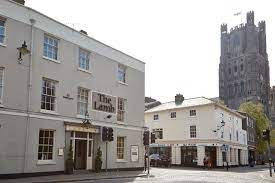
I was hitting my stride now and thoroughly enjoying being back in Ely for a few hours. I continued my wanderings, heading just around the corner to where my next stop occupies a significant portion of space on Lynn Road. I was now at The Lamb.


Run by Greene King as part of their Olde English Inns brand, The Lamb stands 150 yards from Ely Cathedral. An inn has existed on the site since 1416 but the current hotel was built in 1828 as a popular stopping point for those travelling between London and East Anglia. The main entrance leads to a corridor that divides the drinking and dining area for visitors from the hotel proper. A small bar sits opposite this corridor and holds 2 handpulls. This is where I sit my first snag of the day as neither handpull was in use as both of the house beers had gone. A friendly barmaid offered me alternatives in the shape of a kegged version of Ruddles and bottles of Abbot Ale. I went for a bottle of Abbot in the end as this seemed the best option and meant I could still enjoy my surroundings at a table in the dining area. The walls in this area are decorated with photos of old Ely, adding to the age of the site.

Despite my slight disappointment at the lack of draught ale, I got the sense that this not a regular occasion as the beers were in the process of being replaced as I was leaving. I now headed over the road to a place that had been a particular favourite of mine when I lived here. In the shadow of the magnificent cathedral sits the Minster Tavern.


The building that is now the Minster Tavern is believed to have been standing since the 10th century when it was originally used by monks from the cathedral. It is now operated by Stonegate and has a quaint and homely feel to it. There is a plaque on a wall nearby in memory of 2 martyrs who were burned to death on the cathedral green in the reign of Mary I. The bar is J shaped and sits to the left of the room. 5 handpulls are present, 3 of which are in use at the time of my visit, with the options of Jennings Cumberland, Ghost Ship and Hobgoblin. Having had 2 of the 3 throughout the day so far, I went for the Cumberland, which was pleasant and well kept. I sat on a long table just inside the door, with my back to the mullioned windows and admired a nearby mural that talks about the ghosts that haunt the property. One of them is believed to be a monk who is heard banging around on the upper floor most nights of the week and is known for the disappearance of pints of bitter from the cellar at 4am. There is also a strange story regarding the outline of human figure that appears on the wall in one part of the cellar. No matter how often this is painted over, it always eventually reappears. Strange things are afoot here indeed!

I found it hard to leave the Minster as it is a place that I always enjoyed visiting. Needs must though and I mustered the strength to tear myself away and push on. I retraced my steps and turned left in front of the Lamb onto St. Mary's Street. My next location was on the right at The King's Arms.
Image result for kings arms ely

This popular live music venue has 2 bar areas served by a central bar with separate doorways leading to both. There is a large TV in one area and seating is in the form of low tables scattered around both sides. The bar hosts 4 handpulls, 3 of which were in use on the day, with a choice of Doom Bar, Sharp's Atlantic and Milton Medusa. The latter of these was my choice as it was a beer with which I was unfamiliar. This special edition beer is a strong mild with an ABV of 4.6%. Cocoa, vanilla and fruitcake aromas are backed by a satisfying yet subtle bitterness. I'm not normally one for milds but this was certainly very drinkable and almost did enough to detract from the fact that Donald Trump was on TV.

I finished my beer and left before politics made me angry, wisely deciding to head to the next pub which required a short walk and a left turn into Silver Street. Located approximately halfway down this road is the first of 2 Good Beer Guide listed pubs on this trip, namely the Prince Albert.


This is a small, yet perfectly formed pub located near to the Cathedral car park. It was formerly the Officers' Mess for the local militia and has recently been refurbished to create a separate restaurant area for fine dining. There is no music and no games machines, providing a relaxing atmosphere with emphasis on old fashioned chit-chat. There is a walled garden to the rear. The small bar sits opposite the entrance and features an impressive 10 handpulls, 9 of which are in use during my visit. The choice of beers is interesting, with Abbot Ale, Greene King IPA, Greene King XX Mild, Castle Rock Harvest Pale, Black Sheep Best Bitter, Milton Sparta, Three Blind Mice Milk Worm, Robinson's Trooper and Old Rosie cider. With the last Milton beer going down so well, I chose the Sparta this time. At 4.3% this is a yellow/gold best bitter with floral hops, kiwi fruit and balancing malt softness which fades to leave a long, dry finish. The feel of this place reflects its prior use and it's easy to picture militia officers gathering here for their meals. This connection is extended by a connection to an alleged haunting that takes place on the street outside. On warm, sunny afternoons, the figure of a man in military uniform, resplendent with medals, has been seen walking silently towards the Cathedral car park, whereupon he disappears. Who this man is subject to debate but the story is an interesting one.

Continuing down Silver Street leads to the penultimate destination of the day's activities, which is opposite the Porta Gate of the Cathedral grounds. My travels had now brought me to The Fountain.
Image result for the fountain ely

This attractive street-corner pub occupies a Grade II listed building opposite the monastic gatehouse. The interior is brimming with character, featuring an eclectic mix of furnishings, local historical photographs and paintings. The large and welcoming fireplace houses a log fire in winter. The large bar has 2 banks of handpulls, 8 in total with 6 in use during my trip. These are doubled up on Ghost Ship, Adnams Southwold Bitter and Landlord. It seemed a good idea at this stage to return to Ghost Ship and I enjoyed this at the bar whilst eavesdropping on the most middle class conversation ever as a girl explained how returning to the UK from LA was like being in a 3rd world country and the 'inhumanity' of learning to drive in a Lexus 4x4.

Returning to the real world, I had one destination left, delayed until last because of its opening times, and it was one that I was very much looking forward. Returning to Fore Hill, I located the building I was seeking, opposite the Royal Standard. My day would close at the Drayman's Son.


Formerly known as the Liberty Belle, this is a small and very welcoming micropub situated in former shop premises. The theme is nostalgic with old railway signs, posters and musical scores throughout. The pub is Good Beer Guide listed. Ales are sourced both locally and from further afield and served direct from the barrel in a temperature controlled back room behind a small till counter. The pub is very busy when I arrive with a small buffet set up for some kind of celebration, a few children running about and 2 very well-behaved Staffies under a nearby table. The beer choice numbers 10 from a variety of different sources. The beers on offer ran as follows: Elephant School Porter in a Storm, Fossil Fuel Amber, Three Blind Mice Drayman's Best, Baker's Dozen Electric Landlady, Black Pig Oatmeal Stout, Wolf Battle of Britain, Blindmans Mine Beer, Milk Street Funky Monkey, Bexar County American Pale Ale, Colchester Trinovantes Gold and Brandon Old Rodney. Amongst such an intriguing choice, the name alone drew me to Electric Landlady. Brewed by Rutland-based Baker's Dozen, Electric Landlady is a big hitting golden ale, brewed with Mosaic hops, giving a big hop flavour and a citrus kick in a package of 5% ABV. I managed to find a table to sit at on the lower half of the split level interior as I enjoyed this delicious beer and reflected upon the day I had had.

Ely has been excellent. It's pubs are numerous, welcoming and, in some cases, very old and quaint. The beers have been a combination of old favourites and new things and it's safe to say that the real ale scene is in very good shape. I wasn't sure what to expect from a place that I never really explored when I lived here but this second opportunity to immerse myself in the pubs and inns of this historic place has been much welcomed. In the wide expanses of the fens, sits an island. And that island is brimming with wonderful beer, good people, great pubs and excellent stories.


Monday, April 24, 2017

Just Say Ches!

Last week, I once again took advantage of the local rail network and headed north, this time for a slightly shorter journey than my previous trip to Sheffield. My destination on this occasion was 2 stops closer down the line in the neighbouring county of Derbyshire as I sought out the offerings of the town of Chesterfield.

Chesterfield is a market town and a borough in Derbyshire. It lies 24 miles (39 km) north of Derby and 11 miles (18 km) south of Sheffield, at the confluence of the rivers Rother and Hipper. The borough – which includes the settlements of Whittington, Brimington and Staveley – had a population of 103,800 in 2011. Chesterfield is the second largest town in the ceremonial county of Derbyshire, after the city of Derby.
Archaeological examination of the town has traced its beginnings to the 1st century AD and the construction of a Roman fort, which became redundant and was abandoned once peace was achieved. Later an Anglo-Saxon village grew up on the site. The name Chesterfield derives from the Anglo-Saxon words caester (a Roman fort) and feld (grazing land).
Chesterfield received its market charter in 1204. It still has a moderately sized market of about 250 stalls held three days a week. The town sits on a large coalfield, which formed a major part of the area's economy until the 1980s. Little visual evidence of the mining remains today.
The town's best known landmark is the Church of St Mary and All Saints, popularly known for its "crooked spire", which was originally constructed in the 14th century.
Chesterfield was in the Hundred of Scarsdale. The town received its market charter in 1204 from King John. The charter constituted the town as a free borough, granting the burgesses of Chesterfield the same privileges as those of Nottingham and Derby. In 1266, it was the site of the Battle of Chesterfield, in which a band of rebel barons were defeated by a royalist army.
Elizabeth I granted a charter of incorporation in 1594 (or 1598), creating a corporation consisting of a mayor, six aldermen, six brethren, and twelve capital burgesses. This remained the governing charter until the borough was reformed under the Municipal Corporations Act 1835. The borough originally consisted only of the township of Chesterfield, but it was extended in 1892 to parts of some surrounding townships. In 1920 there was a major extension when the borough absorbed New Whittington and Newbold urban district. Chesterfield's current boundaries date from 1 April 1974, when under the Local Government Act 1972, the Borough of Chesterfield was formed by an amalgamation of the municipal borough with the urban district of Staveley and with the parish of Brimington from Chesterfield Rural District.
Chesterfield benefited greatly from the building of the Chesterfield Line – part of the Derby to Leeds railway (North Midland Line), which was begun in 1837 by George Stephenson. During the work, a sizeable seam of coal was discovered during the construction of the Clay Cross Tunnel. This and the local ironstone were promptly exploited by Stephenson, who set up a company in Clay Cross to trade in the minerals.
During his time in Chesterfield, Stephenson lived at Tapton House, and remained there until his death in 1848. He is interred in Trinity Church. In 2006, a statue of Stephenson was erected outside Chesterfield railway station.
Chesterfield is located on the confluence and valleys of the River Rother and River Hipper at the Nottinghamshire, Derbyshire and Yorkshire Coalfield. The town also lies in the eastern foothills of the Pennines, and is also known as a gateway to the Peak District National Park or "The Gateway to the Peak" lying to the west of the town.

Chesterfield is perhaps best known for the "crooked spire" of its Church of Saint Mary and All Saints and is why the local football team is known as The Spireites.
The spire is both twisted and leaning, twisting 45 degrees and leaning 9 feet 6 inches (2.90 m) from its true centre. Folklore recounts that a Bolsover blacksmith mis-shod the Devil, who leapt over the spire in pain, knocking it out of shape. In reality the leaning characteristic has been attributed to various causes, including the absence of skilled craftsmen (the Black Death having been gone only twelve years prior to the spire's completion), the use of unseasoned timber, and insufficient cross-bracing. According to the curators of Chesterfield Museum, it is now believed that the bend began when the original wooden roof tiles were replaced by heavier slate and lead. The bend in the spire (the twist being deliberate) follows the direction of the sun and has been caused by heat expansion and a weight it was never designed for. There is also no record of a bend until after the slate change. The tower which the spire sits upon contains 10 bells. These bells were cast in 1947 by the Whitechapel Bell Foundry in London, replacing a previous ring. The heaviest weighs 25 long hundredweight (2,800 lb; 1,300 kg).

I was excited about this trip, particularly as I'd never been to Chesterfield and so would be discovering the town as I discovered the pubs and beers. I arrived just before midday and made my way into the town, using the aforementioned spire as a means to get my bearings. Luckily, being able to locate this imposing structure made my first pub for the day easy to find, as it sits opposite. My day began at the White Swan.


The first of 4 Good Beer Guide listed pubs on the trip, this is a contemporary twist on a traditional pub, affectionately known by locals as the 'Mucky Duck'. The interior is spacious and comprises a single room, divided into drinking and dining sections through the use of a partition wall. The décor is modern and bright with the bar along the back wall. The emphasis is on local breweries and the pub is the tied house for local Raw Brewing Company. There is also an upstairs function room that is available to hire. As well as the 12 handpulls, the bar offers a wide choice of bottled and international beers, ciders, perries and wines. The ale choice is varied and mostly local. Available on my visit were Raw Mucky Duck, Dark Star Espresso, Hartington Bitter, North Yorkshire Summer Ale, Kelham Island Pale Rider, Ashover Zoo, Raw Anubis Porter, Abbeydale Deception, Stockport Cascade, Magpie Thieving Rogue, Abbot Ale and Barlow Betty's Blonde. Regular readers will be aware of my appreciation for Abbeydale beers so Deception was my choice here and very good it was too! I took a seat at a high table facing the bar and enjoyed my first beer of the day as I had a quick perusal of Google Maps to determine the best route to my next couple of locations.

My next stop was not very far away at all, located as it is around the corner on the other side of the church. Another GBG entrant, this was the Rutland Arms.


Located, quite literally, in the shadow of the church with the graveyard next door, this popular pub is operated by Pub People and has the appearance of 2 buildings joined together with a partially castellated roof line. Inside, there are 2 rooms, divided by steps and the overall décor is one of traditional wood with low seating and tables throughout and a snug-like area to the right of the door. The bar sits almost opposite the main entrance in a corner of the first room and features 9 handpulls, 8 of which are in use whilst I'm there. On offer on the day were Old Rosie cider alongside Thornbridge Jaipur, Oakham Citra, Dark Star Hophead, True North Pale Ale, Stockport Crown Best, Hilltop American Pale and North Yorkshire Yorkshire Porter. I opted for the American Pale from Conisbrough based Hilltop brewery. At 4.5%, this is an incredibly easy drinking golden beer, with a creamy head and a nice bitter flavour that combats the big hit of American hops. I sat at a long table directly facing the bar and admired my surroundings. The day was only 2 pubs old and it was shaping up very nicely indeed.

It was another short walk to pub number 3 as I merely had to leave the Rutland and turn left to find it at the end of the road. Next up, The Burlington.


This large pub sits near the main shopping district and has recently been refurbished by owners Stonegate following a prior spell as a branch of Yates'. It has since been rebranded and boasts a large interior with a bar down one side towards the back of the room with lots of seating throughout. On the bar can be found 6 handpulls with 5 of them in use during my visit. The selection isn't too bad, offering Thwaites Wainwright, Wychwood Hobgoblin, Old Speckled Hen, Timothy Taylor Landlord and Adnams Ghost Ship. I hadn't had Ghost Ship on draught for a while so this was my natural choice and it was a good one, tasting just as it should. It was quite busy here, even given the time of day and I've no doubt this is helped by the location and the fact that the kids were still off school at this point. It definitely seems to have benefited from its change of appearance.

There was a slight change of plan with regards to my next stop. My original plan was to visit the Spread Eagle, a short walk away at the end of a nearby street. Upon entering though, the 3 handpulls were barren so I quickly made my way to the next place on the list. Somewhat off the beaten track and tucked into an old street known as The Shambles, my travels now brought me to the Royal Oak.


This Grade II listed building is the oldest pub in Chesterfield and believed to be one of the oldest in Derbyshire, with one of the earliest references being in a conveyance report from 1772, though a previous incarnation existed as part of a cattle market in the 12th century. The building has two entrances, both leading to a central bar which serves both sides. Unusually, there is no internal connection between the 2 sides and this is due to them previously being separate buildings with the top bar having at one time been a butchers. The pub was renovated into its current form in 1897 after being purchased by Stones' Brewery. The top bar and windows are largely untouched from that time. There is an extensive cellar below the bar floor with the butchers slab still extant, as well as a trapdoor that allegedly leads to one of Chesterfield's many underground passages. The building is also allegedly one of the most haunted in the area with the phantom of a murdered coachman believed to stalk the site. It's into the bottom bar that I wander. The bar area itself is quite small with the bar central to the wall and toilets in one corner. Beer-wise, this side offers 4 handpulls with a choice between Moorhouse's Spring Watch, Young's Special, Young's Double Chocolate Stout and Faversham Steam Whitstable Red IPA. The Whitstable Red has recently gone down rather well at work so I decided to give it a go myself and wasn't disappointed. This is an auburn coloured 4.5% beer with citrus and pine notes on the nose and a hint of sweet malt. The taste is of rich toffee and fruits and it goes down very well indeed. This is a lovely little pub and it's unusual layout makes it unique. It's definitely worth a visit if you're passing by!

My next destination took me across the market place as I headed for the customary local Wetherspoons, although this one was a bit more unusual than most as it is one of the hotels in the chain. This was the Portland Hotel.


Named after the Earl of Portland, whose estate used to include the land on which the hotel stands, this started life as a traditional railway hotel, serving passengers from a now non-existent line that used to run nearby. The interior décor is as you'd expect from a Spoons with its casual seating, a number of smaller areas off of the main room and photos of historic Chesterfield adorning the walls. The bar is long and takes the majority of the rear wall. All 10 of its handpulls are in use, offering an interesting choice of beers including the usual Spoons suspects, namely Doom Bar, Ruddles, Abbot Ale, Old Rosie, Black Dragon, Kelham Island Pale Rider, Little Critters Blonde Bear, Oakham Citra, Bradfield Farmers Brown and Derventio Eagle Porter. I'd never heard of Little Critters before so, in the name of further study, I decided on a pint of Blonde Bear. Little Critters are a Sheffield based small batch brewery that brew beers themed after animals. The Blonde Bear is their equivalent of a session ale and it's easy to see why. At 4.2%, it has a bready, slightly malty character that pays complement to the hoppy undertones. It's light body makes it drinkable, moreish and satisfying with hints of tropical fruit and earthy bitterness. It was a very enjoyable beer and I'll definitely be looking out for more of their brews in future.

There was another change of plan in the offing with my intention initially to now visit the Sun Inn, which sits virtually opposite. Again I was to be disappointed a none of the trio of hand pumps were in use, which was a mite disappointing in a pub that I'd previously heard good things about and has a reputation for being haunted following an incident in 1957 when bottles were smashed and barrels moved around by unseen hands in an otherwise locked cellar. A ghostly coachman who met his end in a nearby well in the eighteenth century has been blamed for this and continuing activity, including that of footsteps that are frequently heard around the building. Still, with no reason to stay in this pub, I quickly moved on. Just down the road from here was my next stop, a cosy little micropub called the Chesterfield Alehouse.


Chesterfield's first micropub opened in 2013 in a former furniture shop and is now a split-level bar with a seating area leading up to the serving area via a short flight of steps. In addition to regularly rotating beers, it has a reputation for bottled world beers, ciders and wines. A stout or porter is always available, something that has no doubt helped the pub's inclusion in the Good Beer Guide. It also won Town Centre Pub of the Year for 2015. The 6 handpulls offer a variety of local brews, specifically North Yorkshire Temptation, Great Heck Snazzy Beer, Great Heck Styrian IPA, Wantsum Black Prince, Pigeon Fishers Cuban Espresso and Pentrich Black Ale. I decided that I would try a pint of Snazzy Beer from Great Heck, based in the Yorkshire village of the same name. This is a very hoppy golden beer brewed with Chinook, Columbus and Topaz and then dry hopped with Nelson Sauvin. This provides a very bold hop character with plenty of fruitiness and a resiny quality. It's certainly a delicious brew and the temptation to stay for another is strong but I manage to force myself to move on.

I retraced my steps slightly now, heading back to the market place where I found the aptly named, and GBG listed, Market Pub.
Image result for market pub chesterfield

This is a popular and friendly pub located on the market place. Inside, is a large L-shaped room with dark wood fittings, a flagstone floor and central bar. It's popularity and quirkiness are reflected in it securing the title of Town Centre Pub of the Year for 2011 and the fact that the staff are dressed as Star Wars characters and preparing to show A New Hope on what I'm fairly sure is the 40th anniversary of its release date. On the bar are 9 handpulls with a good mix of products, namely Abbot Ale, Daleside G&P, Blue Monkey BG Sips, Brunswick Black Sabbath, Acorn Azacca IPA, Castle Rock Harvest Pale, Kelham Island Easy Rider, Timothy Taylor Landlord and Rosie's Pig cider. I opted for the Azzaca IPA, from Wombwell based Acorn brewery. With an ABV of 5%, this part of the brewery's recent series of US hopped IPAs. This is a rich, golden beer with an intense tropical aroma and hints of citrus and mango. It's somewhat of a fruit explosion and very refreshing. It would have been easy to stay in this friendly and welcoming pub for longer and watch Star Wars for the rest of the afternoon but there was work still to be done so on I pushed.

The next pub was just behind the Market Pub in a neighbouring street. The penultimate stop of this adventure was the Barley Mow.


This is a traditional wood panelled pub located just on the edge of the town centre. The interior features lots of seating areas arranged around a bar that sits opposite the entrance. It's nice to see that all 3 of its handpulls are being utilised and all feature something different, with the choices between Bradfield Blonde, Black Sheep Best and Doom Bar. I swung for the Doom Bar on this occasion and this was as good as it should be. I took a seat under a window, facing across the bar as I psyched myself up for the final push before home.

The final stop took me almost back to where I'd begun, in the shadow of the crooked spire, and to a pub called The Rectory.


Formerly known as The Crooked Spire, this pub has not long reopened following an extensive refurbishment that has turned it into a modern gastropub with an emphasis on excellent food and great beer. As well as a strong real ale selection, craft keg beers are also available. The ales in question occupy 8 handpulls with the options during my visit being Ringwood Boondoggle, Thwaites Lancaster Bomber, Dancing Duck Ay Up!, Dancing Duck Dark Drake, Marston's Pedigree, Rectory Clericale and Thundering Molly and Lilley's Mango Cider for those of an appley inclination. With a few moments of pondering I was happy in my choice of Lancaster Bomber which was very nice indeed and certainly went down swiftly.

And that was that! My day in Chesterfield was complete! And what a day it had been. There had been a wide range of beers across an interesting variety of pubs. Give or take one or two disappointments (Spread Eagle, Sun Inn), my choices of pubs had thrown up a good cross section of what can be had in Derbyshire's second town. I went into the trip not knowing what to expect but came away pleased with what I had discovered and, more than that, also identified a number of drinking dens worthy of a visit for next time that just missed out on this occasion. The future of ale in North Derbyshire is certainly in safe hands.