Wednesday, September 9, 2015

Having A Lough

Last week, once again afforded a Bank Holiday Monday free from work, Amy and I decided that we would bring forward a proposed trip to a place that is becoming something of a haven for real ale, and a place that Amy knows well as she once lived there and both her mother and grandmother are still residents. Taking advantage of the easily accessible bus network, we made our way, on a not unpleasant day, over the Leicestershire border to explore the town of Loughborough.

Loughborough  is a town within the Charnwood borough of Leicestershire, England. It is the seat of Charnwood Borough Council and home to Loughborough University. The town had a population of 57,600 in 2004, making it the largest settlement in Leicestershire outside the city of Leicester. The town is close to the Nottinghamshire border and is within a short driving distance of locations such as Nottingham, the East Midlands Airport and Derby.
In 1841, Loughborough was the destination for the first package tour, organised by Thomas Cook for a temperance group from Leicester. The town has the world's largest bell foundry — John Taylor Bellfounders, which made the bells for the Carillon war memorial, a landmark within the Queens Park in the town, Great Paul for St Paul's Cathedral, and York Minster. The first mention of Loughborough is in the 1086 Domesday Book.
To the north of the edges of Loughborough, Dishley Grange Farm was formerly the home of agricultural revolutionist Robert Bakewell. The farm was also once home to the annual Leicestershire County Show. Loughborough's local weekly newspaper is the Loughborough Echo. The town is also served by Leicestershire's daily newspaper, the Leicester Mercury.
The first sign of industrialization in the Loughborough district came in the early years of the 19th century, when John Heathcoat, an inventor from Derbyshire patented in 1809 an improvement to the warp loom, known as the twisted lace machine, which allowed mitts with a lace-like appearance to be made.
Heathcoat, in partnership with the Nottingham manufacturer Charles Lacy, moved his business from there to the village of Hathern, outside Loughborough. The product of this "Loughborough machine" came to be known as English net or bobbinet. However, the factory was attacked in 1816 by Luddites thought to be in the pay of Nottingham competitors and 55 frames were destroyed. This prompted Heathcoat to move his business to a disused woollen mill in Tiverton, Devon.
The character of Loughborough as a whole began to change after 1888, when a charter of incorporation was obtained, allowing a mayor and corporation to be elected. The population increased from 11,000 to 25,000 in the following ten years.
Among the factories established were Robert Taylor's bell foundry John Taylor & Co and the Falcon works, which produced steam locomotives, then motor cars, before it was taken over by Brush Electrical Machines. Inn 1897, Herbert Morris set up a factory in the Empress Works in Moor Lane which become one of the foremost crane manufacturers by the mid-20th century.
There was also strong municipal investment: a new sewage works in 1895, then a waterworks in Blackbrook and a power station in Bridge Street in 1899. The corporation took over Loughborough Gas Company in 1900.
Loughborough was referred to in the 1086 Domesday Book as Lucteburne.

I had never been to Loughborough before and so I was very excited to see what was on offer. With a list of pubs to hand, but no particular route in mind, this was very much a trip in which we intended to make it up as we went along. We identified our first location immediately upon arrival into the town, as it was just around the corner for the bus stop we arrived at. Recently reopened following an expensive refurbishment, we arrived at The Phantom.


Operated by Stonegate Pub Co., The Phantom was formerly part of the Scream brand of student bars until this particular brand was disbanded a month or so ago. As a former Stonegate employee, I'm always intrigued to see how the pubs are doing, especially as this one is run by an old boss of mine. Inside, it's clear that the money expended on the refurb was money well spent. The interior is modern and stylish with a welcoming atmosphere and large seating areas around the bar, which sits horizontally between the 2 entrances. There is also a large, outdoor seating area. The bar is equipped with 5 handpulls, 4 of which are in use, offering Marston's Pedigree, Thwaites' Lancaster Bomber, Old Speckled Hen and Old Golden Hen. There are also 2 craft beers on draught, in this case Grimbergen and Revisionist craft lager. I opted for the Lancaster Bomber, a beer that I'm familiar with and this is well kept and very tasty. Amy decided to start off on lager but I knew she'd make a stab at some ale later as I've been able to introduce her to a few that she enjoys. I was pleased to be able to have a chat with my old boss John who, when I arrived, had been watching some kind of police incident happening in the next street. It's always nice to catch up with old friends in situations like this and he deserves an awful lot of credit for how successful The Phantom is.

The day had started promisingly and we'd already spotted the next place we planned to visit, just around the corner. Pints finished, we made our way to The Organ Grinder.


This is the sister pub to The Organ Grinder on Canning Circus in Nottingham and both premises act as brewery taps for the excellent Blue Monkey brewery. The Loughborough pub is the smaller of the 2 and is situated on a street corner. Inside is the same mix of rustic charm and modern features that can be found in its Nottingham equivalent. The bar is tucked into one corner of the room and there is a small snug-like area to the left of the door. The seating consists of low tables and benches and the pub in general has a very cosy feel to it. The bar hosts 8 handpulls, all featuring Blue Monkey beers as you'd expect. It's an impressive range offering, at the time of our visit, Ape Ale, 99 Red Baboons, Right Turn Clyde, Sanctuary, Marmoset, Guerrilla, BG Sips and Infinity. Being familiar with the majority of these, I went for one of my favourites, 99 Red Baboons which, unsurprisingly, is excellent. Amy went for a pint of Symond's cider which is available on draught along with a couple of craft products. This is the kind of pub in which it would be tempting to spend the whole day and, had our stay not been dependent upon Bank Holiday bus times, we may have done just that. Amy was thoroughly enjoying herself at this stage and it was really nice to have her with me as this is the first time that she's accompanied me on an excursion. I have a feeling she'll be joining me again in the future.

Our next destination was further into the town centre proper and is actually the sister pub to The Phantom. Next up, The Unicorn.


This large, former hotel on Biggin Street has retained much of it's charm with it's traditional exterior frontage and expansive interior. The bar is long and takes up most of one side of the large, single room with the rest of the space given over to a variety of separate seating areas. There are 5 handpulls on the bar offering a choice of Pedigree, Robinson's Twisted Sister, Bass, Greene King IPA and Courage Best Bitter. Amy was curious as to how the Twisted Sister was, as was I as this is a new one on me. We decided to have a pint each and took up a seat on a table in roughly the centre of the room. The beer turned out to be a good choice. At 4%, this is a sister brew to the excellent Dizzy Blonde. Twisted Sister is a blonde beer with a floral aroma, created by the use of Amarillo, Cascade and New Zealand's Nelson Sauvin hops. It's a fruity brew with a very moreish taste and certainly a good way to mark the halfway point of our visit to Loughborough.

Upon leaving the Unicorn, we bumped into Amy's grandma's partner who was randomly on the phone to Amy's mum. After being handed the phone, Amy was pointed in the direction of a pub which I was assured that I would like. Making our way down a nearby road known as The Rushes, we found the pub in question: the Tap & Clapper.


This premises was formerly known as Hobgoblin and was renowned for selling Wychwood beers. Before this, the pub was known as The Black Lion, a name that is still visible on the gable end of the building. Recently refurbished, the pub is named after parts of a bell in honour of the historic bell foundry in the town. Four bells have been commissioned from the foundry especially for the pub and these can be seen behind the bar. The pub markets itself as a good place to watch sport and the 14 TVs, at least one of which is visible from anywhere in the pub, are testament to this. 5 handpulls are present, 4 of which are in use, and these offer Bombardier, Tetley's, Tetley's Gold and Navigation Brittania. Although tempted by the Brittania, I instead decided on Bombardier which was in very good condition. We grabbed a booth opposite the bar, under a light fitting designed in the style of a bell and had a chat about whatever sprang to mind. It's always easy to talk to Amy about anything which is one of the reasons I was glad that she had joined me on this particular trip. By the time it was decided to move on, the jukebox was playing Rage Against The Machine which was unusual but not unwelcome.

Slightly further down The Rushes but on the opposite side of the road, is the local Wetherspoon's which was our next stop. I wondered what to expect from The Amber Rooms.


The pub takes it's unusual name from the fact that The Rushes retail development, which it is part of, occupies the site of what used to be the Loughborough Electricity Works. Electricity takes it's name from the Greek word 'elektron' meaning amber, hence The Amber Rooms. The interior is in the similar Wetherspoon's vein with lots of local history information adorning the walls. The bar is long and to the left of the entrance, and features 8 handpulls consisting of Marston's Old Empire, Hobgoblin Gold, Purple Moose Dark Side of the Moose, Oakham JHB and doubled up Abbot Ale and Ruddles. I swung, in the end, for the Hobgoblin Gold, particularly as the JHB had just gone. The Gold was very tasty and it was at this point that we decided that it was a good time for some food. We perused the menu and took advantage of one of the excellent burger deals, accompanied by another pint of course! Regular readers of this blog will know that I'm, in general, quite a big fan of Wetherspoons for their dedication and determination to feature and maintain real ale to a high standard. They deserve a lot of praise for how keenly they are fighting the good fight.

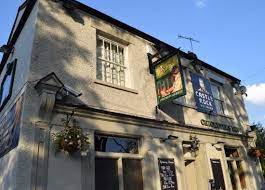
The final stop on our tour of Loughborough (at least for now), was back over the road at Castle Rock's only pub in Loughborough, The Swan in the Rushes.


Part of the Castle Rock chain for over 25 years, the pub was previously known as the Charnwood. It was closed and unable to find a buyer until Castle Rock saw its potential, gave it a new name and reopened the doors. It has remained an integral part of Loughborough's real ale scene and regular stocks a range of 10 cask ales at any one time as well as up to 5 real ciders and over 30 single malt whiskies. The Swan also regularly serves ale from the area's newest brewery, Charnwood. The interior of the pub is divided by a corridor which leads to one of 2 areas, either side of the entrance, both served by the same bar. 10 handpulls offer 9 ales and a cider, on this occasion Castle Rock Sheriff's Tipple, Harvest Pale and Elsie Mo; Adnams Southwold, Ossett Silver King; Charnwood IPA, Old School, Try Hopped and Vixen as well as Old Rosie cider. I'm still a fan of Castle Rock beers despite a healthy professional rivalry, and I decided on a pint of Elsie Mo, which was excellent. As much as I like Castle Rock pubs, the atmosphere in The Swan didn't feel as welcoming as some of their other pubs. Whether this is due to my familiarity with the venues I have visited more often or that the clientele during our visit is mostly older men I'm unsure. The pub isn't too bad in itself and I can imagine when it's busy that the pub is buzzing.

We were tired by this stage so came to the decision to call it a day with the prospect of a bus ride home during which we could analyse what had happened on our trip. Loughborough has a lot to offer and a promising ale scene which will only improve. There are a significant number of pubs in the town that warrant a visit so this is by no means our last exploration. All in all, Loughborough has been interesting. Stay tuned for a return trip in the future. Who knows what other hidden gems may be lurking in this charming Leicestershire town. Having Amy with me only made the experience more enjoyable so expect more of the same in future.

Wednesday, September 2, 2015

The Long & Short of Long Eaton

I decided to visit another of my old stomping grounds for a recent trip. In this case, it was another area that I had once lived in and frequently visited in the past. Anyway, on an unsettled but warm Monday afternoon, I made the 2 bus journey to Long Eaton.

Long Eaton is a town in Derbyshire, England. It lies just north of the River Trent about 7 miles (11 km) southwest of Nottingham and is part of the Nottingham Urban Area (the conurbation around Nottingham) but not part of the City of Nottingham. Since 1 April 1974, Long Eaton has been part of Erewash borough.
Long Eaton is referred to as Aitone, in the Domesday Book. Several meanings are associated with this name, for example "farm between streams" or "low lying land". This agricultural settlement grew up close to the lowest bridging point of the River Erewash.
In 1228 the village gained the "Long" prefix due to its length. The cottages and farms straggled along the Market Place, High Street and Main Street.
The "Great Fire of Long Eaton" ripped through 14 houses and several other building in the Market Place destroying them in 1694.
The village remained a constant size until the coming of the railways in the nineteenth century. The Midland Counties Railway in 1839 and the Erewash Valley Line in 1844 provided transport links which encouraged growth. Two industries came to employ many people in the growing town, lace-making and railway wagon manufacturing. A large railway yard at Toton Sidings grew just north of the town.
By 1900 the town had grown to have a population of over 10,000. It had expanded with the construction of many new houses, business premises and factories throughout the Victorian period. In 1921 Long Eaton's boundaries were extended bringing Wilsthorpe and parts of both Sandiacre and Sawley into the town.
A notable building in the town is the Palladian Long Eaton Hall. This was originally a private residence, but is now occupied by the borough council, and is attached to the Long Eaton Town Hall complex, which opened in 1991.
The Parish Church of St. Laurence stands to the east of the Market Place. Local tradition dates the church to the 11th century, possibly built under King Cnut. However, it is more likely that it dates to after the Norman Conquest, possibly into the 12th century. It was originally a daughter church of All Saints, Sawley, but gained its independence in the 19th century.
 
There are several fine examples of industrial architecture in Long Eaton. Most are connected with the town's development as a lace-making centre. By 1907, the town housed almost 1,400 lace machines and the industry employed over 4,000 people (a quarter of the population). One of the largest lace-making mills, Harrington Mill, was built in 1885. It took one and a quarter million bricks to build the 167 metre long factory and it has 224 cast-iron windows down one side. Harrington Mill is a traditional, four-storey, red lace mill, built by a consortium of lace manufacturers. The turrets on the sides of the building house the original staircases.
A glance above the shops on High Street and the Market Place can reveal some interesting architecture. A large part of the centre is made of Victorian and early twentieth century architecture. The New Century Buildings are a good example of late Victorian architecture.
In general Long Eaton's main shopping streets have retained more character than those of most towns of its size.
The High Street and Market Place were pedestrianised during the 1990s and in 2010 work to enhance and improve the layout and paving of Long Eaton town centre was completed.

My previous experience of Long Eaton means that I know where all of the pubs on my planned itinerary are located and the quickest way to get to them all. My first stop was situated on the edge of Long Eaton's market place. Formerly known as The Lockstone, the pub is now called The Oxford.


The pub underwent a significant refurb and name change in August 2014 and is now operated by Amber Taverns. The interior is fairly expansive with a large amount of seating and a large number of TVs showing sports highlights. The long bar has 3 handpulls, 2 of which are in use on my visit. These offer a choice between Caledonian Golden XPA and Navigation Back of the Net. Deciding to show some brand and employee loyalty, I opted for a pint of Back of the Net (4.5%), a golden, seasonal ale brewed to commemorate the start of the football season. It's packed with fruity aromas, sweet flavours and delicate hop and fruit tastes. It's a refreshing start to the day and the pub is quiet apart from a few regulars.

Being back in Long Eaton is a strange experience but I've weirdly missed the place at times like this. My next stop, tucked away down a small, side street further down the high street, is the local Wetherspoons, The Twitchel Inn.


The pub takes its name from the nearby footpath known as 'The Twitchel' which connected Long Eaton with the village of Sawley. The footpath, leading from the junction of High Street and Station Road has since been widened and is now West Gate. The Clifford Street factory, alongside these premises opens onto both Clifford Street and West Gate. This is one of the smaller Wetherspoons pubs that I've been in, taking up the ground floor with a raised section to the rear and the obligatory upstairs toilets. The kinked bar features 12 handpulls, with a wide range of beers on offer. The choices for me on the day are Bateman's Gold, Tring Kotuku, Doom Bar, Springhead Drop O' The Black Stuff, Grainstore Steelback IPA, Pedigree New World (x2), Greene King IPA, Abbot Ale, Ruddles, Old Rosie and Old Rosie Fruit. I decided, after much deliberation, to go for a pint of the Steelback (4.2%), from Oakham's Grainstore Brewery. This is a full bodied beer with characteristic English ale flavours thanks to the use of Goldings and Fuggles hops. I don't often get the chance to enjoy Grainstore beers so it's always good to be able to try them. They certainly know what they're doing as the beer is delicious.

It was, once again, time to move on and my next location was situated at the end of nearby Main Street is a Marston's run premises called The Tappers Harker.


Named after a famous train, the Tappers Harker is a large single roomed building with eating areas divided by wooden banisters and partitions, including a raised area in one corner. The bar sits at the back of the room and is a backwards J shape. There are 4 handpulls offering Pedigree, Hogoblin, Hobgoblin Gold and Jenning's Cumberland. I decided on the Cumberland which is in excellent condition. I took a seat in a small snug area which is equipped with 2 TVs showing Sky Sports News. I took my time with this pint as my next proposed location doesn't open until 2 on a Monday. Despite this, I still managed to arrive before the doors were open so I looped back round, made friends with a cat and then made my way back to the next place on my list.

Situated on Tamworth Road which runs through the town is the previously Good Beer Guide listed, The Barge Inn.


The pub has previously been renowned for its ale and live music scene so I was excited to see what was to offer. Then however, came the big snag. Despite the advertised opening time of 2pm, 10 minutes after this, the door is still closed and the lights appear to be off. The lack of external advertising is also a worrying sign, forcing me to conclude that the pub is closed, at least temporarily. Fingers crossed this isn't a long term measure.

Not to be deterred, I turned my attention instead to a pub further down the road, back towards the town centre, The Stumble Inn, which immediately wins comedy points for funniest pub name.


This is a family run freehold premises which offers a small lounge and larger bar area. As well as being known for having a good range of local ales, the pub featured in 3 consecutive editions of the Good Beer Guide (2011-2013) and now brews on-site with its Songbird micro brewery. 4 of the 6 handpulls were in use during my visit, offering Greene King IPA, Old Speckled Hen, Abbot Ale and their own Alehouse Rock. I decided to try the offering from the pub's own brewery and this turned out to be an excellent and very tasty porter with a lot of complex malt notes and a syrupy, chocolaty aftertaste.

I had one destination left on my list and it was the one that I'd been the most excited about throughout the day. On Regent Street, opposite a doctor's surgery, is The Hole in the Wall.


Privately owned and a regular entry in the Good Beer Guide, The Hole in the Wall offers 2 distinctive drinking areas, a bar with a pool table and a quieter lounge with an old school serving hatch. The bar is central and serves both areas and the walls throughout are adorned with breweriana. The pub has been run by the same individual for many years. 6 handpulls are present, offering Bass Nottingham EPA, Oakham Citra, Doom Bar, Oakham Bishops Farewell and Thirsty Farmer Scrumpy cider. Anyone whose ever read this blog knows that I'm a big fan of Oakham beers so Bishops Farewell was an obvious choice. This was excellently kept and served as a very good end to what I feel is a productive day. As I enjoyed my thirst quenching final pint, I had a chat with the bar maid who offered to pass on my blog details. Hopefully this has meant that a few more people have been reading the recent entries. Welcome to any newcomers!

My day in Long Eaton had been very good. The pubs were pleasant, the beers were good both in quality and quantity and the weather had held out. It's nice to see that ale is keeping up appearances in the area and certain pubs can certainly be commended for their commitment to maintaining this. The Hole in the Wall deserves special praise for the length of time that they have been going strong and The Twitchel carries on the high standards of most Wetherspoons branches elsewhere. In short, Long Eaton is another place that has a growing ale scene. We can hope that this continues into the foreseeable future.

Next time, I'll be bringing you a report into a Bank Holiday trip to Loughborough which turned out to be very good indeed. Until then, take care!

Sunday, August 23, 2015

Touching Basford

Hot on the heels of my recent trip to Ilkeston, I had an extra day off in the same week of which to make the most. To that end, I decided to travel to somewhere slightly closer to home and investigate what the real ale scene had to offer in the Basford area of Nottingham.

Basford is a suburb in northern Nottingham. Basford parish was absorbed into Nottingham in 1877. It gave its name to the Basford Rural District which existed from 1894 to 1974.
There is both an ‘Old Basford’ and a ‘New Basford’ although New Basford is mainly Victorian. Basford lies close to the River Leen, a tributary of the River Trent. Basford is located on the main route of the Nottingham Express Transit, which connects it to Nottingham City Centre to the south and Hucknall and Bulwell to the north.
The place name comes either from Old English "the ford near the home of Bassa" (Bassa's ford) or French le bas ford, 'the lower ford'.

Close to Basford Register Office is the site of a former workhouse, this was used for Basford and the neighbouring parishes. The workhouse later became a maternity hospital and then a psychiatric hospital. The hospital is due to be demolished.
Near Vernon Park there used to be a complex of high rise flats which consisted of horizontal and vertical blocks connected together by ariel concrete walkways. These were demolished in 1983.
Basford has a good range of shops in the area. It is a large area. Home to Vernon Park, Basford also has football teams who play in the area, and is home to the Bulwell and Basford Rotary Club.
For many years one of the largest industries in Basford was the manufacturing of soap. A soap factory was established in Basford in the 1890s by Gerard Bros. In 1955 Gerard Bros. was acquired by Cussons Sons & Co., manufacturer of Cussons Imperial Leather soap. In 2005 the factory was closed and production was moved to Thailand.
Basford was well served by railways with no less than three stations bearing its name in one form or another. Basford Vernon was the first to be built, on the Midland Railway's Nottingham to Mansfield Line. The next built was Basford North on the Great Northern Railway, which was originally called Dob Park from the land it was built on, then later Basford & Bulwell. Lastly came New Basford on the Great Central Main Line. Basford North and New Basford closed along with the lines on which they were situated. Basford Vernon closed in 1964 but the line on which it stood remained open for freight and was subsequently reopened to passengers as the Robin Hood Line; the station did not reopen but is now the site of Basford tram stop on the Nottingham Express Transit.
Basford also had over the years three breweries, though probably only the main one, Shipstones, will be familiar. The other two were Basford Brewery (taken over via Shipstones) and the redundant Prince of Wales Brewery in Old Basford which closed over 90 years ago. However, its buildings remain pretty much as built in the form of Murphy's Chemical Works on Alpine Street.

I was mildly apprehensive prior to embarking on this particular venture, as Basford has something of a dodgy reputation. However, having lived in Nottingham on and off for nearly 10 years, I know which areas to avoid so I wasn't unduly worried. The weather was overcast but still warm with rain and stormy weather threatening but I was filled with excitement at what I might discover.

My first stop is a place that sits just on the edge of Basford proper, somewhere that I've somehow managed to leave out of previous blog entries. Situated on a junction between Hucknall Road and Mansfield Road, not far from Forest Fields, is The Grosvenor.

Image result for the grosvenor pub nottingham

The pub is characterised by its glazed signage and gold lettering and is currently operated by John Barras. The pub also has an unnerving tendency to severe flooding in times of particularly heavy weather as its location has positioned it in what is essentially a small basin at the crest of a hill. Inside, the bar is central with seating areas on all 4 sides. The seating is a mixture of wooden tables and upholstered benches. The bar is stocked with 9 handpulls, 8 of which are in use at the time of my visit. The majority of these are doubled up, with 2 each of Greene King IPA, Doom Bar and Abbot Ale. Also available are Well's Bombardier Burning Gold and Old Rosie cider. I opted for a pint of the Burning Gold (4.1%), a sister beer to the original Bombardier, inspired by the words to William Blake's 'Jerusalem', which is a refreshing golden beer which is almost like a lager in texture, but not in an unpleasant way. It's a good way to start the day and I took a seat on a high table right near the door as I looked up the quickest route to the next location using the not so trusty Google Maps.

The pint was smooth and went down quickly and so I decided it was time to venture forth to my next location. This was another day in which a lot of walking was involved, something to which I thankfully have no aversion. In order to reach my next spot, I had to take a long walk down Nottingham Road, the aforementioned main route from Basford to the city centre. After approximately 25 minutes or so of walking, during which I passed several pubs that it was certainly a good idea to avoid, I finally reached the next spot on my itinerary. Almost opposite a local social club is The Willow Tree Inn.
Image result for the willow tree inn nottingham

Owned and operated by Stadium Leisure, who also own the social club opposite, this is a bar and restaurant that specialises in steak. The interior is laid out like a restaurant with a public dining area to the front and a private restaurant area to the rear. The bar is slightly to left as you enter. The interior is decorated with fairy lights on a surprising number of surfaces and red tablecloths adorn every table. The atmosphere is a friendly, welcoming one and it is clear that many of the customers are regulars. The bar has 2 handpulls, only one of which is in use and this is proffering Caledonian Deuchars IPA, which is very well kept. I sat on a small sofa that looks out into the main bar area and pondered my surroundings. It's clear that the pub is set up as more of a restaurant business but this appears to be sufficient for the local community and the mere fact they have real ale available is good enough for me!

Next up was a hidden gem of a pub that I'd heard a lot about but never had a chance to visit. This involved a bit more walking but this time it was only about 10-15 minutes away. Situated on Mosley Street in Basford proper, is The Lion Inn.

Image result for the lion inn nottingham

Located in the shadows of the old Shipstone's Brewery, The Lion Inn is a proper ale house with all the charm and ambience that you would expect. They certainly know what they're doing here as the pub has featured in the CAMRA Good Beer Guide for 10 years in a row. Inside is a mass of rustic charm, from the traditional beams and memorabilia that cover the walls and ceiling to the huge (now, sadly unused) well that occupies the centre of the floor and acts as a sauce station for food. The central bar is U-shaped and opposite the toilets. There is an expansive outdoor seating area and the pub is a stone's throw from the Shipstone Street tram stop so there really is no excuse not to visit. The aforementioned bar is stocked with 11 handpulls, 10 of which are in use on my trip offering a mouth-watering range of beers. 10 real ciders and perries are also available. It took me a while to decide where to begin as I was faced with the following choices: Dukeries Farmer's Branch; Black Iris Bleeding Heart; Camerons Gold Bullion; Shiny 4 Wood; Tim Taylor Landlord; Phesantry Dark Ale; Totally Brewed Slap in the Face; Castle Rock Screech Owl; Castle Rock Harvest Pale and Bass. I eventually decided on 4 Wood (4.5%) from Derby's Shiny Brewery. This is a golden, coppery coloured beer with a good bitter and fruit balance. There is a nice, citrusy hop aroma with a smooth, dry aftertaste. I sat down near the bar, enjoying not just the beer but also the music from the jukebox (Fleetwood Mac in all their glory) and the pub as a whole. So good a time was I having that it would have been rude not to have a second pint. For my next beverage, I went for Bleeding Heart (4.5%) from the now Nottingham-based Black Iris brewery. This is a ruby red ale, brewed in the style of an IPA with Harpoon hops. This began life as a collaboration with Wetherspoon's as part of their craft brewers showcase. This was delicious with a strong, malty backbone and a syrupy finish. I would have loved to have stayed all day and sampled all of their beers but, sadly, time was getting on and I had yet another pub to get too.

Retracing my steps slightly, I reached my last destination, which sits on a corner of Mosley Street and Radford Road. This another pub in the local area that is known for its good beer: The Horse and Groom.
Image result for the horse and groom basford

This is another traditional ale pub, formerly owned by Shipstone's that prides itself on bringing in a variety of beers from breweries around the country. The interior is very traditional and decorated with old photographs of the local area. The pub is at the back of the main room and off to the right with a seating area in front and another on the other side of the central entrance passageway. 6 of the 7 handpulls are in use when I'm there, offering a choice of Harvest Pale, Belvoir Beaver, Moorhouse Black Cat and a trio from Whim Ales, Earl Grey, Hartington IPA and Flower Power. After a moment's deliberation, I opted for the Flower Power (5.3%) from Buxton based Whim Ales. This is a pale ale with an initial warmth that is followed by developing intense citrus flavours. It is medium to full bodied with complex hop character, a dry finish and a very hoppy aroma.

As I perched at the bar and thoroughly enjoyed my last pint for this trip, I reflected upon how the day had gone. Overall, it had started slowly but as the day had gone on and the pubs had improved, it became clear that a lot can be said for the quality of the beer in this area. Basford is looked upon disapprovingly by some but, if the quality of its beer and its pubs can be used as a benchmark, that opinion looks set to change rapidly. It's always good to see pubs like The Horse and Groom, and especially The Lion, thriving in areas like this. Basford has intrigued and pleased me when I wasn't necessarily expecting it. That's credit where it is clearly due.

Thursday, August 13, 2015

Investigating Ilkeston


This week, I decided to leave the Nottinghamshire suburbs behind and venture once again into neighbouring Derbyshire. My destination on this occasion was a place that I know relatively well having lived there for a year a few years ago and visited the place previously. My recent visit was inspired by recent positive developments with regards to the ale scene, in an area, that was fairly well equipped before. The subject of this once-over: Ilkeston.

Ilkeston is a town within the Borough of Erewash, in Derbyshire, England. It lies on the River Erewash, from which the local borough takes its name. Its population at the 2001 census was 37,550. Its major industries were traditionally coal mining, iron working and lace making / textiles, but these have all but disappeared in the last few decades.
The town is close to both Derby and Nottingham and is near to the M1 motorway. Although Ilkeston lies within Derbyshire, it is closer to Nottingham than it is to Derby. The eastern boundary of Ilkeston is only two miles from Nottingham's western edge. Ilkeston is considered by the Office for National Statistics to be part of the Nottingham Urban Area.

Ilkeston was probably founded in the 6th century AD, and gets its name from its supposed founder, Elch or Elcha, who was an Anglian chieftain ("Elka's Tun" = Elka's Town). The town appears as Tilchestune in the Domesday Book when it was owned principally by Gilbert de Ghent. Gilbert also controlled nearby Shipley, West Hallam and Stanton by Dale. Ilkeston was created a borough by Queen Victoria in 1887.
Ilkeston is one of several places where the distinctive dialect of East Midlands English is extensively spoken. Ilkeston is referred to as 'Ilson' in this dialect. One might greet a friend with "Eh up, me duck!" or "Ah do?".
The American Adventure, a large theme park which closed in 2007, was located on the outskirts of Ilkeston on the former Woodside Colliery adjoining Shipley Country Park.

One of the biggest and most important local employers was the Stanton Ironworks, later known as Stanton and Staveley - the continuation of a long-standing tradition of iron working in this area. There has been evidence of iron working and quarrying in the area since Roman times, and the industry began blossoming into a huge industrial concern in the 1780s. By the mid-19th century there were several blast furnaces and the production rose from around 500 tons of pig iron per month to 7,000 at the end of the century. Steel pipe manufacturing began at Stanton after World War I and later concrete pipes were produced, Stanton being the first in the UK to develop the 'spun pipe' process.
In the mid-19th century the works produced 20,000 tons of iron castings per year, 2.5 millions by 1905. Up to 12,500 people were employed during the period when the works were part of British Steel Corporation, of which 7,000 worked at the Stanton works. During its long existence the works produced huge quantities of a variety of products, including pig iron, tunnel castings, (used in projects such as the London Underground), pipes and street furniture as well as bitumen, roadstone, chemicals and munition casings. It is likely that if you live in the UK, you are not far away from a S&S manhole cover or lamp post. The works gradually declined, the business being run from 1985 by the French Saint-Gobain Group. The last casting was an emotional event in 2007. The huge Stanton site has been partially given over to business park and the rest of the site is earmarked for redevelopment which is subject to local opposition.

Ilkeston Market Place is the site of a Charter fair. The fair celebrated its 760th anniversary in 2012, the Charter being granted by King Henry III in 1252. This makes the fair older than Nottingham's famous Goose Fair and it is one of the largest street fairs in the Country, indeed in Europe.
The present fair developed from two separate fairs, as another 'agricultural hiring fair' or 'Statutes Fair' was traditionally held on Wakes week in October as well as the original Charter Fair which was held on the Feast of the Assumption of the Blessed Virgin Mary (15 August). The two fairs were combined in 1888 and the one Charter Fair has been held in October ever since.
Since 1931 the fair has been officially opened by the Mayor - first of Ilkeston and since 1974 of Erewash - on the Fair Thursday at noon with the Town Clerk or latterly the Council's Solicitor reading the Charter from the steps of the Town Hall.

Ilkeston has not had a railway station since 1967, despite its substantial population and the fact that the Midland Main Line (formerly part of the Midland Railway, later the LMS) skirts the eastern edge of the town. Due to recent rail reopenings in similarly-sized towns it is now, by some definitions, the largest town in Britain with no station. Ilkeston once had three stations. Ilkeston Junction station, also known as "Ilkeston Junction & Cossall" was on the former Midland Railway and later LMS Erewash Valley Main Line: this station closed in January 1967. A short branch led from this station to Ilkeston Town station, at the north end of Bath Street, which closed to passengers in June 1947.
Ilkeston's third station was Ilkeston North, on the former Great Northern Railway (later LNER) line from Nottingham to Derby Friargate station, closed in September 1964. A major feature of this line was Bennerley Viaduct, a 1,452-foot (443 m) long, 61-foot (19 m) high, wrought iron structure which still crosses the Erewash valley just to the north east of Ilkeston. Once threatened with demolition, it is now a Grade 2 listed building, though the removal of the embankments at either end have left it an oddly isolated free-standing structure surrounded by fields.
The nearest currently operating station is Langley Mill. Following a long-running local campaign, in March 2013 Transport Secretary Patrick McLoughlin announced that Ilkeston was one of three sites 'most likely' to get a new station as part of the 'New Stations Fund', costing £5 million and sited close to the old Ilkeston Junction station. On the 15 May 2013 it was announced this new station would be built. It will have two platforms, which can take six trains per hour with up to six passenger cars and will include waiting shelters. A 150 space car park, cycle storage, bus stop, drop off point and taxi rank will also be on the site. The station will be unmanned with automated ticket machines and was originally scheduled to open by the end of 2014. Due to the discovery of great crested newts and flood prevention work means the opening has been delayed by four months, and will not open until 2015.

From early in the 19th century the existence of natural mineral waters was noted here and exploited. A local businessman Thomas Potter built, in 1831, the famous Ilkeston Bath at the bottom of Town Street attached to the Rutland Hotel. For over 60 years the baths helped tourism to the town at a time when spa towns like Bath and Harrogate enjoyed popularity. 'If you're doubled in pain and thin as a lath, Come at once then and try, the famed Ilkeston Bath,' was a well known advertising slogan. A mixture of a general decline in the popularity of spa bathing and, reportable, contamination of the waters from mining activities led to the eventual closure of the baths just before 1900. The baths and the adjacent Rutland Hotel, which also enjoyed a revenue from tourism, no longer exist though they are remembered in the name of 'Bath Street'.

On a warm and slightly unsettled Monday, I made my way, via the seemingly obligatory 2 bus journeys, to Ilkeston to delve into what the real ale scene may hold. My first destination lies just over both the town and county boundaries, at the bottom of the main road that leads uphill into the town centre. Located in a picturesque spot on the bank of the Erewash Canal, is The Gallows Inn.


As the name probably makes clear, the pub is located on the site of where a gallows reputedly stood in the 17th Century. The pub underwent a brief spell as the Horse & Jockey before reverting to its original title. The pub has recently been sold at auction but this is not in danger of affecting its continued business as a licenced premises. The main entrance is at the side of the building, facing the canal and the associated lock. Inside, the pub is large and roughly U-shaped, comprising of a single room with the bar at the centre. On the day of my visit, 2 of the 3 handpulls are in use, offering a choice of North Star Helmsman and North Star Pathfinder. Real cider is also available from bag in boxes behind the bar. I opted for a pint of Helmsman (4.2%) to start off the day's activities. This is a pale ale with a full malt flavour and a delicate hop balance with a satisfying fruit finish. I took a seat to one end of a long bench facing the bar and enjoyed my fortifying beverage as I took a look around the pub. The Gallows is also relatively well known locally as a live music venue and it can be hoped that this will also continue under the new ownership.

Feeling considerably more awake after my first pint of the day, I was also optimistic about what the rest of the day had to offer. To get to the next location, I had to jump back onto a bus to convey me to the market place area of the town; a short journey that only took me a few minutes. Due to the later early week opening hours of a couple of the pubs on the itinerary, my designed route was a circuitous one but one which would allow to explore the majority of the pubs in the town. The next stop was a few feet from the bus stop, at the renowned, and Good Beer Guide listed, Spanish Bar.


This is a two roomed, café-style pub on one of the main high streets in the town. The main room has comfy leather seats and the bar with a second room that includes similar seats and a number of TVs. The pub is currently in the final stages of a tasteful redecoration project. A glance at the bar makes it immediately clear that this place deserves its regular entries in the Good Beer Guide and it was also voted Erewash Valley Summer pub of the year 2013. The bar runs horizontally along the left side of the main room and features 7 handpulls, 5 of which are in use on my visit. Available for my delectation are Jenning's Cumberland Ale, Whim Ales Hartington IPA, Quartz Heart, Blue Monkey Junior Ape and Thornbridge Kipling. As I am a huge fan of Blue Monkey, it didn't take me long to make a choice. Junior Ape (4.4%) is a well-balanced pale ale with clean, hoppy flavours. It's certainly easy drinking and very tasty, helped by the pleasant, relaxed atmosphere in which I'm drinking it. Spanish Bar deserves to keep its status as a GBG regular if this is what the drinker can expect.

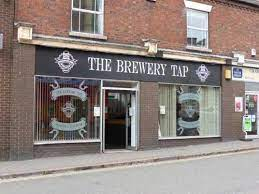
My next location was further down the street, at a place that hadn't existed when I had last been in the area: The Brewery Tap.


This is the oldest of two micropubs in the town, and acts as the brewery tap for nearby Muirhouse Brewery. The building has seen many uses, having previously been part of a building society and a florists before its most recent incarnation as a smoothie bar. It was converted into its current status approximately a year and a half ago. The shop frontage opens into a living type layout with a bar off centre into one corner. The bar features 6 handpulls, 5 of which are in use. There are also a list of beers that are coming soon pinned up above the bar. The handpulls offer a variety of brews including Muirhouse's own Ilkeston Pale Ale, Nethergate Stour Valley Gold, Slieve Bloom Flanagan's Irish Stout, Lilley's Strawberry Cider and another cider called Pig Swill. In the cellar to come later are Nethergate Essex Border, Nethergate Growler and Blonde, Citra and Voodoo Mild, all courtesy of Great Heck Brewery. On this occasion, I opted for Stour Valley Gold (4.2%), a light, fruity beer with apricot flavours that is surprisingly refreshing. I took my time drinking this beer, largely to avoid peaking too soon when I was very aware that I still had a few other venues to visit.

From a new place to a place with a new face next. Situated almost opposite the Brewery Tap is Hogarth's.


Now marketed as a gin palace (a reputation it deserves once you see the bar), the building that is now Hogarth's was originally the town post office before being converted to a pub under the name The Old Posthouse. It was then renamed The Charter in honour of Ilkeston's town charter, granted by Henry III in 1252, before being recreated in its current guise. The pub is named after 18th Century satirical artist William Hogarth and the pub is decorated with recreations of some of his illustrations. The general layout of the pub sees it divided into small sections with the use of pillars and booths. The bar runs down the right hand wall opposite the main entrance. I was pleased to see 6 handpulls, all occupied, despite the prevalence of gin of offer. The choices on offer are Jenning's Sneck Lifter and Cocker Hoop, Courage Directors, Joseph Holt Two Hoots, McEwan's IPA and Navigation New Dawn Pale (hooray!). As tempted as I was by New Dawn Pale, working in the brewery tap for this particular brewery means I'm exposed to it a lot. Instead I went for the Two Hoots, which I've had before in bottled form. This is a light, crisp and refreshing ale with a hint of citrus that is beautifully balanced. It's always interesting to try a cask version of a beer that is normally bottled and, in this case, it's an excellent transition.

Ideally, I would next like to have visited Ilkeston's 2nd and newest micropub, the Burnt Pig Ale 'Ouse, but this is closed Monday-Wednesday so will have to wait for another visit in the future. Instead, I made my way across the nearby market place to my next destination, the local Wetherspoon's, The Observatory.


The name of this glass-fronted building recalls John Flamsteed, whose family lived at Little Hallam and at Denby. In 1675, Flamsteed was appointed the first Astronomer Royal at the Greenwich Observatory. Refreshingly, the pub was formerly a supermarket, built on the site of the Ilkeston Liberal Club. Officially opened in 1888, the Liberal Club was a well-known local landmark until it was demolished in the late 1960s. As well as being supermarket-turned-pub as opposed to, the sadly more common, vice versa, the pub also has downstairs toilets and an upstairs beer garden. The bar is well stocked with 11 handpulls, 10 of which are in use. These feature doubled up Abbot Ale, Ruddles and Doom Bar, Oakham Citra, Navigation Atlas, Wadworth 6X and Session IPA from Central brewery in the States, part of the world brewer collaborative series. I was immediately swayed by the presence of Citra as it comes from one of my favourite breweries. It was in excellent condition.

There was a bit of a walk to my next couple of locations but sometimes it's worth it to make the effort. First up, I had to walk out of the town centre to the central ring road and up Heanor Road which heads (rather obviously) towards nearby Heanor. Situated at the top of the hill, on the right hand side of the road as you leave the centre, sits Rutland Cottage.


This is a freehold premises with a large beer garden and original internal features including exposed beams and a partially mock-Tudor frontage. The bar is central and U-shaped and features Marston's Pedigree as its house bitter. 4 other handpulls also sit on the bar, offering a wide range of local beers. At the time of my visit, I have a choice between Blue Monkey Guerilla, Magpie Angry Bird, Falstaff A Fist Full of Hops and Thornbridge Jaipur. I decided that Angry Bird was the beer for me. At 4.2%, this is a ruby red ale with a malt character that gives way to a rich hoppy palate of Phoenix, Bramling and Archer hops. The beer was brewed with Lillian Greenwood MP and councillor Alex Ball with 2p from every pint going to the Ear Foundation. Rutland Cottage does a lot to support local real ale, as evidenced by the array of pump clips adorning the walls and ceiling. This kind of commitment is always good to see, especially in places where it is not necessarily expected.

I retraced my steps somewhat for my penultimate stop. Heading back down the road and across the roundabout, I eventually turned right and walked past a small retail park with my next destination in sight, the award winning Dewdrop Inn.


Built in 1884, this is a traditional corner pub. Internally, it has a 3 roomed format with an entrance lobby. There is a bar and a lounge on either side of the serving area and a separate snug. The pub has won 8 CAMRA pub of the year awards, from the Erewash Valley branch, since 1997, including in 2013 and 2015. The 4 handpulls on offer during my trip featured Dancing Duck Nice Weather, Acorn Barnsley Gold, Ascot Penguin Porter and Blue Monkey Marmoset. I instantly decided on Nice Weather (4.1%) from Derby's Dancing Duck brewery. This is a copper coloured, fruity summer ale packed full of flavour. Blackberry, strawberry and floral rose notes in perfect balance with just the right amount of malt character. During my time drinking this enjoyable beer, I got into a conversation about football with one of the regulars. He was very friendly and the chat was welcome, helping to cement the friendly feeling of the place as a whole. I spent longer here than I intended, largely due to the football talk but soon it was time to move on to my final stop.

For my last visit of the day, I needed to make my way back across the market place and back to the central street opposite Spanish Bar. Situated conveniently close to the bus stop is The Poacher.


This former Shipstone's house has a 4pm opening time Monday-Wednesday, hence my decision to arrive here later. There is a modern public bar with a lounge to the left side and another at the rear. The 5 handpulls feature doubled up Doom Bar and Castle Rock Harvest Pale as well as Thatcher's Heritage cider. The pub also offers CAMRA discount. Harvest Pale was my choice this time and it was very well kept.

Sadly, my time in Ilkeston had come to an end but it had been a good one. This town has certainly done a lot in recent years to increase and improve its reputation for real ale and in that respect it is definitely mission accomplished. The pubs here openly and actively promote real ale with an impressive attitude that puts a lot of nearby areas to shame. This definitely won't be my last trip to Ilkeston within these pages. Not only do these locations need monitoring to fully appreciate the efforts they go too and the quantity and quality of beer on offer but there are other premises, including the Burnt Pig Ale 'Ouse that warrant a return trip. Well done Ilkeston. I'm impressed!

Thursday, July 30, 2015

An Anticlimax in Kimberley

Following the relative success of my recent trips out to the suburbs, I had high hopes for my most recent excursion, for which I visited a place that I have passed through en route to some prior destinations. A fortnight ago, having once again been granted a free Monday, I made a trip out to the Nottinghamshire town of Kimberley.

Kimberley is a town in Nottinghamshire, England, lying 6 miles northwest of Nottingham along the A610. The town grew as a centre for coal mining, brewing and hosiery manufacturing. Together with the neighbouring villages of Giltbrook and Greasley, it has a population of around 6,500 people. There has been no mining or hosiery manufacturing in the town for many years and the local brewery was sold and closed at the end of 2006.
Kimberley is referred to as Chinemarelie in William the Conqueror's Domesday Book. With the accession of William to the throne Kimberley came into the possession of William de Peveril. The Peverils lost control when they supported the losing side in the civil war which preceded the accession of Henry II of England in 1154. The King became the owner of the land. King John of England granted land in the area to Ralph de Greasley in 1212 who took up residence at Greasley Castle and also at around this time to Henry de Grey whose son re-built Codnor Castle on the site of an earlier castle established by William Peveril.
Ralph de Greasley's land passed by inheritance and marriage to Nicholas de Cantelupe who took part in Edward III of England's Scottish campaigns and also the Battle of Crécy. Nicholas founded Beauvale Priory using part of his Kimberley holding in 1343. That part of Kimberley which had become the property of Beauvale Priory was claimed by King Henry VIII during the Dissolution of the Monasteries in the 16th century.
The Priory's land was redistributed by the King and came into the possession of Arthur Capell, 1st Baron Capell of Hadham again by inheritance and marriage in 1627. Arthur was beheaded in 1649 having fought for the Royalists in the English Civil War. Arthur's son was created Earl of Essex in 1661.
In 1753 the land was purchased by Sir Matthew Lamb whose grandson William Lamb became Prime Minister in 1834. The Lamb's Kimberley estates passed by marriage to the 5th Earl Cowper in 1805 and on the death of the 7th Earl in 1913 were sold off in pieces.
That part of Kimberley retained by the Cantelupe's passed by inheritance and marriage to John Lord Zouch who died at the Battle of Bosworth Field with Richard III of England in 1485. He was posthumously found guilty of high treason with his property forfeited to Henry VII of England. John Savage received this part of Kimberley in gratitude for his efforts on behalf of Henry VII at Bosworth. The Savage family sold this land to the Earl of Rutland in the early 17th century. The Duke of Rutland's Kimberley estates were sold in parcels in the early 19th century.

Airships have flown over Kimberley on a number of occasions. The R101 flew over Kimberley during a trial flight on 18 October 1929, the year before it crashed with the loss of most of its passengers and crew during a flight to India. During a bombing raid on the Bennerley and Stanton Ironworks during World War One, a German Zeppelin airship, L.20 (LZ 59) overflew Kimberley. The R101 and the L.20 were rigid airships but more recently, in August 1997 a non-rigid airship advertising the RAC flew over Kimberley.

One of Kimberley's most notable structures is its unusual war memorial, in the form of a rotunda which is used as the emblem of Kimberley School. This secondary school has a catchment area which extends into the neighbouring areas of Nuthall, Eastwood, Watnall, and Hempshill Vale.
On the South side of Kimberley lies Swingate, which has many different walking and cycling routes into the woods and surrounding countryside.
The twin towns of Kimberley are Échirolles in France and Grugliasco in Italy.
Kimberley Brewery has recently been taken over by Greene King, another major brewer in a multi million pound deal which marks the end of the traditional Kimberley Ales as ale brewing will now cease and there will only be a distribution centre in the area.
The Kimberley Brewery has within its boundaries a geological Site of Special Scientific Interest (SSSI). It is listed under the title of "Kimberley Railway Cutting" as an important location for Permian Gymnosperm fossils. The Permian - Carboniferous unconformity can be found in the Kimberley Railway Cutting.
Since 1974, Kimberley has been part of the Borough of Broxtowe. From 1894 to 1974, however, it was part of Basford Rural District Council.
Recently there has been speculation that the Nottingham Express Tram (NET) want to extend their Phoenix Park tram stop into Kimberley towards Giltbrook Retail Park.

Ignoring the unsettled weather which marred my bus journey to the town, I decided to start at the far end of Kimberley and work my way back through, down the long central road, which is part of the A610. My first destination was a pub which I had heard a lot about in relation to its record for real ale and which sits at the top of an embankment, looking back down onto the main road. First up on this trip, the Nelson and Railway.


This picturesque pub is also a hotel and has a long history, as the building itself is 400 years old. The main door has an outside seating area to either side, including a small wooden smoking shelter. Inside, the narrow corridors encircle the bar, leading to the lounge entrance at one side of the long, narrow bar. This led to some initial confusion when I first entered as the door to the immediate left of the entrance is no longer in use and so my attempts to open it were made all the more frustrating by the fact that the clientele could see my struggle through the glass panel at the top. Not to be deterred, I eventually found my way in. The lunge area is roughly L-shaped with small tables and benches spread throughout. On the way, there are 4 handpulls offering Nottingham Extra Pale Ale, Greene King IPA Gold, Skinner's Betty Stogs and Kimberley Best Bitter, brewed by Greene King to the recipe of the now defunct local brewery which lies nearby. I opted for a pint of the Betty Stogs fro Cornwall's Skinner's Brewery. This was in excellent condition and a welcome way to forget the inclement weather. I took a seat at a small round table off to the side and soaked in the atmosphere of the interior, decorated with bygone photos of the area and assorted brewery memorabilia. I was the youngest customer in the pub by a good 20 years but this wasn't an issue and it was nice to see that the older folk of Kimberley have a good taste in music as Dire Straits and Fleetwood Mac made an appearance on the jukebox.

This had been a pleasant start to the day but, as the title no doubt implies, it would not continue in this vein for long. My next stop was slightly further down the road, up yet another slope. My next intended stop was The Cricketers Rest.


The ease with which I'd located this pub was quickly tempered by the worrying sight of 2 locked doors at the entrance and a To Let sign on the wall above. This is certainly a worrying development for this Greene King owned premises. One can hope that the pub opening hours are such that I was early and that a new tenant can be found to ensure that the premises remains a drinking hole. A future visit may be required to see how things lie.

Next up, back down on the main road through the town was the next planned stop on the list. Set back slightly from the road is The Gate Inn.


This is yet another Greene King operated property in this particular neck of the woods. The pub is named for its location at what used to a turnpike between Nottingham and Kimberley which, for a fee, would allow travellers to pass through in one of 4 possible directions heading to various destinations. The building itself is contemporary with the turnpike and parts of it may be older. I walked towards the door, hoping for the welcome sight of an open door. Alas, this pub was also closed at the time of my visit! A quick bit of research confirmed that the pub does not open until 4pm on a Monday and Tuesday which seems a bit strange given the all day opening of pubs in nearby areas. This proves the value of researching opening hours in more detail before embarking on a trip of this type. Although frustrated, with the weather improving, I was determined to continue my adventures in the hope of finding at least one other pub that was open.

Hope was to be found at my next location, the Lord Clyde.


I was pleased to see that this pub was open, making it a marked improvement over the previous 2. Upon entering, I was greeted by an open plan layout with seating mostly confined to one side and a long booth to the right hand side. There are a few regulars around but the pub is largely quiet. The bar is small and tucked into one corner at the back of the room. I am faced with the choice of 2 beers from an available 6 handpulls. My options are Hardy and Hanson's Bitter and Golden Galaxy, brewed for Greene King in association with Brentwood Brewing Co. I decided on the Golden Galaxy (4.0%), a rich, golden and fruity ale with a nice, smooth finish. I took a seat by myself at a small table, largely obscured from the other punters by a supporting pillar. My pint went down quickly, coinciding coincidently with the arrival of the bingo callers. Taking that as my cue to leave, I headed out with the barman's advice to 'Run, before the bingo starts', ringing in my ears.

I had one final stop planned on my so far mediocre exploration of Kimberley. Situated at the other end of the town in its own large plot, is The Stag Inn.


This is a traditional stone built inn dating from 1737, with 2 bars, both of which have low beams, wooden panelling and settle seating. The appearance of the pub already had me hooked and the emphasis on advertising real ale even more so. The only thing preventing me from a pint or 2 to bookend the day was.......the opening time. 5pm. This was not the ending I was expecting to my trip. I'm not ashamed to admit that the issues with opening times is insufficient research on my part. However, The Stag not withstanding, there is a large preponderance of Greene King in this small town, echoing nearby Eastwood in that respect. Overall, Kimberley had been a disappointment but that doesn't mean that I'm not prepared to give it the benefit of a return trip in the future. The Stag alone will not escape my attentions that easily. I can't help but wonder whether areas like this would benefit from longer opening hours but it's obvious that pubs like this survive by knowing when to open and when they are more likely to attract passing trade. In general, Kimberley was one of the more ale deprived areas of recent trips but, who knows, perhaps a return on a different day, at a different time, will yield more fruit. Kimberley has had the once over so we'll see how it stacks up in the foreseeable future. Until next time.