Wednesday, February 15, 2017

Ales and Avalon

Following on from our investigation of some of the pubs around the Stokes Croft area of Bristol, our second day of last week's trip to the west saw us do a number of different things. Our plan was thus: a trip to Matt's favourite pub en route to the legendary town of Glastonbury for a brief look at their pubs before a return to Hanham, the Bristol suburb where Matt lives, to check a few more of his locals. There was a lot about the day that I was excited about, no more so than our first trip.
Our first location is situated deep in the Mendips and has something of reputation in the local area for its beer, food and hospitality. Matt has told me a lot about the pub in the past and it would finally be good to experience it for myself. Our first destination of the day was the Hunter's Lodge Inn.


This is a timeless, classic roadside inn, situated at a crossroads near the village of Priddy, the highest village in Somerset. The pub is very popular with cavers and walkers and the landlord, Roger, has been in charge for well over 40 years. There are 3 rooms, including one with a flagged stone floor. All of the beer is dispensed directly from casks behind the bar and local cider is also served. The food is supposed to be exceptional and, judging from the prices, very reasonable as well. There is a garden to the rear and dogs are welcome. Mobile phones, however, are definitely not and Matt has told me that Roger has a piece of wood with phones nailed to it that is often used as a visual deterrent. The opening times are limited to lunchtimes and evenings with the pub usually closed between around 2 and 6pm. There were 3 beers available to choose between at the time of our visit, Cheddar Ales Potholer, Blindmans Golden Spring and Butcombe Bitter. I opted for the Potholer (4.3%), an award-winning golden ale with zesty fruit flavours and a rounded, hoppy finish. It was very nice indeed and added to the atmosphere of what is a cracking little place. I was already in love with the pub before I even ordered a beer and I'll definitely be returning in future, to try the food if nothing else. You don't get many pubs like this any more and it's a real shame but long may the Hunter's continue.

Next stop Glastonbury! I had been to the town once before but never for long enough to properly explore and Amy had never been, having only negative connotations to associate with it due to selling tickets for the eponymous festival in her job. I was excited to see more of a town I knew a fair bit about from its connection to various myths and legends, particularly those linked to Arthurian myth. You probably know what's coming next if you've read these entries previously. Here comes the historical intro.

Glastonbury  is a town and civil parish in Somerset, England, situated at a dry point on the low-lying Somerset Levels, 23 miles (37 km) south of Bristol. The town, which is in the Mendip district, had a population of 8,932 in the 2011 census. Glastonbury is less than 1 mile (2 km) across the River Brue from Street, which is now larger than Glastonbury.
Evidence from timber trackways such as the Sweet Track show that the town has been inhabited since Neolithic times. Glastonbury Lake Village was an Iron Age village, close to the old course of the River Brue and Sharpham Park approximately 2 miles (3 km) west of Glastonbury, that dates back to the Bronze Age. Centwine was the first Saxon patron of Glastonbury Abbey, which dominated the town for the next 700 years. One of the most important abbeys in England, it was the site of Edmund Ironside's coronation as King of England in 1016. Many of the oldest surviving buildings in the town, including the Tribunal, George Hotel and Pilgrims' Inn and the Somerset Rural Life Museum, which is based in an old tithe barn, are associated with the abbey. The Church of St John the Baptist dates from the 15th century.
The town became a centre for commerce, which led to the construction of the market cross, Glastonbury Canal and the Glastonbury and Street railway station, the largest station on the original Somerset and Dorset Joint Railway. The Brue Valley Living Landscape is a conservation project managed by the Somerset Wildlife Trust and nearby is the Ham Wall National Nature Reserve.
Glastonbury has been described as a New Age community which attracts people with New Age and Neopagan beliefs, and is notable for myths and legends often related to Glastonbury Tor, concerning Joseph of Arimathea, the Holy Grail and King Arthur. Joseph is said to have arrived in Glastonbury and stuck his staff into the ground, when it flowered miraculously into the Glastonbury Thorn. The presence of a landscape zodiac around the town has been suggested but no evidence has been discovered. The Glastonbury Festival, held in the nearby village of Pilton, takes its name from the town.

During the 7th millennium BCE the sea level rose and flooded the valleys and low-lying ground surrounding Glastonbury so the Mesolithic people occupied seasonal camps on the higher ground, indicated by scatters of flints. The Neolithic people continued to exploit the reedswamps for their natural resources and started to construct wooden trackways. These included the Sweet Track, west of Glastonbury, which is one of the oldest engineered roads known and was the oldest timber trackway discovered in Northern Europe, until the 2009 discovery of a 6,000-year-old trackway in Belmarsh Prison. Tree-ring dating (dendrochronology) of the timbers has enabled very precise dating of the track, showing it was built in 3807 or 3806 BC. It has been claimed to be the oldest road in the world. The track was discovered in the course of peat digging in 1970, and is named after its discoverer, Ray Sweet. It extended across the marsh between what was then an island at Westhay, and a ridge of high ground at Shapwick, a distance close to 2,000 metres (1.2 mi). The track is one of a network of tracks that once crossed the Somerset Levels. Built in the 39th century BC, during the Neolithic period, the track consisted of crossed poles of ash, oak and lime (Tilia) which were driven into the waterlogged soil to support a walkway that mainly consisted of oak planks laid end-to-end. Since the discovery of the Sweet Track, it has been determined that it was built along the route of an even earlier track, the Post Track, dating from 3838 BC and so 30 years older.
Glastonbury Lake Village was an Iron Age village, close to the old course of the River Brue, on the Somerset Levels near Godney, some 3 miles (5 km) north west of Glastonbury. It covers an area of 400 feet (120 m) north to south by 300 feet (90 m) east to west, and housed around 100 people in five to seven groups of houses, each for an extended family, with sheds and barns, made of hazel and willow covered with reeds, and surrounded either permanently or at certain times by a wooden palisade. The village was built in about 300 BC and occupied into the early Roman period (around 100 AD) when it was abandoned, possibly due to a rise in the water level. It was built on a morass on an artificial foundation of timber filled with brushwood, bracken, rubble and clay.
Sharpham Park is a 300-acre (1.2 km2) historic park, 2 miles (3 km) west of Glastonbury, which dates back to the Bronze Age.


The origin of the name Glastonbury is unclear but when the settlement is first recorded in the 7th and the early 8th century, it was called Glestingaburg. The burg element is Anglo-Saxon and could refer either to a fortified place such as a burh or, more likely, a monastic enclosure, however the Glestinga element is obscure, and may derive from an Old English word or from a Saxon or Celtic personal name. It may derive from a person or kindred group named Glast.
Hugh Ross Williamson cites a tale about St. Collen, one of the earliest hermits to inhabit the Tor before the Abbey was built by St. Patrick, which has the Saint summoned by the King of the Fairies, Gwyn, to the summit of the Tor. Upon arrival there he beholds a hovering mansion inhabited by handsomely dressed courtiers and King Gwyn on a throne of gold; holy water disperses the apparition. This is from Druid mythology, in which the mansion is made of glass so as to receive the spirits of the dead, which were supposed to depart from the summit of the Tor. This was the chief reason why the chapel, and later the church, of St. Michael were built on the high hill; St. Michael being the chief patron against diabolic attacks which the monks believed the Fairy King to be numbered among. Accordingly, Williamson posits that the Tor was named after the glassy mansion of the dead.
William of Malmesbury in his De Antiquitate Glastonie Ecclesie gives the Old Celtic Ineswitrin (or Ynys Witrin) as its earliest name, and asserts that the founder of the town was the eponymous Glast, a descendant of Cunedda.
Centwine (676–685) was the first Saxon patron of Glastonbury Abbey. In 1016 Edmund Ironside was crowned king at Glastonbury. After his death later that year he was buried at the abbey. The Domesday Book indicates that in the hundred of Glastingberiensis, the Abbey was the Lord in 1066 prior to the arrival of William the Conqueror then tenant-in chief with Godwin as Lord of Glastingberi in 1086.
To the southwest of the town centre is Beckery, which was once a village in its own right but is now part of the suburbs. Around the 7th and 8th centuries it was occupied by a small monastic community associated with a cemetery. Archaeological excavations in 2016 uncovered 50 to 60 skeletons thought to be those of monks from Beckery Chapel during the 5th or early 6th century. Sharpham Park was granted by King Eadwig to the then abbot Æthelwold in 957. In 1191 Sharpham Park was conferred by the soon-to-be King John I to the Abbots of Glastonbury, who remained in possession of the park and house until the dissolution of the monasteries in 1539. From 1539 to 1707 the park was owned by the Duke of Somerset, Sir Edward Seymour, brother of Queen Jane; the Thynne family of Longleat, and the family of Sir Henry Gould. Edward Dyer was born here in 1543. The house is now a private residence and Grade II* listed building. It was the birthplace of Sir Edward Dyer (died 1607) an Elizabethan poet and courtier, the writer Henry Fielding (1707–54), and the cleric William Gould.
In the 1070s St Margaret's Chapel was built on Magdelene Street, originally as a hospital and later as almshouses for the poor. The building dates from 1444. The roof of the hall is thought to have been removed after the Dissolution, and some of the building was demolished in the 1960s. It is Grade II* listed, and a Scheduled ancient monument.
During the Middle Ages the town largely depended on the abbey but was also a centre for the wool trade until the 18th century. A Saxon-era canal connected the abbey to the River Brue. Richard Whiting, the last Abbot of Glastonbury, was executed with two of his monks on 15 November 1539 during the dissolution of the monasteries.
During the Second Cornish Uprising of 1497 Perkin Warbeck surrendered when he heard that Giles, Lord Daubeney's troops, loyal to Henry VII were camped at Glastonbury.

In 1693 Glastonbury, Connecticut was founded and named after the English town from which some of the settlers had emigrated. It is rumored to have originally been called "Glistening Town" until the mid-19th century, when the name was changed to match the spelling of Glastonbury, England, but in fact, residents of the Connecticut town believe this to be a myth, based on the Glastonbury Historical Society's records. A representation of the Glastonbury thorn is incorporated onto the town seal.
The Somerset towns charter of incorporation was received in 1705. Growth in the trade and economy largely depended on the drainage of the surrounding moors. The opening of the Glastonbury Canal produced an upturn in trade, and encouraged local building. The parish was part of the hundred of Glaston Twelve Hides, until the 1730s when it became a borough in its own right.

By the middle of the 19th century the Glastonbury Canal drainage problems and competition from the new railways caused a decline in trade, and the town's economy became depressed. The canal was closed on 1 July 1854, and the lock and aqueducts on the upper section were dismantled. The railway opened on 17 August 1854. The lower sections of the canal were given to the Commissioners for Sewers, for use as a drainage ditch. The final section was retained to provide a wharf for the railway company, which was used until 1936, when it passed to the Commissioners of Sewers and was filled in. The Central Somerset Railway merged with the Dorset Central Railway to become the Somerset and Dorset Railway. The main line to Glastonbury closed in 1966.
In the Northover district industrial production of sheepskins, woollen slippers and, later, boots and shoes, developed in conjunction with the growth of C&J Clark in Street. Clarks still has its headquarters in Street, but shoes are no longer manufactured there. Instead, in 1993, redundant factory buildings were converted to form Clarks Village, the first purpose-built factory outlet in the United Kingdom.
During the 19th and 20th centuries tourism developed based on the rise of antiquarianism, the association with the abbey and mysticism of the town. This was aided by accessibility via the rail and road network, which has continued to support the town's economy and led to a steady rise in resident population since 1801.
Glastonbury received national media coverage in 1999 when cannabis plants were found in the town's floral displays.

Glastonbury is notable for myths and legends concerning Joseph of Arimathea, the Holy Grail and King Arthur. Many long-standing and cherished legends were disproved in a four-year study by archaeologists at the University of Reading, who, amongst other findings, discovered that the connection with King Arthur and his Queen, Guinivere, was created deliberately by the monks in 1184 to meet a financial crisis caused by a devastating fire. Other myths dispelled include the visit by Jesus, the building of the oldest church in England, and the flowering of the walking stick. The study made new archaeological finds; its leader found Glastonbury to be a remarkable archaeological site. The new results were reported on the Glastonbury Abbey Web site, and were to be incorporated into the Abbey's guidebook; however, the leader of the study, who became a trustee of Glastonbury, said "We are not in the business of destroying people’s beliefs ... A thousand years of beliefs and legends are part of the intangible history of this remarkable place".
The legend that Joseph of Arimathea retrieved certain holy relics was introduced by the French poet Robert de Boron in his 13th-century version of the grail story, thought to have been a trilogy though only fragments of the later books survive today. The work became the inspiration for the later Vulgate Cycle of Arthurian tales.
De Boron's account relates how Joseph captured Jesus' blood in a cup (the "Holy Grail") which was subsequently brought to Britain. The Vulgate Cycle reworked Boron's original tale. Joseph of Arimathea was no longer the chief character in the Grail origin: Joseph's son, Josephus, took over his role of the Grail keeper. The earliest versions of the grail romance, however, do not call the grail "holy" or mention anything about blood, Joseph or Glastonbury.
In 1191, monks at the abbey claimed to have found the graves of Arthur and Guinevere to the south of the Lady Chapel of the Abbey Church, which was visited by a number of contemporary historians including Giraldus Cambrensis. The remains were later moved and were lost during the Reformation. Many scholars suspect that this discovery was a pious forgery to substantiate the antiquity of Glastonbury's foundation, and increase its renown.
An early Welsh poem links Arthur to the Tor in an account of a confrontation between Arthur and Melwas, who had kidnapped Queen Guinevere.
Joseph is said to have arrived in Glastonbury by boat over the flooded Somerset Levels. On disembarking he stuck his staff into the ground and it flowered miraculously into the Glastonbury Thorn (or Holy Thorn). This is said to explain a hybrid Crataegus monogyna (hawthorn) tree that only grows within a few miles of Glastonbury, and which flowers twice annually, once in spring and again around Christmas time (depending on the weather). Each year a sprig of thorn is cut, by the local Anglican vicar and the eldest child from St John's School, and sent to the Queen.
The original Holy Thorn was a centre of pilgrimage in the Middle Ages but was chopped down during the English Civil War. A replacement thorn was planted in the 20th century on Wearyall hill (originally in 1951 to mark the Festival of Britain, but the thorn had to be replanted the following year as the first attempt did not take). The Wearyall Hill Holy Thorn was vandalised in 2010 and all its branches were chopped off. It initially showed signs of recovery but now (2014) appears to be dead. A new sapling has been planted nearby. Many other examples of the thorn grow throughout Glastonbury including those in the grounds of Glastonbury Abbey, St Johns Church and Chalice Well.
Today Glastonbury Abbey presents itself as "traditionally the oldest above-ground Christian church in the world," which according to the legend was built at Joseph's behest to house the Holy Grail, 65 or so years after the death of Jesus. The legend also says that as a child, Jesus had visited Glastonbury along with Joseph. The legend probably was encouraged during the medieval period when religious relics and pilgrimages were profitable business for abbeys. William Blake mentioned the legend in a poem that became a popular hymn, "Jerusalem" (see And did those feet in ancient time).

Whether or not you believe the legends and claimed religious importance of Glastonbury, it's hard to ignore the enormous amount of history associated with such a small corner of Somerset. It was into this land of myths, martyrs and legends that we now immersed ourselves. Our first task was an attempt to climb the Tor, something that Matt and I have done previously but Amy, with this being her first visit, had not experienced. We eventually decided that halfway was probably far enough so instead returned to the real purpose of our visit, Glastonbury's pubs! The first of these was more or less right at the bottom of the Tor and walking had made us thirsty so it was almost like we'd planned it. Our first stop in Glastonbury's drinking establishments was The Rifleman's Arms.
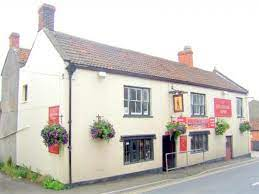


The pub dates from at least the 16th century and much of the original façade remains unchanged. The rear terrace and sun-trap patio provides great views over the surrounding area. The wide, low front doorway leads to the traditional bar, separated from the more modern rear of the building by an archway. Both bars include real log fires (particularly noticeable on a chilly February day) and there is also a pool room and regular live music. The 5 handpulls include doubles of Tribute and Butcombe Bitter as well as Philosopher cider from Orchard Pig. We sat at a table by the aforementioned log fire, under the traditional mullioned windows and enjoyed the warmth and the beer. The Tribute was as it should, lovely and warming and clearly well kept. Conversation turned to our next plan and I decided I'd like to try and find the Hawthorns Hotel, the only GBG listed pub in the town. We succeeded in this plan only to find that it appeared to be closed for redecoration. Instead we headed to the neighbouring Who'd A Thought It?, only to discover that this quirkily named pub was unable to serve real ale as they were retiling their cellar. Not to be deterred, we retraced our steps.

Our next destination ended up not being a bad one as we ended up at the King William.


This warm and friendly pub sits in the town centre and features a long bar opposite the entrance with a raised dining area to the left and an smaller seating area to the right with a small set of steps leading down to a pool table and a door that leads to the toilets and a skittle alley. The pub is dog friendly and hosts live music at weekends. The bar holds 2 handpulls featuring, on our visit, Butcombe Bitter and Box Steam Tunnel Vision. The Tunnel Vision (4.2%), is a well-rounded light amber bitter with a clean taste and a slight bitterness in the finish. It proved to be a good choice and we sat at a table just off from the bar, very much enjoying, despite setbacks, what was proving to be a largely enjoyable day. Our conversation was briefly interrupted by a trio of 18 year old lads who'd bunked off from a school trip who, despite, not actually engaging us, sat on the table right next to us in deference to established rules of pub etiquette. When they later admonished and removed by an annoyed teacher, it gave us a chance to laugh about it with the barman.

We decided we could probably squeeze one more in before Matt drove us back to Hanham so we popped into one of the oldest buildings in the town, the George & Pilgrim's Hotel.


Designated as a Grade I listed building, this is the oldest purpose built public house in the South West of England, having been constructed sometime in the 14th century to accommodate pilgrims visiting the nearby abbey. Originally known as the Pilgrims' Inn of Glastonbury Abbey, by the 19th century the building was known as the George Hotel, hence the current name. The front of the three-storey building is divided into three tiers of panels with traceried heads. Above these are three carved panels bearing the coats of arms of the abbey and of King Edward IV. The hotel is certainly a sight to behold and is very atmospheric inside, having kept a large number of period features including the almost pew-like seating. The bar is in a large lounge-style room off of the central corridor and 7 handpulls are in evidence with 5 of them in use. For our delectation are Tribute, Doom Bar, Otter Bitter, Fine Tuned Rack & Roll and Hecks Cider. It didn't take long at all to decide on the Rack & Roll. At 4%, it's an easy-drinking ruby coloured American style ale with big notes belying it's ABV. The brewery, Fine Tuned, are based in Lanport in Somerset. We took our beers through to a smaller seating are on the other side of the central hallway and absorbed some of the history of this fantastic place. Perhaps unsurprisingly for a building of its age and history, there are a number of ghostly tales told of the George & Pilgrim's. The most widely reported apparition is that of a monk who has been reported walking down corridors and through walls and sometimes appearing in the bedrooms of guests. He has on occasion been seen to be followed by a well dressed female figure about whom little is known. The monk himself is believed to have committed suicide on the site in an area known as the 'haunted cell'. Another ghost is that of a man in a blue sports jacket who vanishes when approached. Light anomalies are regularly spotted on the pub CCTV and, in 2012, a photo taken in the bar area appeared to show the face of an unknown man manifesting in midair even though nothing was seen at the time.
It's difficult not to sucked into the atmosphere and antiquity of this place with its tales of spirits and the air of mysticism and mystery that seems to permeate the whole town. Alas, it was now time to make our way back. We weren't done with our ale excursions by any stretch though!

Upon arrival back at Hanham, instead of going back to the flat, we continued our journey down towards the river, where Matt had informed us there were a couple of nice pubs. We decide to pop into the oldest and more traditional looking of these, the Lock & Weir.


This is a riverside cottage pub that occupies 2 levels with the bar area on the upper floor containing a flagstone floor and tall bar stools, with three linked drinking rooms downstairs and a heated patio on the river's edge. The pub is dog friendly and has a Golden Retriever as its pub dog although the dog is sadly nowhere to be seen when we visit. The bar holds a single handpull, with Tribute as its offering and this is in very good condition indeed. I can definitely see this place being popular in daytime, especially in the summer with the river in close proximity and a jolly, convivial atmosphere throughout. On an inclement Wednesday night in February though, it's a different story. The pub, the company and the locals are great. The weather is definitely not on our side however!

We now headed back to the flat and decided to go to a pub that is quite literally just down the road and, despite numerous trips down here, has not yet made it into a blog entry. It's time has come! We now made our way to the local Wetherspoons, The Jolly Sailor.


This long standing pub is situated on the main road through Hanham, which follows the route of a former Roman road to Bath. Named as a link to the nearby River Avon and the historical local links to John Cabot its earliest recorded landlord is Charles Coole, in charge during 1853-74. Hhe was followed by Joseph Bateman whose relative conducted a service on board the Titanic as she sank. The décor and layout is standard Spoons with the seating areas over 2 levels, a main bar downstairs and a smaller bar and toilets upstairs. The 5 handpulls offer Ruddles, Abbot Ale, Doom Bar, Exmoor Fox and Bath Gem. I went for the Exmoor Fox (4.2%), a sleek and delicate beer with a malty mouthfeel, a soothing, softly bitter finish and a lingering bittersweet character. All in all, a cracking pint! We initially came here with the intention of food and our intentions were cemented when we discovered it was quiz night! We took a table upstairs, prepared ourselves and awaited the arrival of Jess who had been at work. The food was good, the beer went down easily and a good time was had by all. Following the quiz, we emerged full and victorious!! The girls decided to turn in for the night and Matt decided we could probably manage another so wandered over to a pub just behind and up the road from the flat, another I had never visited. Our journey concluded at the Queen's Head.
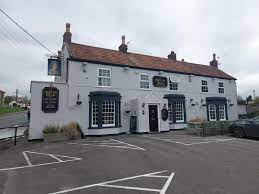


Reopened in September 2016 following a refurbishment, this is a comfortable friendly local with a main bar to the front, a separate bar area to the left and a restaurant area off to the right. There are a few regulars in when we arrive and the atmosphere is very welcoming as we peruse the beer choice. Of the 6 available handpulls, 4 are in use, offering doubles of Wadworth 6X and Wadworth IPA. I don't tend to see Wadworth much in my part of the world but I'm familiar enough with the brand to know what I'm getting and a pint of 6X goes down very well indeed. We reflected here on our past couple of days and how enjoyable the whole experience had been once again. We were also befriended by the pub dog, a gorgeous female husky called Bear, which made leaving even harder. Matt had suggested heading down to The Swan (another new one on me) but I was spent by this stage and it also means we've got more to do next time!

The 2 days spent down in Bristol with great friends and great pubs was a refreshing start to the year and has once again contributed to some fantastic memories. The West Country, as far as I've seen, is a hub of real ale magnificence and a haven for those of a drinking bent. There are some many fantastic places, both in and around Bristol, to explore and appreciate a good beer in. Bristol itself still holds many things for me to yet discover so we'll have to see where we end up next time. Because there will always be a next time.


Bristol Rovers

Greetings again one and all and, once again, an apology for my absence over recent months. It seems that once October rolls around, time and finance conspire to prevent me getting out and about as much as I would like. Thankfully, normal service is for now resumed and I hope to be able complete more excursions in the weeks and months to come.
It seems apt that the first new trip of the year should be to a place that has featured many times in this blog, a place that I am very fond of and which has a huge amount to offer both the seasoned and casual drinker. Last week, as part of the festivities surrounding my 30th birthday (screams inwardly), Amy and I headed down to the west country to visit Matt and Jess in Bristol with the aim of further exploring this fantastic city. What followed was 2 days of fun, excitement and drinking, both in Bristol and further afield.
Our first day of the 2 we spent in this lovely part of the country, saw us travelling to the Stokes Croft area of Bristol and exploring a number of the pubs along Gloucester Road, which runs from the suburbs directly into Bristol city centre. This involved a bus ride into the centre followed by a shorter bus ride out, which would allow us to walk back down towards the bus stops when we decided to call it a night. I was very excited to see what we would discover as I hadn't heard an enormous amount about the pubs in this area. Our first stop, The Bristol Flyer.


Formerly known as The Goose at the Flyer, this large, stylish pub has a very modern interior arranged over a split level set up with a large beer garden to the rear, featuring booths and a fully enclosed seating area which includes sofas. The pub even has its own small vegetable garden which allows it to grow its own produce for use on site. In terms of ale, the very well-served bar includes 4 handpulls, 3 of which are in use during our visit, offering us a choice between Bath Ales Gem, Great Heck Dave and Greene King Mighty Moose IPA. Being familiar with Bath Ales, and not wanting to start off on anything too strong with a whole day to get through, I opted for a pint of Gem. Matt went for the Dave whilst Jess and Amy began the day on cider. The Gem is a very delicious pint. Brewed with Maris Otter malt and Goldings hops, the beer boasts a rich aroma of both and a long, deep, bittersweet finish. It almost goes down too easily as I had almost finished my pint before anybody else had really got started!
Despite the forecast of a dry day, the weather was beginning to look decidedly ominous. Thankfully, our next destination was only a couple of doors away, at The Cider Press.


Formerly, the Rising Sun, this Stonegate operated premises was once part of the Scream student pub brand before this was disbanded and now emphasises cider (as you'd expect), beer, sport and burgers. Inside, the layout is large and open-plan with a central bar facing the large front windows and small tables situated opposite and around the sides. The pub is Cask Marque accredited and also offers a CAMRA discount, which I found out too late as usual. 2 of the 3 handpulls are in use, proffering a choice between Prescott Hill Climb and Brains Reverend James. I do enjoy a good pint of Reverend James so my choice in this situation was easy and I was not to be disappointed as the beer was refreshing and vey well kept. Cider fans will not be disappointed here either as the back bar boasts a whole bank of wall-mounted cider pumps, offering as many as 28 varieties of different styles, flavours and strengths. The day had certainly started in a positive fashion and we were very much enjoying our most recent trip down to this wonderful city.
The rain had dissipated somewhat as we headed to our next destination, which on the opposite side of the road at the area's namesake pub, now operated as the Gloucester Road Alehouse & Kitchen.


This mock-Tudor fronted property has risen from the ashes of an old pub known as the Foresters and prides itself on cask ale and craft beer, operated as it is by Wotton-under-Edge based Wickwar Brewery. The interior is compact and cosy with a small bar accessible through a glass door just inside the entrance. There are 6 handpulls on show, mostly showcasing Wickwar beers, in the form of Try Time, Cotswold Way, Bob and Falling Star, but also St. Austell Tribute and Lilley's Cheeky Pig cider. The upstairs bar also boasts a further 3 handpulls. All real ale retails at £2.50 a pint and they also boast an extensive gin collection, which very much pleased Jess. I haven't tried much Wickwar stuff in the past so, after a moment of deliberation, I opted for the Falling Star (4.2%), a golden ale with a complex and distinctive aroma due to a combination of Cascade, Willamette and Mittelfruh hops. All of this gives way to a balanced and refreshing finish. Based on this beer alone, I can recommend Wickwar beers to anyone as this is delicious!
It seemed a shame to leave this excellent place behind but our next stop was just down the road and this would prove to also be an inspired choice. Next up was The Hobgoblin.
Image result for the hobgoblin bristol images

In a former the Royal Hotel, this pub has been through several revamps and renamings in recent years. The large windows overlook the main road and there is a covered beer garden at the rear. The interior consists of large wooden tables arranged roughly around a central bar, staffed by a very enthusiastic barmaid. The 5 handpulls offer a mixture of things with Tribute, Old Rosie, Hobgoblin (somewhat obviously), Bath Gem and Orchard Pig Explorer. It would almost have been rude not to have the Hobgoblin and this proved to be a wise choice as it was very well kept. We took a bit more time with our beers here as we were very aware that it would soon be time for some food. I was tempted by the pub's in-house red hot chicken wings challenge but I was very aware of how wrong this would go so thought better of it.
We eventually decided that we could hold out a bit longer before food so decided to try one more pub first. That pub was the Prince of Wales.

Image result for prince of wales bristol

The beautiful external mural of a row of handpumps was created by local artist Andrew Burns Colwill, whilst the ground floor stained glass windows are Victorian. Inside, two linked drinking areas are served by a U-shaped bar. There is a mix of seating with padded settles around the walls and a covered and seated outdoor section to the rear of the building. Daily newspapers and board games are available, along with a good beer selection. 6 of the pub's 8 handpulls are in use, featuring Bespoke Forest Pale, Boss Best, Butcombe Gold (x2), Otter Amber (x2) and Electric Bear Spilt Milk. Having initially missed the presence of Spilt Milk, I had already chosen Butcombe Gold for my tipple here. This was not a bad choice however as the beer was delicious and went down very easily. This is a very atmospheric pub and it's easy to see why drinkers are attracted here, the mural itself not withstanding.
The pub investigation continued just down the road at Bishop's.


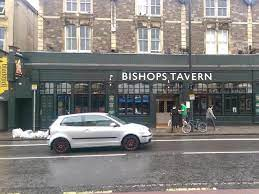
Formerly Hogshead, then Bishop's Tavern and now just the Bishop's, this Greene King owned pub is a large, sprawling premises with a mixed customer base. A pool table sits in one corner and live sport is regularly shown on the TVs. There are 5 handpulls on the bar offering the obligatory Greene King IPA, alongside Abbot Ale, Timothy Taylor Boltmaker, Tyneside Blonde and Westerham British Bulldog. The inner patriot in me was called to British Bulldog, especially given that it's 6 Nations season. From Kent-based Westerham Brewery, British Bulldog (4.1%) is a rich, full-bodied best bitter in the traditional Kent style. The full flavour and aroma is the product of Kent Northdown and Golding hops before the late finish with Progress. All-in-all a very, well-rounded and drinkable beer indeed.
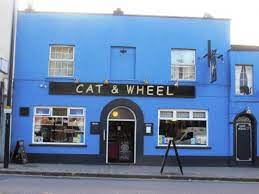
It was food time next and, following some Caribbean cuisine at a nearby Turtle Bay, the exploration continued. Our next stop was the Cat and Wheel.


Situated near the Arches railway bridge on Cheltenham Road, this is a traditional locals and community pub with a lounge and public bar. There are 6 TVs inside and one in the garden which show Sky Sports, a quiz machine, jukebox, pool table and table football and regular theme nights throughout the week. The 4 handpulls provide a choice of Tribute, Sharp's Doom Bar, Molescrum (the pub's own rebranded best bitter) and Theakston XB. I decided on the Molescrum which was a delicious, traditional beer with a dry, biscuit aftertaste. We took a table in the lounge, near the toilets, an area that was otherwise empty, and soaked up the atmosphere of this proper locals pub. We soon met Michael, a rather drunk Irish gentleman who was fascinated at the length of Matt's hair. He was very friendly and non-threatening and continued mine and Matt's record of always bumping into eccentric people when we drink in Bristol.
We decided we had time for one more pub before we wound our weary way home. That pub was The Social.


This popular café/bar is billed as one of the best places to eat in the Stokes Croft area of Bristol. Inside, there are a number of low, wooden tables, dimmed lights and a quirky sort of atmosphere. There are also quite a few people as it's early evening by the time we arrive. The décor is stylish and modern with a smallish bar tucked into a corner at about the midpoint of the structure. The solitary handpull offers Butcombe Rare Breed. This is well kept and easily drunk as we debate our next move. There are a good 3-4 more pubs further down the road that we have yet to visit but the length of the day and quantity of alcohol has caught up with us all so we resolve to call it a night and leave the unexplored for next time.

Bristol never ceases to amaze me. No matter how often we visit or how many bars and pubs we go to, there is always something new to discover, new beers to enjoy and unknown pubs to experience. The fact that we've already identified some candidates for our next journey down speaks volumes as to how much there is to see. With this, Day One of our most recent Bristolian excursion was brought to a close. Day Two had lots more to enjoy. Stay tuned!


Friday, October 21, 2016

Festival Thursday

Last week it was time for an event that has effectively become an annual pilgrimage and one which I am determined never to miss. I, of course, refer to the Robin Hood Beer & Cider Festival held, once again, at Nottingham Castle. This is the 41st year of the event and my 5th consecutive visit since I first made an appearance there in 2012.


This year we did things slightly differently to prior visits. Unable to get the Saturday off due to work commitments, Amy and I opted instead for the Thursday session which, as well as being considerably quieter, led to the chance of more beer and an always welcome opportunity to meet up with George and Claire. Sadly, Matt couldn't make it any earlier than the Saturday so he was unable to join us. Nevertheless, what followed was an excellent experience that well and truly reinforced that this is the best festival of its type anywhere in the world.

We arrived at the castle fairly early, around 11.30, with Amy meeting me following an early delivery shift at work (for me, not her). We were immediately surprised by the lack of a queue, especially given that we hadn't procured tickets this year and were buying on the door. This was not an issue at all though as we were inside almost instantly, clutching our commemorative glasses and beer tokens (as usual, 5 extra for me due to CAMRA membership).

Our first destination, after a brief exploration of the relatively unchanged layout, was the lower area near the bandstand which, although smaller than the main marquee further up, was easier to access for now and offered an interesting range of beers to choose from. As usual, the beers were arranged in alphabetical order of brewery with a larger choice in the main marquee as well as a number of dedicated brewery bars and the lower tent which features lots more! My first tipple of the day was highly seasonal. With Halloween just around the corner, I was instantly drawn to Fright Night, the solitary festival beer from Pennine Brewery, based out of Batley, West Yorkshire. At an easy drinking 4%, this is an amber ale with a roasted bitterness and a slightly spiced aroma. It was a very warming beer and a great start to the day that certainly got me into the mood. Using this first beer as a palate cleanser, we made our way up towards the main tent where we got our bearings and worked out what our next move would be. As it turned out, another beer was our next move and we found just the thing at one of the brewery bars, specifically that operated by Laneham based Springhead, whose beers I am more than familiar. Following recommendations by the very knowledgeable barman, I was drawn to the Blind Tiger (4.5%), an aromatic pale golden beer with full oranges added to the brew, which provided the whole thing with a slightly cloudy appearance and citrusy flavour. All in all, it was very nice indeed.

Things were progressing nicely now and, determined not to spend too much time in one area, we once again made our way down to the bottom marquee. Following a quick examination of the beers on offer, I was surprised to see a single beer from St. Austell brewery. The aptly named Bucket of Blood (4.5%) is a spicy, classic red ale with a malty toffee palate and a very nice flavour that went down much more quickly than I was expecting. It was back to the main marquee next and straight to a local brewery that I have all the time in the world for and who, once again, boasted their own bar at this year's festival. I speak, inevitably, of Blue Monkey brewery. Some serious decision making went into my choice this time. In the end, Amy and I both went for a third of Nuts (4.6%), a nut brown ale with a fruity flavour and smooth bitter afternotes. It was different to a lot of Blue Monkey beers and certainly a departure from what I expected. Blue Monkey is still flying the flag for excellent local beer and long may it continue! Continuing the back and forth that had so far been the theme of the day, we soon found ourselves back by the lower bars again and drawn to the bar of a brewery that I always make the point of visiting at every beer festival, due to both the quality of their beers and the quirkiness of their bar. Funfair Brewery had once again outdone themselves, last year's steampunk themed BBQ was now an Alice in Wonderland themed caravan, reflected admirably in their beers. My choice was Cheshire Cat (4.9%), a dark, malty, and very easy drinking strong bitter. The novelty value of this bar was once more enhanced by the serving of some of the beers (regrettably not mine) out of a teapot.

At this stage, we were at something of a quandary. We were very tempted to head back up to the main marquee, whilst also being very aware that George, Claire and Rich's arrival was imminent. In the end, fate (or something like it) intervened. As we were debating our next move, the advanced party, namely mutual friends of both myself, George and Rich (whose names are too numerous to mention) arrived and immediately headed for the Traffic Street bar. Thinking it rude not to get involved, we quickly did the same. An offshoot of Castle Rock brewery, Traffic Street specialise in speciality beers, many of which were in evidence here. Initially unsure where to progress next, I was finally swayed by the Rat Race (4.7%), a rich and biscuity red ale. Despite the relatively low ABV, it tasted a lot stronger but, thankfully, did not have too much of an adverse effect. Absorbed into the sudden increase in numbers of our group, who then decided that buying novelty traffic cone hats was the best idea in the world (it was not), we once again ventured to the main marquee which by this stage was considerably busier than it had been early doors. My beer exploration next me to the offerings of a new brewery, namely Brew York from, er, York which amongst its portfolio offered Viking DNA (5%), a very dark porter which packed a hell of a punch and was certainly worth giving up tokens for. My initial quantity of tokens was almost exhausted by now so I resolved myself to finding a decent beer to get a half of before I purchased further tokens. George and I had a discussion which led to a mutual interest in beers with amusing names, not that we weren't already fans of unfortunate/rubbish puns. To that end, the only place to really go by this stage was into the realms of Staggeringly Good Brewery, from my home town of Portsmouth!! At 6.5%, Velocirapture was worth a taste for the hilarious name alone. This strong (very strong!), American IPA was delicious, hoppy and smooth as well as adding another notch in the belt of a city that already boasts Charles Dickens and a football team on the verge of a return to greatness.

Our next step was to purchase more tokens which took next to no time and then it was straight back to the brewery bars. I was intrigued to see what Grafton Brewery had to offer this year. Renowned for their use of unusual flavours in their beers, they had been responsible for the excellent green beer last year. Between the small group of us, we opted for a range of the beers that were being proferred our way this year with myself being drawn to the Chocolate Mint Delight. This 4.8% stout was flavoured with peppermint, chocolate and coffee/cocoa flavours and was deceptively delicious. Fair play to Grafton for daring to go against the masses and produce beers that aim to be different. At this stage, Amy, George, Claire and myself once again headed back down to the lower area, making a bee line for the tent which was shared by Black Iris and Totally Brewed. Torn between the 2, George and I eventually opted for beers from the Totally Brewed stable, with my choice being 4 Hopmen of the Apocalypse (5.2%) with its piney, citrus hop character and caramel note. I have to confess that I hadn't previously tried many of Totally Brewed's beers but, if this is any indication, then it's clear that I've missed out. The main marquee once again held the day's next delight, in the form of a very interesting beer from Lincoln Green, which had one of the largest selections of any brewery at this year's event. The wonderfully named Gin and Beer It (5%) is infused with juniper berries, orange, lemon peel and coriander seeds, tasting for all the world like a gin and tonic, in every way that that is a good thing.

The sheer range of beers on offer this year was truly staggering and, the longer the day went on, the more I remembered how much I love the beer festival and how empty my life was before I first experienced its wonders. Still in the main tent, it was time once again to crank up both the ABV and the flavour, this time with Monster from Edinbrew, from Edinburgh in case you hadn't guessed. At 5.7%, Monster is a golden IPA packed with lychee, mango, lime, grapefruit and orange along with some big hop flavours. Monster is about right! Continuing the theme, the next beer was straight out of Somerset, courtesy of Electric Bear from Bath. Their Livewire is a big American IPA with a massive hop kick, all at a surprisingly drinkable 5.4%. Time was definitely getting on by this stage but there was still more beer to be drunk before the day was out. The taste for high strength beers was definitely catching on by now as my next choice was the 5.6% Aurora from Lewes based Burning Sky. A pale ale with big citrus and hop flavours, it went down far too easily and it became clear that I probably had 2 or 3 more beers in me before it was time to call it a day.

As it would turn out, the lower bars would be our destination for the remainder of our visit. It was time to pop in to the Castle Rock tavern to see what they'd brought with them this year. Baptism of Fire (4.8%), a ginger infused amber ale, instantly caught my eye and drew my attention away from the hardcore band on the bandstand who were struggling with their sound levels. Too much guitar and not enough vocal in my unprofessional opinion. Getting their mixing desk completely wrong was Amy's very educated verdict. Time and tokens wearing on meant that there was time for 2 more beers before we departed for home. The penultimate beverage for me caught my eye from the description alone. Out of New Mills, Derbyshire, Torrside Brewery have produced Late to the Party (5.5%), a black IPA (I'm still not sure how that works), with a healthy dose of New Zealand hops and roasted dark malts.

It had come to that time of the day. The last beer. The point where you have to decide carefully exactly what you want to do with the last of your tokens. It's always a tough decision, especially when the alcohol haze sets in and you don't want to make a snap decision for fear of regretting it. Thankfully, I'm a seasoned pro at this by now and I'd been eyeing up a suitable candidate for a while. Completing this year's beer festival journey was Werewolf. Brewed by Windswept in Lossiemouth, Moray, Scotland, this is a 6% dark, strong ale infused with chilli. All in all, a worthy climactic brew for what had been, once again, an excellent festival. The weather had held out, the beer and company had been excellent and everybody involved should be very very pleased with themselves. Once again, the Robin Hood Beer Festival has shown everybody how it should be done. It's no wonder that so many people, including myself, go back year after year. It's a one of a kind experience and one that other festivals can definitely learn. Will I be there next year? Obviously. Should you be? Definitely.

Tuesday, September 6, 2016

Hopping around Hucknall

Last week, I decided to make my way out to a destination from which I was unsure of what to expect. Taking advantage of Nottingham's excellent tram network, I used a pleasant Thursday to head out to Hucknall for a bit of an explore of the local real ale scene.
Hucknall, formerly known as Hucknall Torkard, is a town in Nottinghamshire, in the district of Ashfield. The town was historically a centre for framework knitting and then for mining, but is now a focus for other industries as well as providing housing for workers in Nottingham. The town is notable as the site where Rolls-Royce made the first demonstration of vertical take-off (for a plane). It is also the final resting place of Lord Byron and his estranged daughter, the mathematician and pioneer computer programmer Ada Lovelace.
Hucknall is 7 miles (11 km) north-west of Nottingham on the west bank of the Leen Valley, on land which rises from the Trent Valley in the south to the hills of the county north of Kirkby-in-Ashfield. The Whyburn or 'Town Brook' flows through the town centre, and Farleys Brook marks its southern boundary.
The town’s highest point is Long Hill, (although Beauvale estate has a higher elevation and is situated at the base of Leivers Hill, commonly mistaken for Misk Hill) at 460 ft (140 m) above sea-level, with views over the city and Trent Valley, which descends to between 22 and 24 metres AOD, flowing just beyond most of the city centre.
The town is surrounded by farmland or parkland. To the north-west lie Misk Hills and Annesley. To the north-east town are the villages of Linby and Papplewick beyond these two is Newstead Abbey and its grounds, once the residence of Lord Byron. To the west lies Eastwood, birthplace of D. H. Lawrence, and the inspiration for many of his novels. To the east of the town is Bestwood Country Park.
The contiguous settlements of Butler's Hill and Westville often appear as distinct entities on maps, but are generally regarded as part of Hucknall, and are part of its historic and present-day Church of England parish, although the town itself has no civil parish council, however the identity is reinforced by being part of the post town and by being shared wards of Hucknall.

Hucknall was once a thriving market town. Its focal point is the parish church of St. Mary Magdalene, next to the town’s market square. The church was built by the Anglo-Saxons and completed after the Norman Conquest, though much of it has been restored during the Victorian era. The medieval church consisted only of a chancel, nave, north aisle and tower but it was considerably enlarged in the Victorian period. In 1872 the south aisle was added and in 1887 the unusually long transepts, while the rest of the building apart from the tower was thoroughly restored. The top stage of the tower is 14th century as is the south porch. There are 25 fine stained-glass windows by Charles Eamer Kempe which were added mostly in the 1880s. There is a modest memorial to Lord Byron.
From 1295 until 1915, the town was known as Hucknall Torkard, taken from Torcard, the name of a dominant landowning family. Signs of the old name can still be seen on some of the older buildings.
During the 19th and 20th centuries, coal was discovered and mined heavily throughout the Leen Valley, which includes Hucknall. This brought increased wealth to the town along with the construction of three railway lines.
The first was the Midland Railway (later part of the LMS) line from Nottingham to Mansfield and Worksop, closed to passengers on 12 October 1964 though partly retained as a freight route serving collieries at Hucknall, Linby and Annesley. The Hucknall station on this line was known as "Hucknall Byron" in its latter years. In the 1990s this line was reopened to passengers in stages as the Robin Hood Line, the section through Hucknall in 1993 with a new station on the site of the old "Byron", though simply called "Hucknall".
The second line was the Great Northern Railway (later part of the LNER) route up the Leen Valley and on up to Shirebrook, serving many of the same places as the Midland south of Annesley. It closed to passengers on 14 September 1931 but remained in use for freight until 25 March 1968. The Hucknall station on this line was known as "Hucknall Town".
The third line was the Great Central Railway (also later part of the LNER), the last main line ever built from the north of England to London, opened on 15 March 1899. The stretch through Hucknall closed completely on 5 September 1966, but the Hucknall station here (known as Hucknall Central), had closed earlier, on 4 March 1963.
From 1894 until 1974 Hucknall was the seat of the Hucknall Urban District Council. Upon the abolition of the UDC, local government of the town was transferred to Ashfield.
In 1956 the Church of St. Peter and St. Paul, Hucknall was built to serve the area of west Hucknall.

Hucknall was recorded as Hokeuhale (n.d.) and Hokenale (n.d.), suggesting “nook of land of Hōcanere” (a tribe), from Old English halh (haugh). This same tribe’s name occurs in Hook Norton, Oxfordshire. It has been suggested that the name Hucknall once referred to a larger area on the Nottinghamshire/Derbyshire border. Two other settlements in the locality are called Hucknall; Hucknall-under-Huthwaite, in Nottinghamshire, (known today as Huthwaite) and Ault Hucknall in Derbyshire. It is likely that Hucknall Torkard marked the Southern Boundary of this larger Hucknall Area.
In the Domesday Book (AD 1086) the name appears as Hochenale (volume 1, pages 288-290).

Hucknall had already proven itself to have more history than I had ever realised so the question now was in relation to the quality of its pubs and beer. Leaving the tram station upon my arrival in the town, I headed towards the main street through the centre, where the majority of the drinking establishments are located. Despite arriving in Hucknall before midday, I was pleased to see that my first intended stop was already open. Without further ado, I got the day underway at the Plough & Harrow.


Now owned by Amber Taverns, the pub was extensively renovated and improved in September 2015, with the one year anniversary scheduled to take place 2 days after my visit. Carpeted throughout, the pub is essentially a single room but has been cleverly arranged to create several snug-like drinking areas. Several TVs are located throughout and there is a heated patio and smoking area to the rear. The bar is opposite the main entrance and features 4 handpulls, 2 of which are in use at the time of my visit. Facing a choice between Tetley's Gold and Doom Bar, I opted for the latter and took a seat in one of the aforementioned snugs as I looked forward to the day ahead. The Doom Bar was in top quality condition and very refreshing. It went down very easily, so much so that I decided on a second pint. This was partly driven by an annoying email from an estate agent so extra alcohol was definitely needed so I could calm down.

Feeling calmer and optimistic about the rest of the pub trip, I moved on to my next stop, which happened to be just opposite. It was now time for the obligatory trip to a local Wetherspoons. This one is The Pilgrim Oak.


The origin of this pub's name links back to Lord Byron. He is buried in St. Mary's Church, which lies close to this pub, named after a famous tree that once stood outside Newstead Abbey, Byron's ancestral home, which isn't too far away from Hucknall itself. The interior is the standard Spoons décor with old pictures and local historical information displayed on the walls. The bar is roughly central to one wall and slightly curved with low tables throughout and a number of booths along the opposite wall. There are 12 handpulls present, all of which are in use, and these represent doubles of the 6 beers that are currently on. My options on this day are Abbot Ale, Bradfield Blueberry Ale, Magpie Six For Gold, Dukeries Bolt Out of the Blue, Lincoln Green Available Soon and Kelham Island Pale Rider. I'm an enormous fan of Bradfield and their beer portfolio so it was no time at all for me to choose the Blueberry Ale (4.4%). This is a delightfully refreshing session beer with fruity, spicy overtones and an interesting blue tint to the head. It's like Christmas in September! This was a very tasty beer and a pleasant atmosphere to enjoy it in, as I sat in one of the booths and watched the lunchtime regulars go about their business.

Next on my list, was a pub that was just down the street. I made my way to the Red Lion.


In the 18th Century, the Red Lion Inn was the rent house of Lord Byron. Refurbished and reopened in 2013, it is laid out as a series of 'living rooms' that act as separate drinking areas, as does the rear beer garden. The bar is small and sits just to the side of the main entrance. The single handpull offers Lion's Pride Bitter, which is rebadged H&H Bitter. I took my pint and moved into one of the adjacent rooms and took a seat at a small table near a window that looks out onto the junction of the high street and an adjacent road. The beer is malty and smooth and goes down well considering the low ABV. Hucknall was proving to be an interesting place and I was intrigued to see what else was in store as I reached the halfway point of the day.

My next stop was on the corner at the end of the high street at a place called the Half Moon.


Originally a Shipstone's pub, the building dates back to 1868. Reopened in Spring 2014 after a lengthy period of closure, it has been extensively refurbished to make it light and open. One side of the central bar has tables and chairs for diners and drinkers, with the other side housing the pool table. At the back is a small raised area with comfortable seating. 3 handpulls occupy the bar, 2 of which are in use whilst I'm there, offering H&H Olde Trip and Greene King London Glory. I decided on a pint of the London Glory (4%), a traditional bitter with flavours of burnt toffee and caramel and a fruity finish. I took a seat at a table just opposite the bar and enjoyed my beer as I took in the décor with its promotional posters for upcoming DJ and karaoke nights.

I was very excited to get to my next location as it was the premises that I'd been most looking forward to when researching this trip. Located around the corner from the Half Moon, on the corner of Derbyshire Lane and Watnall Road, is Hucknall's very own micropub, Beer Shack.


Formerly a shop, this is now a friendly, TV-free beer and cider pub where the emphasis is very much on good conversation. The unique Flying Bedstead pub sign, from a nearby pub that closed before Beer Shack opened, adorns one wall. In addition to its 5 handpulls, 12 real ciders are available and high quality pork pies are available to eat in or take away. The pub was awarded the accolade of East Midlands Cider Pub of the Year in 2014. I'm immediately given a warm welcome by the bar man and the small group of regulars a I peruse the beers on offer. The choice is certainly interesting: Cottage Honey Bunny, Spire Whiter Shade, Brentwood Summer Virgin, Everard's Tiger and Nightingale Tres Bien. I opted for the Summer Virgin (4.5%), a summer seasonal beer from Essex's Brentwood Brewery. This beautiful blonde beer is packed with refreshing grapefruit and citrus flavours. I took a seat on a comfy sofa at the back of the room and was instantly befriended by a small, cute dog called Yoda who made me welcome by climbing onto my lap. I engaged in conversation with the regulars where I could but sat and listened for the most part as I drank my beer. The atmosphere here is so friendly and the beer so good that I could easily have stayed here all day but, I had 2 more pubs to visit and time was getting on.

Thankfully, my next location was just around the corner, next to the training centre for Nottinghamshire Police. I was now at the Green Dragon.


Tastefully renovated in 2012, the pub has both bar and lounge areas despite its open plan layout. The bar contains the pool table and dartboard whilst the lounge is split level, with the emphasis on comfort. A number of pictures of past Hucknall adorn the walls. A tarmacked patio area is at the front and there is a separate function room at the side. The pub is rumoured to have ghosts but I've been unable to find any further information about this, more's the pity. The bar features 6 handpulls, 3 of which are in use offering Pentrich Death Valley, Castle Rock Green Dragon and Ringwood Forty Niner. After a moment's deliberation I decided on the Death Valley (5.5%), which turned out to be an American pale ale with vibrant citrus flavours from a cocktail of US hops. It's heavy hitting and very hoppy and I was certainly glad that I'd decided on this beer. The soundtrack in this pub was also rather good, as I was treated to an unexpected bit of the Offspring.

There was one premises left to go and this meant making my way back towards the tram stop and visiting the nearby Station Hotel.


Built between 1892 and 1893, this former Home Brewery pub was refurbished in March 2015 and consists of a traditional bar and a large, comfortable lounge. The lounge wall displays a series of old Hucknall photographs including one of the pub from the 1920s. The opening hours have recently been extended and so the hotel is open daily from midday and has recently made a commitment to stocking real ale continuously. This is something that is still in the early stages as there is currently just the single ale available. At the time of my visit, this is Caledonian Best Bitter, which is in very good condition and the perfect accompaniment to live coverage of the England v Pakistan ODI.

The beer was finally done and my list of venues was exhausted for the day so there was nothing else for it but to jump back onto a tram and make my way home. What were my impressions of Hucknall? It had certainly provided more than I had been expecting and the variety of pubs was an interesting mix. Whilst some of them were the standard town centre fare with a small variety of beers, there were others that stood out, specifically the Green Dragon and the excellent Beer Shack, to which I will most certainly be returning. Hucknall is doing its best to keep real ale working and with the number of pubs that are situated in the town, I can see no reason why it should end any time soon. Hucknall is one of those places that will keep ticking over, striving hard and doing its best. Things aren't so bad in this small corner of the county!

Wednesday, August 24, 2016

An Amble Around Ashbourne

I first visited Ashbourne many years ago and it instantly became one of my favourite places and I made a mental note then to one day return and give it's many drinking establishments a proper explore. On an unsettled, but not cold, Monday, that day had finally arrived.

Ashbourne is a market town in the Derbyshire Dales. It has a population of 7,112. It contains many historical buildings and many independent shops and is famous for its historic annual Shrovetide football match.
Due to its proximity to the southern edge of the Peak District and being the closest town to the popular area of Dovedale, the town is known as both the 'Gateway to Dovedale' and the 'Gateway to the Peak District'.
Ashbourne is a market town and was granted a market charter in 1257.
In medieval times Ashbourne was a frequent rest stop for pilgrims walking 'St Non's Way' to the shrine at Dunstable in Bedfordshire.
The forces of Charles Edward Stuart passed through Ashbourne during the Jacobite rising of 1745.
Ashbourne is located at
 WikiMiniAtlas
53°01′N 01°44′W / 53.017°N 1.733°W / 53.017; -1.733. Ashbourne Green and Sturston are hamlets close by. Henmore Brook, a tributary of the River Dove, flows through the middle of the town.
From 1910, Nestle had a creamery in the town, which for a period was contracted to produce Carnation condensed milk. The factory had its own private sidings connected to the railway station goods yard, which allowed milk trains to access the facility, and distribute product as far south as London. After milk trains ceased in 1965, the railway track was lifted and the railway station fully closed. The factory closed in 2003, and since demolition in 2006, has been redeveloped as housing and a light industrial estate, although the old loading ramp from street level up to the factory floor is still in situ.
Water from a borehole on the site was first marketed as Ashbourne Water in 1975, and was sold mostly to the catering trade. Nestlé retained the borehole after the factory shut, taking water by tanker to Buxton for bottling. Declining sales (1.3m bottles in 2005, compared to 90m for Buxton water) meant that they could not justify further investment and the brand was discontinued in 2006.
The town's proximity to Dovedale and the Peak District means that tourism has always been important to it, now more than ever.

The cobbled market place hosts a traditional outdoor market every Thursday and Saturday throughout the year, complementing the wide range of individual shops in the town. Although its market heritage is important, it came under threat of closure from Derbyshire County Council in November 2012. The people of Ashbourne have opposed any such moves by the council and started an online petition. Ashbourne became the 97th Fairtrade Town in March 2005 after many businesses, cafes, shops and community organisations started supporting Fairtrade.
Ashbourne has a large number of public houses for such a small town centre: there are currently 10 pubs trading, as well as 2 social clubs. However, the town's most famous establishment, the Green Man & Black's Head Royal Hotel, closed in 2012 and underwent a change of ownership in 2013. Part of it is being redeveloped into retail units and a bistro, and some of the hotel bedrooms are being restored but, as of February 2014, plans are also afoot to restore a pub function to the complex. The famous and rare 'gallows' sign across St John's Street does, however, remains a focal meeting point in the town. Local historians have noted that almost 1 in 4 buildings in the town have at one time or another been an alehouse, pub or inn or were redeveloped on the site of such an establishment.

The 215 ft (66 m) spire of St Oswald's Church dominates the town. The church is Early English in style and was built around 1220. There are a few remnants of earlier Norman construction and in the south aisle is part of a Saxon cross shaft. The church of St John was built on Buxton Road in 1871 in a neo-Norman style. Ashbourne Churches Together (ACT) has a link with the Diocese of Patna in the ecumenical Church of North India. Regular visits take place in both directions and members of ACT are currently sponsoring the education of children in a school in Bihar, one of the poorest states in India.
Ashbourne is known for its annual two-day Royal Shrovetide Football Match, in which one half of the town plays the other at football, using the town as the pitch and with the goals three miles apart. As many as several thousand players compete for two days with a hand-painted, cork-filled ball. The game is played by two teams, the Up'ards and the Down'ards, over two eight-hour periods, subject to only a few rules. Shrovetide football has been played for centuries, perhaps even over 1,000 years. It is a moving mass (the Hug) which continues through the roads of the town, across fields and even along the bed of the local Henmore Brook. There were intermittent attempts to ban the game until the late 19th century, but none was successful.
Before the 1966 Football World Cup, the West German squad stayed at the nearby Peveril of the Peak Hotel and trained on one of Ashbourne's town football pitches (near the park).

The preponderance of drinking venues, as well as the picturesque surroundings, are what drew me back to Ashbourne and I expected it to be well worth the 2 hour journey on 3 different buses to reach there from home. I arrived in the town just after lunchtime and immediately set about getting my bearings and locating my first stop. The first pub on the day's itinerary was actually located outside of the town proper on the main A52 road between Ashbourne and the neighbouring community of Mayfield. By the side of the road, facing an Aldi supermarket is the Stepping Stones.


This is a large, relatively newly-built Marston's run premises with an accompanying Travelodge next door. The large entranceway gives way to an expansive dining area with a central bar and designated drinking and dining areas arranged throughout. There is also an outside seating area consisting of picnic tables and parasols. Marston's are usually a fairly safe bet with regards to beer and it was no exception on this occasion. The 6 handpulls offer 3 beers doubled up, namely Hobgoblin Gold, Pedigree and the Olympic-themed Hoptathlon. I decided that the Hobgoblin was a good place to start my day and this was in excellent condition, tasting very fresh and smooth. I took a seat at a table in the drinking area, facing the bar. The Stepping Stones is certainly a pleasant place, even on a largely unsettled day with drizzle coming down. The beer was well earned after my journey and barely touched the sides. I was now faced with a short walk back into Ashbourne itself, made easier by following the bus route that had brought me here in the first place.

Walking back past the bus station, reached the end of the road and turned left to where my next location sat on the end of a bridge over the Henmore Brook. Next up, was the aptly named The Bridge.


Marketed mainly as a wine bar, this is a cosy split level property with a small dining area to the front, a small bar tucked into a corner of the second level and a third level to the rear that includes the toilets. The solitary handpull offers Pedigree during my visit. This is well kept and well poured, as the barmaid pulls a full pint off before pouring mine, to ensure that I'm getting the best bits. I took a seat on a high table opposite the bar, next to a window with a view out to the brook and the aforementioned bridge. I enjoyed my beer as I pondered what may be in store for the rest of the day whilst enjoying the singing of Bonnie Tyler (on TV, not in person, although that would have been a treat). This isn't a bad place to pop in for a pint and the food sounds and looks great as well, although it is clearly not aimed at the ale drinker but you can't have everything.

Next on the list, was a pub a couple of doors down, again facing the road into the town centre. I was now at the Coach & Horses.


This is a very friendly, fairly small pub with a bar in line with the main entrance, facing into the largest of the rooms where low wooden tables and benches provide the furniture. Something that immediately drew my attention is the Cask Ale Club, an offer run here every Monday where every pint of cask ale is discounted by 20 pence. Not a bad scheme at all! Speaking of the beers, 3 of the 4 handpulls are in use, providing a choice of Adnams Samba City, Sharp's Doom Bar and Old Speckled Hen. Always up for something new, I was swiftly drawn to the Samba City, a limited edition beer brewed to commemorate the Rio Olympics. I was intrigued to discover that this is in fact a wheat beer, golden in colour with vibrant citrus aromas and a touch of banana on the palate and wheat providing creamy, spicy notes on the finish. At 4.2%, that's a decent amount of flavour! There is certainly a comfortable, cosy atmosphere at the Coach & Horses and it seems a shame to leave, but there are many more pubs to visit before my bus ride home.

The next pub is one that I've heard a lot about and was looking forward to finally visiting it. Located just off the market place, facing up the hill that leads out of town, is Smith's Tavern.


This is a small, highly traditional pub that usually provides a wide range of beers from the Marston's portfolio and a large selection of malt whiskies. The pub was named local Sub-Branch Pub of the Year in February 2015 for the 3rd year in a row. The sign above the door depicts a blacksmith, which is slightly misleading as the pub is actually named after a former owner from its time as a wine merchant. Smith's Wine Vaults and Smith's Wine House are amongst its previous names. The bar in here is small and sits just inside the door, opposite what appears to be the cellar entrance but is labelled as the kitchen. 8 handpulls are in evidence, half of which are in use, offering a choice of Pedigree, Sunbeam, Ringwood Forty Niner and Cumberland Best. Being a massive fan of Ringwood beers, I was always going to opt for the Forty Niner and this was very well kept indeed. I took a seat at a small table tucked just to the right of the entrance and admired the artefacts and old photographs on the wall. I was very interested by a framed page from a Bill Bryson book detailing his own visit to the pub where be endured a frosty exchange with the landlord after daring to suggest that Ringwood produce a decent a lager. It turns out that was sat in the very seat that he had himself sat in, a year or so before, under a photograph of the time when a lorry with failed brakes had gone through the front of the pub. Not so much a claim to fame but I'll take it.

Next up, I wandered up into the market place proper where my location sits next to a chip shop. The next premises under scrutiny was the White Swan.


This is a lively pub with a faux Tudor frontage covering what is a very old original building. The interior is considerably more modern, consisting of a single room that features a pool table, a TV, a jukebox and high wooden tables. Upon entering, I realised that I had actually been here before when I was last in the town. The bar takes up the majority of one wall and boasts 3 handpulls, featuring Pedigree, Leatherbritches Y Not Festivale and a Moonshine Cider. The Festivale was my beer of choice on this occasion, brewed as it was in honour of the nearby Y Not Festival which has recently taken place. This is a 4% brew with a mountain of hops to give a very fruity, delicious kick. I remembered this pub for having very good customer service and this still remains as I am offered a second pint as I'm about to finish my first. Unfortunately, the time had once again come to move along.

My next stop was my favourite pub in Ashbourne, the place where my love for real ale was properly cemented during my last visit here. Situated just across the market place, I give you the George and Dragon.


Under new management since 2014, the George and Dragon is an extremely welcoming place. The bar is more or less opposite the door, with seating areas arranged the edges of the rooms. I can vouch for the quality of the food here and there are even 5 rooms set aside for guest accommodation if you can't bare to tear yourself away too soon. The bar features 4 handpulls, 3 of which are in use and providing a choice between Dancing Duck Gold, Marston's New World and Pedigree. I went for the Gold (4.7%), a modern IPA with a good, hoppy bitterness and aroma balanced with strong malt notes. First Gold hops give peppery, plum like and orange zesty flavours. It's a delicious beer indeed. This pub oozes charm and character and I'm so glad that I've had another chance to visit. The table that I choose to sit at comes with a cat curled up on one the chairs. Named Skylar, she is cute but largely indifferent to my presence and my attempts to get her attention. I relaxed here for a while, engaging in conversation with a regular and the barmaid about the limited time off for pub managers. It was incredibly tempting to spend the rest of my afternoon here, and perhaps even move in, but I reasoned that I should probably fit in my last 2 pubs before I headed home.

The penultimate pub on my list was up a steepish hill that leads out of the town and into the countryside. Just before the town terminates, situated almost at the top of the hill, with a separate car park opposite, lies The Bowling Green.


I have fond memories of the food here. The pub is also a steak house and the steak is incredible. Less incredible was getting a puncture in the car park. The semi circular bar greets you as you enter and there are a couple of tables set up for dining nearby, with the rest tucked away in a back room. The pub features both a public and lounge area, both served by the bar with a partition wall partially obscuring one from the other. 4 handpulls occupy the bar, 2 in each area, featuring doubled up Doom Bar and Pedigree. The Doom Bar was excellent and I took up a bar stool to enjoy it as took in my surroundings and had a chat with a couple of regulars and the barmaid. I've made a mental note to bring Amy here, not just the pub but the town in general, as I'm convinced she'll love it and I know she'd love the steak here.

It was time for the last pub by this stage, and this meant retracing my steps back towards the bus station. Once again back on the main road through town, just down the road from The Bridge and around the corner from the bus stop was my final destination, The Wheel Inn.


This is an old, low-set building located next to the police station. Operated by the same landlord (a former mayor) for many years, the pub has a main bar area to the right and a smaller darts and pool room to the left. The 3 handpulls feature Draught Bass, Old Speckled Hen and Pedigree. I again decided to have a go with the Pedigree and this was very well kept indeed. There were a small group of regulars in the pub during my visit but I took a seat at a low table opposite the bar to enjoy and reflect upon my afternoon. My trip to Ashbourne had been excellent. I had been concerned that my anticipation about coming back and my enjoyment of my previous visit would build my hopes and I would be left disappointed. In the end, this was an excursion that more than lived up to expectations, not just for the beer but for the feel and appearance of what is a lovely little Peak District town. There is no way I would not recommend it for a day trip or longer and definitely no way that I won't be going back. Where else could you sit where Bill Bryson sat and feel like a local when you are anything but, all whilst supping delicious beer from near and far? As I returned to the bus station (scene of sightings of a phantom Roman legion) in preparation for the long journey, I felt content and satisfied that this one of the best trips I had ever done, in one of my favourite places ever. And I didn't even visit all the pubs! Reason enough to give it all another go in the future.

Monday, August 1, 2016

A Run of the Mill

My two most recent trips have both been confined to a relatively local area so, for this excursion, I decided to once again head further afield and head over the county boundary into Derbyshire to investigate the town of Langley Mill and the pubs that it has to offer.
Langley Mill is a small town in the Amber Valley district of Derbyshire. It is on the border of Nottinghamshire, and merges into the towns of Aldercar (to the north) and Heanor (to the southwest). Across the River Erewash is the Nottinghamshire town of Eastwood. It is part of the Aldercar and Langley Mill parish. Although the town has an "NG" postcode, it is in Derbyshire. (The boundary used to be the River Erewash, but the boundary was moved in the 1990s and is now the A610; this means that the Erewash Canal basin is now in Langley Mill.)
Originally named Long Lea, the village of Langley Mill was a major employer throughout the mid 1900s with many companies including The Flour Mill, Langley Mill Pottery, Aristoc & Co Ltd, G.R. Turners, and Vic Hallam Limited.
Aristoc & Co Limited on North Street became a target for German Bombers during the Second World War. Originally a manufacturer of silk stockings, Aristoc manufactured parachutes, inflatable dinghies, etc., for the war effort. The buildings have now been replaced with housing.
International Superbike champion Ron Haslam hailed from Langley Mill. He won many titles in the 1970s and early 1980s on the international motorcycle scene, pitting his natural talents against major stars including Barry Sheene.
Langley (not Langley Mill) is in the Heanor and Loscoe parish.
The town is at the junction of the Erewash Canal, the Cromford Canal, and the Nottingham Canal. The town is the site of Langley Mill railway station, on the Erewash Valley Line. The A610 £2.5 million Langley Mill Bypass was opened on 8 September 1983, by Joe Carty, the leader of Derbyshire County Council.

To get to Langley Mill, I'd decided to get the train as opposed to the bus due to the fact that this would drop me off at a central point for me to get my bearings in the town. The downsides to this particular transport choice meant however that, whilst the journey was quicker, it was more expensive and less frequent, limited to one train an hour there and back. This didn't put me off though and I was determined to have a good day regardless. The weather was a far cry from that of my previous trip out, with a bright, warm Sunday replaced by a cooler, inclement Thursday. I arrived in Langley Mill after the 20 minute train ride and immediately set about finding my way around. The closest pub to the station didn't open until later in the day so I was resolved to visit this last.
To reach my first destination, I turned right out of the station and walked down the main road through the village, passed an Asda supermarket and then further along to where the main road almost joins the A610. Situated down an incline just off the road facing the main thoroughfare was my first stop, The Great Northern.


Now operated by the Pub People Company, this historic canal side pub was refurbished in 2013. The pub sits at the end of the Erewash Canal, at the Great Northern Basin, from which it takes it's name. The pub sits in the basin with the road elevated up a steep verge in front. Internally, the pub is effectively a single room, broken up into nooks and crannies for some privacy, with the bar occupying the central portion of the room. There is also a beer garden and a children's play area alongside the canal. The bar itself features 7 handpulls, 5 of which are in use on my visit. 2 of these offer real cider in the form of Rosie's Pig Handbrake and Snail's Bank Pig Squeal, while the rest proffer real ale, on this occasion Navigation Brittania, Sharp's Doom Bar and Nottingham Dreadnought. Having recently reacquainted myself with Dreadnought, I opted for a pint of it again here. It was very well kept and well earned after my trip.

Following a pleasant few minutes enjoying my pint at the Great Northern, it was time to make my way to my next stop. This meant retracing my steps, back past the train station and up a slight incline towards the middle of the town. On a junction between the main road and a smaller side street, sits the next pub on the day's itinerary, the creatively named Inn the Middle.


This large, roadside pub benefits from a spacious interior with a central, island bar and a pool and darts area off in one corner and a smoking area to rear. The pub takes its name from its location in the town and also from the fact the town itself is roughly equidistant between Nottingham and Derby. 3 of the 4 handpulls are in use offering a choice of local beers, namely Dancing Duck Sapphire, Brewster's Roll in the Hay and Burton Town Heroes for Ghosts. Being unfamiliar with any of these beers, I was spoilt for choice so decided to go for the Sapphire (4.2%), a pale ale with a nice, fruity aroma and lots of citrus flavours from orange, lemon and pink grapefruit, all giving way to a spicy finish. I took a seat to one side of the central bar, thoroughly enjoying my afternoon so far. The beer was delicious and went down a tad too easily. The temptation to have a second was strong but, constrained as I was by time, I had no other choice but to move on. It was raining strongly when I left Inn the Middle but thankfully, I didn't have far to go.
My third and final stop on this short trip was the closest pub to the station and I arrived a couple of minutes after it opened. The day was to close at the Railway Tavern.


This little changed station pub is operated by Turnstone Taverns and is laid out with a number of rooms off the central bar. The pub is locally known for showing live sport and featured in the CAMRA Good Pub Guide in 2010. The bar features 5 handpulls, 3 of which were in use during my visit. All of featured beers were about as local as they could be, as they are all from Heanor's Leadmill Brewery, essentially just down the road. The choices before me were Wild Rover, B52 and Butterley Tunnel, all of which were new to me, leading to a moment of decision making. I eventually decided on the B52. At 5.2%, this is a premium bitter with a caramel malt character and a slightly sharp, bitter hop finish. I made way into a small snug-like back room with my pint and enjoyed it in the company of live football coverage from a pre-season European friendly. I had made a wise choice by leaving this pub until last as I finished my pint with just enough time to make my train back to Nottingham.

My trip to Langley Mill had been an interesting one. Whilst it does not contain many pubs, the quality of beer is very good and it obviously does a lot to support local breweries and ensures that LocALE has a permanent presence. The lack of pubs is more than compensated for by good quality beer and the pubs themselves are welcoming and well maintained. This is definitely one of those locations that has been a pleasant surprise and deserves recognition for such as it seems to have slipped under the radar of the local real ale scene. I urge others to make the trip as it's certainly more than run of the mill!