Monday, May 11, 2015

Let's Hear it for Heanor

Sometimes, since beginning this blog, I'm genuinely surprised with the range and quality of pubs in locations that, at first glance, don't appear to offer much. This was certainly the case with my most recent trip, in which I took advantage of a Bank Holiday Monday off work to once again journey across county lines into Derbyshire to investigate the town of Heanor.

Heanor  is a town and civil (administrative) parish of the town of Heanor and Loscoe in the Amber Valley district of Derbyshire. It is 8 miles (13 km) northeast of Derby. According to the census of 2011 the town's population was 22,620.
Heanor was mentioned in the Domesday Book with the following entry:
6M In CODNOR and Heanor and Langley [in Heanor] and 'Smithycote' [in Codnor Park] 8 thegns had 7 carucates of land to the geld [before 1066]. [There is] land for as many ploughs. There are now 3 ploughs in demesne; and 11 villans and 2 bordars and 3 sokemen [heads of household who were freemen] having 5 ½ ploughs. There is a church, and 1 mill [rendering]12d , and 35 acres (140,000 m2) of meadow, [and] woodland pasture 2 leagues long and 3 furlongs broad. TRE worth 4l ; now 41s 4d [2.2 pounds per year]. Warner holds it.

Coal mining and textiles used to be the major industries of the town, but both of these declined as a major force in the second half of the 20th century.
The Matthew Walker factory, famous for the production of Christmas puddings and situated on Heanor Gate Industrial Park, was sold in 1992 to become part of the Northern Foods Group. Other companies on the park include Advanced Composites Group, Cullum Detuners Ltd and Isolated Systems Ltd. In 2011 the 2 Sisters Food Group purchased Northern Foods. The Matthew Walker factory is now a part of the 2 Sisters Chilled Division.
Heanor merges into Langley Mill and is served by Langley Mill railway station.

The day of my excursion out was a nice one, with a slight breeze but bright spring sunshine with warm temperatures for the time of year. This certainly made the 2 bus journeys to get here much more bearable, as well as providing ideas for future locations to visit. With a distinct Bank Holiday feel in the air, I got off the bus in the main market place, which is elevated on a hill at the certain of the town with steep roads going downhill to 3 sides. It was towards one of these hills that I now had to walk in order to reach my first destination. Intrigued to see what was to come, I began my day at the local Wetherspoons, The Red Lion.


The Red Lion is a former Home Brewery pub, which had been closed for several years before it was reopened by Wetherspoons in 1998. The present building dates from the turn of the 20th Century. It replaced an earlier Red Lion on the same site, which gave its name to the now demolished Red Lion Square, in front of the building. Internally, the pub is quite small with a bar to the left side of the central room and a dining area down a couple of small steps which also lead to an external smoking area to one side. The back end of the room features original beams and a high ceiling, giving the appearance of a barn or hayloft. The atmosphere inside is jovial, filled with a few locals. The bar features 6 handpulls, 5 of which happen to be in use. Amongst the standard Spoons fare of Abbot Ale, Abbot Reserve and Ruddles, are 2 guest ales, in this case Milestone American Pale Ale and Lymstone Stonefish Mild. I opted for the American Pale Ale (4.8%), from Milestone which is based is Cromwell, near Newark. I took a seat in the dining area with my pint and perused my surroundings. Due to the listed nature of the building, not much refurbishment has been done, making this one of the least impressive Wetherspoons outlets that I've visited. Fair play to them for maintaining the traditional features though as lots of chains these days are far too keen to tear down and build from scratch. The beer is still good though. The APA certainly lives up to its name, being very dry and very hoppy with a big hit of good old American hops. It was certainly a refreshing way to start the day after my fairly long journey and it went down very well indeed.

Next up was a pub that sits opposite the central Market Place, which meant a brief back up the short hill I had traversed previously. My next destination was The King of Prussia.


This recently refurbished establishment was the principal pub in the town prior to the outbreak of the First World War. A few weeks following the beginning of the conflict, a meeting of the Heanor Tradesman's Association expressed concerns with the name given that Britain was now at war with Prussia/Germany. The name was hastily changed to the Market Tavern for 'patriotic reasons', a name that it held up until very recently when a change of ownership and the aforementioned refurb led to the reintroduction of its previous moniker. (NB: The above photo shows the pub as the Market Tavern. A more recent photo was not available). Inside, the pub is a hustle and bustle of activity. The bar is tucked into one corner with seating placed more or less around the edges of the room, giving an overall open-plan layout. There are a large number of TVs, on walls and in booths, as well as above the bar, at this time of day showing snooker and horse racing. The bar boasts 4 handpulls but just the one is in use during my visit and this is offering Thwaites' Wainwright which is in very good condition. Upon paying for my pint, I took a standing position near to the main door and browsed through the current issue of Derby Drinker. Lots of items of interest in there, which is always good to see. It was nice to see that the refurb of the pub has been sympathetic to the original features and exterior.

Moving from the King of Prussia, my next location sits further back down the hill up which the bus had travelled on my journey to the town, across a road junction and just down the road from the church. Perched on a tight corner is The Crown Inn.


This compact but cosy pub is dog friendly and has a curved bar directly opposite the entrance, with seating areas to either side. The pub is clearly proud of its real ale status and has the pump clips and advertising signs to prove it. On the bar, 1 of the six handpulls is having its line cleaned. The other 5 feature local ales, including 3 from Stapleford's Full Mash Brewery: Warlord, Wheat Ear and Man-hat-on Pale. Also available are Castle Rock Elsie Mo and Dancing Duck Gold. I decided on the Wheat Ear, 4.2%. This is an occasional brew and is a pale, wheat beer with strong flavours as you would expect. It is certainly very tasty and I was very impressed to find this gem of a pub in an area I had been unsure about. This theme of unexpected success would become a recurring for one for the rest of the day, as will soon become clear. After taking a leisurely time drinking my delicious beer, it was time to move on. The next half of the itinerary involved walking down nearby Ilkeston Road to the Marlpool area of the town, an approximate 7-8 minute stroll, if that. The next pub in mind is one that I had heard very good things about in the past but never had time to visit. I was not to be disappointed as I ventured to the Queen's Head.


This is a former Shipstone's pub which is now owned by the Pub People Co., who have steered the pub back into popularity and carried out a tasteful refurbishment. The pub is a beautiful 5-roomed building with the bar roughly central and a split level layout that has stayed true to the pubs original features, with lots of exposed beams and varnished woodwork, including the flooring. The pub hosted beer festival over the weekend prior to my visit and so had lots of guest beers available at reduced prices. All 6 of the available handpulls were occupied, featuring Shepherd Neame Spitfire, Blue Monkey Infinity, Barlow Betty's Blonde, Brampton Best, Brampton Jerusalem and Dancing Duck Nice Weather. I decided on a pint of Brampton Jerusalem (4.6%) and took a seat in one of the back rooms, near a fellow drinker with a Staffie that really wanted to say hello. The Queen's Head is a proper ale pub with a very nice atmosphere and I always love any pub that is dog friendly. The Jerusalem is delicious, its pale colour is defied by rich, roasted malt notes. The rich maltiness is a contrast to its traditional pale ale appearance. It's essentially a pale ale that tastes like a darker ale!

My next stop was just around the corner at Marlpool Ale House.


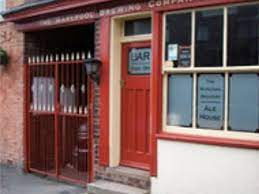
Previously a butcher's shop, this quaint little building on Breach Road is billed as Derbyshire's first micropub. Family run, it is the brewery tap for the Marlpool Brewing Co. but also features beers from lesser known and further afield breweries. The pub is another that is dog-friendly. The bar sits just inside the door next to a small corridor that leads to a seating area at the rear. The bar boasts 4 handpulls and beer is also able to be dispensed directly from casks in the cellar. The handpulls are predominantly and unsurprisingly Marlpool Brewing Co., with Scratty Ratty, Otter's Pocket and Blind Boris, alongside Wembley Way from Mouselow Farm. In the cellar on my visit were Stockport Heaton Rifles, Fell AAA and Rammy Craft Rammy Xtreme IPA. I thought it was only fair to sample the local offering so went for a pint of Scratty Ratty (4.4%). This is a clear golden coloured beer with a hoppy aroma. The flavours are floral and hoppy with a dry and slightly floral finish. This little place confirms once more my love for micropubs and the unique, welcoming atmosphere that they offer the drinker. The growth in number and popularity of pubs of this sort can only be a good thing and they will continue to be a big part of the real ale resurgence.

The last pub on the list for the day was something of a wildcard as I discovered it by accident whilst visiting the previous 2. It sits slightly further down, and over the road, from the micropub. Last stop, the White Lion.

This is very much a locals pub with a pool/darts area to one side, a central bar and a smaller, open lounge area, all in a single room. Despite not having received a refurb in the way that other local pubs have, the atmosphere is friendly enough at the time I'm there. There is also a large garden to the rear with a swing set, presumably reserved for younger visits. Only one of the 3 available handpulls are in use and this proffers good quality Bass. I took a seat by myself in a quiet corner and, as usual at this stage, reflected upon the day's events.

Heanor is certainly something special in terms of the real ale establishments on offer and this is something of a surprise. Many of the pubs here are not too well known outside of the local area, which if anything helps them to do such a good job. There is something for all visitors at the majority of the pubs here, from the standard offerings of the Red Lion to proper drinkers havens of Queen's Head and Marlpool Ale House. It may be exaggerating to state that Heanor's pubs are something of a hidden gem but the quality and range is truly something to behold. Well run pubs that cater for everyone, in a well known area that aren't suffering from their own self-importance and truly value their customers. What more could a real ale drinker want?

Monday, May 4, 2015

An Enjoyable Bath

With the urge to get the blog back on track on a more regular basis fresh in my mind, last week I ventured out on an excursion to a place that will always have a special place in my heart due to its picturesque location, fantastic atmosphere and thoroughly wonderful feel. With its preponderance of fish and chip shops and arcades, it has the distinct feel and appearance of a seaside resort despite being ensconced in the heart of rural Derbyshire. I am, of course, talking about Matlock Bath.

Matlock Bath is a village situated south of Matlock on the main A6 road in Derbyshire, England, approximately halfway between Buxton and Derby. Originally built at the head of a dead-end dirt road running alongside the valley of the River Derwent from Matlock itself, the locality developed in the 19th century as residential and a spa town and still thrives on tourism. Development was and is very restricted due to the steep hillsides, with the majority of buildings on one side of the valley with only footbridges across the river. The road was upgraded and made into a through-way, now designated A6, avoiding the previous old coaching road approach to Matlock from Cromford over very steep hills near to the Riber plateau area.
In 1698 warm springs were discovered and a bath house was built. As the waters became better known, access was improved by the building of the bridge into Old Matlock and in 1783, the opening of a new entrance at the south of the valley. Princess Victoria of Kent's royal visit in 1832 confirmed Matlock as a society venue of the time. Victoria's party visited a pair of museums and a petrifying well. John Ruskin and Lord Byron were visitors, Byron comparing it with alpine Switzerland, leading to a nickname of Little Switzerland. Erasmus Darwin had recommended the area to Josiah Wedgwood I for its beauty and soothing waters, and members of the families vacationed and settled there. Edward Levett Darwin, son of Francis Sacheverel Darwin, lived at Dale House in Matlock Bath, where he was a solicitor.
When the North Midland Railway opened in 1840, carriages plied for hire from Ambergate station. The Birmingham and Derby Junction Railway ran a number of excursions, taking the passengers onward from Ambergate by the Cromford Canal.
Matlock Bath is now a designated conservation area with an Article 4 Direction in relation to properties, predominantly along North and South Parade.
Andrew Asibong's phantasmagorical novel Mameluke Bath is set in a futuristic version of Matlock Bath, and Eleanor Bowen-Jones' film Return to Mameluke Bath explores both real and fictional versions of the town.
Matlock Bath is known as a tourist destination, with attractions including the Heights of Abraham park, Gulliver's Kingdom theme park, the Peak District Mining Museum, the Life in a Lens Museum of Photography & Old Times and an aquarium.
On the opposite bank of the river Derwent stands High Tor, a sheer cliff popular with climbers and walkers. High Tor features Giddy Edge, a narrow winding path along the cliff edge. Cable cars link the base of High Tor rising to the Heights of Abraham.
In autumn of each year, the "Venetian Nights" are held with illuminations along the river and illuminated boats.

I've visited Matlock Bath numerous times before, always by car and I've been in 2 or 3 of the pubs in the past. So I decided, on a quiet Wednesday, that I would make the train journey from Nottingham to do a proper survey of the fine drinking establishments of this fine place. I was a little bit apprehensive first thing that morning as it was raining and Matlock can get quite chilly when the weather is inclement. Thankfully, by the time I was getting ready to leave, the weather had brightened considerably and it was dry with the sun appearing periodically to add some much needed warmth to the proceedings. I arrived in Matlock Bath just before 12.30 in the afternoon and immediately headed to my first destination, situated opposite the bridge the leads over the river from the train station car park. This was a new destination for me: the County and Station.


The County and Station is a former Marston's premises that changed hands in December 2014 and is now operated on behalf of Derby's Shiny Brewery. The interior of the pub retains many of the original Victorian features including the sweeping central bar and the wooden effect walls. The seating is arranged around the edges of the room and takes the form of wooden tables and benches. The bar is well stocked, with 8 handpulls. 5 of these are in use on my visit, offering Great Heck Blonde, Redwillow Seamless, Tap East Coffee in the Morning, Coastal Spring Hop and Shiny Cathedral Ale. They also offer a very nice line in craft keg beers, on this occasion providing Late Knights APA, Tiny Rebel Urban IPA, Tiny Rebel Hadouken, Shiny Tomahawk and Shiny Wrench. Real ciders also feature in plastic kegs behind the bar and these are Burrow Hill, Thundering Molly and Wilkins. After a few moments to peruse the wide range of products on offer, I opted for Great Heck Blonde (4.3%). This is a rich, golden and satisfying ale hopped with a blend of British and Slovenian hops that combine for a zesty finish. It is brewed with Maris Otter and wheat malt and was winner of Yorkshire's finest taste award in 2008. It's easy to see why as it is certainly very tasty and goes down easily. This pub is certainly a hidden gem and worth a visit. More from this place later!

The next location on my trip is a mere stone's throw away, on the other side of the main road that runs through the village. Named after the nearby railway line, next up was The Midland.


This is a pub/hotel which I has visited in the past. The interior is a good mix of original features and modern additions, including a conservatory to the side and a nice riverside seating area for both diners and drinkers. The bar is opposite the entrance from the main road and is broad and curved at both ends. I can vouch for the quality of the food here, having eaten here before, most recently last summer. The pub is dog friendly in all areas except the conservatory which tends to be reserved for diners. The pub also has a very nice husky that lives on the premises although the dog is nowhere to been on my visit. The bar has 5 handpulls, 4 of which are in use on the day in question. The choice is decent, with Dancing Duck Dark Drake, Howard Town Hope, Peak Ales Swift Nick and Rosie's Pig Cider. Having had Swift Nick in the past, I decided this time that Howard Town Hope (4.1%) was a good choice. This is a light citrusy ale made from pale, rye and crystal malts and Pacific Gem and Cascade hops. The brewery itself is based in Glossop. The beer is smooth and fruity with a very nice zesty aftertaste and the perfect antidote to the slightly eclectic mix of music of the pub sound system. Nowhere else would I expect to hear Rita Ora followed by Lionel Richie then followed by Kenny Loggins......... It's almost like a wedding DJ has been let loose. The Midland is one of my favourite pubs in this area but sadly, I was bound by duty to move onto the next location.

Further down the main promenade, on the other side of the road this time, is Riva @ Rose Cottage.


This long, brick, ivy-covered building is now operated by Marston's. The outside area is a series of picnic benches elevated above the pavement behind a stone wall. The interior is a collection of small rooms, divided up by thick partitioning walls with square window-like openings for light and a view into other areas. The bar is small and tucked into one side of the central room, next to the stairs that lead up to the toilets. Half of the 4 handpulls are in use, offering Brakspear Bitter (3.4%) and Thatcher's Heritage cider. For a Marston's premises, the range of ales is disappointing. On a previous visit, a couple of guest ales were also available. I can only assume that this is a feature of the bar during busier periods of trade, such as the summer peak seasons. The Brakspear is well kept and tasty but a greater selection of choices would have been appreciated, although Mansfield Smooth and Marston's Oyster Stout were available on keg.

The handy thing about Matlock Bath is that, with the exception of The Midland, all of the buildings are on one side of the road, with the river opposite. This meant that it was a short walk up the road to the next pub, the Princess Victoria.


Named after Princess Victoria of Kent, who visited the area in 1832, this picturesque little pub boasts a ground floor bar area and an upstairs restaurant function room which looks out over the river. The pub is operated by Bateman's brewery and this is evidence on the single bar which is tucked into the corner of the main room. The 4 handpulls feature Black Sheep Golden Sheep, Bateman's XXXB, Bateman's Best Bitter and Sharp's Doom Bar. I opted for the XXXB (4.8%) which is a superb classic better with a robust palate of hops balanced with a malty bitterness. I took a seat in a corner of the room and admired the interior with its traditional Victorian shop front windows, wooded floors and furnishings and tankards hanging from the ceiling. There is a large TV screen against the back wall showing Indian Premier League cricket to a backdrop of rock music from the pub's sound system. The atmosphere was nice and relaxed and the beer was delicious but my excitement level was rising as I knew that the next destination was my favourite pub in Matlock Bath.

At the top of the main road into the village, opposite the famous Pavilion which now encompasses a mining museum, is The Fishpond.


Built on the original site of The Fishpond Hotel, The Fishpond is a dynamic and modern-looking pub and restaurant with modern features. The interior is a mix of high and low tables and there are bookcases at either to add a touch of quirkiness to the overall design. The bar is L-shaped and very well equipped. There are 8 handpulls, 5 of which are in use at the time of my visit. On offer are Thwaites' Wainwright, Blue Monkey BG Sips, Sharp's Doom Bar, Rosie's Pig Cider and Old Rosie. In busy periods during the tourist season, all of the handpulls are occupied, usually with a wide variety of beers from near and far, often Nottingham and Derbyshire. I've always been a big fan of this pub, due to its beer range and the general atmosphere of the place. On this occasion, I decided on the BG Sips. As I've mentioned before, I'm a big fan of Blue Monkey beers and this was very well kept, as it should be. Given the day I'd had so far, I decided that food was a good idea. After a look over the extensive food menu, I decided against the fish and chips and went for the lasagne, which was very tasty. With time to kill until my train home, I finished my pint and went for a second pint of the same, enjoying the music being played into the pub as it went through Jake Bugg, Fleetwood Mac and Ben Howard. Matlock Bath certainly loves its alternative music. That works for me! Matlock Bath even hosts an annual music festival which was actually happening the last time I was here. Whilst the pubs seem devoid of spirits of a ghostly kind, the Pavilion opposite is notorious for strange goings-on. The figures of a man and 2 children have been spotted in the mining museum, believed to be victims of a mine collapse nearby. Poltergeist activity has been reported from both the museum and the nightclub that occupies the upper floor. Disembodied footsteps and voices are heard and strange mists have been reported. The Pavilion was even featured in an episode of Most Haunted.

The time had come to leave The Fishpond and start walking back down the main road towards the train station. I arrived with 40 minutes to spare so I decided that I had time for another pint. I headed back to the County and Station and treated myself to a pint of Tap East Coffee in the Morning (5.5%). This is a traditional dark, smooth stout with the unusual added ingredient of freshly ground coffee beans, leading to an intense aromatic flavour and a strong, almost peppery finish. It was very nice indeed and a good addition to my growing list of dark beers. I made my weary journey back to the train station ready for the journey home. The day had been superb. The weather had held out and resulted in a dry and pleasant day. This trip has reaffirmed my love for Matlock Bath and proves that small villages are often worth a visit for the pubs and beers on offer as these can often eclipse the range found in bigger settlements. The reliance on the tourist trade to keep the place ticking over obviously benefits the pubs and this is the clear driving force behind the desire to keep a good range of good quality beers on the bar at most of the outlets. Matlock Bath can teach a few other places a thing or two about how to do real ale and do it well. More than anything, this trip has given me another reason to return in the high season and see what has been added to the range. Farewell for now Matlock! We both know I'll be back.

Monday, April 27, 2015

And Back to Bristol........

For the second day of my recent meet up with Matt, we once again ventured into the madness of Bristol, with the intention of visiting some further venues that we had not yet run our eyes and taste buds over. The day started strangely. I succumbed to a sudden, inexplicable 5 minutes of projectile vomiting which I still can't really explain. Matt and I had both eaten the same food more or less the day before and I woke up hangover free and feeling completely fine. Straight afterwards I felt completely fine again. I'm inclined to blame it on a suspicious sandwich at the train station in Nottingham the day before. With this incident behind me, we set out for a bus journey into Bristol city centre. Arriving before the pubs opened, we began our day with a trek up to the Avon Gorge and the magnificent Clifton Suspension Bridge, something I can now cross off of my list of 'Things to See in the West Country'. The weather was excellent again, a fine Spring day with temperatures in the high teens and bright sunshine, making Brunel's fabulous structure look all the more brooding and impressive. This imposing structure is made more so by the sightings of disembodied shades drifting around the area, believed to be the spirits of those who have taken their own lives by leaping from the bridge. I've also become aware since my visit of a legend associated with the construction of the Avon Gorge. The legend goes thus: To prove themselves worthy of the lady Avona's love, the giant brothers Vincent and Goram raced to dig a ditch in order to drain a lake. Goram started work but fell asleep digging the Hazel Brook Gorge, while Vincent dug the Avon Gorge, thereby draining the unwanted lake and winning the lady Avona's heart.

An intriguing legend I think you'll agree and one typical of those used to explain the presence of gorges and river valleys across the UK and elsewhere since ancient times. Anyway, less of the giants for now and on to the exploring. The walk back from the Bridge was considerably easier than the walk up, largely due to being downhill and we began our day of drinking in the Harbourside area of the city, a place visited during my first ever trip down last year. Our first pub of choice was the Grain Barge.


As should be abundantly clear from the picture, this is a converted barge moored along the harbour side. The premises is operated as part of Bristol Beer Factory and it is largely their beers that are on offer, along with at least one guest. They also boast a bar in the Hold, open for live music performances. On offer on our visit were 4 beers from BBF, namely Sunrise, Malz, Nova and Seven as well as Arbor Triple Hop as a guest. Perhaps because of the gorgeous weather, I was instantly drawn to the Sunrise (4.4%). This is an English golden ale with a biscuit malt backbone followed by waves of citrus hops. Matt went for the Arbor Triple Hop which was also deliciously and, as expected, hoppy and very citrusy. The Grain Barge has an outdoor seating area on the upper deck so we decided that this was a good place to plant ourselves whilst the beers went down, which took a few minutes, during which we watched a dog jump in and out of the harbour chasing a stick thrown by its owner. Interestingly, a luminescent squid-like creature was filmed in the harbour in 2013 prompting wild speculation before being revealed to be a man-made promotional device for a TV show.  Matt had again come up with an excellent itinerary for our second day and we tried to stick to this as accurately as possible.

With Matt's itinerary in mind, we took a wander further into the city centre to a place that I assured that I would enjoy, Zero Degrees.


Zero Degrees is a microbrewery nestled amongst some of Bristol's older buildings with a design that is sympathetic to the surroundings whilst incorporating the brewing equipment into the large interior. This is one of 4 venues across the UK, the other 3 being situated in Blackheath, Reading and, randomly, Cardiff. The beers on offer are put together on the premises and fill 16 handpulls with 6 main styles, including pilsner stout, wheat ales and craft lager. In essence, it's a less extreme but just as good version of BrewDog. I decided on a pint of the Wheat Ale (4.2%). This is a hefe-weizen with exotic top notes to the aromas. These aromas are predominantly banana with floral edges. On the palate the fruit notes continue with caramel coming through on the rich elegant finish. Matt opted for a 5.2% Californian Steam Lager, a pilsner style brew with a drinkable flavour and some nice aromas. We once again decided on open air heating, with the sun beaming down and my face taking the brunt of the damage. The smell of malt in the brewery added to the excellent feel to the day so far. I was very excited for what the rest of the day had in store.

For our next stop, we headed back downhill to a pub that has seen a resurgence in recent months due to a recent makeover with an emphasis on real ale and heavy metal (i.e. HEAVEN!!). The wonderful pub in question is none other than The Gryphon/Griffin.
Image result for gryphon pub bristol

This is a small but atmospheric pub with a narrow entrance that widens into a V shaped pub with the bar in the bigger of 2 rooms. When Matt and I arrive, the music is pure genius, heavy rock and metal with well known and obscure acts on offer. Gig posters for established and up and coming acts cover the walls. At this time of day, we are the only customers and this is not a bad thing as it means we are able to discuss the beer with the very attractive bar maid who happens to be on shift, whilst simultaneously attempting to guess the identity of the songs and artists that are playing (Battle Beast anyone?). Speaking of the beer, the ceiling is completely covered in pump clips, a testament to the pub's philosophy to never have the same beer on more than once. On offer for our delectation are 4 of the 6 available handpulls, boasting Atom Dark Alchemy, Oakham Racketeer, Caveman Brewery Si Teh Cah and Cheddar Ales Totty Pot. I was intrigued by Caveman Brewery as it was a new one on me so Matt and I went for a pint each. Based in Swanscombe in Kent, Caveman Brewery specialise in hoppy beers with big flavours. Sih Teh Cah is a good example of this. At 4.8%, this is a deep amber ale, with Ella and Rakau hops from New Zealand. A caramel malt backbone is complimented by a rich fruity hop character. We had such a good time in this pub that we decided on a second pint here, this time going for Oakham Racketeer, another of my favourite breweries. A new beer from the brewery's Oakademy of Excellence, Racketeer (5%), is a citrusy golden beer with more New Zealand hops dominating throughout. All in all, this may be one of my favourite pubs, with the possible exception of the toilets, which are in the basement and slightly reminiscent of a scene from Saw. Still, you can't have it all.

Next up, we made a quick stop off at Bristol Cider Shop, an independent local emporium that even delivers outside of the Bristol area for a courier fee. I picked up a couple of local ciders for Amy and Matt got some stuff for himself before we made our way to Bristol's oldest pub, The Hatchet Inn.


The Hatchet is named for the tools that local woodsmen used in nearby Clifton Woods. Grade II listed, the building dates from 1606 but has undergone significant alterations since. The pub has a pool room upstairs and a beer garden at the rear that faces the nearby O2 Academy. In the 18th Century, there was a rat pit at the rear of the building. The pub is notorious for being one of the taverns frequented by the infamous pirate Edward Teach (Blackbeard) who is alleged to haunt the building. The bar is U shaped and almost opposite one of the 2 entrances. The 3 handpulls feature Hobgoblin, Doom Bar and a charity Help for Heroes ale. Thatcher's real cider is also available. Matt and I decided upon the Help for Heroes ale (4.2%), brewed by Marston's on behalf of the charity with a percentage of the cost of each pint going towards this noble cause. The ale itself is copper coloured with nice malty, hoppy balance and an easy drinking flavour and mild aroma of biscuit. We were starting to flag a little by this time but were not about to give up easily.

Our next move was to a pub that Matt has raved about for a while. Nicknamed the 'Cat Pub', for reasons that will become clear, we next headed to the Bag O' Nails.

Image result for bag of nails bristol

The nickname given to the pub, mostly by Matt, is due to the landlord's fondness for cats, of which at least 6 roam the premises. Only one of these is present in the bar area during our visit, curled up in the window on a copy of New Scientist. There is even a sign on the way in warning customers to be aware of the kitten to prevent any risk of her reaching the busy road outside the pub. The pub itself is certainly atmospheric, fairly small inside with 8 of 9 handpulls in use. These offer a regularly changing range of real ales. During our visit, beers are available from Hop Kettle, Bragdy Heavy Industry, Naked Beer Company, Ashley Down, Flying Monk, Left Handed Giant and Red Squirrel. I decided on a pint of Bragdy Heavy Industry's 77 (4.9%). This is a big amber IPA with dark Seville marmalade and piney peppery bitterness. Matt decided on Hop Kettle's Kia Ora which was very sweet and smooth. As we took a seat and enjoyed our beers, I  took a moment to admire the long list of landlord's rules, scrawled on a pillar at the bar. Some of them are reasonable: Rule 11: No skipping a record once it has started. Others are tongue in cheek: Rule 12: Rule 11 does not apply to the landlord. Whilst simultaneously flicking through the magazine I'd extracted from under the cat (that's a strange sentence), and attempting to photograph said feline, Matt was engaged in conversation with a gentleman across the room. This began as a chat about Mark Knopfler and Dire Straits, segued further into music and then got strange when the gentleman told us about his 'innate ability' to identify a person's ancestral background from facial features alone. Interestingly, he couldn't work mine out until I told him, at which point it all apparently became clear. Worst superpower ever. We decided that this was probably our cue to leave.

We intended to only visit one more pub before I sadly had to depart for the station and the train back to the Midlands. This plan changed slightly when I became distracted by an interesting looking place that I'd never seen before. We decided to change tack slightly and made a quick trip to Beer Emporium.

Image result for beer emporium bristol

Situated in a series of brick vaults beneath the streets of Bristol, the Beer Emporium is also a restaurant and a bottle shop. The interior is very modern with low ceilings and dark alcoves off to the side. The bar is well stocked with both handpulls and a variety of bottled products. 6 of the 12 available handpulls are in use, with beers from a variety of breweries local to the area and further afield. With time of the essence and finances running low, we decided that halves would be a better option here. I went for yet another beer from another brewery that I love, Abbeydale Cosmology (5%). This is a premium blonde bitter with crisp fresh-hop aromas and soft pineapple notes due to a blend of 2 Australian hops, Galaxy and Ella. Matt decided on a half of a beer from Nottingham's own Blue Monkey brewery. I feel that Beer Emporium is definitely worth a further visit when we have more time in future.

We had time for one more pub before my inevitable departure. This led to another change of plan as we swapped a pub that I've not visited for one that we thoroughly enjoyed on a previous visit and that happens to be closer to the train station that I would soon require. So it was, with heavy hearts and fuzzy heads, we made a return to The Cornubia.


The Cornubia is a much loved ale house, tucked away on Temple Street. It has featured in this blog before but I can't remember whether there was a picture but there is now at any rate. Amongst the quirky features of this great pub are various decorative flags and a turtle tank, complete with turtles which I took care to notice this time. Of the 10 available hand pumps, 7 were in use with their usual strong range of beers from all over the place. Between us we decided on Mantles Gold and Peerless El Dorado respectively. The El Dorado was excellent. At 4.8%, it is a full bodied malty amber ale with a distinctive, peachy fruit finish, derived from the hops that give the beer its name and provide a medium hop bitterness. It's a great beer with which to end a great couple of days.

Sadly, the time had come to make my weary way back to Temple Meads station for the long journey back to Nottingham. I always manage to have fun in the West Country. The beer and the company is excellent and I genuinely believe that a lot of regions would struggle to beat it for this. It's always increasingly hard to go home after so many hours of fun experiencing what this beautiful part of the country has to offer. But, never fear, I am intending to go back. As long as this part of the world keeps impressing me, it will be too hard to stay away.

With my work situation now more conducive to regular trips, expect to see further updates, on an almost weekly basis fairly soon. Until then, keep drinking!

Fan-TAFF-tic!

First things first, credit for this entry's ingenious title pun goes to Matt, who coined this during a text conversation to arrange a visit to the location in question. The eagle eyed amongst you may have noticed my reference to an upcoming visit to the Welsh capital for an exploration of what beer over the border has to offer the seasoned drinker (assuming you were able to access my last entry; I had some slight publishing issues). I am pleased to announce that, not only did this trip successfully take place, it was the first of a 2 day excursion which took in a return to Bristol for a visit to some pubs not visited previously. What follows is an in-depth look around Cardiff and some of its many fine drinking establishments. But first, as always, the history bit.

Cardiff  is the capital and largest city in Wales and the tenth largest city in the United Kingdom.The city is the country's chief commercial centre, the base for most national cultural and sporting institutions, the Welsh national media, and the seat of the National Assembly for Wales. The unitary authority area's mid-2011 population was estimated to be 346,100, while the population of the Larger Urban Zone was estimated at 861,400 in 2009. Cardiff is a significant tourist centre and the most popular visitor destination in Wales with 18.3 million visitors in 2010. In 2011, Cardiff was ranked sixth in the world in National Geographic's alternative tourist destinations.
The city of Cardiff is the county town of the historic county of Glamorgan (and later South Glamorgan). Cardiff is part of the Eurocities network of the largest European cities. The Cardiff Urban Area covers a slightly larger area outside the county boundary, and includes the towns of Dinas Powys and Penarth. A small town until the early 19th century, its prominence as a major port for the transport of coal following the arrival of industry in the region contributed to its rise as a major city.
Cardiff was made a city in 1905, and proclaimed the capital of Wales in 1955. Since the 1990s, Cardiff has seen significant development. A new waterfront area at Cardiff Bay contains the Senedd building, home to the Welsh Assembly and the Wales Millennium Centre arts complex. Current developments include the continuation of the redevelopment of the Cardiff Bay and city centre areas with projects such as the Cardiff International Sports Village, a BBC drama village, and a new business district in the city centre.
Sporting venues in the city include the Millennium Stadium (the national stadium for the Wales national rugby union team and the Wales national football team), SWALEC Stadium (the home of Glamorgan County Cricket Club), Cardiff City Stadium (the home of Cardiff City football team), Cardiff International Sports Stadium (the home of Cardiff Amateur Athletic Club) and Cardiff Arms Park (the home of Cardiff Blues and Cardiff RFC rugby union teams). The city was awarded with the European City of Sport in 2009 due to its role in hosting major international sporting events. It has been announced that Cardiff will again be the European City of Sport in 2014. The Millennium Stadium hosted 11 football matches as part of the 2012 Summer Olympics, including the games' opening event and the men's bronze medal match.

Caerdydd (the Welsh name of the city) derives from the earlier Welsh form Caerdyf. The change from -dyf to -dydd shows the colloquial alteration of Welsh f [v] and dd [ð], and was perhaps also driven by folk etymology (dydd is Welsh for 'day' whereas dyf has no obvious meaning). This sound change had probably first occurred in the Middle Ages; both forms were current in the Tudor period. Caerdyf has its origins in post-Roman Brythonic words meaning "the fort of the Taff". The fort probably refers to that established by the Romans. Caer is Welsh for fort and -dyf is in effect a form of Taf (Taff), the river which flows by Cardiff Castle, with the t showing consonant mutation to d and the vowel showing affection as a result of a (lost) genitive case ending.
The anglicised form Cardiff is derived from Caerdyf, with the Welsh f [v] borrowed as ff /f/, as also happens in Taff (from Welsh Taf) and Llandaff (from Welsh Llandaf). As English does not have the vowel [ɨ] the final vowel has been borrowed as /ɪ/.
The antiquarian William Camden (1551–1623) suggested that the name Cardiff may derive from "Caer-Didi" ("the Fort of Didius"), a name supposedly given in honour of Aulus Didius Gallus, governor of a nearby province at the time when the Roman fort was established. Although some sources repeat this theory, it has been rejected on linguistic grounds by modern scholars such as Professor Gwynedd Pierce.

Archaeological evidence from sites in and around Cardiff—the St Lythans burial chamber, near Wenvoe (about four miles (6.4 km) west, south west of Cardiff city centre), the Tinkinswood burial chamber, near St Nicholas (about six miles (10 km) west of Cardiff city centre), the Cae'rarfau Chambered Tomb, Creigiau (about six miles (10 km) north west of Cardiff city centre) and the Gwern y Cleppa Long Barrow, near Coedkernew, Newport (about eight and a quarter miles (13.5 km) north east of Cardiff city centre)—shows that people had settled in the area by at least around 6,000 years before present (BP), during the early Neolithic; about 1,500 years before either Stonehenge or the Great Pyramid of Giza was completed. A group of five Bronze Age tumuli is at the summit of The Garth (Welsh: Mynydd y Garth), within the county's northern boundary. Four Iron Age hill fort and enclosure sites have been identified within Cardiff's present-day county boundaries, including Caerau Hillfort, an enclosed area of 5.1 hectares (51,000 m2).
Until the Roman conquest of Britain, Cardiff was part of the territory of the Silures – a Celtic British tribe that flourished in the Iron Age – whose territory included the areas that would become known as Breconshire, Monmouthshire and Glamorgan. The 3.2-hectare (8-acre) fort established by the Romans near the mouth of the River Taff in 75 AD, in what would become the north western boundary of the centre of Cardiff, was built over an extensive settlement that had been established by the Silures in the 50s AD. The fort was one of a series of military outposts associated with Isca Augusta (Caerleon) that acted as border defences. The fort may have been abandoned in the early 2nd century as the area had been subdued, however by this time a civilian settlement, or vicus, was established. It was likely made up of traders who made a living from the fort, ex-soldiers and their families. A Roman villa has been discovered at Ely. Contemporary with the Saxon Shore Forts of the 3rd and 4th centuries, a stone fortress was established at Cardiff. Similar to the shore forts, the fortress was built to protect Britannia from raiders. Coins from the reign of Gratian indicate that Cardiff was inhabited until at least the 4th century; the fort was abandoned towards the end of the 4th century, as the last Roman legions left the province of Britannia with Magnus Maximus.
Little is known about the fort and civilian settlement in the period between the Roman departure from Britain and the Norman Conquest. The settlement probably shrank in size and may even have been abandoned. In the absence of Roman rule, Wales was divided into small kingdoms; early on, Meurig ap Tewdrig emerged as the local king in Glywysing (which later became Glamorgan). The area passed through his family until the advent of the Normans in the 11th century.

In 1081 William I, King of England, began work on the castle keep within the walls of the old Roman fort. Cardiff Castle has been at the heart of the city ever since. The castle was substantially altered and extended during the Victorian period by John Crichton-Stuart, 3rd Marquess of Bute, and the architect William Burges. Original Roman work can, however, still be distinguished in the wall facings.
A small town grew up in the shadow of the castle, made up primarily of settlers from England. Cardiff had a population of between 1,500 and 2,000 in the Middle Ages, a relatively normal size for a Welsh town in this period. By the end of the 13th century, Cardiff was the only town in Wales with a population exceeding 2,000, but it was relatively small compared with most notable towns in the Kingdom of England.
In the early 12th century a wooden palisade was erected around the city to protect it. Cardiff was a busy port in the Middle Ages, and was declared a Staple port in 1327.
Henry II travelled through Cardiff on his journey to Ireland and had a premonition against the holding of Sunday markets at St Piran's Chapel, which stood in the middle of the road between the castle entrance and Westgate.
In 1404 Owain Glyndŵr burned Cardiff and took Cardiff Castle. As the town was still very small, most of the buildings were made of wood and the town was destroyed. However, the town was soon rebuilt and began to flourish once again.

In 1536, the Act of Union between England and Wales led to the creation of the shire of Glamorgan, and Cardiff was made the county town. It also became part of Kibbor hundred. Around this same time the Herbert family became the most powerful family in the area. In 1538, Henry VIII closed the Dominican and Franciscan friaries in Cardiff, the remains of which were used as building materials. A writer around this period described Cardiff: "The River Taff runs under the walls of his honours castle and from the north part of the town to the south part where there is a fair quay and a safe harbour for shipping."
Cardiff had become a Free Borough in 1542. In 1573, it was made a head port for collection of customs duties, and in 1581, Elizabeth I granted Cardiff its first royal charter. Pembrokeshire historian George Owen described Cardiff in 1602 as "the fayrest towne in Wales yett not the welthiest.", and the town gained a second Royal Charter in 1608.
A disastrous flood of the Bristol Channel on 30 January 1607 (now believed to be a tsunami) led to a change in the course of the River Taff and the ruining of St Mary's Parish Church, which was replaced by its chapel of ease, St John the Baptist.
During the Second English Civil War, St Fagans just to the west of the town, played host to the Battle of St Fagans. The battle, between a Royalist rebellion and a New Model Army detachment, was a decisive victory for the Parliamentarians and allowed Oliver Cromwell to conquer Wales. It is the last major battle to occur in Wales, with about 200 (mostly Royalist) soldiers killed.
In the ensuing century Cardiff was at peace. In 1766, John Stuart, 1st Marquess of Bute married into the Herbert family and was later created Baron Cardiff, and in 1778 he began renovations on Cardiff Castle. In the 1790s a racecourse, printing press, bank and coffee house all opened, and Cardiff gained a stagecoach service to London. Despite these improvements, Cardiff's position in the Welsh urban hierarchy had declined over the 18th century. Iolo Morgannwg called it "an obscure and inconsiderable place", and the 1801 census found the population to be only 1,870, making Cardiff only the 25th largest town in Wales, well behind Merthyr and Swansea.

In 1793, John Crichton-Stuart, 2nd Marquess of Bute was born. He would spend his life building the Cardiff docks and would later be called "the creator of modern Cardiff". A twice-weekly boat service between Cardiff and Bristol was established in 1815, and in 1821, the Cardiff Gas Works was established.
After the Napoleonic Wars Cardiff entered a period of social and industrial unrest, starting with the trial and hanging of Dic Penderyn in 1831.
The town grew rapidly from the 1830s onwards, when the Marquess of Bute built a dock, which eventually linked to the Taff Vale Railway. Cardiff became the main port for exports of coal from the Cynon, Rhondda, and Rhymney valleys, and grew at a rate of nearly 80% per decade between 1840 and 1870. Much of the growth was due to migration from within and outside Wales: in 1841, a quarter of Cardiff's population were English-born and more than 10% had been born in Ireland. By the 1881 census, Cardiff had overtaken both Merthyr and Swansea to become the largest town in Wales. Cardiff's new status as the premier town in South Wales was confirmed when it was chosen as the site of the University College South Wales and Monmouthshire in 1893.
A permanent military presence was established in the town with the completion of Maindy Barracks in 1877.
Cardiff faced a challenge in the 1880s when David Davies of Llandinam and the Barry Railway Company promoted the development of rival docks at Barry. Barry docks had the advantage of being accessible in all tides, and David Davies claimed that his venture would cause "grass to grow in the streets of Cardiff". From 1901 coal exports from Barry surpassed those from Cardiff, but the administration of the coal trade remained centred on Cardiff, in particular its Coal Exchange, where the price of coal on the British market was determined and the first million-pound deal was struck in 1907. The city also strengthened its industrial base with the decision of the owners of the Dowlais Ironworks in Merthyr (who would later form part of Guest, Keen and Nettlefolds) to build a new steelworks close to the docks at East Moors, which Lord Bute opened on 4 February 1891.

King Edward VII granted Cardiff city status on 28 October 1905, and the city acquired a Roman Catholic Cathedral in 1916. In subsequent years an increasing number of national institutions were located in the city, including the National Museum of Wales, Welsh National War Memorial, and the University of Wales Registry Building—however, it was denied the National Library of Wales, partly because the library's founder, Sir John Williams, considered Cardiff to have "a non-Welsh population".
After a brief post-war boom, Cardiff docks entered a prolonged decline in the interwar period. By 1936, their trade was less than half its value in 1913, reflecting the slump in demand for Welsh coal. Bomb damage during the Cardiff Blitz in World War II included the devastation of Llandaff Cathedral, and in the immediate postwar years the city's link with the Bute family came to an end.
 
The city was proclaimed capital city of Wales on 20 December 1955, by a written reply by the Home Secretary Gwilym Lloyd George. Caernarfon had also vied for this title. Cardiff therefore celebrated two important anniversaries in 2005. The Encyclopedia of Wales notes that the decision to recognise the city as the capital of Wales "had more to do with the fact that it contained marginal Conservative constituencies than any reasoned view of what functions a Welsh capital should have". Although the city hosted the Commonwealth Games in 1958, Cardiff only became a centre of national administration with the establishment of the Welsh Office in 1964, which later prompted the creation of various other public bodies such as the Arts Council of Wales and the Welsh Development Agency, most of which were based in Cardiff.
 
The East Moors Steelworks closed in 1978 and Cardiff lost population during the 1980s, consistent with a wider pattern of counter urbanisation in Britain. However, it recovered and was one of the few cities (outside London) where population grew during the 1990s. During this period the Cardiff Bay Development Corporation was promoting the redevelopment of south Cardiff; an evaluation of the regeneration of Cardiff Bay published in 2004 concluded that the project had "reinforced the competitive position of Cardiff" and "contributed to a massive improvement in the quality of the built environment", although it had failed "to attract the major inward investors originally anticipated".
In the 1997 devolution referendum, Cardiff voters rejected the establishment of the National Assembly for Wales by 55.4% to 44.2% on a 47% turnout, which Denis Balsom partly ascribed to a general preference in Cardiff and some other parts of Wales for a 'British' rather than exclusively 'Welsh' identity. The relative lack of support for the Assembly locally, and difficulties between the Welsh Office and Cardiff Council in acquiring the original preferred venue, Cardiff City Hall, encouraged other local authorities to bid to house the Assembly. However, the Assembly eventually located at TĹ· Hywel in Cardiff Bay in 1999; in 2005, a new debating chamber on an adjacent site, designed by Richard Rogers, was opened.
The city was county town of Glamorgan until the council reorganisation in 1974 paired Cardiff and the now Vale of Glamorgan together as the new county of South Glamorgan. Further local government restructuring in 1996 resulted in Cardiff city's district council becoming a unitary authority, the City and County of Cardiff, with the addition of Creigiau and Pentyrch.

So, thousands of years of history have made Cardiff the place that it is today and it was into this backdrop that we eagerly flung ourselves. With Matt being in Bristol and myself in Nottingham, we agreed to meet in Cardiff. 3 train journeys and 2 changes later and I was stepping out into bright Spring sunshine in the land of the dragon. As much as that sounded like a Hawkwind lyric, it really was that kind of day, the clouds of England parting into bright sunshine as my train left the tunnel that runs under the River Severn. Matt is familiar with the Cardiff area as his sister lives there and so had planned a rough itinerary for the afternoon. Our first move was to jump on yet another train and make the short hop to Cardiff Bay. This relatively newly developed area is a haven of pubs and shops and it was to one of these pubs that we quickly ventured. Venue number one for the day was a Wetherspoons overlooking the entrance to Cardiff Bay, The Mount Stuart.
 
Opened in July 2014 in what was previously a Harry Ramsden's restaurant, The Mount Stuart is a 2 storey glass building with extensive seating both inside and out, including an upstairs terrace with telescopes for those wanting to admire the impressive views. The building originally dates from the 1880s and was the long time offices of Mount Stuart Dry Docks Ltd.  There are bars upstairs and downstairs and these are well stocked as you would expect from a Spoons. Amongst the usual offerings such as Abbot Ale, Ruddles and Adnams Broadside, there were also a couple of guest ales, featured as part of the recent international brewery collaboration event. The two available on our visit were Celt Experience Chieftain and Norwegian Brewery Nogne O Wit. We decided on a pint of Chieftain to start the day and this proved to be a good plan. Brewed with Amarillo hops, this is a lovely aromatic ale of 4.1% ABV. This is a pale, fruity single hopped session ale full of fresh berry, floral and spice aromas. We decided to make the most of the excellent weather and sit in the outdoor seating area overlooking both the entrance to the Bay and the nearby Doctor Who Experience, sadly closed during our visit. The beer went down very quickly so we decided that a second pint was in order. It made sense to try the 2nd guest beer, which was again an excellent move. At 4.5 %, Wit is a Belgian style ale with generous contributions of orange peel and coriander giving it a fruity palate and a spicy finish. I thought that food would be a good idea at this stage so we moved to the upstairs seating area whilst I inhaled a very good Panini. The area is certainly very picturesque and has an intriguing atmosphere. The nearby docks were the scene of a ghostly sighting in 1962 when a teenager who was fishing encountered a man who was smoking a pipe and wearing a trilby hat and either a trench coat or overcoat. The figure swiftly vanished into a nearby field of flat prairie grass.

We took our leave of this location and headed a few yards away to our next destination, Terra Nova. 


This impressive looking building is yet another addition to the area following the recent redevelopment. The interior includes some traditional looking features such as exposed beams and period wall designs. This was the scene of our first encounter for the day with Brains Brewery as they are based in the city and feature in quite a significant number of the pubs. Terra Nova features the whole range of Brains beers. With quite a range to choose from, we went for a pint each of Brains Gold. This is a full-flavoured, hoppy and refreshing golden ale. There is a satisfying bitterness, balanced by vibrant citrus aromas and complex hop flavours from late hopping with Cascade and Styrian Goldings, all for a strength of 4.3%. We again made use of the sunshine and selected a table outside where Matt exposed me to some treats from the world of music on YouTube. After a few minutes, the breeze had begun to pick up so we decided to finish our pints and venture elsewhere.

Our next destination was a heritage pub a short walk from the bay area on Bute Street.


Known as The Packet after a type of steamer vessel that used to frequent the nearby docks, this is a spacious pub that has retained its heritage look with fabulous mahogany construction behind the bar, consisting of columns and arches and 2 rope clad original pillars. The bar takes up much of the central space with seating around the edges into a series of alcoves.  The pub was built in 1864 as a hotel mainly for sailors. There is an unwritten rule that a sailor caught with the tide out must be given boarding. In 1985, the building was extended, consuming the house next door. The stained glass windows were replaced in 2004. Brains beers were again in evidence here and this time we decided on a pint of Rev. James (4.5%). Full bodied and warming, this is rich in palate, spicy and aromatic with a deeply satisfying finish.

We enjoyed our time at The Packet and then decided that we would venture back into Cardiff city centre. Opting not to jump back onto the train with the weather still good, we decided to walk back into the centre seeing as it was really only a few minutes away. On our way we passed the Oasis Dental Care practice which led to us attempting to make some puns combining dentistry with a legendary Britpop band. The winner: Don't Look Plaque In Anger......... I'm truly sorry. What happened next was pure comedy gold. Approaching the city centre, we spied a nice looking pub that we decided to investigate further. I needed the loo if nothing else. The pub in question was the Golden Cross.
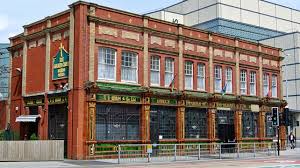
Image result for golden cross cardiff

This famous listed building is a perfect example of an old Cardiff pub and the exterior retains its historic glazed tiles. We entered the pub to the sight of 4 handpulls, all out of use but Brains Gold was available on Smooth flow. Matt ordered whilst I went to the loo. Upon my return, we quickly realised what was unusual about the pub. The posters advertising performances by drag acts and the look we were given by the barman gave away that we were in a gay pub. This isn't so much of an issue but was a good indication that in future we need to make sure we research places properly. The Brains Smooth itself was very good. At 3.7%, it's easy drinking and very light and went down very easily indeed.

Next up was somewhere that we had definitely planned as part of the days activities, The Cottage. 
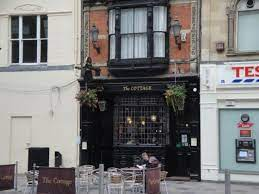

This is yet another Brains pub, in the heart of the city centre on St. Mary's Street. The setting inside is very relaxed and traditional with a good range of cask ales. As well as the normal beer range, the bar also featured a beer from the brewery's cask beer range, Gin Lane (5%). This seemed like an excellent choice after our good experiences with their beers so far and we were proven correct. This ale was brewed especially for the Wales Beer Festival and is due to reappear at the Great British Beer Festival. Lemon and lime aromas give way to herbal, spicy hop flavours and a dry, pleasantly bitter aftertaste. This concoction also benefits from the addition of ground juniper berries and crushed coriander seeds creating an overall distinctive gin flavour. The pub is quite long and narrow and we pulled up a table in the back to enjoy our delicious pints. Matt took this time to outline the general plan for the rest of the day which would ultimately culminate in meeting up with his sister and her boyfriend.

I was heartened by the potential delights to come and before long it was time for a wander to our next destination, the Queen's Vaults.


Probably later Victorian, this grade 2 listed building had a structural refurbishment in 1996, making it cavernous and open plan. It is not completely clear when the pub was extended to consume the 2 adjacent properties. The pub was previously known as the Flyhalf and Firkin until taking its present name in 2002. The pub is a stone's throw from the Millennium Stadium and inside it contains 3 pool tables, situated underneath a high beamed, pitched ceiling, like a barn. The bar was well stocked with 6 handpulls, most of which featured the now familiar site of Brains Beers. Additional to this though was Grog y Vog from the Vale of Glamorgan Brewery up the road in Barry. At 4.3%, this is a golden pale ale late hopped with whole Styrian Goldings for a fresh aroma and flavour. It was certainly refreshing and I was thoroughly enjoying my first ever trip to Wales. The beer was definitely starting to have an effect by this stage but more fun was still to come.

Next up, in the shadow of Cardiff Castle, was Dempsey's.
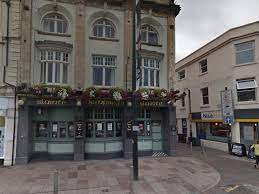


Situated opposite the main entrance of Cardiff Castle, Dempsey's is a traditional Irish bar operated by Brains (them again). The bar is well stocked with the Brains range and this time we opted for the SA (4.2%), whilst admiring the many gig posters dotted across the walls. The SA is copper coloured with a full flavour. A nutty richness comes from a blend of fine pale and crystal malts and this balanced with a satisfying dryness from the use of Challenger, Fuggles and Goldings. There is a pleasant hint of spirit in the aroma. I took some time here to admire the nearby castle, both impressive and imposing in the afternoon Welsh sunshine. As the history section above makes clear, the castle dates back to 1070. This area of the city is renowned for its extensive hauntings and the local ghost walk starts from the main entrance of the castle. The castle is believed to be the haunt of a phantom coach which heard when a member of the Hastings is about to die. It was heard by John Boyle on the night his cousin the Marquis Hastings died. Other ghosts reputed to haunt the castle include the second Marquess of Bute who walks through several walls, a faceless woman in a long skirt known as Sarah and a 3 metre tall giant who walks around the park. A couple of streets nearby also have accompanying spirits. Nearby Cowbridge Road is haunted by the ghost of a young boy and Queen Street, at the other end of Castle Road, is home to sightings of a phantom grey female figure who walks along the street until reaching the bridge where she turns and waves in the direction of the castle. These tales sound spooky in the bright daylight so it's easy to imagine how sinister this can seem when the sun goes down.

It was soon time to move again, this time for a rendezvous with Matt's sister Becca and her boyfriend Rich. The venue for this meet up was the City Arms.


Locally renowned for its impressive and ever-changing range of beers, the pub was constructed in the 1880s, the same decade that Brains was founded, and was known as the Cattle Market Tavern. It was later renamed the Dover Arms and became the City Arms in 1905 in recognition of Cardiff's new City status. The pub specialises in serving high quality ales and ciders straight from the cask, on tap and in bottles. The pub was voted CAMRA Cardiff Pub of the Year in 2012 and was highly commended in 2013 and 2014. The bar is crammed with handpulls featuring Brains SA and Dark as it regulars and a myriad of ever changing guests. Catching my particular attention was East Street Cream (5%), courtesy of RCH Brewery. This is a full bodied beer which combines malty, hoppy and fruit bitterness with a sweet taste, which all vie for dominance in what is a complex chestnut coloured ale. The pub sits almost opposite the main entrance to the Millennium Stadium, leading to some excellent photo opportunities. As I supped my very nice pint, Becca and Rich soon arrived accompanied by Rich's friend Kit. With our gang now complete for the evening, we finished our drinks and nipped across the road to our next destination, conveniently located opposite.
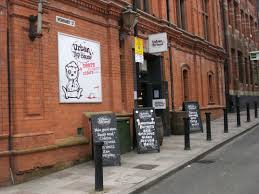
Image result for urban taphouse cardiff

Urban Taphouse, pictured above, is a local outlet for the Newport based Tiny Rebel brewery. The bar has built a reputation for excellent beer and excellent food. As well as a selection of Tiny Rebel beers, the bar also features a changing selection of guest beers. Being a big fan of Tiny Rebel beers, I decided on a pint of Goldie Lookin' Ale (4.5%). This beer is a collaboration between the brewery and local novelty rap group Goldie Lookin' Chain. This is a golden and very tasty beer with a heavy smattering of American hops adding to the aroma and a tang on the palate. As well as beer, Matt and I had decided to sample one of the renowned burgers and this was another excellent decision. The food was amazing and I can recommend it to any visitors to this fine city. Another feature of Urban Taphouse is it's regular weekly board games night on a Monday. Matt and I, very much beer addled by now struggled to understand the rules of  a game called Epidemic, which was essentially Risk with added disease. The others seemed to be enjoying it though! It was at this point that we randomly bumped into David, a friend of ours from Nottingham who has now relocated to Cardiff. This was completely unexpected but very nice all the same.

Sadly, our day in Cardiff was almost over so it wasn't long before we had to bid our farewells and head off to the station for the train back to Bristol. We did have time to pop into another Wetherspoons near the station for a very quick pint but, due largely to the sheer amount of beer and the length of the day, neither of us paid much attention to the beer that we drank. The train journey to Bristol was a brief one but it gave us both a chance to reflect on our day. I was very impressed by what Cardiff had to offer, even with the preponderance of Brains in many of the establishments. The beer they offer is of excellent quality and there are many other pubs that we had no time to visit. Cardiff is definitely worth a visit for any fan of real ale. The Welsh certainly know what they're doing and this is reflected in the care and quality provided in the beers. I would fully recommend a trip across the border. The Dragon is waking and it's waiting for you.

Monday, March 30, 2015

It's Not All Bad in Radford

Spring is in the air at last, so what better time to try and get the blog back up to more regular publishing levels. I took a bit of a gamble with my chosen location this time around but everywhere deserves a fair representation where ale is concerned. Last week, with a day off at my disposal I decided to brave the pubs of the Radford area, to see what, if anything, they have to offer.

Radford is an inner-city area of Nottingham, located just outside the city centre itself. It is bounded on the south by Lenton and Nottingham City Centre, and comprises around 600 acres (2.4 km2) of land.
St. Peter's Church, Radford was given by William Peveril to Lenton Priory. The church was rebuilt in 1812 at a cost of £2,000. The Wesleyan chapel, was built in 1805, and enlarged in 1828. In September 1878 a chapel was built on St Peter's Street by the United Methodist Free Churches at a cost of £1,900. It was closed due to declining membership and income in June 1947 and purchased by the Evangelical Free Church. Radford Registration District (RD) was created on 1 July 1837 on the introduction of Statutary registration of Births, Marriages and Deaths (bmd) - and was abolished, and absorbed into Nottingham RD, on 1 July 1880.
The area has a large ethnic minority population (mainly West Indian, African, Asian and increasingly Polish), and accordingly, there is a large number of specialist food and retail shops catering to specific cultures. Due to the relatively cheap nature of housing in the area (and the large number of old Victorian properties converted into flats and bedsits). Radford has a large student population, most of whom attend the nearby Nottingham Trent University and University of Nottingham.
Radford was the home of Raleigh Industries once the world's largest bicycle producer, Players cigarettes and Manlove, Alliott & Co. Ltd., inventors of incinerators for waste disposal. It provides the backdrop for much of Alan Sillitoe's book Saturday Night and Sunday Morning. Numerous scenes from the film of the book which starred Albert Finney, were shot in Radford.

Radford is one of the more well known areas of Nottingham but normally for the wrong reasons, despite its extensive history. I was hoping that nothing untoward would occur during my exploration of this particular area. Having made my way into town by bus and a brisk walk from the city centre, hoping to dodge the incoming thunderstorm, I headed towards my intended first destination, the Colonel Burnaby on Hartley Road.


It was here that I hit an early snag. Although the pub appeared to be open, as evidenced by the open front door and a sign that at least attempted to be welcoming, there didn't appear to be anyone home. The interior lights were off and most the pub appeared to be in darkness. I have an innate fear of entering ominous places alone and this is bettered by a slightly more logical fear of being knifed by strangers. Given the evidence, it seemed best to give this location a miss, at least until I could muster back up. Luckily, my next location was just down the road. Situated parallel to the Castle Retail Park is The Pheasant Inn.


This tidy, pleasant-looking building on Prospect Street gave me hope. The interior is roughly square and symmetrical in general layout. There is an entrance to either side of the front windows, both of which bring the drinker through to the main bar area. There is a dart board to one side of here and a pool table to the other. The central bar faces some high backed booths with plaques dedicating these to dearly departed regulars. The bar is well stocked with spirits and lagers and includes 4 hand pulls. Unfortunately, during my visit, none of these are in use. The pub is well kept and well presented, the atmosphere is relaxed and landlord and regulars are very pleasant. Despite this, I can't help but feel that the hand pumps are wasted and could certainly add to the popularity of what is a very nice venue. Although disappointing from an ale drinker's perspective, my spirits my lightened by the bar staff try to decide whether or not I am over 25 (sadly, I am) and by the present of a very cute, very friendly small dog which appeared from the upstairs region of the pub shortly before my departure.
So far, it had been an oddly disappointing afternoon. However, I was not about to give up. I was determined that things couldn't be as bad as they seemed. Thankfully, my next location proved me correct.

Next up was a place that I'd intended to visit for quite a while. Renowned as the tap house for Nottingham Brewery, my next stop was The Plough.


Dating from the 1700's The Plough is famously mentioned in Alan Sillitoe's novel Saturday Night and Sunday Morning. The main entrance takes you to a choice of 2 internal doors which take you to opposite sides of the square central bar. Upon entering, I opted for the right hand door, not really for any reason but I had to start somewhere. There is seating around the edges of both rooms, as well as small tables and some high bar stools. The 10 hand pulls are divided between both sides of the bar, 4 on one side and 6 on the other and one of these is not in use during my visit. All but one of these beers, as you'd expect, come from the associated brewery which is behind the pub. The 4 on the side I have chosen are Rock Mild, EPA, Legend and Rock Bitter. On the opposite side, the pumps boast Regal, Bullion, Broadway Reel Ale, Sooty Stout and Clark's Blonde which is the guest. I decided to begin with a pint of Legend as I was thoroughly parched by this point. The Legend was in excellent condition and went down very well indeed, reflecting everything that is good about the beers from this fabulous local brewery. I thought it was only fair to try a second pint here and I was feeling adventurous. I opted second time around for the Sooty Stout. This is a fabulous beer, full of complex aromas and smoky, hazy flavours. It is essentially like drinking smoke, with all of the tangy and woody undertones that you would expect. I didn't want to leave here in any hurry but time was getting on and I still had another couple of locations left to visit. Hoping to dodge any impending rain showers, I made my way down towards the next stop, passing student flats in what used to be the old Raleigh bicycle factory and the White Horse pub, now unceremoniously converted into a cafĂ©.

My journey now took me out to the other end of Radford, emerging on Derby Road. Originally a farmhouse and a pub since at least 1810, I was now at The Three Wheatsheaves.


 The interior of the pub is a mix of modern and traditional features with the bar to one side in a reverse J shape. Of the 3 handpulls on the bar, 1 is in use and this is offering Caledonian Edinburgh Castle. This is a copper coloured ale with a soft flavour of hops and an overall sweet finish. Despite the lack of choice at the time of my trip, the landlord seems to be preparing for an increase in ale volume as a number of pump clips are being stored behind the bar, presumably for when the renovations are completed. I'm prepared to give this particular pub the benefit of the doubt pending another investigation. It's nice to see that the new landlord is still prepared to make the most of his ale pumps once everything is up and running again. If done properly, this could be a venue to watch.
Last on my itinerary for the day was further down Derby Road, in the shadow of Queen's Medical Centre. Operated under the Flaming Grill brand, my last destination was the Rose & Crown.


Behind the trademark orange and black exterior is a large, expansive interior around a W shaped bar which occupies an area of the back wall. The pub is geared around food and the amount of seating on offer reflects this, consisting of low tables and high plush booths. There are lots of TV screens and a projector, focused on showing live sport. The bar includes 4 hand pulls, half of which are in use, providing Castle Rock Harvest Pale and Wells Bombardier. The Bombardier is very well kept and that is always good to see. Taking a seat at a high table facing a TV screen on which Sky Sports News is playing, I reflected about the ups and downs of my Radford recon. The quality of Radford's pubs for the discerning ale drinker is a reflection of the area as a whole and probably suffers as a direct result of the area's unsavoury reputation. However, this does not mean it is all bad. The fact that Nottingham Brewery, and its tap house The Plough, can thrive in this area is a testament to how times are changing. It will be interesting to see how the ale scene develops here. All being well, The Three Wheatsheaves will continue to provide ale once its refurbishment work is complete, offering a good alternative for ale drinkers in the area. If The Pheasant can also make better use of their ale pumps then an area that initially appears to be a little bit of a real ale wasteland (The Plough obviously excluded from this), may begin to show signs of turning into an unlikely haven.

Although I do keep saying it, I fully intend to update this on a more regular basis with areas far and wide making an appearance, including my first ever trip to Wales and a return to the West Country. This year looks set to be another good one and I intend to monitor that as best as I possibly can.